
Business
IEA orders all government entities to procure domestic goods over imported products

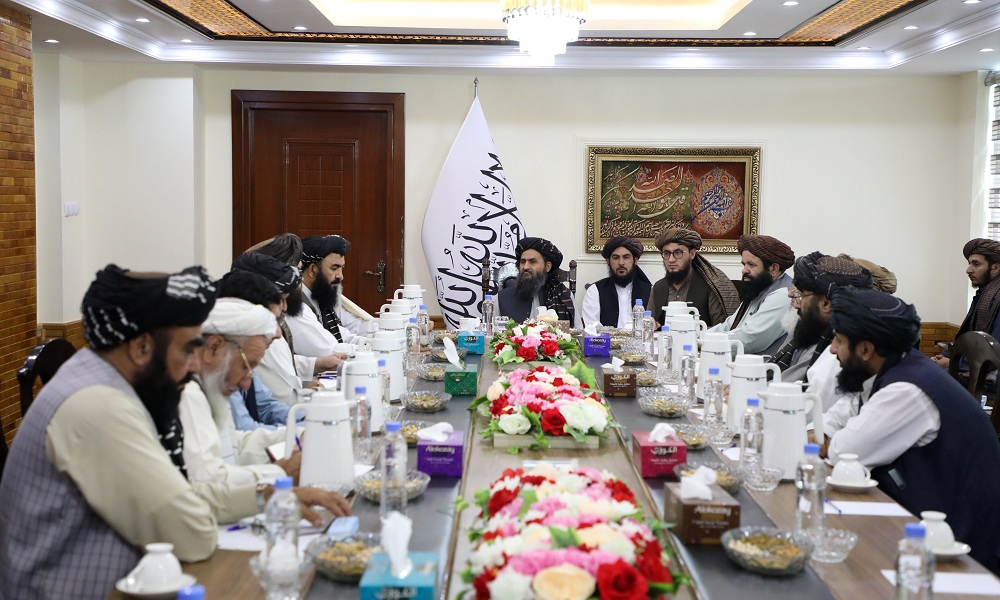
Under the guidance of the Deputy Prime Minister for Economic Affairs Office, a meeting aimed at bolstering the industrial sector and supporting locally manufactured goods was held at Marmarin Palace on Monday.
Officials from key ministries, including finance, interior, industry and commerce, economy, the general directorate of intelligence, and representatives from the private sector participated.
Significant decisions were made to strengthen the domestic industrial landscape. The Afghanistan Chamber of Industry and Mines will formally present domestic products to the Tariff Committee, which will follow a meticulous process of assessing quality, quantity, and pricing. The Tariff Committee, which is made up of officials from the general directorate of intelligence, Afghanistan Food and Drug Authority, and Afghanistan National Standard Authority, will determine import tariffs so as to ensure domestically made goods are prioritized on the local market.
Their findings will be reported to the Office of the Deputy Prime Minister for Economic Affairs. Furthermore, in alignment with Resolution No.19 of the Cabinet of the Islamic Emirate of Afghanistan, all government institutions are mandated to prioritize the use of domestic products in their procurement processes. This commitment extends to cases where the quality of domestic products may lag behind foreign counterparts by 10 to 15 percent.
Government entities are directed to maintain comprehensive lists of domestic products and seek quotations accordingly during procurement. To address security concerns for industrialists and investors and foster effective coordination, it was resolved that within three days, the Ministries of Interior, Finance, Industry and Commerce, the General Directorate of Intelligence, and the Chambers of Afghanistan Trade and Investment and Industry and Mines will designate competent representatives to the Office of the Deputy Prime Minister for Economic Affairs.
Additionally, the Ministry of Industry and Commerce assumes the pivotal role of submitting product names, marks, and brands for anti-counterfeiting measures to the Office of the Deputy Prime Minister for Economic Affairs.
As a concluding mandate, the Tariff Committee, under the stewardship of the Ministry of Industry and Commerce, will comprehensively investigate the existing challenges related to invoice execution between the Chambers of Commerce and Investment and Industry and Mines.
Their findings and recommendations will be presented to the Office of the Deputy Prime Minister for Economic Affairs.





Business
Afghanistan, Belarus discuss expanding industrial and trade cooperation
Particular attention was given to companies producing tractors, industrial machinery, and equipment and vehicles used in the mining sector.
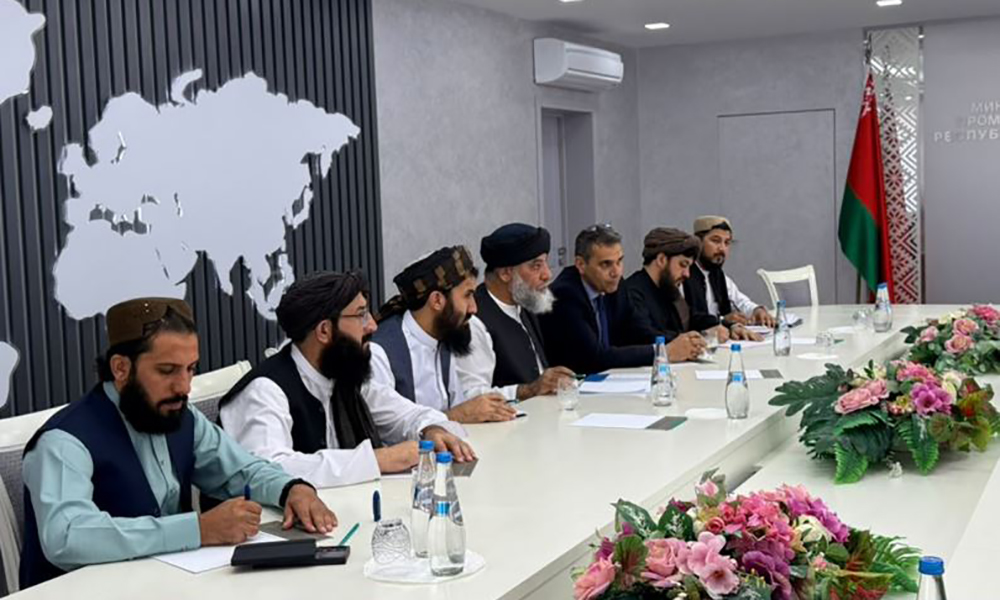
Afghanistan’s Minister of Industry and Commerce, Nooruddin Azizi, met with Belarus’ Minister of Industry during an official visit to the country.
The two sides discussed the establishment of manufacturing plants in Afghanistan, the regular organization of the Afghanistan-Belarus Business Forum, and follow-up on issues raised through the countries’ economic commission.
Belarusian officials expressed appreciation for Afghanistan’s participation in the country’s international industrial exhibition and voiced interest in expanding the presence of Belarusian manufacturing companies in Afghanistan.
Particular attention was given to companies producing tractors, industrial machinery, and equipment and vehicles used in the mining sector.
The second International Industrial Exhibition of Belarus is being held with the participation of around 500 companies from different countries. The exhibition has also attracted visitors from European and Asian countries.
Business
Afghanistan, Tajikistan seek stronger trade and investment ties
The two sides discussed increasing trade exchanges, establishing direct links between traders and investors, and organizing joint economic programs.
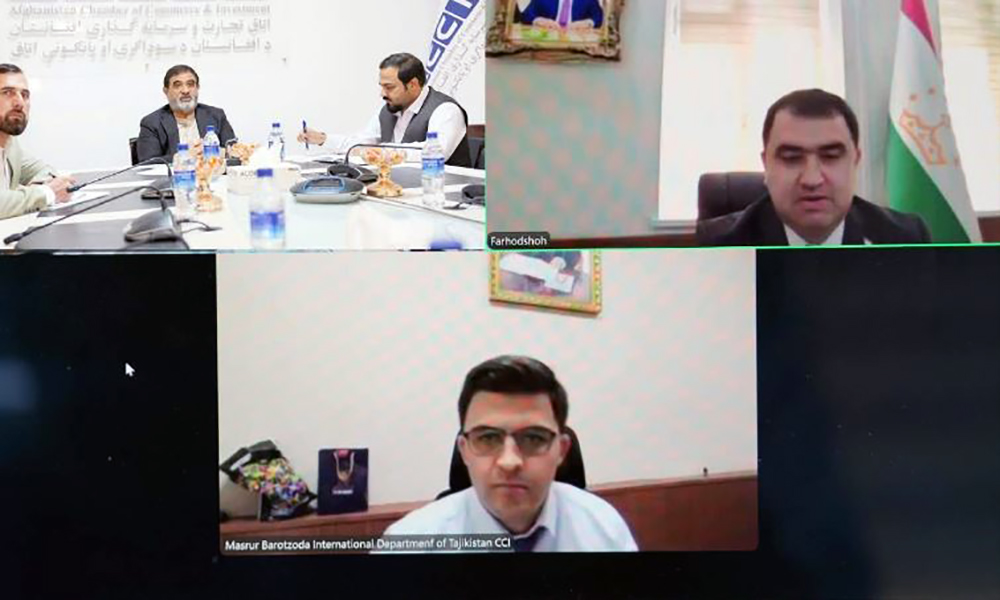
The heads of the chambers of commerce and industry of Afghanistan and Tajikistan have agreed to strengthen bilateral trade, promote investment and expand cooperation between the private sectors of the two countries.
Sayed Karim Hashemi, head of the Afghanistan Chamber of Commerce and Investment (ACCI), held an online meeting with Farhad Shah Rahman Alizoda, head of the Chamber of Commerce and Industry of Tajikistan, to discuss ways to expand economic ties.
The two sides discussed increasing trade exchanges, establishing direct links between traders and investors, and organizing joint economic programs.
Hashemi invited Tajik traders and investors to participate in the fifth Imam Abu Hanifa International Exhibition in Kabul.
Alizoda, meanwhile, invited an Afghan business delegation to attend a major trade and industrial exhibition in Dushanbe.
The two sides also stressed the importance of exchanging business delegations and developing long-term cooperation between the private sectors of Afghanistan and Tajikistan.
Business
Kazakhstan grain shipments to Afghanistan rise over 4-fold
Of the total, 7.2 million tons were transported for export, while 2.1 million tons were supplied to the domestic market.
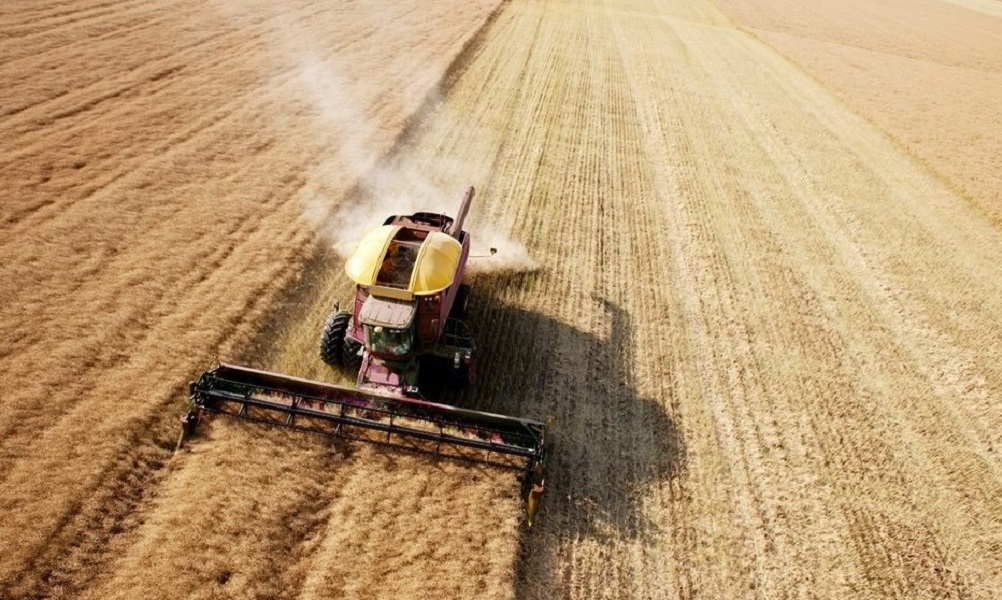
Grain shipments from Kazakhstan to Afghanistan increased 4.4 times in the first eight months of the year, reaching 655,000 tons, according to Kazakhstan’s Transport Vice Minister Zhanibek Taizhanov.
Speaking at a government meeting, Taizhanov said Kazakhstan transported 9.3 million tons of grain by rail during the period, a 13% increase compared with the same period in 2025.
Of the total, 7.2 million tons were transported for export, while 2.1 million tons were supplied to the domestic market.
Taizhanov said grain shipments to Central Asia increased by 37%, while shipments to China rose by 34%. Grain exports through Russian ports also increased by 9%.
Meanwhile, combined fodder exports rose by 38% to 2.6 million tons.
Earlier, Kazakhstan’s Vice Minister of Agriculture Azat Sultanov said the country plans to commission 15 additional vegetable storage facilities by the end of 2026, with a combined capacity of 129,000 tons.


Afghanistan to face Pakistan, India and Australia at 2027 Cricket World Cup

Saudi-led coalition says Houthis attacked power station for Prophet’s Mosque in Medina

UN expert calls for accountability after Pakistani airstrikes kill civilians in Afghanistan

Tahawol: Pakistan’s airstrikes on civilians in Afghanistan discussed

Arman FC crush Toofan Herat 4-0 in ACL clash

Saudi energy group signs major Afghanistan deals covering gas exploration and pipeline plans

Iranian clubs to face Gulf opponents at neutral venues in Asian Champions League Elite

Khalilzad: Afghanistan ready to attract major investment

El Niño likely to intensify, may become strongest ever recorded, WMO says

Khyber Chamber demands reopening of Torkham crossing
Tahawol: Pakistan’s airstrikes on civilians in Afghanistan discussed

Tahawol: Improvement in Afghanistan-China relations discussed

Saar: Expanding ties with regional and global countries discussed

Tahawol: Absence of Afghanistan’s envoy at UNGA discussed

Saar: Assessment of war between Afghanistan and US discussed
-

 Latest News5 days ago
Afghanistan says 28 killed, 32 captured in Nuristan operation
-

 Sport5 days ago
Afghan bodybuilder Ali Bilal finishes runner-up at Mr Olympia for third straight year
-
 Sport4 days ago
Afghanistan vs India Asian Games quarter-final abandoned without a toss
-
 Latest News5 days ago
UNDP, UN Women launch financing initiative for Afghan women entrepreneurs
-
 Latest News5 days ago
Germany reports 488 Afghans for possible deportation, 267 have no criminal convictions
-
 Regional4 days ago
Floods, landslides kill 56 in India and 14 in Nepal
-
 World4 days ago
Trump says men arrested at UK air base used by US planned ‘big damage’
-
 Regional3 days ago
US, Iran separately talk with mediators in latest bid to end war