
Latest News
US understands importance of Chabahar Port for Afghanistan: India

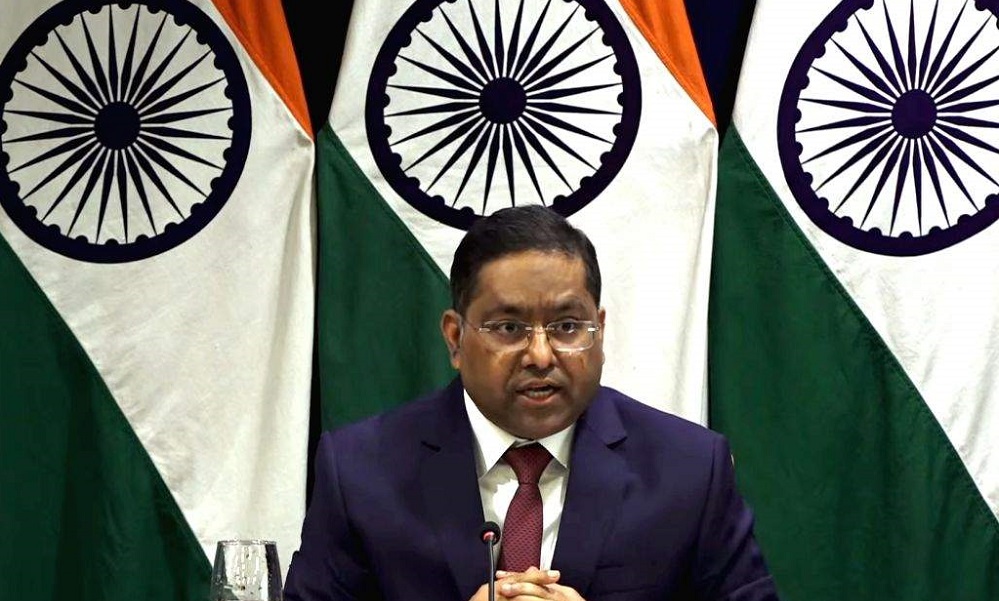
The United States understands the importance of Chabahar Port for continued humanitarian supplies to Afghanistan and to provide the country economic alternatives, India’s foreign ministry said on Friday.
India recently signed a 10-year agreement to develop and operate Iran’s strategic Chabahar Port as New Delhi aims to boost trade ties with landlocked Afghanistan and Central Asian countries, bypassing ports in its western neighbour and arch foe Pakistan.
But the deal has prompted a thinly veiled threat of sanctions from the United States, with whom India has developed close economic and military ties in recent decades.
India’s foreign ministry spokesman, Randhir Jaiswal, noted that since 2018, India has supplied 85,000 metric tons of wheat, 200 metric tons of pulses and 40,000 litres of pesticide Malathion to Afghanistan through Chabahar Port.
“The United States also has an understanding…understands the importance of Chabahar Port for continued humanitarian supplies to Afghanistan and to provide Afghanistan economic alternatives,” he said in a press conference.
“Our External Affairs Minister also spoke on this matter in several forums recently, where he said that we should not take a narrow view of this particular project, it has an important role to play as far as the region is concerned, connectivity is concerned, particularly for the landlocked countries in the area,” he added.
He also said that Russia‘s special envoy to Afghanistan, Zamir Kabulov, met with an Indian delegation led by Joint Secretary, J.P. Singh, who looks after Pakistan, Afghanistan, Iran, in the Ministry of External Affairs, essentially exchange of views on the ground and the situation and how the two countries look at the situation.
He said that they emphasized on the need to provide development assistance and humanitarian support to the people of Afghanistan.

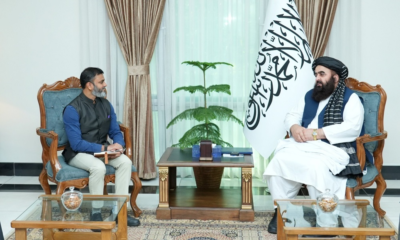


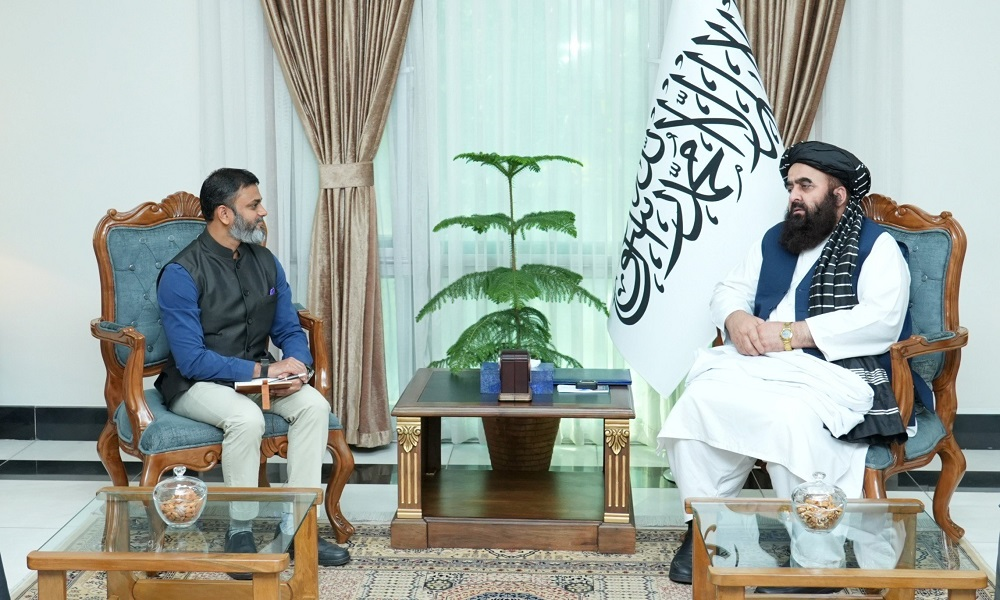
Amir Khan Muttaqi, Minister of Foreign Affairs of the Islamic Emirate of Afghanistan, met with Yatin Patel, India’s chargé d’affaires in Kabul, on Wednesday.
The Ministry of Foreign Affairs said Muttaqi emphasized that, in line with its balanced foreign policy, the Islamic Emirate attaches importance to relations with India.
Referring to the growing volume of trade between the two countries, he stressed the need to strengthen communication and cooperation between Afghanistan’s and India’s public and private sectors, adding that cooperation should be expanded to make better use of existing capacities.
Meanwhile, Yatin Patel said India seeks to expand its relations and engagement with Afghanistan in the economic, political and humanitarian fields.
Muttaqi also wished Patel success in his new assignment.
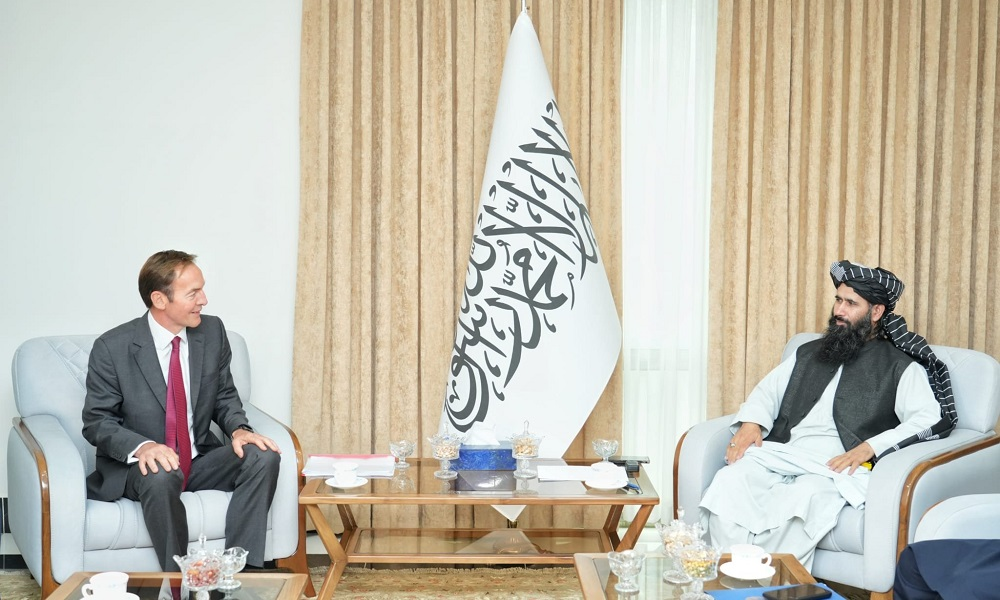
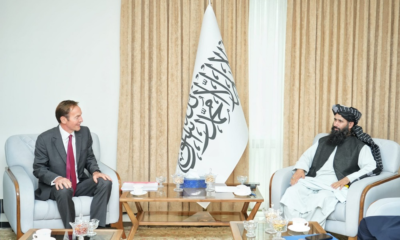
Mohammad Naeem, Deputy Minister for Finance and Administration at the Ministry of Foreign Affairs of the Islamic Emirate of Afghanistan, met on Wednesday with Richard Lindsay, the UK’s Special Representative for Afghanistan.
The Ministry of Foreign Affairs said the two sides discussed Afghanistan’s political, economic and security situation, regional stability, humanitarian assistance and consular services.
Naeem expressed appreciation for the UK’s humanitarian assistance and cooperation with Afghanistan and stressed the importance of continuing cooperation between the two sides.
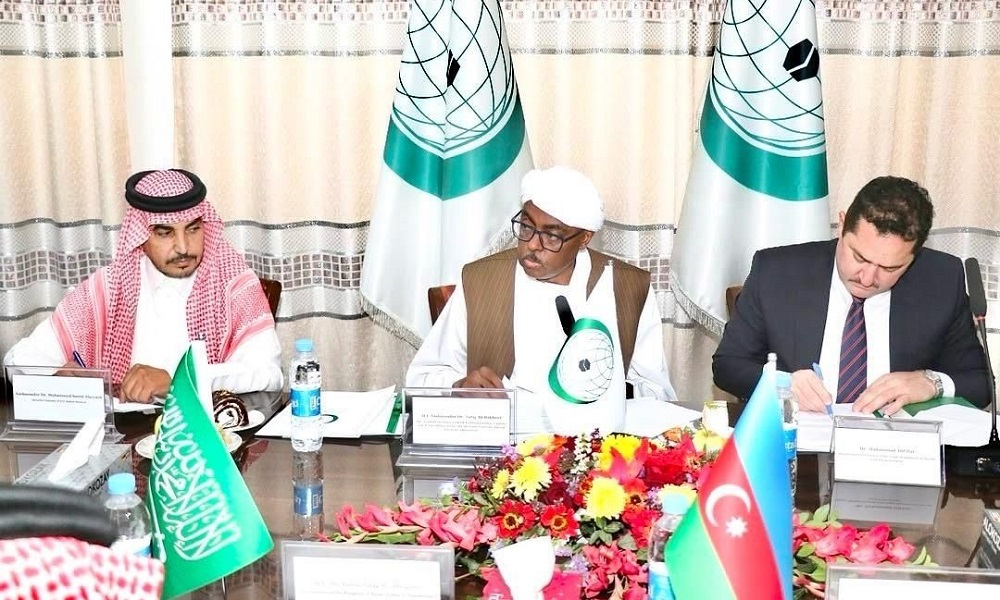
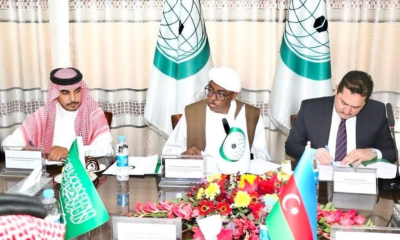
The Organization of Islamic Cooperation’s (OIC) Special Envoy to Afghanistan, Ambassador Dr Tarig Ali Bakheet, has briefed ambassadors and heads of mission from OIC member states in Kabul on the outcomes of his official visit to the country.
The briefing followed meetings with Afghanistan’s authorities and international partners, focusing on humanitarian assistance, counter-terrorism efforts, healthcare, education and measures to improve livelihoods.
According to the OIC, discussions also explored opportunities to strengthen cooperation in addressing Afghanistan’s humanitarian and development challenges.
Bakheet emphasised the need for OIC member states to coordinate their efforts and maintain cooperation to support the Afghan people, particularly in meeting the country’s ongoing humanitarian needs and development priorities.
The meeting also provided an opportunity for diplomats to exchange views on the OIC’s current activities in Afghanistan and discuss potential areas for future engagement.
The OIC, a grouping of Muslim-majority countries, has continued to engage on Afghanistan through diplomatic contacts and humanitarian initiatives, with a focus on supporting the population and addressing the country’s social and economic needs.
The briefing comes as Afghanistan continues to face significant humanitarian and economic challenges, making international assistance and coordination important for the delivery of essential services and the improvement of livelihoods.


FM Muttaqi says IEA values ties with India under its balanced policy

Afghanistan and UK stress expanding bilateral cooperation

OIC envoy briefs Kabul diplomats on talks with Afghan authorities

Afghan delegation attends 41st international exhibition in Indonesia

Afghan official says Durand Line crossings to remain closed until Islamabad accepts demands

Cricket Bonanza: Afghanistan set for packed international schedule

UN warns of mounting humanitarian and human rights pressures in Afghanistan

Afghanistan says 28 killed, 32 captured in Nuristan operation

CNN, MS NOW and Politico sue Trump, challenging White House ban

Silk Road highway in Wakhan corridor now reaches the China border

Tahawol: Warnings over worsening insecurity in Pakistan discussed

Saar: Concerns over potential return of US military bases to Afghanistan discussed

Tahawol: Kabul’s criticism of Islamabad’s policy toward Afghanistan

Saar: Pakistan deploying army in KP

Tahawol: EU appointing new envoy for Afghanistan
-
 Latest News4 days ago
Pakistan issues new directives for Afghan medical students and doctors
-

 Latest News4 days ago
Iranian lawmaker praises Afghanistan’s support, accuses Pakistan of ‘hypocrisy’
-
 World5 days ago
US imposes sanctions on ICC amid dispute over international prosecutions
-
 Regional3 days ago
Houthis warn airlines to avoid Saudi airports after deadly Riyadh attack
-
 Sport5 days ago
Bangladesh reach 317/8 on Day One against Afghanistan in Test match
-
 Business4 days ago
Afghan-Austrian partnership aims to boost carpet exports to European markets
-
 Sport3 days ago
Afghanistan Champions League second half to kick off on October 16
-

 World2 days ago
One dead in new attack on Saudi airport, a day after Houthi strike kills 13