
World
US announces $5.9 billion in military and budget aid to Ukraine
Washington has separately provided approximately $61.4 billion in security assistance to Kyiv since the start of the war, according to the Pentagon.

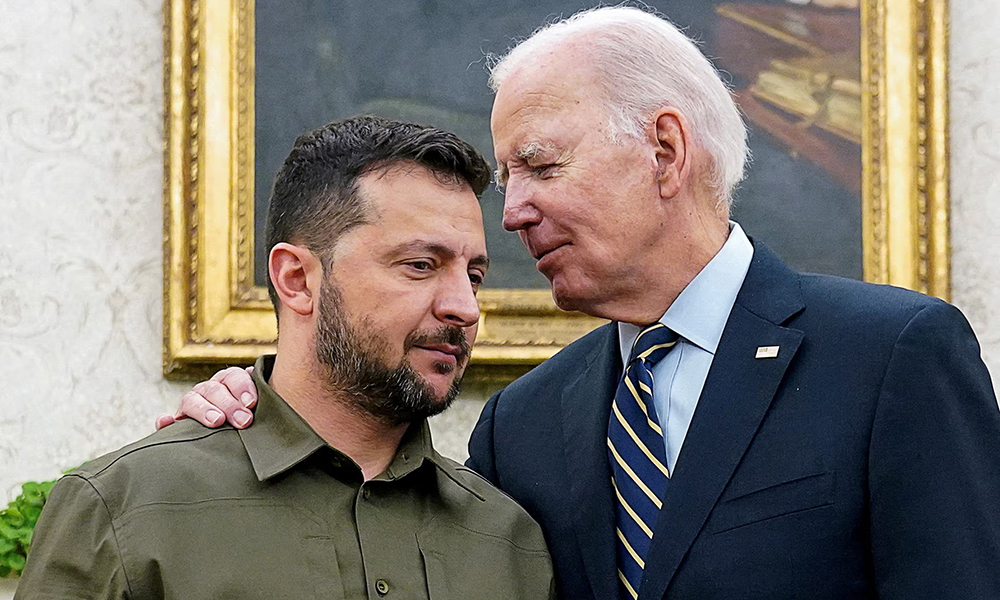
The United States on Monday announced nearly $6 billion in additional military and budget assistance for Ukraine as President Joe Biden uses his final weeks in office to surge aid to Kyiv before President-elect Donald Trump takes power, Reuters reported.
Biden announced $2.5 billion in additional security assistance for Ukraine.
Treasury Secretary Janet Yellen said the United States has made available $3.4 billion in additional budget aid to Ukraine, giving the war-torn country critical resources amid intensifying Russian attacks on Ukrainian civilians and infrastructure.
“At my direction, the United States will continue to work relentlessly to strengthen Ukraine’s position in this war over the remainder of my time in office,” Biden said in a statement.
Biden’s announcement includes $1.25 billion in military aid drawn from U.S. stockpiles and a $1.22 billion Ukraine Security Assistance Initiative (USAI) package, the final USAI package of Biden’s time in office.
Under USAI, military equipment is procured from the defense industry or partners, rather than drawn from American stocks, meaning it can take months or years to arrive on the battlefield.
Yellen said in a statement the direct budget assistance, provided in coordination with the U.S. Agency for International Development and the State Department, marked the final disbursement under the 2024 Ukraine Security Supplemental Appropriations Act, read the report.
The U.S. Congress has approved $175 billion in total assistance for Ukraine since Russia’s invasion of Ukraine nearly three years ago, according to the nonpartisan Committee for a Responsible Federal Budget. Recently the Russians have been using North Korean troops to bolster their fighting position.
North Korean forces are experiencing mass casualties on the front lines of Russia’s war against Ukraine, with 1,000 of their troops killed or wounded in the last week alone in Russia’s Kursk region, White House spokesperson John Kirby said on Friday.
Biden said the new assistance will provide Ukraine with “an immediate influx of capabilities that it continues to use to great effect on the battlefield and longer-term supplies of air defense, artillery, and other critical weapons systems.”
Nearly three years into the war, Washington has committed billions of dollars in aid for Ukraine, but it is uncertain if the aid will continue at that pace under Trump, who succeeds Biden on Jan. 20.
Trump has said he wants to bring the war to a swift end.
During the presidential campaign, Trump questioned the level of U.S. involvement in the conflict, suggesting European allies should bear more of the financial burden, Reuters reported.
Some of his fellow Republicans – who will control both the House of Representatives and Senate starting next month – have also cooled on sending more aid to Kyiv.
A U.S. official said the $3.4 billion in budget funding brings the total in U.S. budget aid to Ukraine to just over $30 billion since Russia’s invasion in February 2022. Most of those funds are used to keep Ukraine’s government running by paying salaries to teachers and other state employees.
Washington has separately provided approximately $61.4 billion in security assistance to Kyiv since the start of the war, according to the Pentagon.
Biden said the Defense Department is in the process of delivering hundreds of thousands of artillery rounds, thousands of rockets, and hundreds of armored vehicles “which will strengthen Ukraine’s hand as it heads into the winter.”
Yellen said continued economic aid for Ukraine was crucial to allow it to maintain government services and continue to defend its sovereignty, warning against moves to cut funding.
“Ukraine’s success is in America’s core national interest,” she said, vowing to continue to pressure Moscow with sanctions and to help position Ukraine to achieve a just peace.
“We must not retreat in this effort.”





World
Trump wants more economic pressure on Iran
The United States could continue targeting Iranian individuals and entities, as well as others in China and the Gulf, that are helping Tehran evade sanctions to collect revenues for its war effort.
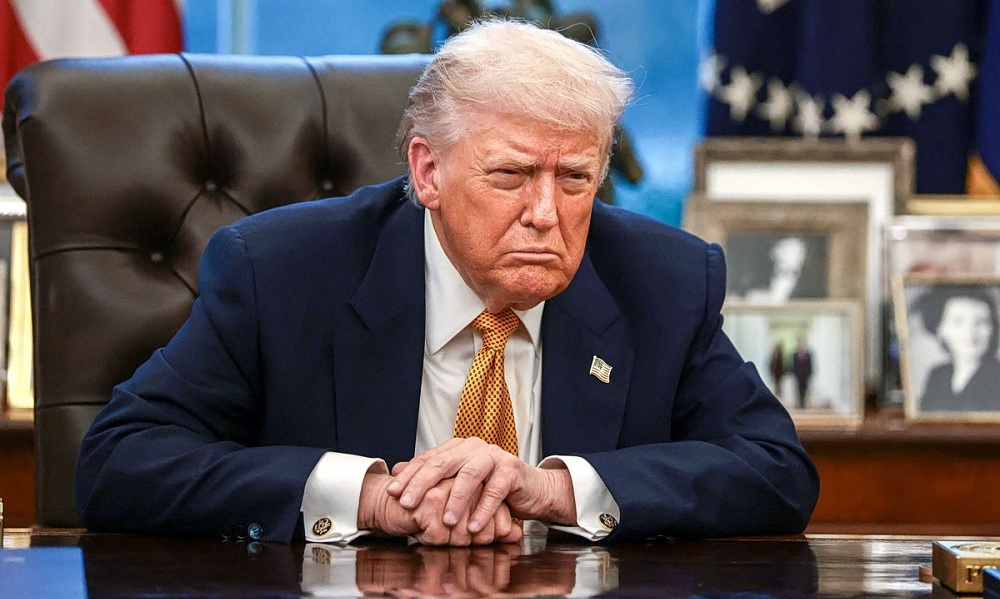
U.S. President Donald Trump on Friday vowed to hit Iran hard economically, a day after Treasury Secretary Scott Bessent said that Washington would impose measures on Tehran that have “never been seen” as soon as next week, Reuters reported.
The United States, United Nations and European Union have applied sanctions, implemented trade embargoes and frozen assets since the late 1970s over Iran’s nuclear program, human rights violations and support for militant groups.
Since the Iran war began in February, Washington has levied additional maritime, energy and financial sanctions and started a naval blockade.
Data from the U.S. Treasury Department’s Office of Foreign Assets Control (OFAC) shows the agency has imposed sanctions on more than 1,000 people, vessels and aircraft since Trump began his second term.
Recent measures have targeted Iran’s shadow oil fleet; shipping insurers; entities and people enabling Iran’s acquisition of weapons; and digital exchanges, freezing an estimated $500 billion in Iran-linked cryptocurrency.
Chinese independent refineries known as “teapots” account for a quarter of Chinese refinery capacity. They operate with narrow and sometimes negative profit margins.
China buys more than 80% of Iran’s shipped oil, according to 2025 data from analytics firm Kpler. Independent refiners absorb much of this trade, exposing them to so-called secondary measures that penalize entities helping a primary sanctions target.
Past U.S. sanctions have deterred larger independent refiners from buying Iranian oil. But the independent refineries are somewhat immune since they have little exposure to the U.S. financial system, sanctions experts say.
OFAC has imposed secondary sanctions on smaller China- and Hong Kong-based entities accused of processing billions of dollars in Iranian oil and helping to fund weapons procurement.
Treasury has warned two larger Chinese banks they could face secondary sanctions if Iranian funds were found moving through their systems, but has stopped short of designating them.
Hitting those two banks, which U.S. officials have not publicly identified, or imposing other sanctions could have a chilling effect on bigger financial institutions, sanctions experts said, although they warned it could also trigger retaliatory actions by Beijing, read the report.
Trump administration officials have sought to play down tensions between Washington and Beijing ahead of an expected meeting between Trump and President Xi Jinping later this year. They worry that China could curtail exports of critical minerals that are essential to advanced technology production at a time when the U.S. and Western allies are still trying to develop their own supplies.
The United States could continue targeting Iranian individuals and entities, as well as others in China and the Gulf, that are helping Tehran evade sanctions to collect revenues for its war effort.
Treasury recently issued sanctions against firms that are springing up to facilitate Iran’s trading of oil revenue for imports. But such measures amount to a “whack-a-mole” approach that has not altered Iran’s behavior, said Brett Erickson, managing principal of Obsidian Risk Advisors, noting that Tehran simply creates new entities to replace them.
Miad Maleki, a sanctions expert with the Foundation for Defense of Democracies, said Bessent was likely signaling a sharpened enforcement push against oil shippers, purchasers and currency exchangers who help Iran pay for its imports.
Further aviation sanctions were also possible, aimed at degrading Iran’s ability to move trade now that the U.S. has blockaded shipping via the Strait of Hormuz, he added.
Some U.S. and Israeli officials have floated the prospect of a land blockade, which would require assistance from Iran’s neighbors: Iraq, Turkey, Pakistan, Afghanistan, Turkmenistan, Azerbaijan and Armenia.
The Trump administration has varying degrees of closeness with all those countries except Afghanistan, but that border is mountainous and extremely difficult to patrol anyway.
Trump may have leverage over Pakistan, which recently sought a $10 billion currency swap line from Treasury, and Turkey, which is seeking to rejoin the U.S. F-35 warplane program.
A land blockade could increase pressure on the Iranian people by halting their imports of food, energy and textiles, but experts say such a move would be difficult to execute and might not result in protests or internal pressure, Reuters reported.
Trump has repeatedly threatened tariffs on goods from countries that do business with Iran, although the Supreme Court struck down the legal basis for such taxes.
The Senate passed a sweeping Russia sanctions bill last week that included new Iran sanctions and would give Trump new tariff powers that he could potentially use against countries that aid Iran’s commerce and weapons procurement.
That legislation must still pass the U.S. House of Representatives, which could prove challenging given widespread concerns among Democrats and some Republicans about the tariff measures.
World
Lebanon says Israeli strikes in south of the country kill at least 11
Iran-backed Hezbollah said in a statement that the attacks would be “met with what they deserve”.
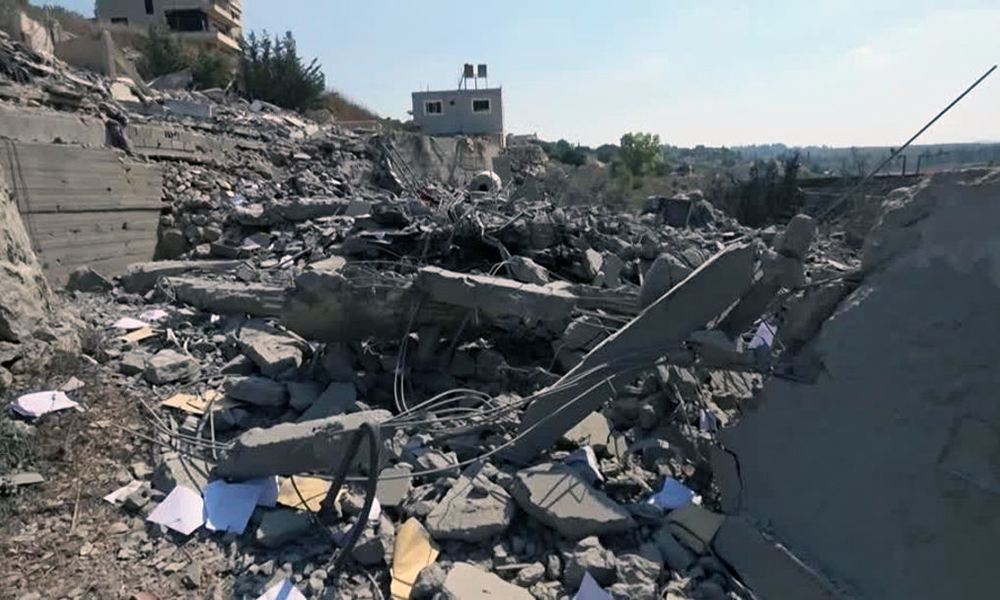
At least 11 people were killed in Israeli strikes in southern Lebanon on Saturday, the Lebanese health ministry said, some of the deadliest in the weeks since the country agreed to a U.S.-mediated peace framework with neighbouring Israel, Reuters reported.
The Israeli military said it struck Hezbollah infrastructure overnight in what it describes as a security zone in southern Lebanon in response to actions against its soldiers there.
Iran-backed Hezbollah said in a statement that the attacks would be “met with what they deserve”.
The framework leaves Israeli troops inside occupied southern Lebanon until Hezbollah is disarmed and the Lebanese army takes control, terms the group has rejected as surrender.
Lebanon’s official National News Agency said seven people were killed when Israeli warplanes struck a house in the southern village of Ansar, while four others were killed in a strike on the village of Deir El Zahrani.
The seven people killed in Ansar included three children and two women, NNA said, adding that a total of 19 people were wounded in the attacks.
At least 4,300 people have been killed in Lebanon in the latest round of hostilities since March 2.
NNA also reported other airstrikes across southern Lebanon, including on a strategic area north of the Litani River known as Ali al-Taher hill. One, targeting a valley next to Ansar, was the deepest strike into Lebanon in two months.
The office of Israeli Prime Minister Benjamin Netanyahu, in a statement on X, accused Hezbollah of violating the ceasefire and attacking Israeli soldiers leading to three injuries, read the report.
“The IDF (Israel Defense Forces) responded by striking the Hezbollah terror headquarters which ordered the attack,” the statement said. “Only later did the IDF learn that Hezbollah deliberately put civilians in that military compound.”
The Israeli military said in a statement it killed Ali Samir Al-Haj Hassan, a commander in Hezbollah’s elite Radwan Force unit and others when it struck “a central headquarters of the Radwan Force unit,” in Ansar.
“At the time of the strike, Hassan’s family was also present with him inside the military headquarters and, according to the claim, was harmed in the strike,” the statement added, emphasising that the family was not the target of the strike.
“The martyrs of the Israeli raid on the village of Ansar are not ‘military infrastructure’ and the women and children killed in it are not military targets,” Lebanon’s Prime Minister Nawaf Salam said in a post on X.
Nabih Berri, the speaker of Lebanon’s parliament, who is a Hezbollah ally, called in a statement for national unity and for the sponsors of the peace talks and ceasefire agreements to assume responsibility for stopping the war before it was too late.
Israel’s military seized a swathe of southern Lebanon during its war with Hezbollah earlier this year, triggered after the group fired at Israel two days into the Iran war. Israel has said it will keep its forces there to protect the north of the country from further attacks.
During a visit to southern Lebanon on Thursday, Defence Minister Israel Katz said Israel would not withdraw from areas under its control until Hezbollah was disarmed. A U.S. State Department official said a permanent Israeli military presence there was not consistent with commitments set out in the deal, Reuters reported.
Lebanese President Joseph Aoun, in a statement on X, said the attacks were a “clear message” aimed at the negotiations and U.S. efforts towards implementing the framework agreement.
Doron Spielman, international spokesperson for the Israeli Prime Minister’s Office, told Reuters Saturday’s strikes would “tighten up” negotiations.
“I think it should make the negotiations more serious and more real, because it highlights the whole reason we got into these negotiations in the first place,” he added.
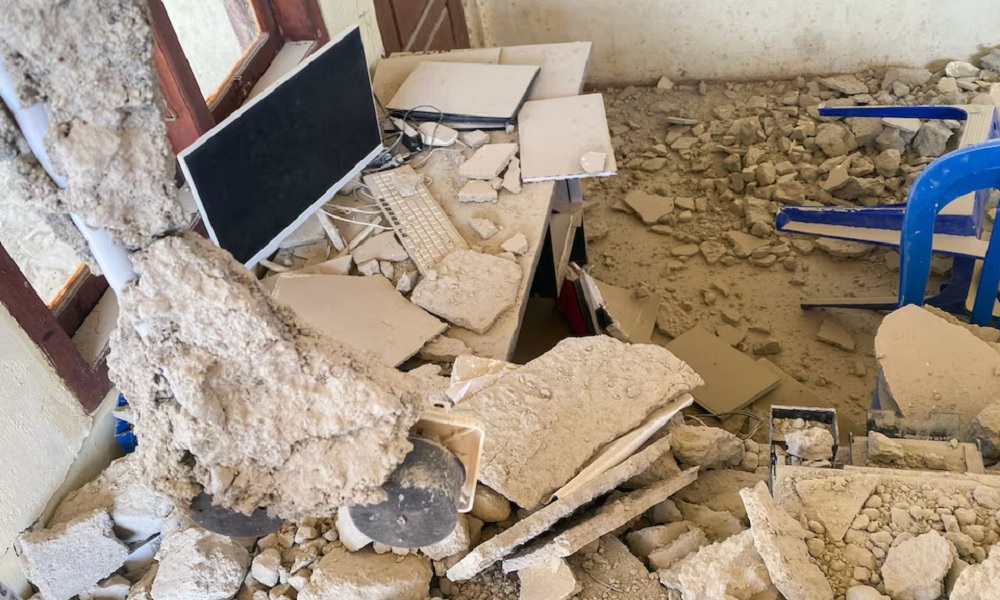
At least 38 people died after an earthquake of magnitude 7.7 and dozens of aftershocks struck off eastern Indonesia on Saturday, officials said, as rescue workers rushed to reach areas closest to the epicentre.
Tsunami waves of less than 1 metre (3 feet) were recorded in several areas of the Southeast Asian nation after the early morning tremor. The tsunami warning was lifted about three hours after the quake, Reuters reported.
“As of 15:00 (0800 GMT), the recorded figures are 38 fatalities, two people seriously injured, 11 with minor injuries,” Suharyanto, head of the National Disaster Management Agency, or BNPB, told a televised press conference. He added that approximately 2,000 people had fled to safer ground.
Earlier, rescuers in the port town of Maumere found 20 dead, six injured and two trapped under the rubble, said Fathur Rahman, head of the city’s rescue agency. Maumere is the main town in Sikka Regency on Flores Island in the east of Indonesia’s vast archipelago.
Suharyanto said residents remain trapped in several buildings in earthquake-affected areas and there are reports of landslides blocking several roads.
TEAMS HAVE YET TO REACH REGION CLOSEST TO EPICENTRE
Teams have yet to reach Nagekeo, the region closest to the epicentre, and communications signals there had been affected, Fathur told Reuters. Attempts to reach Nagekeo by car were blocked by landslides, while another team was attempting to go by ferry, he said.
About 2,000 residents in Nagekeo evacuated, and damage was reported to a number of houses, warehouses and government facilities, the BNPB said. Authorities also reported traffic congestion and power outages affecting parts of the regency, it said.
The governor of East Nusa Tenggara Province, Emanuel Melkiades Laka Lena, told a press conference at least five people died from collapsing rubble as they slept.
Parts of a building collapsed into dust and rubble as people screamed and ran in the street, a video on Facebook, verified by Reuters as being at a port in Maumere, showed.
“The quake was massive, the shock was so strong, we were resting at home with family,” said Nona, a 51-year-old resident of Talibura, a village in East Nusa Tenggara. “There were 13 of us inside the house and we all ran to save ourselves.”
Strong shaking was felt across East Nusa Tenggara, West Nusa Tenggara and parts of South Sulawesi, and residents in several areas reported shaking lasting about one minute, the BNPB said in a statement.
“Most of the people felt the shock and scattered out of their homes,” it said.
A hospital in the district of Ende in East Nusa Tenggara Province was moving patients outside, Kompas TV footage showed, and Kompas.com reported at least one landslide.
Indonesian geophysics agency BMKG recorded the first quake at 4.58 a.m. (2158 GMT) at a depth of 15 km (9 miles), followed by several aftershocks.
In 1992 the same area was hit by a magnitude-7.5 quake, causing extensive destruction at that time, the agency said.
Australia’s tsunami warning centre said the undersea earthquake would pose “no tsunami threat to the Australian mainland, islands or territories”.
Indonesia straddles the “Pacific Ring of Fire”, a seismically active zone, where different plates on the earth’s crust meet, creating a large number of earthquakes and volcanoes.


Darwish Rasooli named captain as Afghanistan unveil Asian Games squad

Juma Khan Fateh surrenders to IEA forces in Badakhshan

Afghanistan Supreme Court says rights of almost 119,000 women addressed over five years

Seven killed in temple stampede in India

Afghanistan floods affect more than 97,000 people so far this year

Pakistan’s governance system has ‘collapsed’: Mohsin Naqvi

Spain sweep FIFA World Cup player awards after historic triumph

First Chinese transit shipment arrives in Herat via Iran’s railway corridor

Afghanistan exports first stone shipment to US in $100,000 trade milestone

AFC confirms clubs for 2026/27 competitions; draw set for August 18

Tahawol: U.S. non-recognition of IEA

Saar: Tensions between Iran and the United States

Debate with Nooruddin Azizi, Minister of Industry and Commerce

Saar: Marking IEA’s fifth anniversary in Afghanistan discussed

Tawsia: $420M investment in TAPI gas distribution network in Herat discussed
-

 Latest News4 days ago
HesabPay unveils new visa card and digital payment app in Kabul
-

 International Sports4 days ago
AFC Champions League Elite draw nears as Al-Nassr seeded above Al-Hilal
-
 Latest News4 days ago
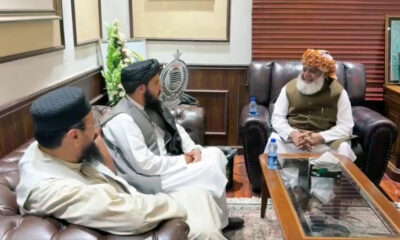
Afghan envoy invites Fazlur Rehman to embassy event marking IEA’s return to power
-

 Sport5 days ago
Kabul Premier League: Abasin Defenders thrash Band-e Amir Stars by 163 runs
-
 Regional4 days ago
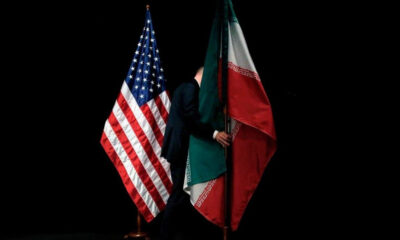
Iran says no progress on reviving interim peace deal with US
-

 Sport4 days ago
Afghanistan clinch Ireland series with record ODI score
-
 Latest News4 days ago
Afghanistan’s future depends on inclusive progress and sustained international engagement: UNAMA
-
 Latest News4 days ago
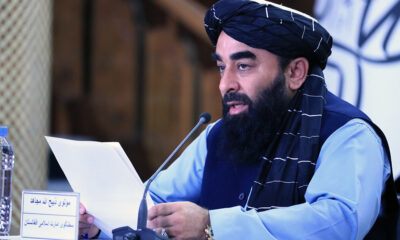
Mujahid rejects UN sanctions monitoring team’s report on foreign militant groups in Afghanistan