
Latest News
A look back at major security developments in Afghanistan in 1400


As the solar year 1400 comes to an end, Ariana News looks back at major security developments that took place in the country over the last 12 months.
Early in the year, fighting in Afghanistan escalated as foreign troops worked towards an end-August withdrawal date following the 2020 deal between the United States and the Islamic Emirate of Afghanistan (IEA).
IEA seized control of 24 districts in the first quarter of the year and were fighting for control in other districts.
Most of the districts seized by IEA were in the northern parts of the country, including Teshkan, Tagab, Darayem, Keshm, Warduj, Shahr-i-Buzurg, Raghestan, Jurm, Yaftal and Kalafkan.
During the period that the districts fell to the IEA, coalition members including Portugal, Slovenia, Spain and Sweden pulled out all their troops from the country.
IEA then stepped up its attacks to an extent that it stalled intra-Afghan peace talks.
On 11 Asad (August 2), parliament convened an emergency session where then president Ashraf Ghani called on the public to stand up against the IEA.
Fighting escalated however after Ghani’s appeal and just three days later, the IEA took control of the provincial capital Zaranj in the southern province of Nimroz.
In the north, more districts were coming under the control of IEA. Ghani travelled to northern Balkh province twice. There, he met with former Balkh Governor Ata Mohammad Noor and former Vice President Abdul Rashid Dostum to discuss ways to contain the IEA’s advance.
In the week following the seizing of Zaranj, the IEA also took the provincial capitals of Herat, Ghazni, Helmand, Kandahar and Ghor.
The offensive culminated with the capture of capital Kabul on 24 Asad (August 15), and the total collapse of the Ghani government.
While the fighting took a heavy toll on both parties, the number of casualties among civilians was also high.
According to a UN report, 1,659 civilians were killed and 3,523 others were wounded in the first half of 2021.
The report said that 39 percent of civilian deaths were caused by the IEA, while government forces were responsible for 23 percent of the deaths.
Looking at data on military deaths, 405 government forces were killed in the month of Sawr (May), and 703 in Jawza (June).
On the other hand, the defense ministry of the then government had announced that IEA lost 2,146 of its members in Sawr and 1,535 in Jawza, figures that were denied by IEA.
The conflict ended in Afghanistan once the IEA took over the capital, however, security incidents continued to cause civilian casualties.
As many as 200 civilians were killed outside the Kabul airport in an explosion claimed by Daesh during the chaotic foreign troop withdrawal process.







Latest News
Afghan defense forces stand ready to protect national sovereignty: MoD
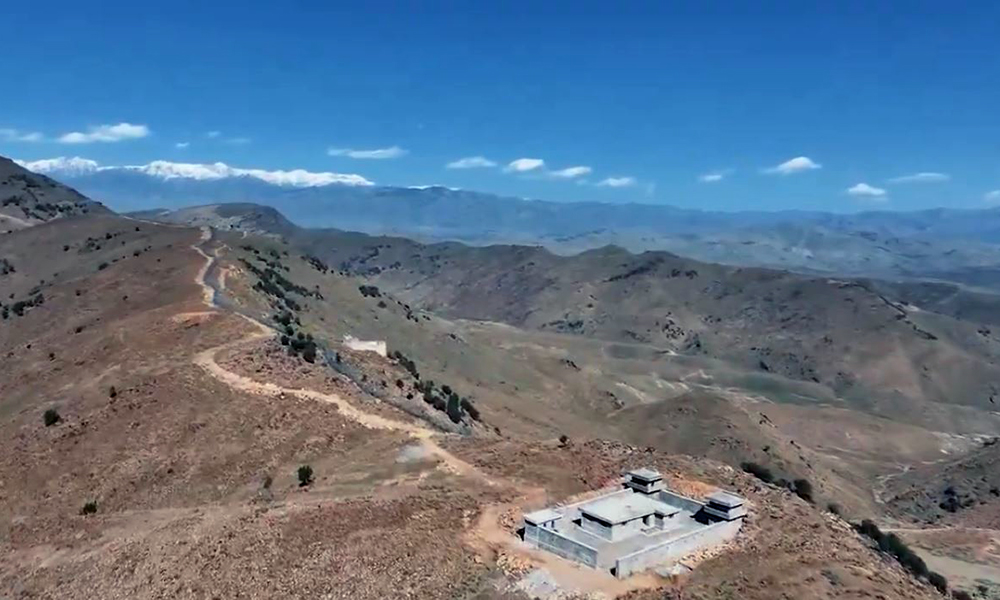
Sediqullah Nasrat, deputy spokesperson for the Ministry, released a video message stressing that Afghan forces stationed in the eastern zone are steadfast in their positions, remaining vigilant to defend the nation’s sovereignty against any external threats.
The Ministry of Defense of Afghanistan has reassured the nation that its defense forces are fully prepared to address any security threats along the country’s borders.
Enayatullah Khwarizmi, spokesperson for the Ministry of National Defense of the Islamic Emirate of Afghanistan, made a firm statement asserting that the protection of Afghanistan’s independence and national security is a fundamental responsibility for all members of the Afghan armed forces. He emphasized that this commitment is both a religious and patriotic duty.
In addition, Sediqullah Nasrat, deputy spokesperson for the Ministry, released a video message stressing that Afghan forces stationed in the eastern zone are steadfast in their positions, remaining vigilant to defend the nation’s sovereignty against any external threats. Nasrat further highlighted that the defense forces are leveraging all available resources to ensure the safety, security, and stability of Afghanistan, underscoring their unwavering dedication to serving the Afghan people.
The statements come at a time of heightened regional tensions, as Afghanistan continues to focus on safeguarding its borders and strengthening its defense capabilities.
Latest News
Amnesty International urges IEA to end education ban for girls
In a statement, the human rights organization called on the Islamic Emirate of Afghanistan to ensure that girls can safely return to schools and universities.

Amnesty International has raised serious concerns over the ongoing exclusion of Afghan girls from education, noting that with the start of the new academic year, girls above the sixth grade, including university students, remain barred from schools and higher education.
The South Asia office of Amnesty International highlighted that Afghan girls have been denied access to formal education for over four years, depriving a generation of young women of critical learning opportunities.
In a statement, the human rights organization called on the Islamic Emirate of Afghanistan to ensure that girls can safely return to schools and universities.
Amnesty International warned that continuing restrictions on girls’ education will have severe long-term consequences on the development of the country and the future of its youth.
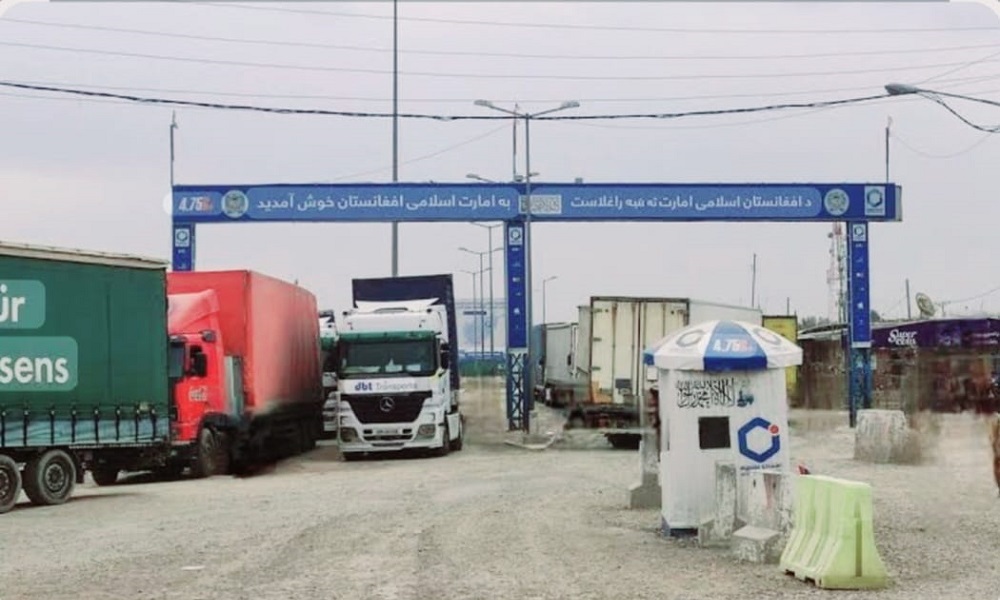
Mohammad Yousuf Saeedi, spokesperson for the governor of Herat, announced on Friday that Iranian cargo truck drivers will no longer need visas to enter Afghanistan.
Saeedi said that, by order of the leader of the Islamic Emirate, starting Saturday, Iranian transit vehicles will be allowed to enter Afghanistan without a visa or a “road pass.”
According to him, the implementation of this decision will reduce transportation costs and, as a result, lower the prices of goods.
Noor Ahmad Islamjar, the governor of Herat, visited the Islam Qala border crossing on Friday to review the implementation of this order. During the visit, he discussed the details of executing the plan with officials from relevant departments, including representatives from the Ministry of Foreign Affairs, Public Works, Customs, and Transport.
Starting Saturday (March 28), foreign cargo vehicles are expected to enter the Islam Qala border without the need for a visa or road pass, unload their goods, and then return to their destinations.
The statement added that implementing this plan could reduce transportation fares on one hand and, by lowering transport costs, help decrease the prices of goods on the other.
This process will create daily job opportunities for more than 1,000 people.


Afghan defense forces stand ready to protect national sovereignty: MoD

G7 foreign ministers demand an end to attacks on civilians in Iran war

Amnesty International urges IEA to end education ban for girls

Twelve US troops wounded in Iran strike on base in Saudi Arabia, US official says

Exclusive interview with Indrika Ratwatte, Deputy UN Special Representative for Afghanistan

Pakistani military jet downed in Afghanistan’s Jalalabad, pilot captured alive

Afghan Air Force conducts airstrikes in Islamabad, other cities

Prominent Muslim scholar issues fatwa calling for Afghanistan-Pakistan ceasefire

Afghan air force strikes key Pakistani military installations in retaliatory operation

IEA: Special circle in Pakistan has launched mission to destabilize region
Exclusive interview with Indrika Ratwatte, Deputy UN Special Representative for Afghanistan

Tawsia: Efforts to boost Afghanistan’s domestic production and economic diplomacy

Tahawol: Discussion on day 27 of Iran–US war

Saar: Islamic Emirate confident of Durand Line control

Tahawol: Efforts to release Mohammad Rahim from Guantanamo Bay Detention Camp
-
 Latest News2 days ago
Tajikistan shifts stance on Afghanistan amid rising border tensions
-
 Latest News4 days ago
Around 2.3 million tourists visited Afghanistan’s recreational areas during Eid: Ghufran
-

 Sport4 days ago
Afghanistan squad hit by withdrawals ahead of AFC Asian Cup Qualifiers
-
 Latest News4 days ago
Islamic Emirate releases American prisoner Dennis Coyle
-
 Latest News3 days ago
Two civilians killed, eight injured in fresh shelling by Pakistan in Kunar
-
 Regional4 days ago
US allies in Middle East ‘edging closer’ to joining conflict
-
 Latest News5 days ago
Airstrike on Kabul drug rehabilitation centre sparks legal concerns
-
 Regional4 days ago
Tehran rejects Trump’s claims of talks, accuses US of spreading ‘fake news’