
Latest News
Afghan academics living abroad for years return home

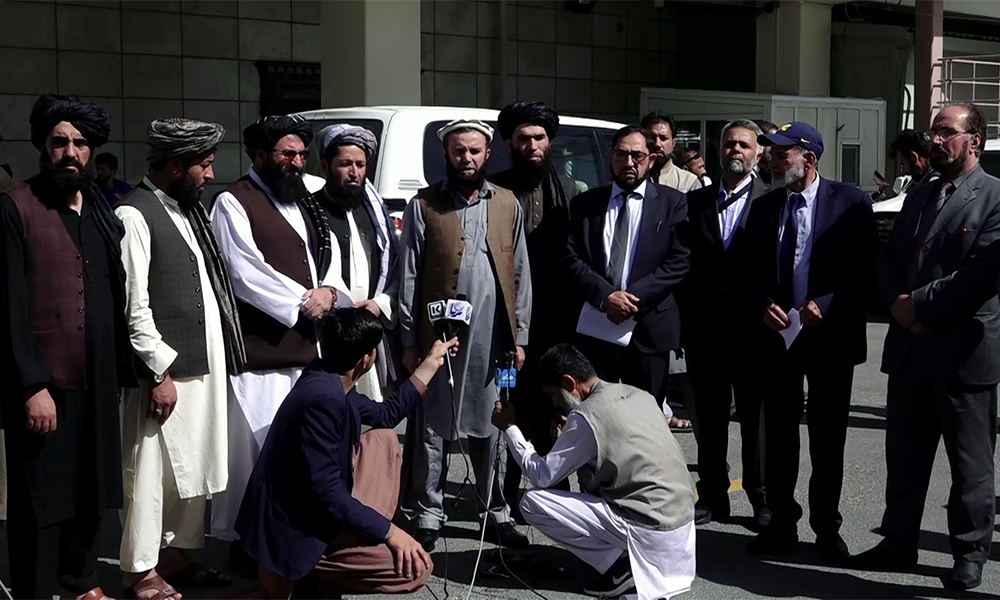
Seven prominent Afghan academics, who had been living outside the country for many years due to the lack of security, received a warm welcome on their return to Kabul on Monday.
They were welcomed home by Islamic Emirate of Afghanistan (IEA) officials at Kabul airport.
According to them, there is a host of academics, especially scientists, living abroad who will return home soon.
The returning academics expressed their intention to live in Afghanistan and cooperate with the Islamic Emirate.
“There are more than 200 of us in this group with bachelor’s and master’s and doctoral degrees, also among us we have people who in the government of Ghani and Karzai rejected the proposal of the ministries,” said Fazlullah Jalili, former director of education at Ariana Airlines.
“We have got suggestions and advice in various sectors that the Islamic Emirate can include in its policy and use to serve the homeland to solve the current problems in the country,” said Abdul Matin Safi, a medical specialist.
Welcoming the return of these Afghans, a spokesman for the new commission tasked with attracting Afghans to return home said that in the past few days, dozens of high- and low-ranking officials of the former government had contacted them and were willing to return home.
“Currently, dozens of people who worked in high and low positions in the previous regime have contacted us, and among them are governors, deputies, general managers and some political figures who will come to Kabul,” said Ahmadullah Waseek, a spokesman for the commission.
However, after recent developments and the fall of the previous government, hundreds of politicians, high-ranking government officials and academics left the country.
But the Islamic Emirate is trying to pave the way for the return of skilled Afghans through the commission.



Latest News
Afghanistan and Uzbekistan hold high-level bilateral meeting to boost trade and economic cooperation
Governor Abdullazov welcomed the initiatives of Minister Azizi, describing the Afghan people as friends and brothers, and provided an overview of the industrial and production capacities of Namangan Province.
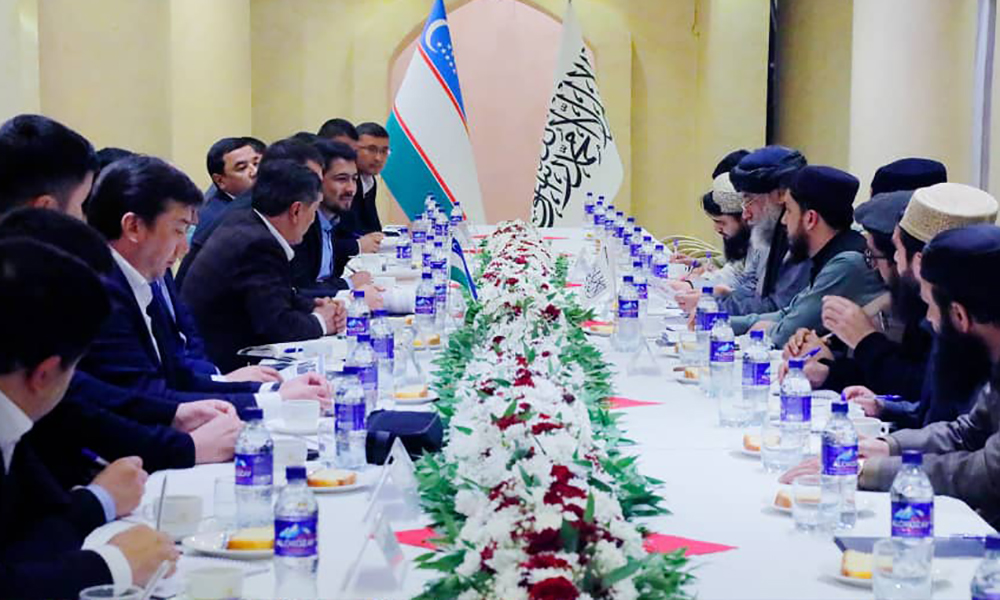
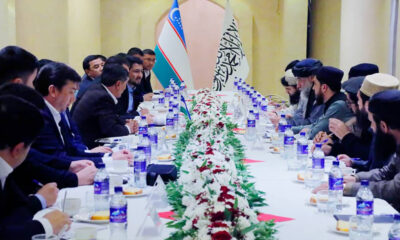
A high-level bilateral meeting between Afghanistan and Uzbekistan was held to strengthen trade and economic relations, particularly with the Namangan region of Uzbekistan. The meeting brought together Nooruddin Azizi, Minister of Industry and Commerce of the Islamic Emirate of Afghanistan, and Shukhrat Abdullazov, Governor of Namangan Province, along with their respective delegations.
At the outset of the meeting, Minister Azizi expressed appreciation for Uzbekistan’s four years of cooperation with the Islamic Emirate and the people of Afghanistan, emphasizing the country’s commitment to brotherhood and bilateral collaboration.
Governor Abdullazov welcomed the initiatives of Minister Azizi, describing the Afghan people as friends and brothers, and provided an overview of the industrial and production capacities of Namangan Province.
During the discussions, both sides explored cooperation in key sectors, including:
- Export and production of medicinal herbs and spices in Afghanistan
- Poultry farming capacity and joint ventures in the sector
- Investment and trade in precious and semi-precious stones, including exports
- Export of agricultural machinery and equipment, drip irrigation systems, and collaboration with Afghan farmers
Minister Azizi reaffirmed Afghanistan’s readiness for joint ventures and trade promotion between the two countries, highlighting investment opportunities in cold storage facilities, agricultural and medicinal product factories, and other sectors.
At the conclusion of the meeting, it was decided that a delegation from Afghanistan’s private sector would visit Namangan Province to identify trade opportunities. The Afghan delegation was also invited to attend the annual historic Flower Festival in Namangan, held every May.
Latest News
US report flags continued presence of anti-India militant groups in Pakistan
According to the report, Lashkar-e-Taiba, formed in the late 1980s, remains active in Pakistan’s Punjab region and Pakistan-administered Kashmir.
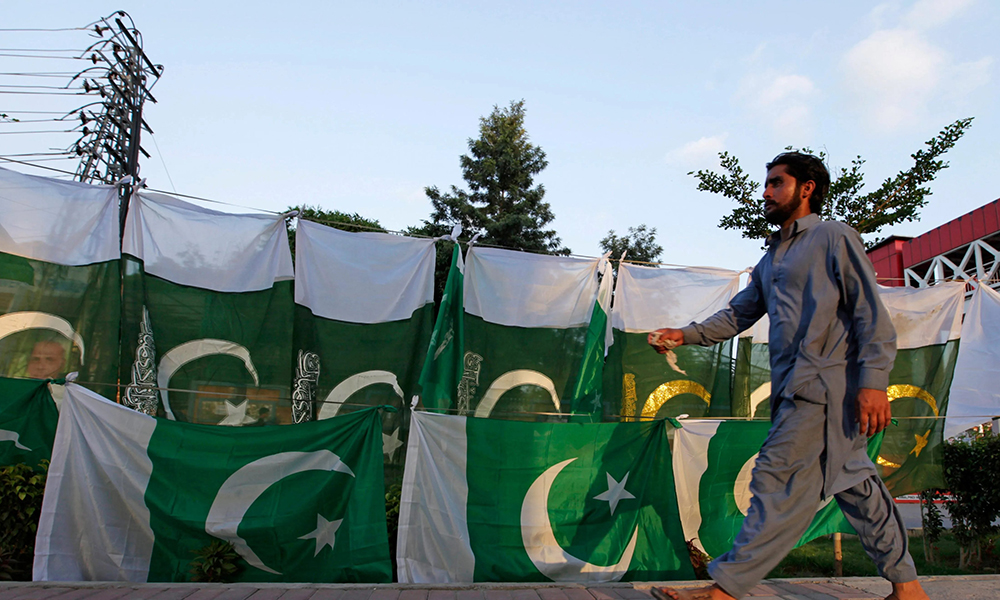
A recent assessment by the U.S. Congressional Research Service has underscored ongoing concerns that Pakistan remains a base for multiple militant organisations, including those targeting India and the disputed region of Jammu and Kashmir.
The March 25, 2026 “In Focus” report identifies 15 groups operating in or from Pakistan, many designated by the United States as Foreign Terrorist Organizations. It highlights the continued activity of India- and Kashmir-focused groups such as Lashkar-e-Taiba, Jaish-e-Mohammed, Harakat-ul-Jihad al-Islami, Harakat ul-Mujahidin and Hizbul Mujahideen, noting that these outfits continue to operate with relative freedom.
According to the report, Lashkar-e-Taiba, formed in the late 1980s, remains active in Pakistan’s Punjab region and Pakistan-administered Kashmir. Led by imprisoned figure Hafiz Saeed, the group has reportedly used alternate identities such as Jamaat-ud-Dawa to bypass sanctions and has been linked to major attacks, including the 2008 Mumbai assault.
The report also draws attention to Jaish-e-Mohammed, founded by Masood Azhar, which has operated across India, Afghanistan, and Pakistan. It highlights the group’s involvement in the 2001 Indian Parliament attack and notes its stated objective of integrating Jammu and Kashmir with Pakistan, as well as its declared hostility toward the United States.
In addition to regionally focused groups, the report points to the presence of global networks such as Al-Qaeda and Al-Qaeda in the Indian Subcontinent. It states that despite extensive counterterrorism operations, including airstrikes and intelligence-led missions, many US- and UN-designated groups continue to operate within Pakistan.
While acknowledging that Islamabad took some measures in 2023 to curb militant activity, the report raises concerns about the continued influence of certain religious institutions in spreading extremist ideologies. It also references Pakistan’s 2014 National Action Plan, noting that its goal of eliminating armed groups has yet to be fully realised.
Authored by South Asia expert K. Alan Kronstadt, the report describes Pakistan as facing a dual challenge—tackling internal security threats such as separatist unrest in Balochistan and instability in Khyber Pakhtunkhwa, while also being accused of allowing anti-India militant networks to persist.
It categorises militant groups in Pakistan into five overlapping types: globally oriented, Afghanistan-focused, India- and Kashmir-focused, domestically driven, and sectarian. The findings reinforce India’s long-standing position that cross-border militancy remains a major obstacle to regional peace, with New Delhi calling for stronger action against such networks.
Latest News
Peshawar to host key Pakistan-Afghanistan peace jirga amid ongoing tensions
The development comes against the backdrop of heightened tensions, including Pakistan’s ongoing military campaign, Operation Ghazab lil-Haq, against Afghanistan.
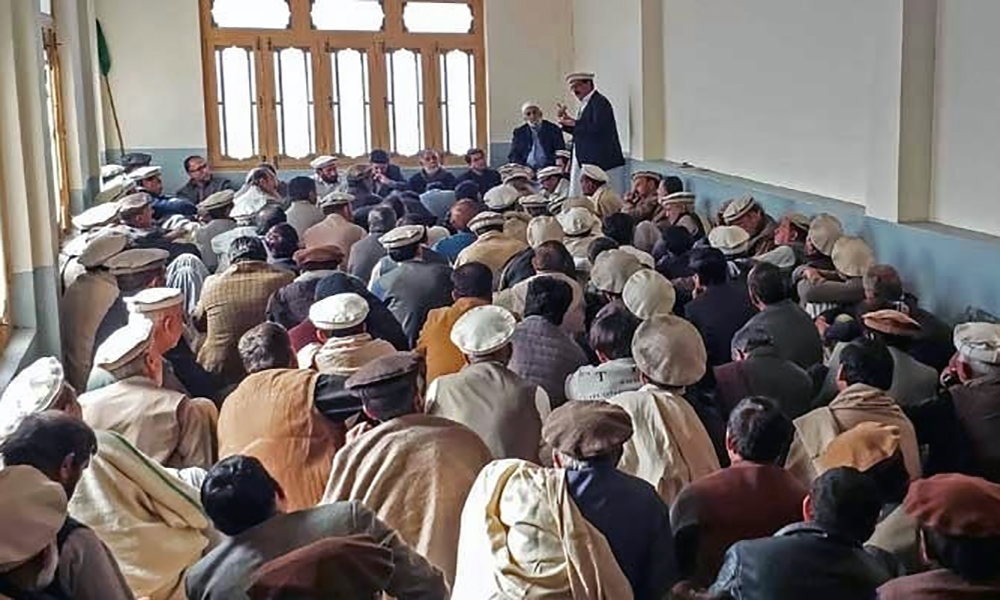
A significant Pakistan-Afghanistan peace jirga is set to take place in Peshawar on Tuesday, March 31, aiming to establish a joint framework for promoting peace, stability, and dialogue between the neighbouring countries.
Former KP chief secretary and Aspire-Khyber Pakhtunkhwa head Arbab Shezad Khan made the announcement in a joint press conference alongside Qaumi Islahi Tehreek head Haji Sohrab Ali Khan.
The development comes against the backdrop of heightened tensions, including Pakistan’s ongoing military campaign, Operation Ghazab lil-Haq, against Afghanistan.
According to Khan, the jirga will bring together a broad cross-section of society, including political leaders, tribal elders, religious scholars, civil society representatives, members of the business community, and media professionals. Prominent figures with a history of working toward Pak-Afghan reconciliation have also been invited.
He noted that discussions will centre on rebuilding trust, fostering mutual respect, and initiating meaningful negotiations for sustainable peace. A joint declaration endorsing peace efforts is expected to be issued at the conclusion of the gathering and shared with the governments of both Pakistan and Afghanistan.
Khan described the initiative as a critical step toward charting a unified path to stability, emphasising that current tensions between the two countries make such dialogue urgently necessary.
He further revealed that similar jirgas are being planned in Quetta and other locations, aiming to involve all stakeholders in shaping a long-term peace process for the region.
Participants are expected to call on the leadership of both nations to implement an immediate ceasefire, de-escalate tensions, and resolve disputes through dialogue and diplomatic engagement.


Afghanistan and Uzbekistan hold high-level bilateral meeting to boost trade and economic cooperation

US report flags continued presence of anti-India militant groups in Pakistan

Peshawar to host key Pakistan-Afghanistan peace jirga amid ongoing tensions

Afghanistan, Uzbekistan ink $514.8 million deals to deepen trade ties

Kohli shines as RCB open IPL title defence with dominant win

Pakistani military jet downed in Afghanistan’s Jalalabad, pilot captured alive

Prominent Muslim scholar issues fatwa calling for Afghanistan-Pakistan ceasefire

Afghan air force strikes key Pakistani military installations in retaliatory operation

IEA: Special circle in Pakistan has launched mission to destabilize region

IEA Supreme Leader issues Eid-ul-Fitr message urging unity and support for Islamic system

Tahawol: Concerns over spread of Middle East crisis discussed

Saar: Weakening relations between Kabul and Washington discussed

Exclusive interview with Indrika Ratwatte, Deputy UN Special Representative for Afghanistan

Tawsia: Efforts to boost Afghanistan’s domestic production and economic diplomacy

Tahawol: Discussion on day 27 of Iran–US war
-
 Latest News3 days ago
Tajikistan shifts stance on Afghanistan amid rising border tensions
-

 Latest News2 days ago
Russia deems US military presence in Afghanistan unacceptable
-
 Latest News2 days ago
IEA says Iranian drivers no longer need visas to enter Afghanistan
-
 Latest News4 days ago
Two civilians killed, eight injured in fresh shelling by Pakistan in Kunar
-

 Sport4 days ago
IPL 2026: RCB sold for $1.78 billion in landmark deal
-

 Sport3 days ago
Afghanistan to face Myanmar in crucial AFC clash
-

 Sport3 days ago
Myanmar trump Afghanistan 2-1 in Asian Cup Qualifier
-

 Business4 days ago
‘Made in Afghanistan’ expo opens in Tashkent