
Business
Afghanistan and Iran usher in new trade chapter after railway link inaugurated

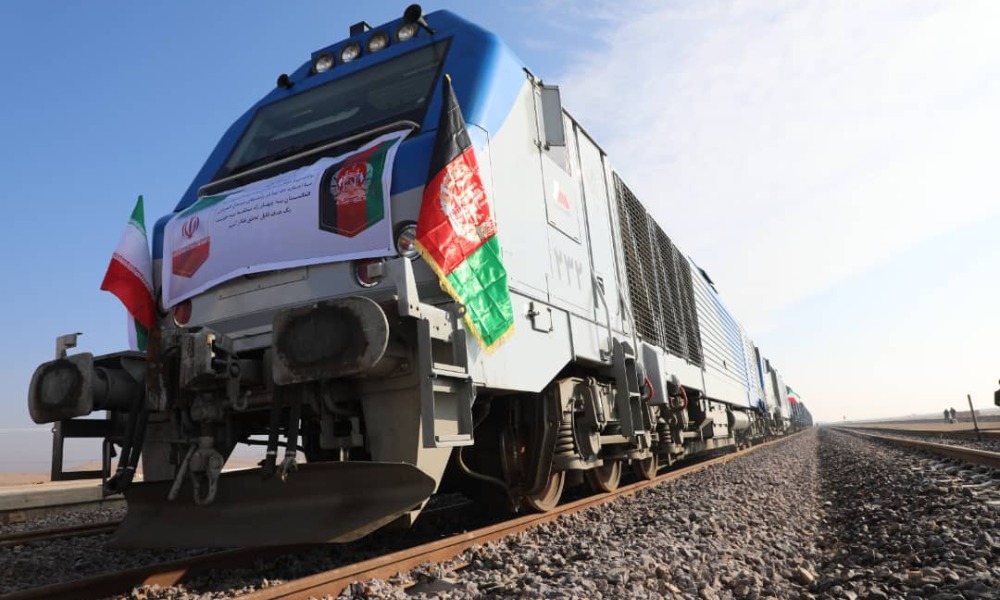
The Herat-Khawaf railway line, a major infrastructural project between Afghanistan and Iran, was officially inaugurated in the presence of the presidents of both countries, via video link, on Thursday.
For Afghanistan this was an historic moment as the railway line will open a new chapter in trade not only with Iran but also with other regional countries, Europe and the rest of the world.
The railway link is seen as an important step in regional cooperation, in addition to being a way to strengthen economic ties and relations between Afghanistan and Iran.
In his speech, President Ashraf Ghani said he had hoped to attend the inauguration in person but due to COVID-19 restrictions he was not able to.
Ghani said however that the railway line was a critically important project, not only for Afghanistan and Iran but also for the region and beyond.
“The opening of the Khawaf-Herat railway is a great step for the development and economic leap of Iran and Afghanistan,” Ghani said.
He said railway transport is the most efficient, important and cheapest means of transporting goods in Asia.
Iranian President Hassan Rouhani in turn said the opening of the Khawaf-Herat railway line strengthens Afghanistan-Iran ties.
Rouhani said that through this railway link, Afghanistan will be connected to European countries.
“With the Herat-Khawaf railway line, Afghanistan will be connected to European countries and also soon will be connected to the Chabahar railway line,” Rouhani added.
Atta Nasib, Head of Afghanistan Investment Facilitation Unit said that this will help turn Afghanistan into a transit hub.
“This railway between Afghanistan and Iran is a major economic and strategic achievement for both countries, which will connect us to European countries,” said Nasib.
Yamma Shams, General Director of Afghanistan Railway Authority said that it is estimated that eventually Khawaf-Herat railway line will carry 1,600 passengers a day.
The railway line cost $100 million dollars to build and currently spans 130 km in total – 70 km in Iran and 60 km in Afghanistan.
This railway line is strategically important as it gives Afghanistan easy access to Iranian ports at Chabahar and Bandar Abbas, as it connects into Iran’s existing railway grid.
Construction of the railway began in April 2007 and was due to finish in 2009, but was delayed.
However, last week a trial run was held and the first consignment of goods imported from Iran, including 500 tons of cement, successfully arrived in the country.
According to the reports Iran’s exports to Afghanistan are projected to reach $2.7 billion by March next year.







Business
Iran’s Khorasan Razavi governor calls for greater economic cooperation with Afghanistan
He further proposed the creation of free economic zones on both sides of the border, arguing that such initiatives could attract joint investment and boost commercial activity.
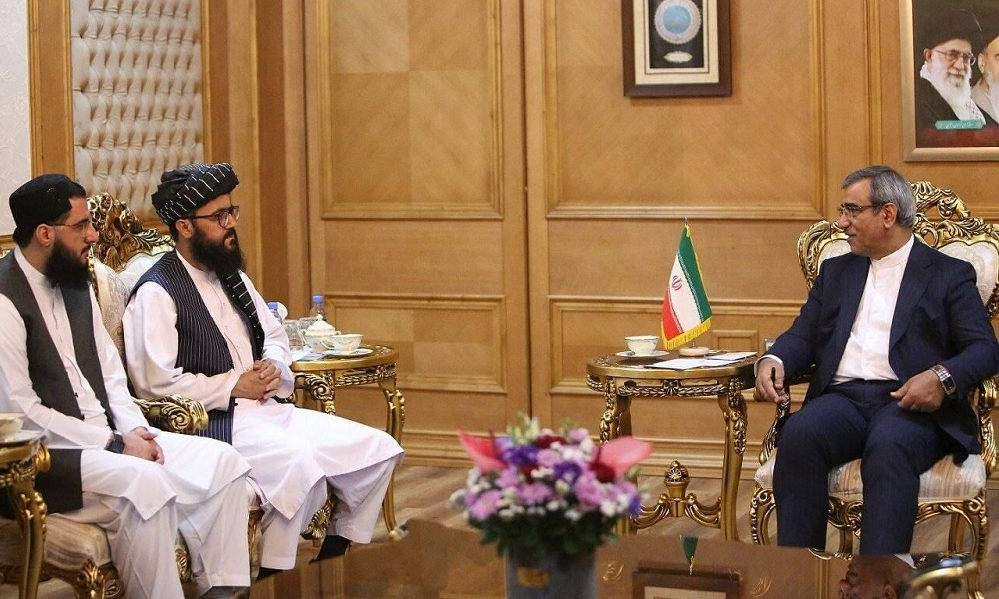
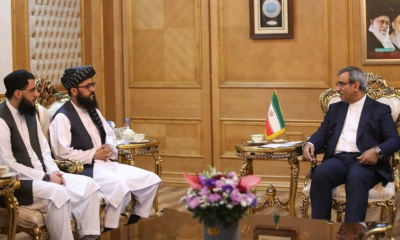
Gholam Hossein Mozaffari, governor of Iran’s Khorasan Razavi province, has called for expanded economic cooperation and joint investment between Iran and Afghanistan, saying the economic growth of both countries depends on stronger bilateral engagement.
Speaking during a meeting with Noor Mohammad Motawakel, Afghanistan’s consul general in Mashhad, Mozaffari said the deep cultural and economic ties between the two neighbors provide a strong foundation for enhancing trade and investment.
According to Iran’s state news agency IRNA, he described Afghanistan as an important economic partner and stressed the need to make better use of existing opportunities to strengthen cooperation between the two countries.
Mozaffari also highlighted the strategic importance of the Islam Qala border crossing, saying efforts are underway to improve infrastructure and streamline operations at the gateway in order to facilitate trade and cross-border movement.
He further proposed the creation of free economic zones on both sides of the border, arguing that such initiatives could attract joint investment and boost commercial activity.
Addressing the issue of Afghan nationals living in Iran, the governor said Tehran aims to regulate the entry, residency and employment of Afghan citizens through a transparent and legal framework. He added that plans are being pursued to issue work visas for businesspeople and establish clearer mechanisms for managing the presence of Afghan nationals in the country.
Mozaffari also emphasized the importance of safeguarding the dignity and rights of Afghan citizens in Iran while reducing irregular cross-border movements through stronger legal channels.
For his part, Motawakel called for the resumption of taxi services between Herat and Taybad, noting that operations were suspended following the recent conflict and have not yet resumed.
The Afghan diplomat also raised concerns about challenges facing Afghan nationals in Iran, including the high cost of health insurance and issues related to the transfer of Afghan prisoners, and urged authorities to address these matters.
Motawakel said implementing agreements reached between Kabul and Tehran would benefit both countries and contribute to expanding economic and transit cooperation.
Business
Afghanistan expands oil production as investment in Amu Darya fields grows
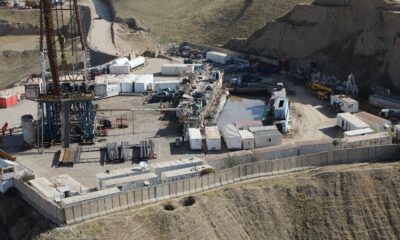
The Ministry of Mines and Petroleum says dozens of wells are currently operational in the Amu Darya region, with additional wells expected to become operational soon.
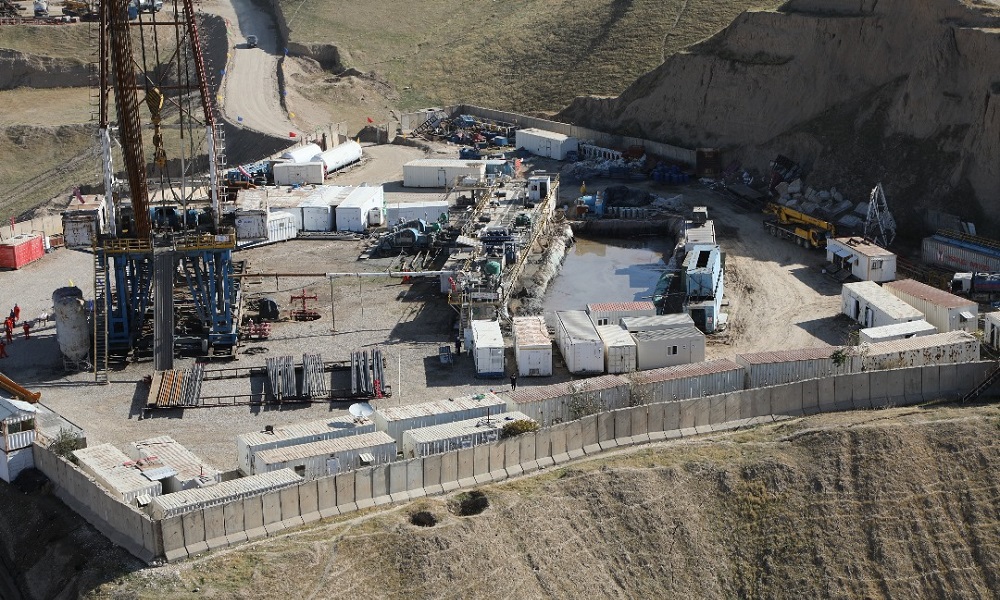
Afghanistan’s oil sector is seeing steady expansion, with officials reporting increased extraction activity in the northern Amu Darya basin and expectations of significantly higher output in the near future.
The Ministry of Mines and Petroleum says dozens of wells are currently operational in the Amu Darya region, with additional wells expected to become operational soon. The expansion is projected to raise daily production by several hundred tons compared with current levels.
The ministry’s spokesman Humayoun Afghan said the country holds substantial untapped oil potential, adding that efforts are underway to accelerate development of northern oil fields.
Officials from the Ministry of Mines and Petroleum also confirmed that plans are in progress to build oil storage facilities alongside the expansion of extraction capacity, aimed at strengthening Afghanistan’s broader energy infrastructure.
The ministry further said it is working with private sector partners to develop large-scale oil refineries, part of a broader strategy to increase domestic processing and reduce reliance on imported fuel products.
In the Amu Darya Basin, members of the oil refinery union say investment in the energy sector has risen in recent years, with investors expressing interest in further expanding refining and processing capacity if more opportunities become available.
Economic analysts argue that sustained investment in mining and energy, combined with targeted incentives for investors, could generate tens of thousands of jobs while boosting national revenues.
Private sector representatives add that expanding domestic production, storage, and refining could improve economic stability and reduce the outflow of foreign currency currently spent on fuel imports.
They are urging the Islamic Emirate to accelerate policy measures that facilitate investment and remove barriers to growth in Afghanistan’s oil and energy sector.
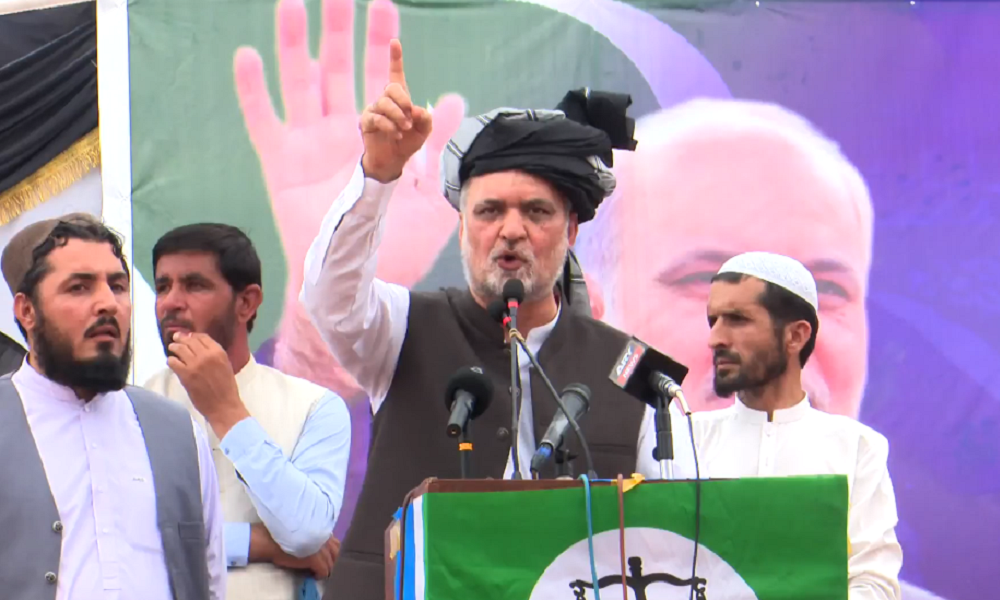
Hafiz Naeemur Rehman, chief of Pakistan’s Jamaat-e-Islami Pakistan political party, has called for the immediate reopening of crossings along the disputed Durand Line and the regularisation of trade with Iran, warning that prolonged border restrictions are worsening economic hardship for communities on both sides.
Speaking at a public gathering in Zhob, in Pakistan’s Balochistan province, Rehman said restoring cross-border trade was essential for reviving Pakistan’s struggling economy and reducing pressure on ordinary citizens already grappling with inflation and unemployment.
He proposed the formation of a joint committee made up of tribal elders, business leaders and local representatives to help restore trade, resolve disputes and maintain stability along the border region.
Rehman also called for the establishment of special trade zones along the Durand Line to facilitate legal commerce and create employment opportunities in areas heavily dependent on cross-frontier movement.
The Jamaat-e-Islami leader criticised current management policies, alleging that crossings were being opened selectively for the benefit of a small group of traders while thousands of transport workers, merchants and families continued to suffer financially from the closures.
Major crossings along the Durand Line have remained largely shut since October 11 following intense clashes between Afghan and Pakistani forces and Pakistani airstrikes inside Afghanistan that reportedly killed dozens of people on both sides.
The violence sharply escalated already strained relations between Islamabad and Kabul, with Pakistan accusing Afghanistan-based militants of carrying out cross-border attacks, claims the Afghan authorities have repeatedly denied.
The prolonged restrictions have severely disrupted trade and travel between the two countries, particularly affecting frontier provinces where local economies rely heavily on the movement of goods, fuel and agricultural products.
Traders and transport unions in both Afghanistan and Pakistan have repeatedly warned that continued closures are causing heavy financial losses and worsening shortages in some areas.


Tahawol: Review of Afghanistan-Russia military agreement

Saar: Afghanistan’s relations with regional countries discussed

Afghanistan to play in Diamond Jubilee Tournament opener against Maldives

Illegal mine collapses in China, killing five just days after Shanxi disaster

NRC says 3.2 million Iranians and Afghan refugees displaced by conflict

New Afghanistan-China transport corridor launched via Turkmenistan

Afghanistan signs $46 million deal to develop standard laboratory complexes

Germany to launch online visa system for Afghan study and work applicants in Pakistan

Large blast near Beit Shemesh part of pre-planned test: Israeli defense firm

Trump returns from China with stability but little progress
Tahawol: Review of Afghanistan-Russia military agreement
Saar: Afghanistan’s relations with regional countries discussed

Tahawol: US, Iran considering deal to end war

Saar: IEA seeking to ensure regional stability

Tawsia: Afghanistan’s weekly economic roundup reviewed
-

 Sport4 days ago
Afghanistan announce squad for India series
-
 Latest News4 days ago
Afghanistan, Russia sign military cooperation agreement
-
 Latest News4 days ago
‘We will never bow our heads before infidels,’ says IEA Supreme Leader
-
 Business3 days ago
Afghanistan expands oil production as investment in Amu Darya fields grows
-
 Latest News2 days ago
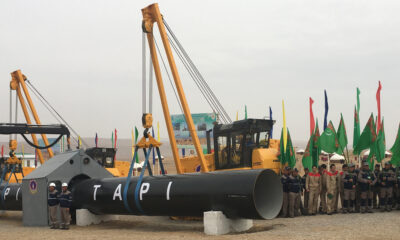
Work on TAPI project in Afghanistan ongoing and accelerating: Mujahid
-
 Latest News3 days ago
Mujahid calls for stronger Afghanistan-Russia relations during Moscow meeting
-
 Latest News3 days ago
Afghanistan calls for global cooperation on climate change as country faces rising environmental risks
-

 Sport4 days ago
ATN secures exclusive rights to broadcast Afghanistan Tour of India