
Latest News
Afghanistan could become a ‘forgotten crisis’, aid agencies warn
Humanitarian actors in Afghanistan assess that inaction from the international community is costing the most vulnerable Afghans dearly.

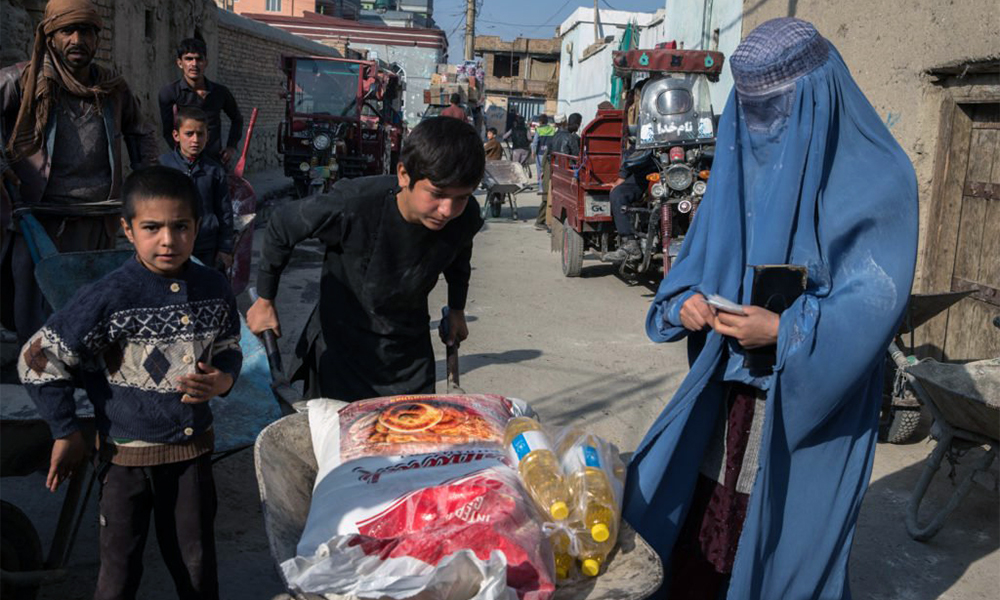
Heavily dependent on humanitarian aid, Afghans are trapped in cycles of poverty, displacement, and despair; and Afghanistan is at risk of becoming a forgotten crisis without international support, a group of 10 aid organizations said in a statement Tuesday.
The organizations stated that Afghanistan desperately needs long-term development assistance to address the root causes of poverty.
Signatories to the statement warned that shrinking humanitarian funding is adversely impacting people’s daily lives, and a lack of funding for medium and longer-term programming has only heightened underlying vulnerabilities, adding to the humanitarian burden.
“Already this year, 343 mobile health teams have shut down, which equals 52% of all mobile health teams. This has had a significant impact on the health and nutrition response, as populations are not able to access essential lifesaving services,” warned Action Against Hunger (ACF), CARE International (CARE), the Danish Refugee Council (DRC), International Rescue Committee (IRC), INTERSOS, Islamic Relief Worldwide (IRW), Norwegian Refugee Council (NRC), People in Need, Save the Children International, and World Vision International (WVI).
These agencies underscored that the ongoing crisis in Afghanistan cannot be addressed with humanitarian assistance alone and a comprehensive, sustained, and contextualized response from the international community is required. “Diplomatic engagement is crucial to creating an enabling environment in Afghanistan that will support upscaling international aid efforts to include development projects alongside emergency assistance,” the statement read.
“The current isolationist approach of most donor countries does not support durable solutions to the challenges faced by the people of Afghanistan, especially children, women, ethnic and other marginalized groups.”
Millions of Afghans continue to struggle in one of the world’s largest and most complex humanitarian crises, three years after the change in power.
While security has greatly improved in the country in this time, Afghanistan continues to experience shock after shock – the ongoing economic crisis, the legacy of decades of conflict, the impacts of climate change, and the gender crisis have taken a devastating toll on the country.
Humanitarian actors in Afghanistan assess that inaction from the international community is costing the most vulnerable Afghans dearly.
“Without rapid efforts to increase diplomatic engagement and longer-term sustainable funding, Afghans, especially women and girls, will be left to suffer for years to come.
“Poverty is nearly universal, and humanitarian needs are rising due to the ever-growing economic crisis, the impacts of climate change, the gender crisis, and diminishing aid,” the statement read.
In line with this, the organizations collectively called for an increase in humanitarian and diplomatic engagement with the Islamic Emirate of Afghanistan (IEA) to improve their ability to reach all people in need, provide aid effectively, efficiently, and equitably, and push the IEA to adhere to international human rights standards, including their obligations towards all genders of the population.
They also called for long-term relationship building and continuous engagement with the IEA in order to address Afghanistan’s most fundamental challenges.
“To avoid the country falling into deeper poverty and isolation, donors must bolster the return of development and longer-term programming and funding to build resilient communities that are less dependent on aid,” the statement read.
They also pointed out that donor governments should continue to reassure financial service providers that they are able to facilitate transactions into and within Afghanistan, increasing private and public confidence in doing business in Afghanistan and easing the current impediments to the transfer of funds into the country.
Currently, there are an estimated 23.7 million people in need of humanitarian assistance in Afghanistan and despite the severity of needs, only 25 percent of the $3.06 billion required for the humanitarian response has been funded so far this year.












Kazakhstan’s Foreign Minister Mukhtar Tileuberdi has called for pragmatic and coordinated international engagement with Afghanistan, saying the country’s long-term stability is closely linked to the security and sustainable development of Central Asia.
Speaking during the general debate of the 81st session of the United Nations General Assembly in New York on Friday, Tileuberdi said humanitarian assistance to Afghanistan remains essential but alone cannot break the cycle of poverty, displacement and dependency.
He said Kazakhstan supports a “pragmatic, coordinated and step-by-step” approach to international engagement with Afghanistan, with the United Nations playing a central role.
Tileuberdi also said Kazakhstan is working with the UN to operationalize the United Nations Regional Centre for the Sustainable Development Goals for Central Asia and Afghanistan in Almaty.
He said the success of the centre should be measured by the results and assistance it delivers to the region.


Abu Muslim Farah defeat Khurasan Faryab 2-0 in ACL season six

Saar: Concerns over Pakistan’s political crisis discussed

Afghanistan Champions League: Omar Zawak Herat beat Toofan Herat 1-0

Blast in Pakistan’s Dera Ismail Khan kills 11, injures 30

Ariana Afghan Airlines increases Kabul-Delhi cargo flights

Saudi energy group signs major Afghanistan deals covering gas exploration and pipeline plans

Trump floats idea of renaming Atlantic or Pacific Ocean

US hits Egyptian bank branches with Iran sanctions as war marks six months

Nepal flood rescue mission enters critical phase as thousands remain missing

Iranian clubs to face Gulf opponents at neutral venues in Asian Champions League Elite
Saar: Concerns over Pakistan’s political crisis discussed

Exclusive interview with Abdul Latif Mansoor, Minister of MRRD

Tawsia: Overview of Afghanistan’s iron mines

Tahawol: Discussion on fresh Pakistani airstrikes on Afghanistan

Saar: Calls for international support for Afghanistan discussed
-

 World5 days ago
CNN, MS NOW and Politico sue Trump, challenging White House ban
-

 Latest News3 days ago
Ariana Afghan Airlines ranks seventh among 45 Central Asian airlines
-

 Latest News4 days ago
UN reiterates call for respect for international law after Kunar airstrikes
-

 Regional3 days ago
US and Iran hold first talks since June after Trump’s ‘annihilation’ threat
-

 Latest News3 days ago
Silk Road highway in Wakhan corridor now reaches the China border
-

 Latest News4 days ago
Afghan Official: Pakistan’s airstrikes will not go unanswered
-

 Sport4 days ago
Afghan boxing referee heads to China for international festival
-
 Regional5 days ago
G7 foreign ministers call on Iran to stop arming Houthis