
Business
Afghanistan’ economic commission approves new policy for mineral processing, exports
Officials said the approved measures have been submitted to the Supreme Leader of the Islamic Emirate of Afghanistan for final approval.

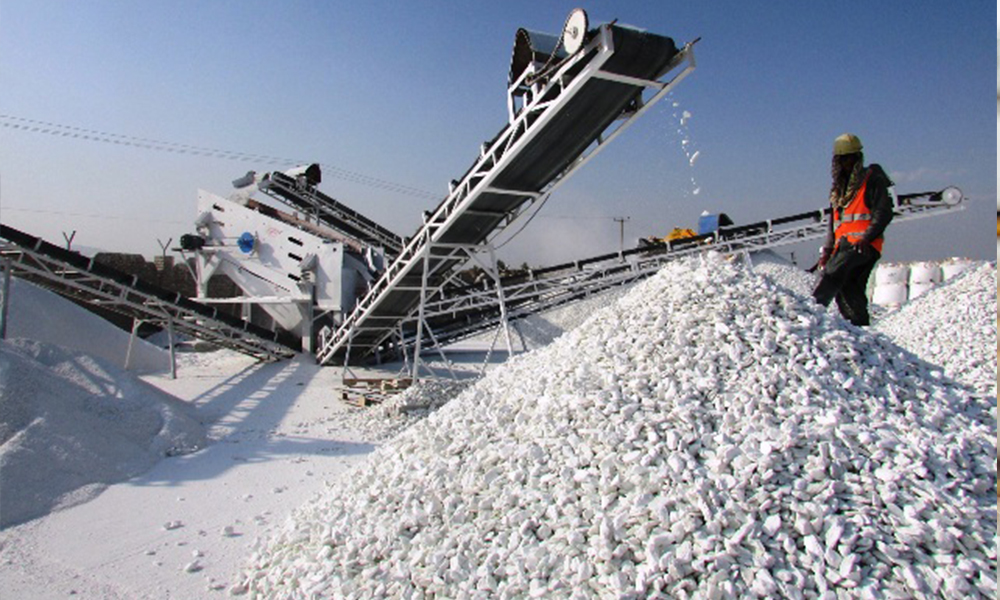
Afghanistan’s Economic Commission, chaired by Deputy Prime Minister for Economic Affairs Mullah Abdul Ghani Baradar, has approved a new policy governing the processing and export of the country’s mineral resources.
According to an official statement, the policy is designed to establish a standardized framework for mineral processing in line with national and international benchmarks.
It also seeks to attract domestic and foreign investment, improve coordination among government institutions, expand traders’ access to regional and global markets, and create jobs across the country.
The commission also endorsed a report from a committee tasked with evaluating plans for laboratory complexes at key border points.
Officials said the approved measures have been submitted to the Supreme Leader of the Islamic Emirate of Afghanistan for final approval.
Afghanistan has been stepping up efforts to boost exports and generate revenue from its vast natural resources.
The country is believed to hold significant reserves of copper, iron ore, rare earths, lithium, and precious stones, resources that could be crucial for regional and global supply chains.
The authorities have emphasized developing domestic processing capacity to add value locally rather than relying on raw material exports.
In recent months, the Islamic Emirate has signed agreements with domestic and foreign companies to explore and develop mining projects, while also promoting cross-border trade through new infrastructure and customs facilities.






Business
Afghanistan, Turkmenistan agree to establish joint road transport commission
The sides also agreed to establish a joint commission to address road transport issues and improve coordination.
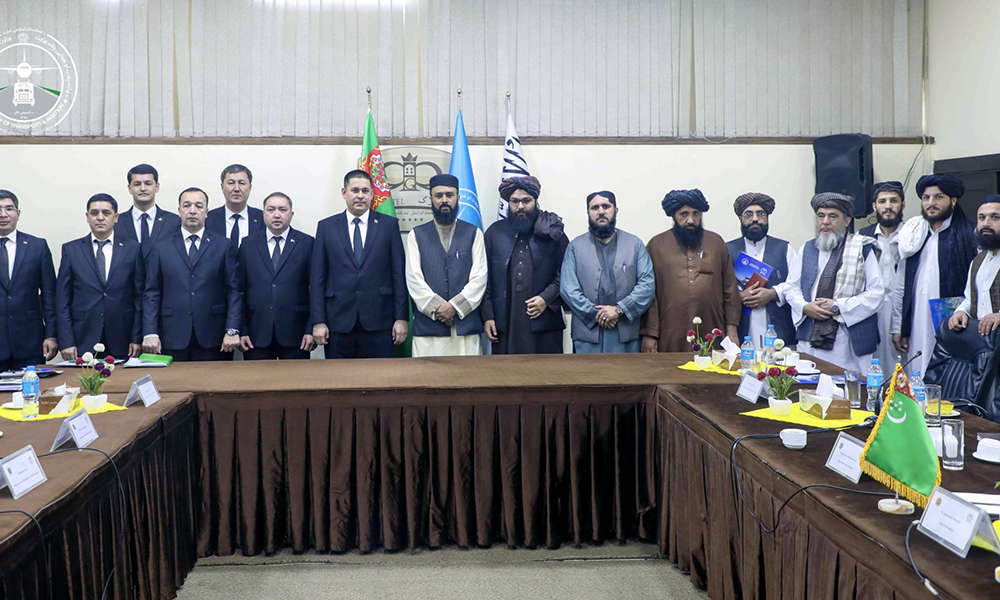
Afghanistan and Turkmenistan have agreed to establish a joint commission on road transport and facilitate transit between the two countries following two days of talks in Herat.
Afghanistan’s Ministry of Transport and Civil Aviation said the meeting brought together technical delegations from both countries to strengthen bilateral transport and transit cooperation.
The talks focused on easing visa procedures for Afghan and Turkmen drivers and traders, operationalising the Lapis Lazuli transit corridor and increasing the movement of transit vehicles between the two countries.
The sides also agreed to establish a joint commission to address road transport issues and improve coordination.
Representatives from Afghanistan’s ministries of foreign affairs, industry and commerce and the railway authority attended the talks, alongside the Ministry of Transport and Civil Aviation. Railway links, bilateral trade and wider transit cooperation were also discussed, with private-sector representatives expected to participate in future discussions.
The agreement comes as Turkmenistan works to strengthen its role as a regional transport and logistics hub, using its road, rail and Caspian Sea infrastructure to connect Central Asia with markets to the west and south.
A key part of that network is the International Seaport of Turkmenbashi, which links Turkmenistan with Azerbaijan and onward routes towards the South Caucasus and Europe.
Turkmenistan’s transport infrastructure also forms part of the wider Middle Corridor, or Trans-Caspian International Transport Route, connecting China and Central Asia with Azerbaijan, Georgia and Türkiye before reaching European markets.
For Afghanistan, the Lapis Lazuli Corridor is particularly important. It connects Afghanistan through Turkmenistan and across the Caspian Sea to Azerbaijan, Georgia and Türkiye, providing a potential route towards European markets.
Rail links such as the Herat-Torghundi line could further connect Afghanistan’s markets with Turkmenistan’s wider transport network.
The latest agreement puts road transport and transit facilitation at the centre of efforts by the two neighbours to expand trade and strengthen regional connectivity.
Business
TAPI gas deliveries to Afghanistan and Pakistan expected to begin in 2027
Turkmenistan regards TAPI as a key project for diversifying its gas exports and strengthening regional economic cooperation.
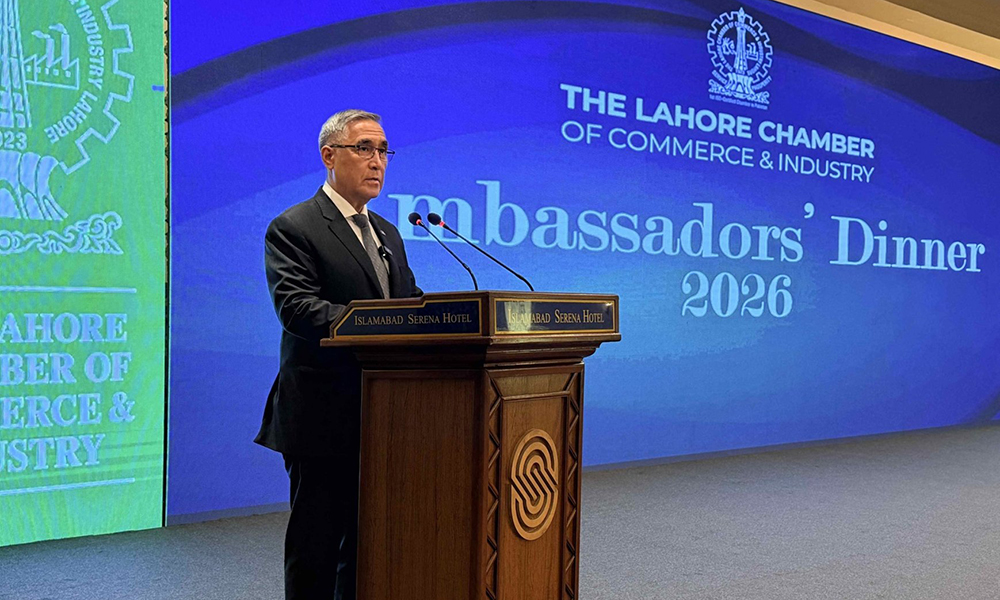
Turkmenistan expects natural gas supplies to Afghanistan and Pakistan through the Turkmenistan-Afghanistan-Pakistan-India (TAPI) pipeline to begin in 2027, according to the Turkmen Embassy in Islamabad.
Turkmen Ambassador Atajan Movlamov said construction of the strategically important Serhetabat-Herat section of the pipeline is expected to be completed by the end of this year.
Movlamov made the remarks during an Ambassadors’ Dinner hosted by the Lahore Chamber of Commerce and Industry in Islamabad.
He said the implementation of TAPI and other regional energy projects could strengthen Pakistan’s energy security while creating new opportunities for industrial development and economic growth.
The planned 1,800-kilometre pipeline is designed to transport up to 33 billion cubic metres of natural gas annually from Turkmenistan’s giant Galkynysh gas field through Afghanistan to Pakistan and India.
Turkmenistan regards TAPI as a key project for diversifying its gas exports and strengthening regional economic cooperation.
The Galkynysh field, which is the main resource base for TAPI, is among the world’s largest gas fields, with estimated reserves of more than 27 trillion cubic metres.
The project has faced years of delays, but recent construction and developments in the regional energy sector have renewed attention to TAPI as a potential link between Central Asian gas resources and South Asian energy markets.
Business
Dogharoun handles 60% of Iran’s exports to Afghanistan
Modoudi invited machinery manufacturing companies in Iran to establish operations in the area.
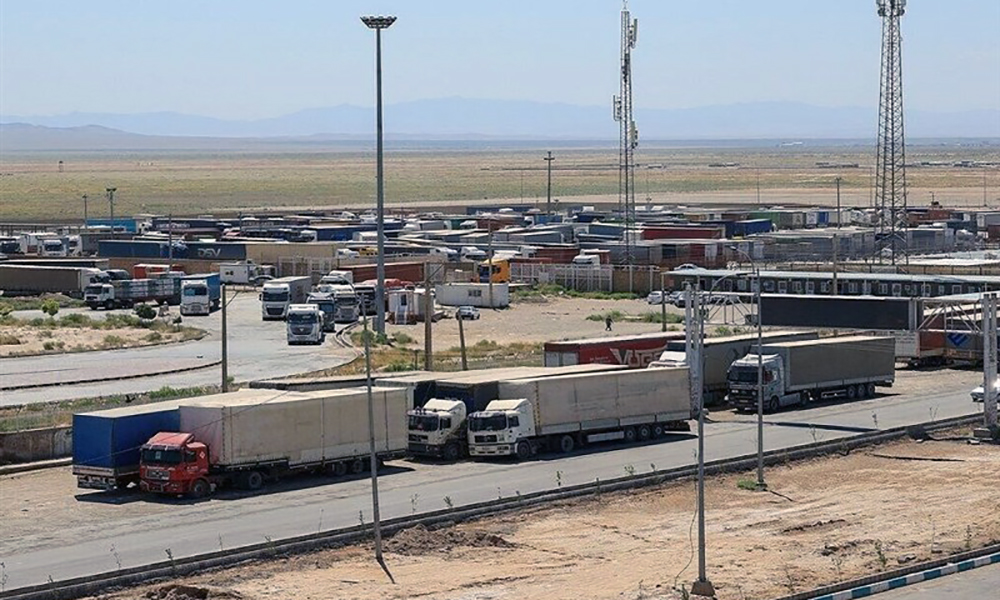
Mohammadreza Modoudi, CEO of the Dogharoon Free Zone, has criticized what he described as the neglect of Dogharoun’s potential, saying Iran ranks first among all countries in terms of exports of goods to Afghanistan.
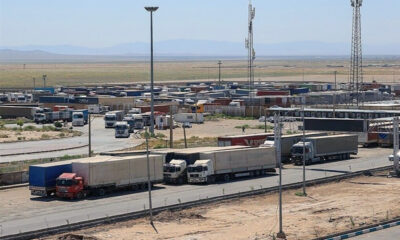
He said 60 percent of this large volume of exports passes through the Dogharoun border crossing, adding that, despite this, the region’s significant potential has been overlooked.
Modoudi invited machinery manufacturing companies in Iran to establish operations in the area.
He said it is time to take a realistic approach and transform Dogharoun from a transit route into a major hub for production, value-chain development and a driving force for international trade.


Australia says OpenAI model breached government health website

Museum dedicated to preserving ‘Jihadi’ artefacts opens in Kandahar

Afghanistan open Asian Games cricket campaign with win over Japan

Trump welcomes Chinese President Xi as US-China summit gets underway

Iran airlines cancel flights as US sanctions hit

Saudi energy group signs major Afghanistan deals covering gas exploration and pipeline plans

ATN secures exclusive rights to broadcast T20I series in India across Afghanistan

Trump floats idea of renaming Atlantic or Pacific Ocean

US hits Egyptian bank branches with Iran sanctions as war marks six months

Nepal flood rescue mission enters critical phase as thousands remain missing

Tahawol: Opening of the 81st UN General Assembly Session

Saar: OIC Assessment of Afghanistan’s humanitarian and development situation discussed

Tahawol: Reactions to Pakistan’s attacks on Afghanistan discussed

Saar: Uncertain fate of Afghanistan’s seat at UN discussed

Tahawol: Uncertain future of Afghanistan’s permanent UN seat
-
 Sport3 days ago
Afghanistan to face Japan and Nepal in Asian Games cricket group stage
-
 Latest News4 days ago
Pakistan says Kohat attackers had roots in Afghanistan
-
 Latest News4 days ago
OIC to hold Afghanistan Contact Group meeting on sidelines of UN General Assembly
-
 Regional4 days ago
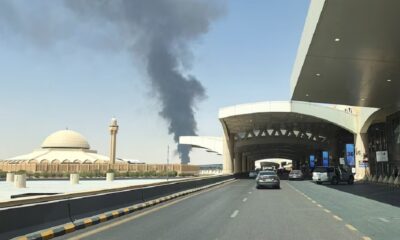
Flames, smoke seen near Riyadh airport; Houthis claim attacks on Saudi capital
-
 Regional3 days ago
Iran and US trade threats after Houthi attacks escalate regional conflict
-

 Sport5 days ago
Abu Muslim Farah and Ariana Khost play out goalless draw in ACL
-
 Business4 days ago
Dogharoun handles 60% of Iran’s exports to Afghanistan
-
 World4 days ago
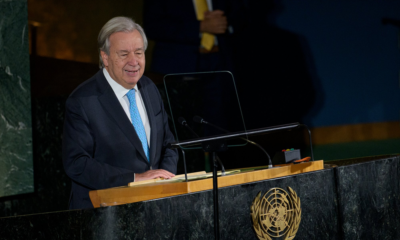
World leaders return to UN amid wars in Middle East and Ukraine