
Business
Afghanistan’s economy is ‘normal’, says finance ministry

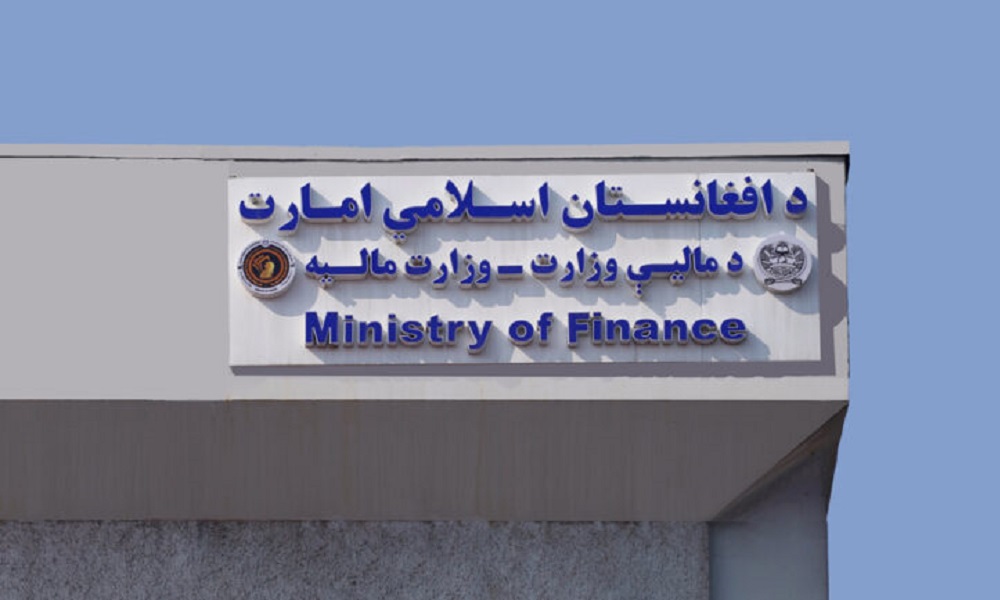
Afghanistan’s Ministry of Finance said Wednesday that after a comprehensive assessment of various sectors, the country’s economic situation is in “its normal state”.
According to a statement issued by the ministry, a meeting was convened to assess financial trade, foreign humanitarian aid, the value of the afghani (AFN), and the impact of changes in foreign policies on the economy.
It was found that the import and export process is functioning smoothly, the banking sector remains stable, national revenues are being collected transparently, and essential government expenditures are being made regularly without any delays.
The ministry attributed the decrease in the value of the AFN against foreign currencies, particularly the US dollar, to widespread negative propaganda.
“Overall, all domestic economic factors are maintaining the value of the Afghan currency in a normal state,” the statement read.
Modest recovery
The Afghan economy is showing signs of moderate growth, but still faces significant headwinds, including fiscal constraints, trade imbalances, and a limited capacity for public investment, according to the World Bank’s latest Afghanistan Development Update.
The World Bank stated that Afghanistan has seen a modest GDP growth of 2.7% over the past two years – growth driven by private consumption. The update stated the economy had recouped only about 10% of past economic losses, indicative of the slow and fragile nature of the recovery.
“Afghanistan’s long-term growth prospects depend on tapping into the substantial potential of the domestic private sector and improving the overall business environment,” said Faris Hadad-Zervos, World Bank Country Director for Afghanistan in the update, which was issued last month.
“Key to this is increased investment, providing access to finance to small businesses, and supporting educated and skilled women entrepreneurs so their businesses can thrive. Without this, the country risks prolonged stagnation with limited prospects for sustainable development,” he added.
The World Bank also stated that the partial recovery, coupled with falling food prices, has contributed to a gradual improvement in household welfare.
But most Afghan households continue to struggle to meet basic needs and poverty remains widespread, the report read.




Business
Uzbekistan approves feasibility study agreement for Trans-Afghan Railway
The agreement builds on a tripartite document signed on July 17, 2025, which outlined cooperation on preparing a feasibility study for the Termez–Kharlachi railway corridor.
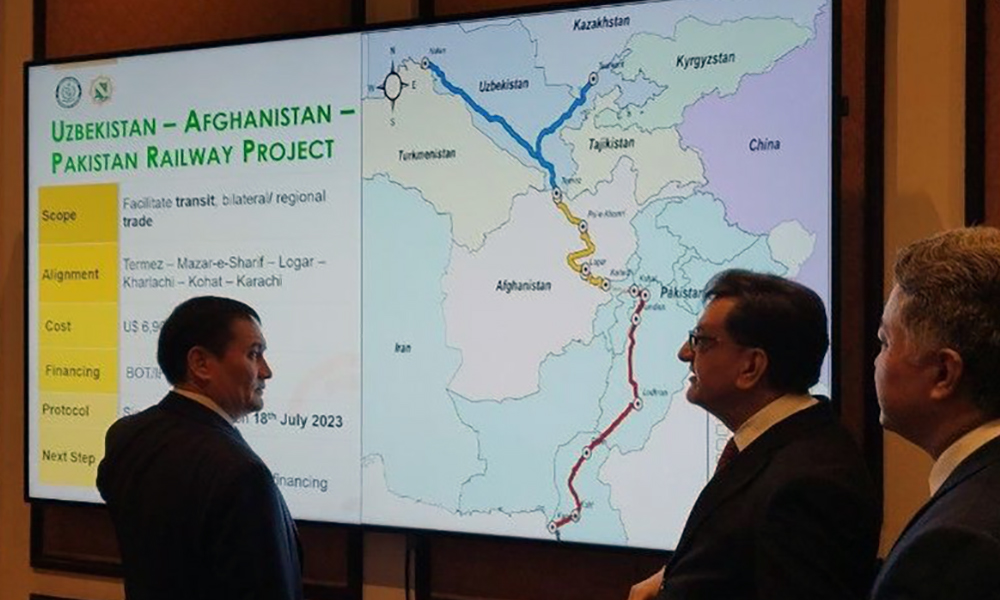
Uzbekistan has ratified an international agreement to prepare a feasibility study for the Naybabad–Kharlachi section of the Trans-Afghan Railway, formalizing its participation in the project.
President Shavkat Mirziyoyev signed a decree on February 4 approving the agreement.
The framework agreement involves the transport ministries of Uzbekistan, Afghanistan and Pakistan and provides for joint work on a feasibility study for the proposed railway line between Naybabad and Kharlachi. The section forms part of the wider Trans-Afghan Railway project aimed at strengthening transport links between Central and South Asia.
Under the decree, Uzbekistan’s Ministry of Transport has been designated as the competent authority responsible for implementing the agreement. The Ministry of Foreign Affairs has been tasked with notifying Kabul and Islamabad that Uzbekistan has completed the internal procedures required for the agreement to enter into force.
The agreement builds on a tripartite document signed on July 17, 2025, which outlined cooperation on preparing a feasibility study for the Termez–Kharlachi railway corridor.
The planned route is expected to run through Termez, Naybabad, Maidanshahr, Logar and Kharlachi, providing a transit corridor through Afghanistan.
The feasibility study will be commissioned by the Tripartite Project Office for the Development Strategy of International Transport Corridors under Uzbekistan Railways.
Established in Tashkent in May 2023, the office also operates branches in Kabul and Islamabad to coordinate the project.
First proposed in 2018, the Trans-Afghan Railway was initially projected to carry up to 20 million tons of cargo annually at a cost of about $5 billion. Cost estimates have since been revised.
In July 2022, Uzbekistan Railways cited an estimate of $4.6 billion with a construction period of up to five years, while Pakistan’s Ministry of Railways put the cost at $8.2 billion in December 2024.
More recent assessments have placed the overall cost at around $7 billion, with a public-private partnership under a Build-Operate-Transfer model among the options under consideration.
Business
Afghanistan seeks expanded ties with Russia in energy, mining and infrastructure
TASS reported that Kabul is also prepared to cooperate with Moscow in the extraction of mineral resources.

Afghanistan has expressed strong interest in broadening trade and economic cooperation with Russia, with a particular focus on energy, mining and infrastructure projects, according to Russia’s TASS news agency.
In an interview with TASS, Afghanistan’s Ambassador to Moscow, Gul Hassan, said Kabul is keen to import oil and gas from Russia as part of efforts to deepen bilateral economic ties.
He noted that trade relations between the two countries are progressing and that, if key obstacles—especially banking restrictions—are addressed, Afghanistan could also import medicines, industrial goods, grain, vegetable oils and other commodities from Russia.
In return, the ambassador said Afghanistan is ready to export fresh and dried fruits, vegetables, medicinal plants, carpets and mineral resources to the Russian market, adding that expanding export-import operations could significantly increase bilateral trade volumes.
He also revealed plans to open an exhibition of Afghan products in Moscow, which he said would help boost trade turnover.
TASS reported that Kabul is also prepared to cooperate with Moscow in the extraction of mineral resources.
Hassan described the economy as a central pillar of Afghanistan’s foreign policy, emphasizing the government’s goal of positioning the country as a key link in regional economic integration and attracting foreign investment.
He noted that Russian companies have long shown interest in Afghanistan’s industrial, mining and infrastructure sectors.
The ambassador further told TASS that Russian firms are already in talks with relevant Afghan authorities on the construction of small hydroelectric power plants.
Representatives of several Russian companies have reportedly visited Afghanistan and held meetings with officials and technical experts.
According to Hassan, practical steps toward cooperation in the energy and power generation sectors are expected in the near future, pointing to a potential new phase in Afghan-Russian economic relations.
Business
Pakistan, China plan to extend CPEC to Afghanistan, revive trilateral framework
The proposed CPEC expansion into Afghanistan is seen as a move to enhance regional economic integration amid shifting geopolitical dynamics.
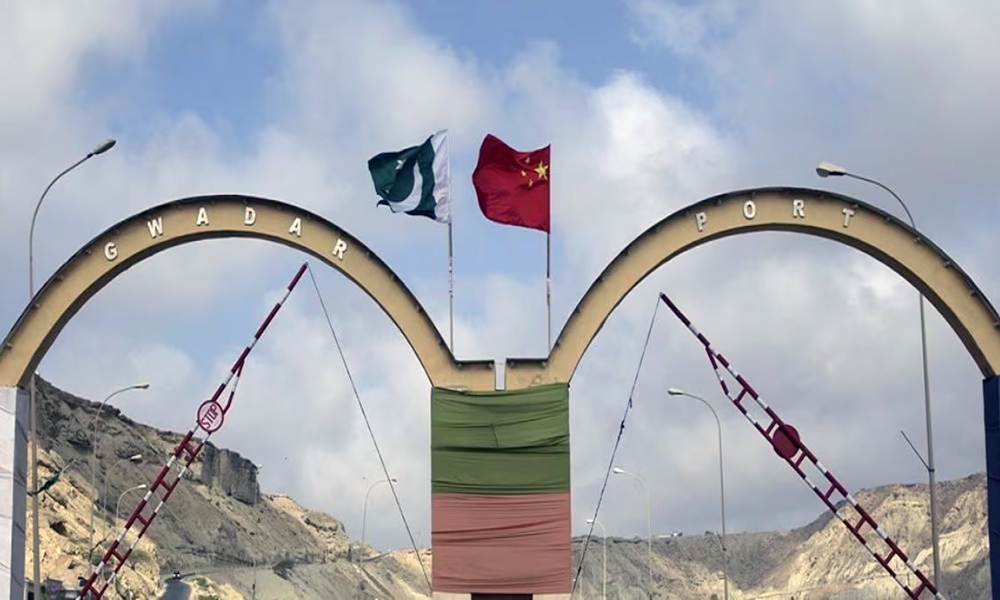
Pakistan and China are moving forward with plans to extend the China-Pakistan Economic Corridor (CPEC) into Afghanistan, a strategic step aimed at bolstering regional connectivity and economic cooperation. The expansion, along with the revival of the Pakistan-China-Afghanistan trilateral framework, was discussed in a recent briefing to the Pakistani Senate Standing Committee on Foreign Affairs.
According to Pakistan Today, officials from Pakistan’s Ministry of Foreign Affairs outlined the details during a session in Islamabad, where they reviewed key aspects of Pakistan’s foreign relations, regional developments, and economic diplomacy.
Officials emphasized that Pakistan’s relationship with China remains strong, underscoring the “all-weather” strategic partnership between the two nations. Strengthening ties with Beijing, they stated, continues to be a cornerstone of Pakistan’s foreign policy. This includes unwavering support for China’s position on regional and international issues, particularly the One-China policy and matters related to territorial integrity.
The briefing also touched upon China’s consistent backing of Pakistan in various areas, including sovereignty, economic stability, counter-terrorism, and support for Pakistan’s exit from the Financial Action Task Force (FATF) grey list.
The Kashmir issue was also addressed, with officials noting that China considers it an unresolved matter and advocates for a peaceful resolution in line with UN Security Council resolutions.
The proposed CPEC expansion into Afghanistan is seen as a move to enhance regional economic integration amid shifting geopolitical dynamics. Officials stated that reviving the trilateral framework is part of broader efforts to foster greater cooperation and connectivity in the region, with an eye on long-term stability and prosperity.
The move also reflects both countries’ desire to further integrate Afghanistan into the regional economic landscape, a key element in fostering peace and development.


Ministries of Public Health and Higher Education sign cooperation agreement

UNAMA holds new round of Working Group meetings on counter-narcotics and private sector

Economic Commission approves national policy for development of agriculture

Afghan authorities prevent three forced marriages in Balkh, Kunar, and Parwan

Doha process private sector meeting highlights growth and coordination in Afghanistan

Afghanistan–China joint market opens in Kabul

Pakistan approves re-export of stranded Afghan transit trade cargo

Pakistan army orders evacuation of Tirah Valley, fears of mass displacement grow

Afghan traders sign deal to import pharmaceuticals from Bangladesh

Uzbekistan pushes forward with Trans-Afghan railway project

Tahawol: Pakistan’s Foreign Policy Failure of Towards Afghanistan discussed

Saar: Regional Problems, Opportunities, and Challenges discussed

Saar: Afghanistan’s relations and opportunities with regional countries

Tahawol: Kabul’s response to Pakistan’s new accusation discussed

Saar: Discussion on Iran-US talks in Oman
-
 Latest News3 days ago
Afghanistan to grant one- to ten-year residency to foreign investors
-

 Sport4 days ago
Indonesia shock Japan to reach historic AFC Futsal Asian Cup final
-

 Sport3 days ago
Iran clinch AFC Futsal Asian Cup 2026 in penalty shootout thriller
-
 Latest News3 days ago
Afghanistan says Pakistan is shifting blame for its own security failures
-

 International Sports2 days ago
Winter Olympics gain momentum as medal table takes shape
-
 Latest News3 days ago
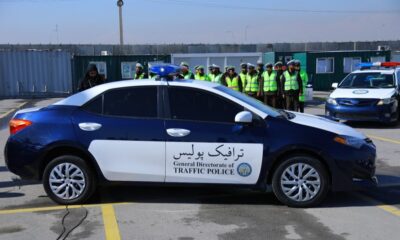
Traffic police receive new cars
-
 Regional4 days ago
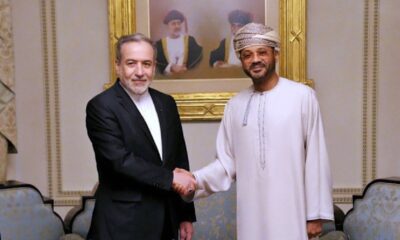
Iran’s FM calls Oman-mediated talks with US ‘good start’
-
 Latest News2 days ago
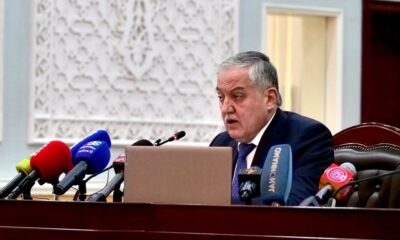
Tajik foreign minister urges international community to help Afghanistan address its challenges