
Latest News
Afghanistan’s Ministry of Information honors media’s role during recent national events
Minister Sher Ahmad Haqqani emphasized the crucial role of media in modern society, assuring journalists that they can continue their work confidently under the policies of the Islamic Emirate.

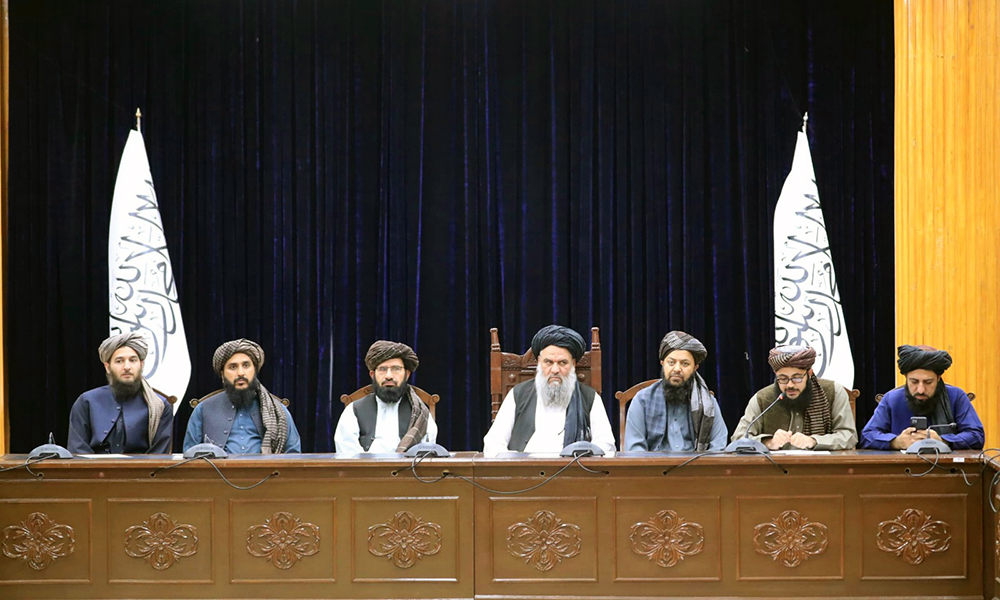
The Ministry of Information and Culture of Afghanistan held a special ceremony on Monday to recognize the contributions of media organizations during recent national incidents. The gathering, hosted at the Government Information and Media Center (GMIC), brought together senior officials, media representatives, and journalists from across the country.
Among the attendees were Sher Ahmad Haqqani, Minister of Information and Culture; Mohajir Farahi, Deputy Minister for Publications; and Naeem-ul-Haq Haqqani, Director of the GMIC, along with heads of publishing departments and representatives from both public and private media outlets.
In his address, Deputy Minister Mohajir Farahi praised the Afghan media for standing alongside state institutions during recent crises, noting their role in delivering a unified national response.
“Our country has only recently emerged from crises and unrest,” Farahi said. “The Islamic Emirate is committed to protecting our borders, upholding Islamic and national values, and improving services for our people across all sectors.”
He encouraged media professionals, both state-affiliated and independent, to continue collaborating with government bodies to help Afghanistan remain active and competitive at the international level.
Representing the Islamic Emirate, Naeem-ul-Haq Haqqani also commended journalists for their dedication and professionalism during recent events, echoing the appreciation expressed by Zabihullah Mujahid, spokesperson of the Islamic Emirate.
Minister Sher Ahmad Haqqani emphasized the crucial role of media in modern society, assuring journalists that they can continue their work confidently under the policies of the Islamic Emirate. He urged the media to report responsibly within the framework of Islamic and national values while highlighting the country’s progress and achievements.
“The media serves as a bridge between the government and the people and plays a vital role in reflecting the true image of Afghanistan,” he said.
During the event, journalists and media leaders reaffirmed their commitment to supporting the nation’s development and addressing national challenges responsibly. Participants also shared suggestions for improving media operations, which the ministry pledged to review and address.
The Ministry of Information and Culture announced that similar gatherings will continue in the future to strengthen cooperation with Afghanistan’s media sector and to honor the essential role of journalists in the country’s growth and stability.





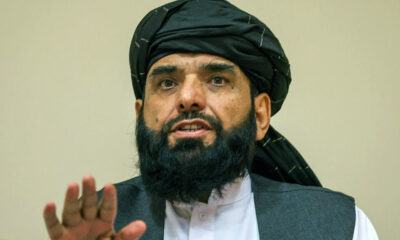


The spokesperson of the Islamic Emirate of Afghanistan Zabiullah Mujahid announced on Wednesday that the security and defense forces of the Islamic Emirate will temporarily halt the “Rad al-Zulm” defensive operation on the occasion of Eid al-Fitr and also at the request of Saudi Arabia, Turkey, and Qatar.
Zabiullah Mujahid said in a post on X: “The Islamic Emirate, while appreciating the goodwill of friendly and mediating countries, emphasizes that maintaining Afghanistan’s national security, territorial integrity, and the safety of Afghan lives is its national and religious duty, and it will bravely respond to any aggression in case of a threat.”
Meanwhile, Ataullah Tarar, Pakistan’s Minister of Information and Broadcasting, also announced that Pakistan has temporarily suspended its attacks on Afghanistan for Eid al-Fitr at the request of Saudi Arabia, Qatar, and Turkey.
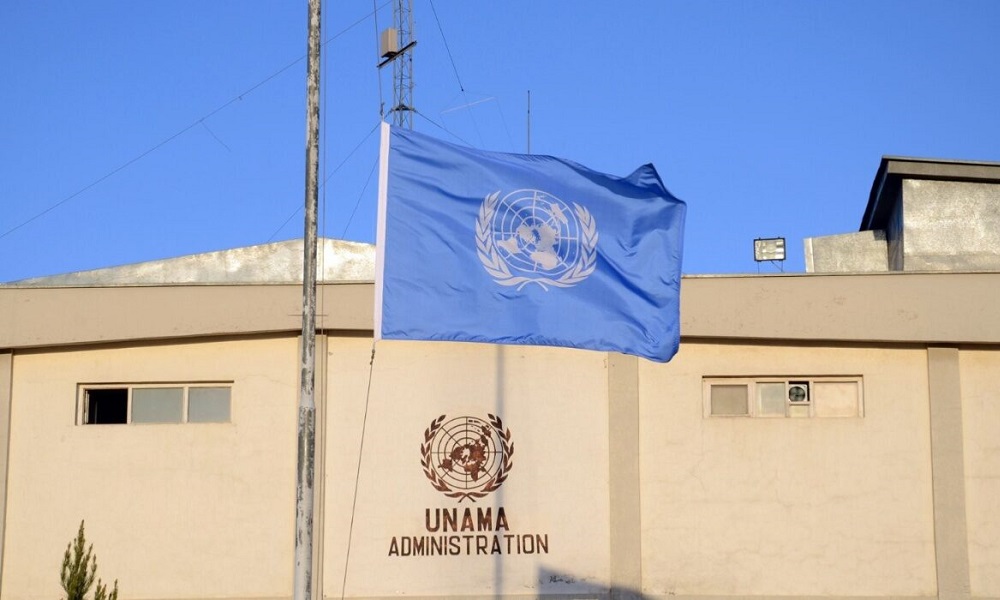
A UN official told Reuters on Wednesday that the United Nations Assistance Mission in Afghanistan (UNAMA) estimated the number of victims of the bombing of Kabul’s Omid hospital by Pakistan at 143 dead.
However, health officials in Afghanistan had earlier reported that the attack killed more than 400 people and injured 265.
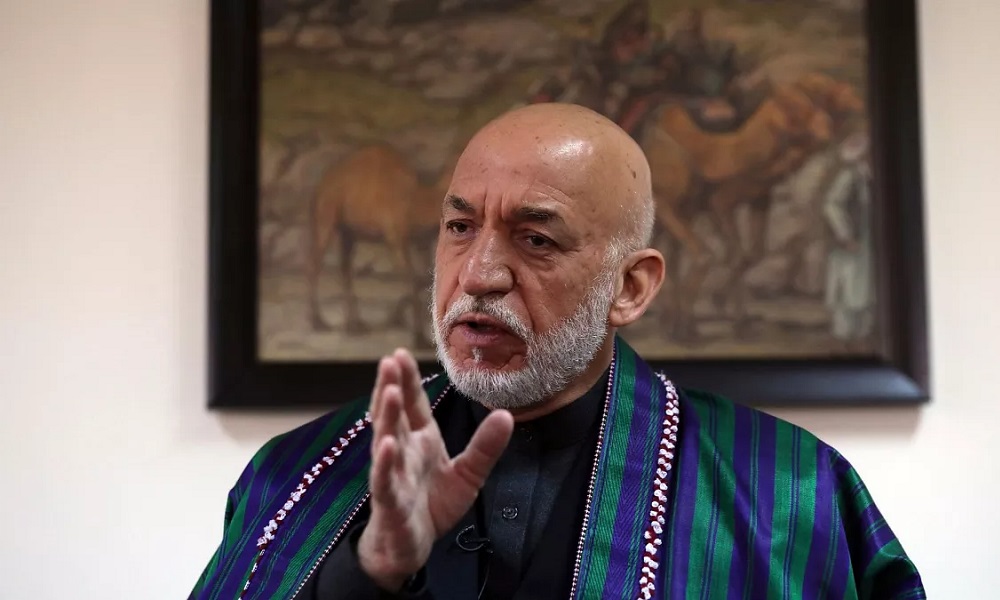
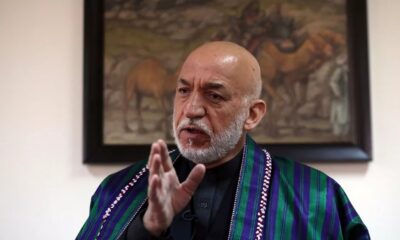
Former Afghan president Hamid Karzai has accused Pakistan of trying to create “anarchy and weakness” in Afghanistan, following a deadly airstrike on Kabul.
In an interview with UK’s Sky News, Karzai said Islamabad’s policies were aimed at keeping Afghanistan unstable and “downtrodden,” warning that such an approach would harm both countries.
He condemned the recent strike on a drug rehabilitation hospital in Kabul, which Afghan officials say killed around 400 people, describing it as an “extremely unfortunate event” in the history of relations between the two neighbours.
Karzai said he personally heard the explosion, describing a “horrific sound” that shook his home and filled the surrounding area with smoke and dust.
The former leader, who governed Afghanistan from 2002 to 2014, said tensions between the two countries are longstanding, claiming Pakistan has struggled to maintain stable relations with successive Afghan governments.
He urged Pakistani leaders to change course and pursue a more constructive relationship, saying past strategies of interference and destabilisation had failed and would not succeed in the future.
Fighting between the two countries has intensified since late February, when Pakistan launched airstrikes it says targeted militant infrastructure. The United Nations estimates the violence has displaced more than 100,000 people.
Pakistan has denied targeting civilians, insisting its operations were aimed at militant sites and accusing Kabul of spreading “misleading” claims to deflect from alleged cross-Durand Line threats.


Tahawol: Global reactions to Pakistan’s recent attacks discussed

IEA announces temporary pause in defensive operations against Pakistan for Eid

Saar: Consequences of Pakistani airstrikes on Afghans discussed

UNAMA puts death toll from Pakistan’s attack on Kabul’s Omid Hospital at 143

Karzai accuses Pakistan of seeking to destabilise Afghanistan after Kabul strike

Pakistani military jet downed in Afghanistan’s Jalalabad, pilot captured alive

Afghan Air Force conducts airstrikes in Islamabad, other cities

IEA releases three Pakistani soldiers to mark Ramadan

Afghanistan’s Chief of Armed Forces underscores readiness and equipment for national defense

Afghanistan welcomes investment and technology partnerships with India
Tahawol: Global reactions to Pakistan’s recent attacks discussed
Saar: Consequences of Pakistani airstrikes on Afghans discussed

Tahawol: Pakistan’s new attacks on Kabul hospital discussed

Saar: Pakistani military’s airstrike on Kabul hospital discussed

Tahawol: China’s efforts for Afghanistan-Pakistan talks
-
 Latest News3 days ago
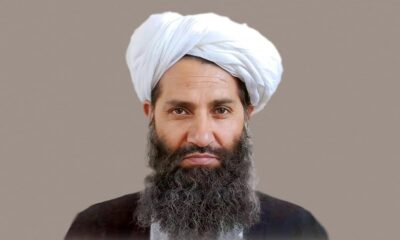
IEA Supreme Leader issues Eid-ul-Fitr message urging unity and support for Islamic system
-
 Latest News5 days ago
14 Pakistani soldiers killed after military post falls along Durand line: MoD
-
 Latest News4 days ago
Regional criticism grows amid Pakistan strikes inside Afghanistan
-
 Latest News4 days ago
Afghan airstrike targets a military camp in South Waziristan
-

 Business3 days ago
Turkmenistan, Afghanistan discuss steps to speed up land acquisition for TAPI pipeline
-
 World5 days ago
White House AI czar says US should ‘declare victory and get out’ of Iran war
-
 Sport4 days ago
IPL 2026 kicks off in under two weeks; Afghan players set to shine
-

 Business4 days ago
Afghanistan expands exports through Lapis Lazuli Corridor