
World
Anti-Trump protesters gather in Washington, other US cities
Some 150 activist groups had signed up to participate, according to the event’s website. Protests were planned in all 50 states plus Canada and Mexico.

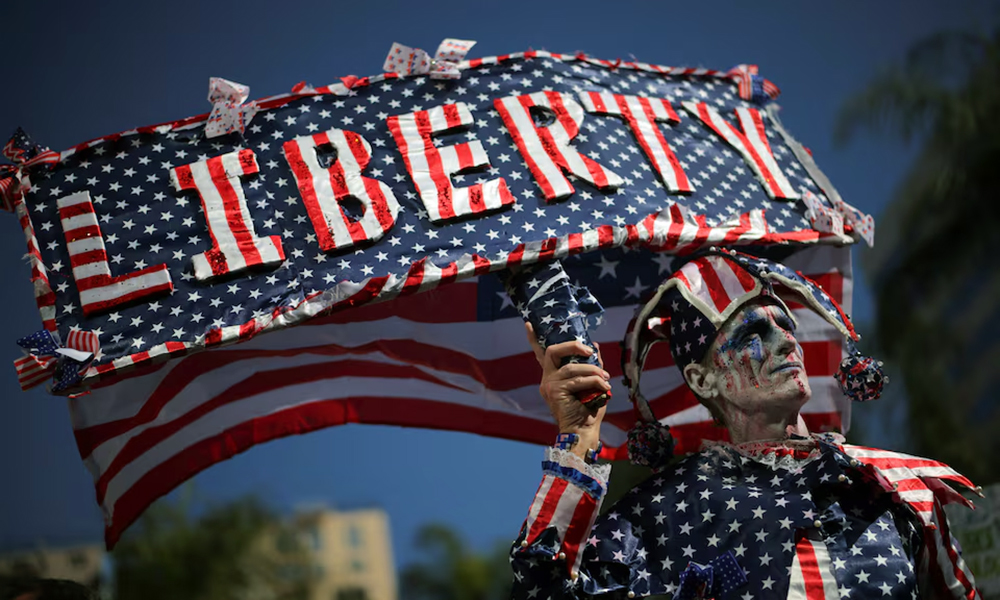
Thousands of protesters gathered in Washington, D.C., and across the U.S. on Saturday, part of some 1,200 demonstrations that were expected to form the largest single day of protest against President Donald Trump and his billionaire ally Elon Musk since they launched a rapid-fire effort to overhaul government and expand presidential authority.
People streamed onto the expanse of grass surrounding the Washington Monument under gloomy skies and light rain. Organizers told Reuters that more than 20,000 people were expected to attend a rally at the National Mall.
Some 150 activist groups had signed up to participate, according to the event’s website. Protests were planned in all 50 states plus Canada and Mexico.
Terry Klein, a retired biomedical scientist from Princeton, New Jersey, was among those who gathered by the stage beneath the Washington Monument.
She said she drove down to attend the rally to protest Trump’s policies on “everything from immigration to the DOGE stuff to the tariffs this week, to education. I mean, our whole country is under attack, all of our institutions, all the things that make America what it is.”
The crowd around the memorial continued to build throughout the day. Some carried Ukrainian flags and others wore Palestinian keffiyeh scarves and carried “Free Palestine” signs, while Democrats from the U.S. House of Representatives blasted Trump’s policies on stage.
Wayne Hoffman, 73, a retired money manager from West Cape May, New Jersey, said he was concerned about Trump’s economic policies, including his widespread use of tariffs.
“It’s going to cost the farmers in the red states. It’s going to cost people their jobs – certainly their 401Ks. People have lost tens of thousands of dollars,” Hoffman said.
Kyle, a 20-year-old intern from Ohio, was a lone Trump supporter, sporting a “Make America Great Again” hat and walking the fringe of the Washington, D.C., rally while engaging protesters in debate.
“Most people aren’t too hostile. A few people cuss,” said Kyle, who declined to give his last name.
Trump, who shook financial markets and upset nations around the world with a raft of trade tariffs this week, spent the day in Florida, playing a round of golf at his club in Jupiter before returning to his Mar-a-Lago compound in the afternoon.
Some four miles (6 km) from Mar-a-Lago in West Palm Beach, more than 400 demonstrators gathered on a sunny day in protest. Drivers honked their horns in support of the pastel-and khaki-clad demonstrators as they passed by.
“Markets tank, Trump golfs,” read one sign.
At another protest in Stamford, Connecticut, Sue-ann Friedman, 84, brought a bright pink, handmade sign objecting to the administration’s moves to cut funding for medical research.
“I thought my marching days were over, and then we get somebody like Musk and Trump,” said Friedman.
Paul Kretschmann, a 74-year-old retired attorney in Stamford, said it was the first time he had ever attended a protest.
“My concern is that Social Security is going to be gutted, that we’re going to lose our benefits, and that there’s going to be nobody around to administer it in the first place,” he said. “I’m afraid that this is all part of a larger plan to dismantle the government and for Trump to maintain power.”
With Trump’s blessing, Musk’s Department of Government Efficiency team has scythed through the U.S. government, eliminating more than 200,000 jobs from the 2.3 million federal workforce. At times, the effort has been haphazard and forced the recall of needed specialists.
On Friday, the Internal Revenue Service began laying off more than 20,000 workers, as much as 25% of its ranks.
Several hundred people gathered outside the headquarters of the Social Security Administration, a top DOGE target, near Baltimore to protest against cuts to the agency which delivers benefits to the elderly and disabled.
Linda Falcao, who turns 65 in two months, told the crowd she had been paying into the Social Security fund since the age of 16.
“I’m terrified, I’m angry, I’m pissed, I’m bewildered this could happen to the United States,” she said. “I do love America and I’m heartbroken. I need my money. I want my money. I want my benefits!” The crowd chanted, “It’s our money!”
White House assistant press secretary Liz Huston disputed the protesters’ charge that Trump aimed to cut Social Security and Medicaid.
“President Trump’s position is clear: he will always protect Social Security, Medicare, and Medicaid for eligible beneficiaries. Meanwhile, the Democrats’ stance is giving Social Security, Medicaid, and Medicare benefits to illegal aliens, which will bankrupt these programs and crush American seniors,” Huston said in an email.
Much of Trump’s agenda has been restrained by lawsuits contending he has overstepped his authority with attempts to fire civil servants, deport immigrants and reverse transgender rights.
Trump returned to office on January 20 with a stream of executive orders and other measures critics say are aligned with an agenda outlined by Project 2025, a deeply conservative political initiative to reshape government and consolidate presidential authority. His supporters have applauded Trump’s audacity as necessary to disrupt entrenched liberal interests.
Hours before the protests were due to kick off in the United States, hundreds of anti-Trump Americans living in Europe gathered in Berlin, Frankfurt, Paris and London to voice opposition to Trump’s sweeping makeover of U.S. foreign and domestic policies.




World
G7 foreign ministers demand an end to attacks on civilians in Iran war
The ministers also reiterated the need to restore safe and toll-free freedom of navigation in the Strait of Hormuz.
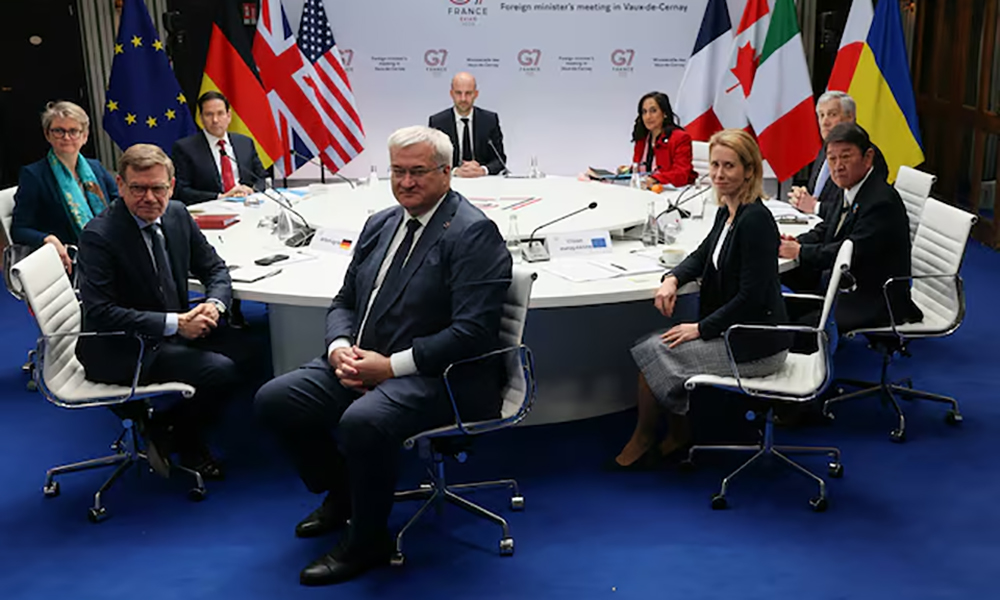
The foreign ministers of the G7 group of nations called on Friday for an immediate stop to attacks against civilians and civilian infrastructure in the Iran war.
In a joint statement agreed on the second day of a G7 meeting in France – this year’s host country – the ministers said they had underscored the importance of minimising the impact of the conflict on regional partners, civilian populations and critical infrastructure.
“We focused on the value of diverse partnerships, coordination, and supporting initiatives, including to mitigate global economic shocks such as disruptions to economic, energy, fertilizer and commercial supply chains, which have direct impacts on our citizens,” they said in the statement seen by Reuters.
The ministers also reiterated the need to restore safe and toll-free freedom of navigation in the Strait of Hormuz.
The G7 members are the United States, Britain, Canada, France, Germany, Italy and Japan, along with the European Union.
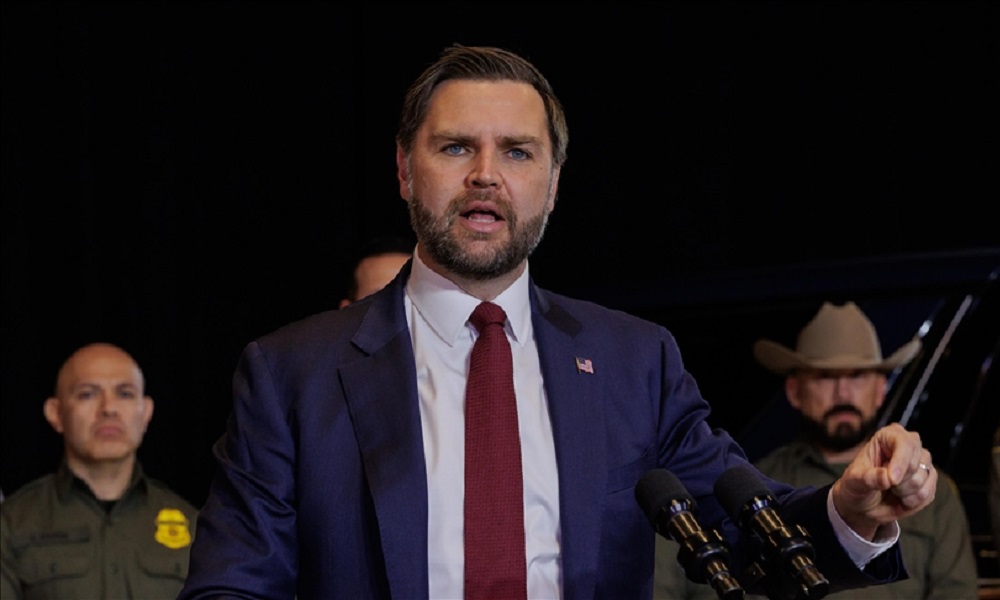
US Vice President JD Vance has taken a leading role in Washington’s efforts to broker peace with Iran, nearly a month into the ongoing conflict, according to US media reports on Friday.
An Axios report says Vance has been actively engaged in behind-the-scenes diplomacy, holding multiple discussions with Israeli Prime Minister Benjamin Netanyahu and coordinating with Gulf allies, while maintaining indirect communication channels with Iranian officials.
The White House reportedly views Vance as a central negotiator due to his senior position and his skepticism toward prolonged military engagements, making him a suitable envoy for sensitive negotiations.
Vance’s efforts include coordination with countries such as the United Arab Emirates and Qatar, focusing on de-escalation, potential peace talks, and regional security.
US President Donald Trump formally confirmed Vance’s role on Thursday, noting that he is working alongside Middle East Envoy Steve Witkoff and Jared Kushner on ongoing negotiations and will brief officials on developments regarding Iran.
White House officials told Axios that Vance’s seniority and opposition to extended foreign conflicts make him a more appealing interlocutor for Iran than other envoys, with Witkoff recommending him as the lead negotiator. “If the Iranians can’t strike a deal with Vance, they don’t get a deal. He’s the best they’re gonna get,” a senior administration official said.
While Vance assumes a larger diplomatic role, Witkoff and Kushner continue handling negotiations. Reports of a confrontation between Vance and Netanyahu were dismissed by US and Israeli sources as inaccurate.
According to the report, Vance initially expressed skepticism about the war’s duration, objectives, and resource impact but supported a strategy of overwhelming force once Trump decided to proceed. Vance remains aligned with Israel while carefully navigating differences between US and Israeli objectives, advisers said.
“He has his own views, but he is going to work according to Trump’s instructions and try to achieve an outcome that the president likes,” a source close to Vance added.
World
Trump signature to appear on US currency, ending 165-year tradition
The Treasury is still producing notes bearing the signatures of former President Joe Biden’s Treasury secretary, Janet Yellen, and former Treasurer Lynn Malerba.
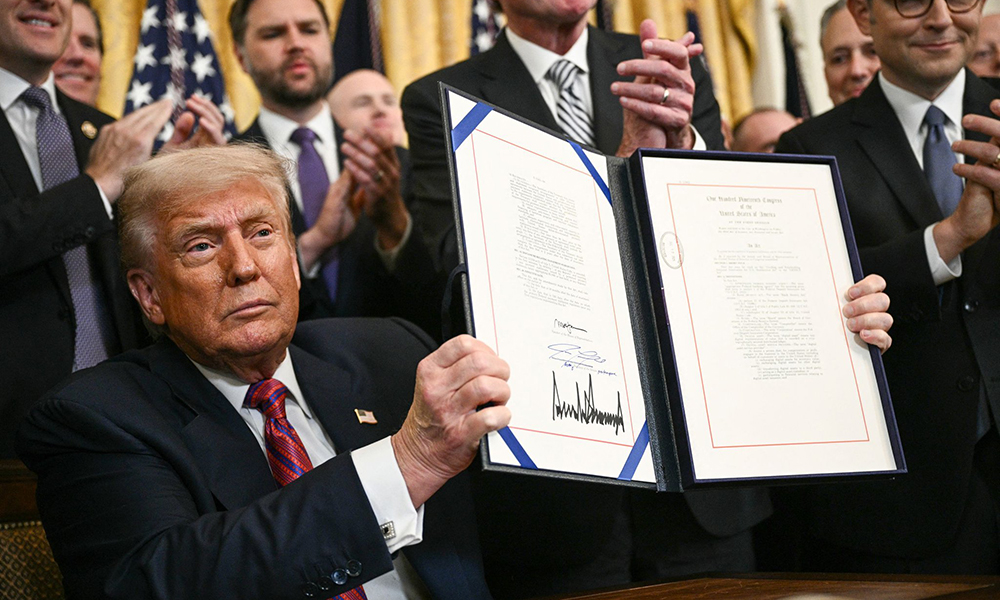
U.S. paper currency will bear President Donald Trump’s signature starting this summer, the first time a sitting president has signed American money, the Treasury Department said on Thursday.
The redesigned notes, planned to mark the 250th anniversary of American independence, will also for the first time in 165 years drop the signature of the U.S. treasurer, who reports to the Treasury Secretary and oversees the Bureau of Engraving and Printing, the U.S. Mint and other Treasury functions, Reuters reported.
The first $100 bills with Trump’s signature and that of U.S. Treasury Secretary Scott Bessent will be printed in June, followed by other bills in subsequent months. The new bills may take several weeks to circulate through banks.
The Treasury is still producing notes bearing the signatures of former President Joe Biden’s Treasury secretary, Janet Yellen, and former Treasurer Lynn Malerba.
Malerba will be the last of an unbroken line of treasurers whose signatures have appeared on U.S. federal currency since 1861, when the U.S. government first issued it.
The signature change is the latest effort by the Trump administration and its allies to put the president’s name on buildings, institutions, government programs, warships and coins. A federal arts panel, whose members Trump appointed, approved last week the design for a commemorative gold coin with Trump’s image.
Bessent said in a statement that the move was appropriate for the U.S. 250th anniversary, given strong U.S. economic growth and financial stability during Trump’s second term, read the report.
“There is no more powerful way to recognize the historic achievements of our great country and President Donald J. Trump than U.S. dollar bills bearing his name, and it is only appropriate that this historic currency be issued at the Semiquincentennial,” Bessent said.
An effort for a circulating $1 Trump coin was set back by laws prohibiting the depiction of living individuals on U.S. coins.
A statute governing the printing of Federal Reserve notes gives the Treasury broad discretion to change designs to guard against counterfeiting. The law requires keeping certain elements, including the words “In God We Trust,” and only allows portraits of deceased individuals.
The overall designs of bills will not change, except for Trump’s signature replacing the Treasurer’s, Treasury officials said. A mock-up of the $100 bill with Trump’s signature was not immediately available.
Malerba, the former treasurer, declined comment on the Trump administration’s move.
Her predecessor, Jovita Carranza, who served as treasurer in Trump’s first term, called the change “a powerful symbol of American resilience, the enduring strength of free enterprise and the promise of continued greatness.”
The current treasurer, Brandon Beach, whose name has not appeared on the currency, also issued a supportive statement, saying Trump was the architect of a “golden age economic revival.”


Severe floods in Badghis leave five dead

13 mountaineers in Balkh summit Alborz at 1,650 meters

Fazlur Rehman urges policy review on Afghanistan, warns of Pakistan’s regional isolation

US regime change efforts in Afghanistan ended in failure, says Merz

Afghan defense forces stand ready to protect national sovereignty: MoD

Pakistani military jet downed in Afghanistan’s Jalalabad, pilot captured alive

Afghan Air Force conducts airstrikes in Islamabad, other cities

Prominent Muslim scholar issues fatwa calling for Afghanistan-Pakistan ceasefire

Afghan air force strikes key Pakistani military installations in retaliatory operation

IEA: Special circle in Pakistan has launched mission to destabilize region

Exclusive interview with Indrika Ratwatte, Deputy UN Special Representative for Afghanistan

Tawsia: Efforts to boost Afghanistan’s domestic production and economic diplomacy

Tahawol: Discussion on day 27 of Iran–US war

Saar: Islamic Emirate confident of Durand Line control

Tahawol: Efforts to release Mohammad Rahim from Guantanamo Bay Detention Camp
-

 Latest News2 days ago
Tajikistan shifts stance on Afghanistan amid rising border tensions
-

 Latest News4 days ago
Around 2.3 million tourists visited Afghanistan’s recreational areas during Eid: Ghufran
-

 Sport4 days ago
Afghanistan squad hit by withdrawals ahead of AFC Asian Cup Qualifiers
-

 Latest News4 days ago
Islamic Emirate releases American prisoner Dennis Coyle
-
 Latest News3 days ago
Two civilians killed, eight injured in fresh shelling by Pakistan in Kunar
-

 Regional4 days ago
US allies in Middle East ‘edging closer’ to joining conflict
-

 Latest News5 days ago
Airstrike on Kabul drug rehabilitation centre sparks legal concerns
-
 Regional4 days ago
Tehran rejects Trump’s claims of talks, accuses US of spreading ‘fake news’