
Latest News
WATCH: Authorities scramble to accommodate refugee influx at Afghanistan border

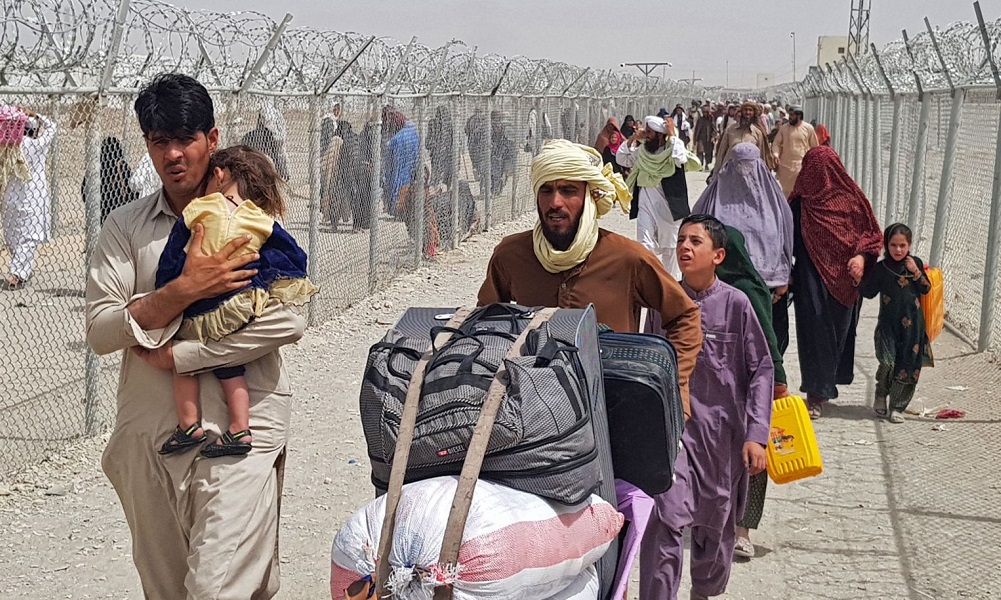
As thousands of refugees cross back into Afghanistan amid Pakistan’s campaign to forcibly expel over 1 million Afghans, local officials scramble to accommodate the influx which also means areas of landmines need to be cleared around the Torkham border area in order to establish more tented camps.
The mines and other unexploded ordnance are remnants of Afghanistan’s 20 year war that ended with the collapse of the former US-backed government in August 2021.
Government officials who visited Torkham this week say they are ready to cooperate with returning refugees.
Nooruddin Torabi, the head of the National Disaster Preparedness Agency, visited Torkham on Tuesday. He stressed the need to clear the area of mines and unexploded ordnance.
Torabi also said that another transit camp would be established to temporarily accommodate the returnees.
Refugees however have slammed the Pakistan government for the way they have handled this. Many say they are now homeless after having left everything behind, including houses, businesses and possessions. In addition to this, a large percentage of them have nowhere to go after having lived in Pakistan for decades.
Afghans have been fleeing to Pakistan for over 40 years – since the invasion of the old Soviet Union in December 1978.
Islamic Relief reported this week that tens of thousands of Afghans are facing dire conditions in makeshift camps after crossing the border from Pakistan.
According to the organization, an assessment team that visited Torkham found that many refugees are arriving in Afghanistan without any shelter, food, cash or water. These families were forced to leave possessions – including animals and household items.
People arrive in droves, covered in dust, crammed onto trucks, and face a barren border with no basic services in sight. The first thing that greets them is a harsh, wind storm swirling with dust.
This influx comes amid an economic crisis in the country and as global cuts to humanitarian funding have forced many essential services in Afghanistan to close, including health facilities and food distributions.
Many of the new arrivals have lived in Pakistan for decades after seeking refuge there, fleeing conflicts and instability in their homeland. They include children who were born in Pakistan and have never been to Afghanistan. Many others no longer have close family members in
Afghanistan or have not visited for many years. They are not truly ‘returning home’ as they hardly know Afghanistan and have no homes or livelihoods to kickstart their lives here.
Some of the arrivals do not even speak an Afghan language and many returnees lack proper identification documents.
The interim Afghan government has pledged to take care of refugees returning to Afghanistan and humanitarian organizations are ramping up efforts to help these refugees.
Pakistan last month set an early April deadline for some 800,000 Afghans carrying Afghan Citizen Cards (ACC) issued by the Pakistani authorities to leave the country, in the second phase of efforts to remove Afghans. More than 1.3 million Afghans who hold Proof of Registration cards from the UN refugee agency, UNHCR, have also been told to move outside the capital Islamabad and the neighbouring city of Rawalpindi





Latest News
Four members of one family killed in Helmand in Pakistan airstrike
The family, originally from Ghazni province, reportedly operated a small restaurant in the area.
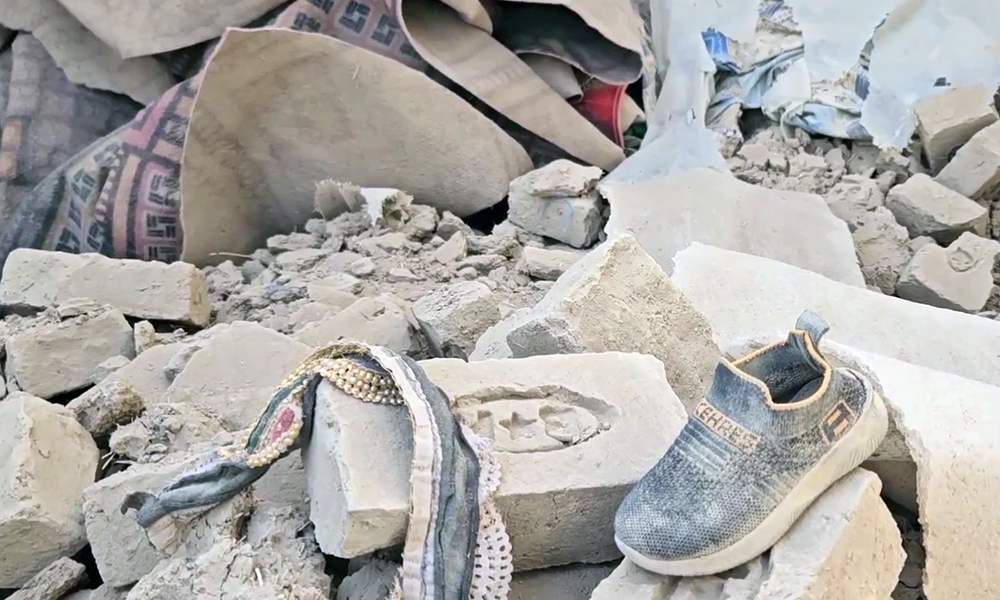
Four members of a family were killed and seven others wounded in an airstrike in Safar area of Garmser district in southern Afghanistan’s Helmand province, according to local reports.
The family, originally from Ghazni province, reportedly operated a small restaurant in the area.
The bodies of those killed and the wounded were transported by helicopter to Ghazni province for burial and medical treatment, according to the reports.
Latest News
UNAMA acting chief visits Islam Qala border to assess support for returnees
UN launched a $529 million response plan aimed at assisting around 2.7 million Afghans expected to return from Iran and Pakistan between April and December 2026.
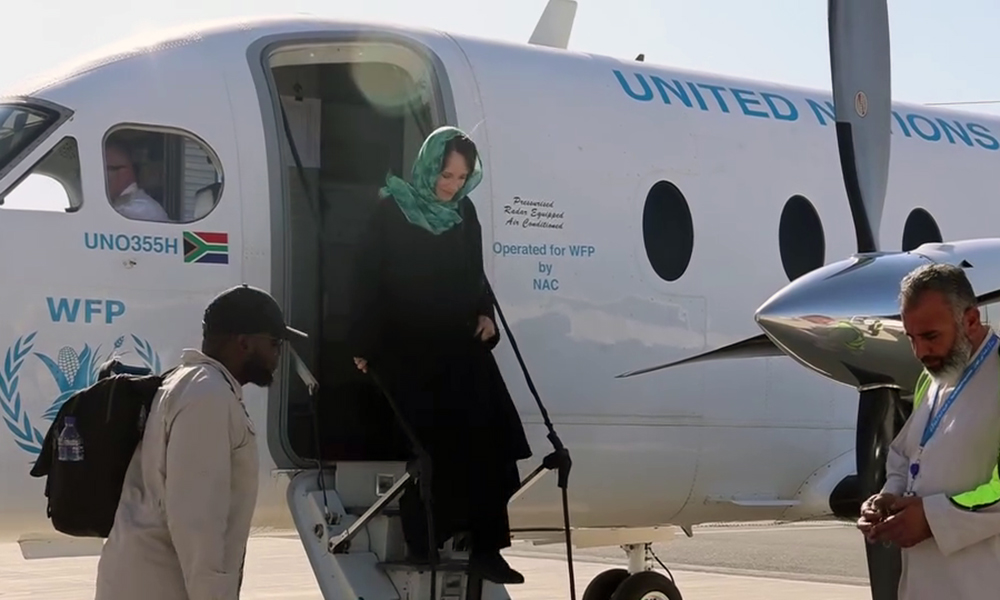
Georgette Gagnon, UNAMA’s acting head, visited western Afghanistan, including the Islam Qala border crossing, to see firsthand UN efforts to support millions of Afghans returning from neighboring Iran and Pakistan.
Earlier this year, the UN launched a $529 million response plan aimed at assisting around 2.7 million Afghans expected to return from Iran and Pakistan between April and December 2026.
Latest News
Trump: Unlike Afghanistan, US took all equipment from Iraq
Trump said the withdrawal from Iraq marked the end of what he described as a costly military involvement, adding that he had set a clear mission and instructed commanders to complete it without allowing the US presence to become permanent.
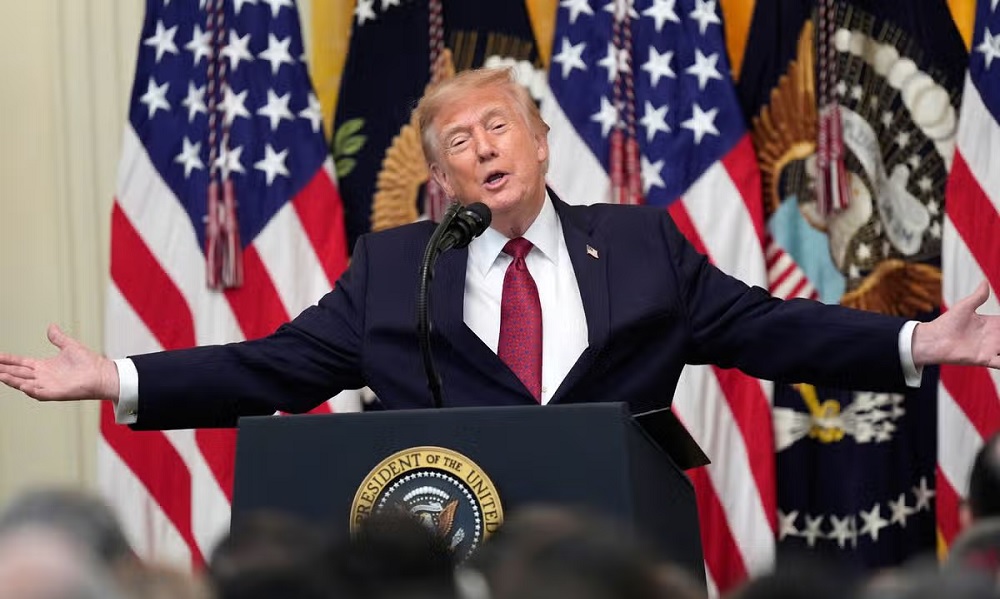
US President Donald Trump on Wednesday compared the withdrawal of US forces from Iraq with the 2021 US withdrawal from Afghanistan, saying military equipment had been left behind in Afghanistan, while US forces leaving Iraq took their equipment with them.
Speaking at a White House event, Trump referred to the final departure of US-led coalition forces and equipment from Erbil Air Base in northern Iraq, which marked the end of the US military mission against Daesh in Iraq.
“I said, take a little longer. Take everyone. We left all of the equipment, if you remember, in Afghanistan. Everything was left behind,” Trump said.
“I said, ‘I want every screw taken. If there’s a screw lying on the ground, take it. If we have a canvas tent, take it.’ We took everything,” he added.
He also mentioned the August 2021 attack at Kabul airport that killed 13 US soldiers.
Trump said he had become acquainted with the families of the US service members killed in the attack and also highlighted those who were seriously wounded.
“What happened to those—to their children should never have been allowed to happen,” he said, adding that 48 wounded service members were severely injured and “never get mentioned.”
Trump said the withdrawal from Iraq marked the end of what he described as a costly military involvement, adding that he had set a clear mission and instructed commanders to complete it without allowing the US presence to become permanent.
The US military announced on Wednesday that its forces and equipment had completed an orderly departure from Erbil Air Base, formally ending Operation Inherent Resolve in Iraq. The US-led mission began in 2014 to fight Daesh after the group seized large areas of Iraq and Syria. The US is continuing its counter-Daesh mission in Syria from a headquarters in Jordan.
Trump said the US had entered Iraq to fight the Islamic State and that the group no longer controlled a territorial “caliphate.”
“We came to fight a caliphate, and there is no longer a caliphate, so we are going home indeed,” he said.


Tahawol: Pakistan’s airstrikes on civilians in Afghanistan discussed

Arman FC crush Toofan Herat 4-0 in ACL clash

Khurasan Faryab and Ariana Khost settle for 1-1 draw

Four members of one family killed in Helmand in Pakistan airstrike

UNAMA acting chief visits Islam Qala border to assess support for returnees

Saudi energy group signs major Afghanistan deals covering gas exploration and pipeline plans

Iranian clubs to face Gulf opponents at neutral venues in Asian Champions League Elite

Khalilzad: Afghanistan ready to attract major investment

Ariana Television Network secures exclusive rights to Afghanistan’s 2026/27 cricket series

El Niño likely to intensify, may become strongest ever recorded, WMO says
Tahawol: Pakistan’s airstrikes on civilians in Afghanistan discussed

Tahawol: Improvement in Afghanistan-China relations discussed

Saar: Expanding ties with regional and global countries discussed

Tahawol: Absence of Afghanistan’s envoy at UNGA discussed

Saar: Assessment of war between Afghanistan and US discussed
-

 Sport5 days ago
Afghan bodybuilder Ali Bilal finishes runner-up at Mr Olympia for third straight year
-
 Latest News5 days ago
Afghanistan says 28 killed, 32 captured in Nuristan operation
-

 Sport4 days ago
Afghanistan vs India Asian Games quarter-final abandoned without a toss
-
 Latest News5 days ago
UNDP, UN Women launch financing initiative for Afghan women entrepreneurs
-
 Latest News5 days ago
Germany reports 488 Afghans for possible deportation, 267 have no criminal convictions
-

 Regional5 days ago
Aimal Wali Khan calls Dera Ismail Khan attack a ‘state failure’
-
 Regional4 days ago
Floods, landslides kill 56 in India and 14 in Nepal
-

 World4 days ago
Trump says men arrested at UK air base used by US planned ‘big damage’