
World
Azerbaijan halts Karabakh offensive after ceasefire deal with Armenian separatists

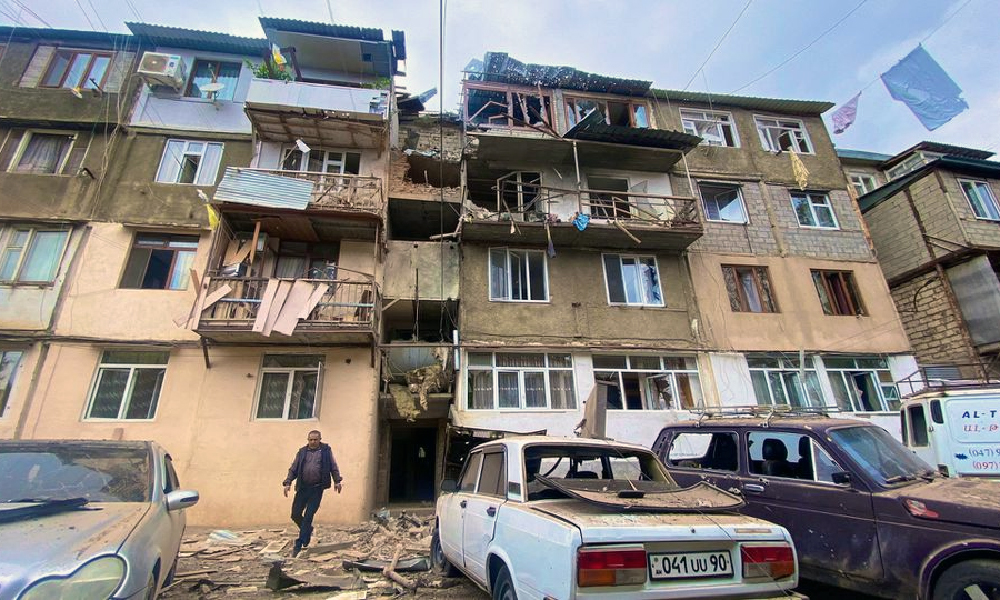
Azerbaijan said on Wednesday it had halted military action in its breakaway region of Nagorno-Karabakh after its battlefield success forced Armenian separatist forces to agree to a ceasefire that will see the area fully return to Baku’s control, Reuters reported.
Under the agreement, outlined by Azerbaijan and the Russian Defence Ministry, which has peacekeepers on the ground, separatist forces are meant to disband and disarm, while talks on the future of ethnic Armenians who live there are due to start on Thursday.
In a speech to the nation on Wednesday evening, Azerbaijani President Ilham Aliyev said Baku had restored its sovereignty “with an iron fist” in a 24-hour offensive by troops backed by artillery strikes that brought the breakaway region to heel.
He said Armenian forces had begun handing over their weapons and leaving, and that Karabakh’s 120,000 Armenians would be able to take part in Azerbaijani elections, receive state education, and freely practice their Christianity in his Muslim-majority nation.
“We will turn Karabakh into paradise,” said Aliyev, who said he was a man of his word.
Karabakh, a mountainous area in the volatile wider South Caucasus region, is internationally recognised as Azerbaijani territory, but part of it has been run by separatist Armenian authorities since a war that ended in the early 1990s.
Armenians claim a long historical dominance in the area, which they call Artsakh. Azerbaijan links its historical identity to the territory too.
Fearful of what the future might hold, thousands of Armenians massed at the airport in Stepanakert, the capital of Karabakh known as Khankendi by Azeris. Others took shelter with Russian peacekeepers in the hope of being flown out.
As Karabakh has been the focus of two wars since the 1991 fall of the Soviet Union, many of its Armenians deeply distrust Azerbaijan. Neighbouring Armenia has accused Baku of trying to ethnically cleanse the territory, something Baku denies.
“They are basically saying to us that we need to leave, not stay here, or accept that this is a part of Azerbaijan – this is basically a typical ethnical cleansing operation,” Ruben Vardanyan, a former top official in Karabakh’s ethnic Armenian administration, told Reuters.
Another separatist Armenian official said at least 200 people had been killed in the fighting and more than 400 wounded. He said 10 of those killed were civilians, of whom five were children. Reuters could not verify his assertion.
The victory for Azerbaijan, whose forces far outnumbered the separatists and which is backed by Turkey, could cause political turmoil in neighbouring Armenia, where some political forces are angry that the government was unable to do more to protect the Karabakh Armeniansm, read the report.
Armenian Prime Minister Nikol Pashinyan is already facing calls from some opponents to resign and thousands of protesters gathered in the Armenian capital on Wednesday evening to demand that the government do more for the Karabakh Armenians.
Some of them yelled “Nikol is a traitor!”.
Others are furious that Russia, which has peacekeepers on the ground and helped broker an earlier ceasefire deal in 2020 following a 44-day war, did not stop Azerbaijan.
The Kremlin rejected that criticism on Wednesday and President Vladimir Putin was quoted as saying that Russian peacekeepers, some of whom were killed on Wednesday when their car was shot at, would protect Karabakh’s civilian population, Reuters reported.
But Moscow has not criticised Baku. Describing a phone call between Putin and Pashinyan, the Kremlin said Putin “noted with satisfaction that it was possible to overcome the acute phase of the conflict, and welcomed the agreement … on a complete cessation of hostilities and the holding of negotiations on Sept. 21”.
Separatists running the self-styled “Republic of Artsakh” said they had been forced to agree to Azerbaijan’s terms – relayed by Russian peacekeepers – after Baku’s army broke through their lines and seized strategic locations.
Azerbaijan had said it could no longer tolerate a situation it regarded as a threat to its security and territorial sovereignty.
Separatist fighters were expected to leave Karabakh for Armenia after handing over their tanks and artillery to Russian peacekeepers, though some of them figure on an Azerbaijani wanted list and are likely to be arrested.
Armenia, which says it has no forces in Karabakh despite Azerbaijani assertions, did not intervene militarily – something that Aliyev said he appreciated.
It was unclear how many ethnic Armenians would opt to stay in Karabakh, Reuters reported.
Russia’s defence ministry, which has thousands of peacekeepers on the ground, broadcast footage of Karabakh Armenians being given temporary shelter at a makeshift Russian military facility.
Armenian Deputy Foreign Minister Paruyr Hovhannissyan told Reuters that Karabakh Armenians could “in an ideal world” live under Azerbaijani rule but that historical experience made it hard to imagine.
Azerbaijan’s military operation had faced sharp criticism from the United States and some European countries.
They said the Karabakh problem should have been solved through talks and that Baku’s actions were worsening an already dire humanitarian situation on the ground following a nine-month blockade of the area by Azerbaijan that caused acute shortages of food and other staples.




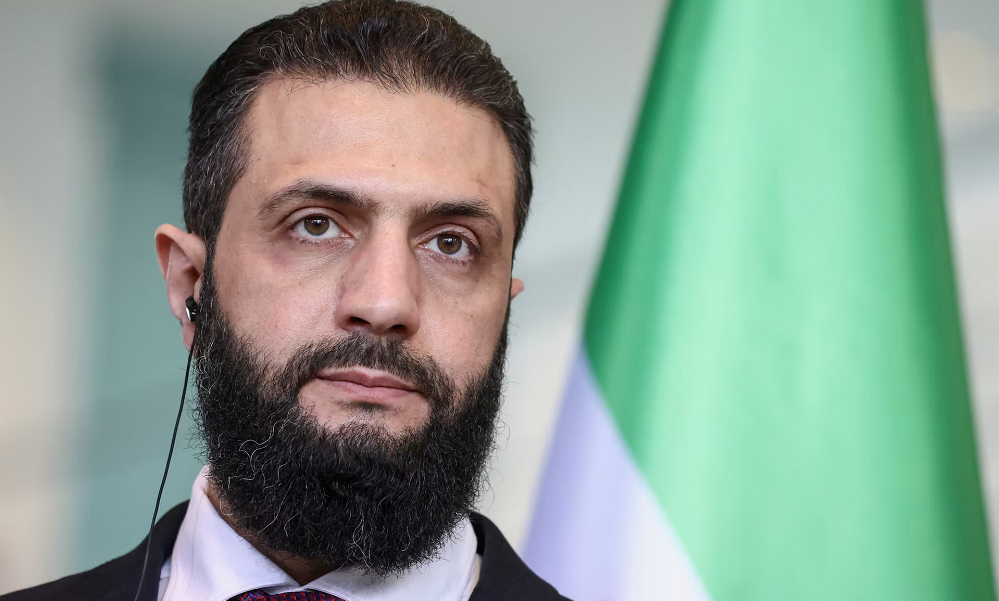
Syrian President Ahmed al-Sharaa said on Tuesday that his country will stay out of the U.S.-Israeli war against Iran unless Syria is subject to aggression and has no diplomatic solutions.
“Unless Syria is targeted by any party, Syria will remain outside any conflict,” the Syrian president said at an event hosted by think tank Chatham House in London, Reuters reported.
“We do not want Syria to be an arena of war. But unfortunately, today, things are not governed by wise minds. The situation is volatile and random,” the president said.
The month-long conflict has spread across the region, killing thousands, disrupting energy supplies, and threatening to send the global economy into a tailspin.
“We want Syria to have ideal relationships with the entire region, with Lebanon, Iraq, Turkey, Saudi Arabia, and world powers like the UK, France, Germany and the U.S. I think that Syria is qualified to start a strategic relationship network,” he said, responding to a question on whether Syria would stay neutral while the conflict goes on.
Syria has been keen to stay on the sidelines of the regional conflict that has pulled in neighbouring countries, including Lebanon, where armed group Hezbollah is locked in fighting with Israeli ground troops, and Iraq, where Iran-aligned factions have launched drone and rocket attacks.
Syria sent thousands of troops to its western border with Lebanon and its eastern border with Iraq earlier this month. Syria’s defense ministry said the deployment was part of efforts to “protect and control the borders amid the escalating regional conflict”.
“We had enough war. We paid a large bill. We are not ready for another war experience,” Syria’s president said.
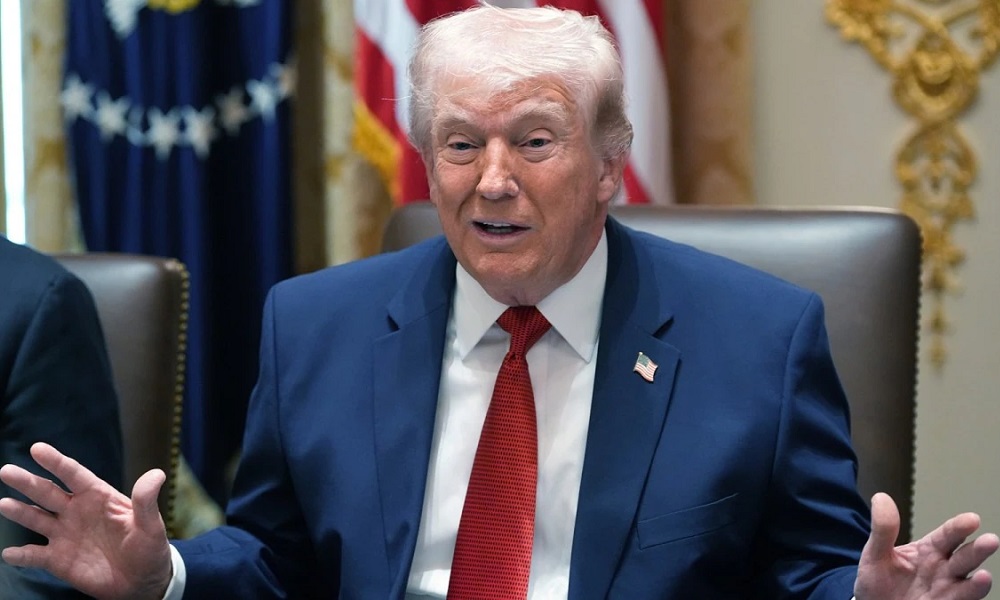
US President Donald Trump again on Tuesday lashed out at allies urging those affected by fuel shortages to secure their own supplies or buy from the United States.
In a post on Truth Social early in the day, Trump criticised allies stating: “All of those countries that can’t get jet fuel because of the Strait of Hormuz, like the United Kingdom… I have a suggestion for you: Number 1, buy from the U.S., we have plenty, and Number 2, build up some delayed courage, go to the Strait, and just TAKE IT,” he wrote.
He added: “You’ll have to start learning how to fight for yourself, the U.S.A. won’t be there to help you anymore… Go get your own oil!”
The remarks come amid heightened tensions in the Gulf, where shipping traffic has been severely disrupted, contributing to rising oil prices and concerns over global supply chains.
Pentagon briefing
At a press briefing on Tuesday, the Pentagon sought to clarify the US position, stopping short of endorsing Trump’s remarks.
Officials said the United States continues to prioritise freedom of navigation in the Strait of Hormuz and is working with regional partners to maintain stability. They emphasised that while all options remain under consideration, there has been no formal shift toward encouraging unilateral action by allied countries.
Pentagon spokespersons also noted that contingency planning is ongoing in response to escalating threats in the region, including missile and drone attacks, but reiterated that diplomatic efforts remain a key component of US strategy.
Key shipping route
The Strait of Hormuz, located between Iran and Oman, handles a significant share of the world’s oil and liquefied natural gas shipments. Any disruption to traffic through the waterway has immediate global repercussions, particularly for energy markets.
Recent weeks have seen escalating tensions involving Iran, with reports of restricted maritime movement and increased military activity in the region. Shipping slowdowns have already pushed oil prices higher and raised fears of prolonged economic fallout.
Trump’s comments also reflect a broader shift in tone toward allies, suggesting a reduced willingness by the United States to intervene militarily on behalf of partner nations.
Despite the controversy, US officials have not formally clarified whether the remarks signal a change in policy or were intended as rhetorical pressure on allies to strengthen their own energy security and defence capabilities.
Ongoing conflict
Trump’s remarks came against the backdrop of another night of intense fighting across the region, underscoring the growing volatility of the conflict.
Iranian forces reportedly struck a large Kuwaiti oil tanker off the coast of Dubai overnight, setting it ablaze and initially raising fears of a major oil spill. However, officials said on Tuesday that the fire had been contained, confirming that no oil leak occurred and no injuries were reported.
Earlier in the day, the United Arab Emirates Ministry of Defense said it had intercepted and responded to missiles and drones launched by Iran targeting the country.
As tensions ripple across the Gulf, Saudi Arabia also reported drone attacks overnight, highlighting the widening regional impact of the conflict. Iran’s foreign minister, however, insisted that the strikes were directed at US-linked targets and not at what he described as “brotherly” nations in the region.
Elsewhere, central Israel came under attack, with multiple strikes reported. The Israel Defense Forces said emergency responders had been dispatched to impact sites, while local media reported casualties.
In response, the IDF said it had carried out a series of strikes targeting government infrastructure in Tehran.
The Israeli military also confirmed it was continuing operations against the Iran-backed militant group Hezbollah in southern Lebanon, stating that several weapons depots, command centres, underground facilities and a rocket launcher had been destroyed.
However, Israel has also reported further losses, announcing that three additional soldiers had been killed in ongoing operations.
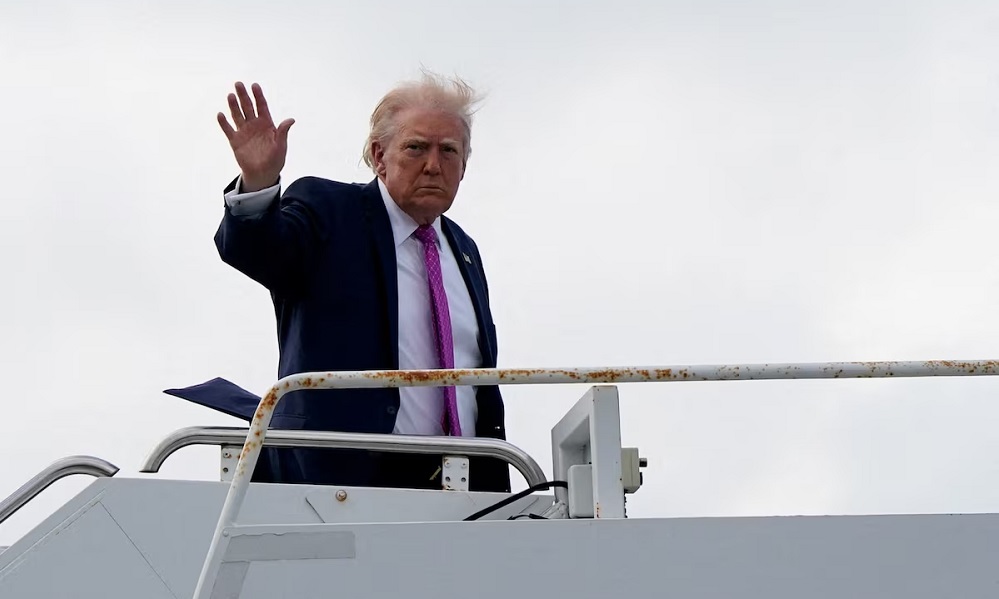
U.S. President Donald Trump told aides he is willing to end the military campaign against Iran even if the Strait of Hormuz remains largely closed and leave a complex operation to reopen it for a later date, the Wall Street Journal reported on Monday, citing administration officials.


Iraq seal final spot as FIFA World Cup 2026 line-up confirmed

Baradar approves 17 projects worth over one billion AFN

Afghan delegation heads to China for talks with Pakistan

US eases asylum freeze for vetted migrants, keeps Afghanistan ban

Punjab Kings edge Gujarat Titans in thrilling IPL clash as tournament gathers pace

Prominent Muslim scholar issues fatwa calling for Afghanistan-Pakistan ceasefire

IEA Supreme Leader issues Eid-ul-Fitr message urging unity and support for Islamic system

14 Pakistani soldiers killed after military post falls along Durand line: MoD

Ronaldo’s private jet flies out of Saudi Arabia following US Embassy drone strike in Riyadh

Afghanistan steps in to replace Iran in supplying fruits and vegetables to Russia

Tahawol: Escalation of conflict in Middle East discussed

Saar: Formation of Jirga in Khyber Pakhtunkhwa

Tahawol: Pakistani military shelling in Kunar

Saar: Impact of Middle East conflict on Afghanistan

Tahawol: Efforts for Kabul-Islamabad de-escalation
-
 Latest News4 days ago
Afghan defense forces stand ready to protect national sovereignty: MoD
-
 Latest News2 days ago
TAPI gas pipeline advances 25 km in Afghanistan
-

 International Sports3 days ago
Injury concerns mount ahead of FIFA World Cup 2026 as stars sidelined
-

 World5 days ago
US Vice President Vance emerges as key figure in Iran peace efforts: Report
-
 Business3 days ago
Afghanistan, Uzbekistan ink $514.8 million deals to deepen trade ties
-
 Latest News3 days ago
Peshawar to host key Pakistan-Afghanistan peace jirga amid ongoing tensions
-
 Latest News3 days ago
US report flags continued presence of anti-India militant groups in Pakistan
-

 Regional4 days ago
Twelve US troops wounded in Iran strike on base in Saudi Arabia, US official says