
Despite talks to see if a nuclear deal can be struck, Washington is amassing military forces in the region.
Iranian officials have warned that Tehran would retaliate by targeting U.S. military bases in the region.

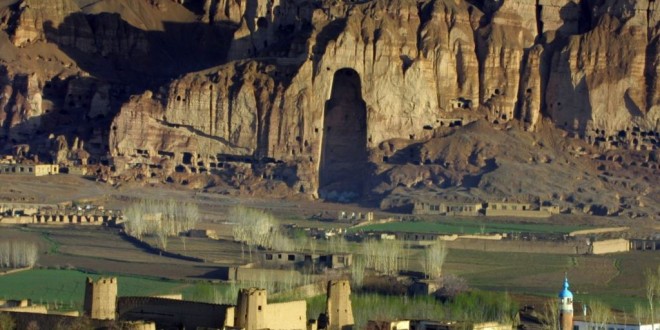

Afghanistan Bamyan province was officially introduced as the cultural capital of South Asian Association for Regional Cooperation (SAARC) for the year 2015.
The second vice president and second deputy of the executive officer arrived in Bamyan province earlier today, unveiled a special statue for the event and are said to consider the introduction of Bamyan as SAARC cultural capital respect for the history and ancient culture of Afghanistan.
Bamyan locates in the central highlands of the country and its terrain is mountainous or semi-mountainous.
The name “Bamyan” can be translated as “The Place of Shining Light”. In antiquity, central Afghanistan was strategically placed to thrive from the Silk Road caravans which criss-crossed the region trading between the Roman Empire, China, Central and South Asia.
Bamyan was a stopping off point for many travelers where elements of Greek and Buddhist art were combined into a unique classical style, known as Greco-Buddhist art.
“The extremists that destroyed Buda now aim the orient countries, the world’s countries should prevent this extremism,” Muhammad Muhaqiq, second deputy of CEO said.
The idea of regional cooperation in South Asia was first mooted in May 1980. The Foreign Secretaries of the seven countries met for the first time in Colombo in April 1981.
The Committee of the Whole, which met in Colombo in August 1981, identified five broad areas for regional cooperation. New areas of cooperation were added in the following years.
The South Asian Association for Regional Cooperation (SAARC) was established when its Charter was formally approved on 8 December 1985 by the Heads of State or Government of Bangladesh, Bhutan, India, Maldives, Nepal, Pakistan and Sri Lanka.
Afghanistan became a member of SAARC during the Fourteenth SAARC Summit held in Delhi, India in April 2007. Until 2009 China, Japan, Republic of Korea, USA, Iran, Mauritius, Australia, Myanmar and the European Union have joined SAARC as Observers.
SAARC provides a platform for the peoples of South Asia to work together in a spirit of friendship, trust and understanding.
It aims to promote the welfare of the peoples of South Asia and to improve their quality of life through accelerated economic growth, social progress and cultural development in the region.
During the Fifteenth Summit, the Heads of State or Government emphasized the importance of maintaining the momentum through clear links of continuity between the work already underway and future activities and recognized the need for SAARC to further strengthen its focus on developing and implementing regional and sub-regional projects in the agreed areas on a priority basis.
They also renewed their resolve for collective regional efforts to accelerate economic growth, social progress and cultural development and emphasized on key issues like telecommunication, energy, climate change, transport, poverty alleviation, science and technology, trade, education, food security and tourism.
Cooperation in SAARC is based on respect for the five principles of sovereign equality, territorial integrity, political independence, non-interference in internal affairs of the member states and mutual benefit.
Regional cooperation is seen as a complement to the bilateral and multilateral relations of SAARC Member States.
Reported by Nasrat Parsa

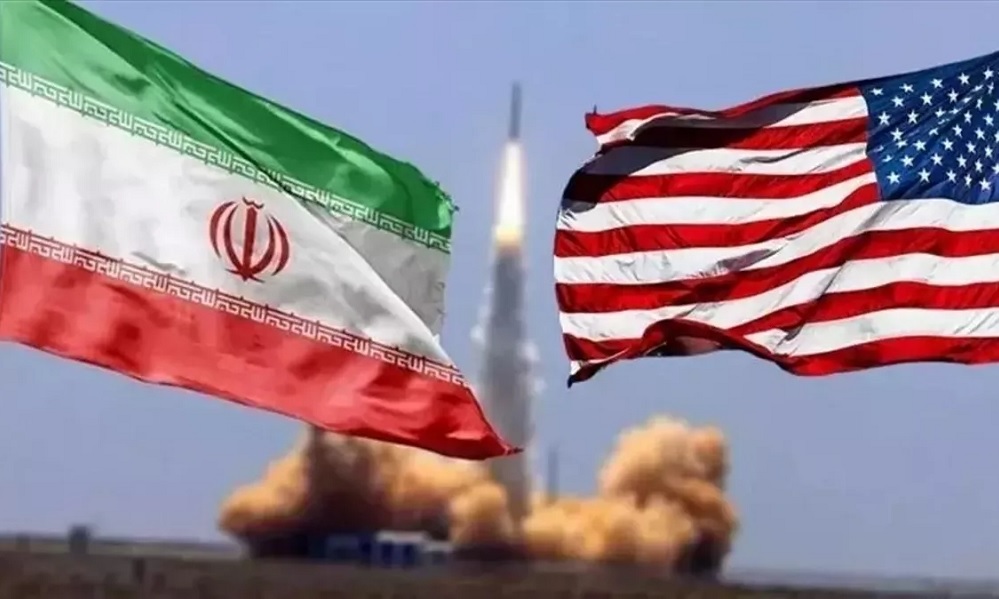
Zabihullah Mujahid, spokesperson for the Islamic Emirate of Afghanistan (IEA), said that in the event of a possible conflict between Iran and the United States, Iran would have the capacity to emerge victorious.
Speaking in an interview with Iran Radio, he emphasized that the Islamic Emirate does not support war, but believes that “the Islamic Republic of Iran was ultimately successful the last time it faced an attack, and this time as well due to its capabilities and its legitimate right to self-defense” it would have the upper hand.
Mujahid added that, if formally requested, Afghans are prepared “to the extent of their ability” to cooperate with the Iranian people in addressing the potential consequences of such a conflict.
Despite talks to see if a nuclear deal can be struck, Washington is amassing military forces in the region.
Iranian officials have warned that Tehran would retaliate by targeting U.S. military bases in the region.
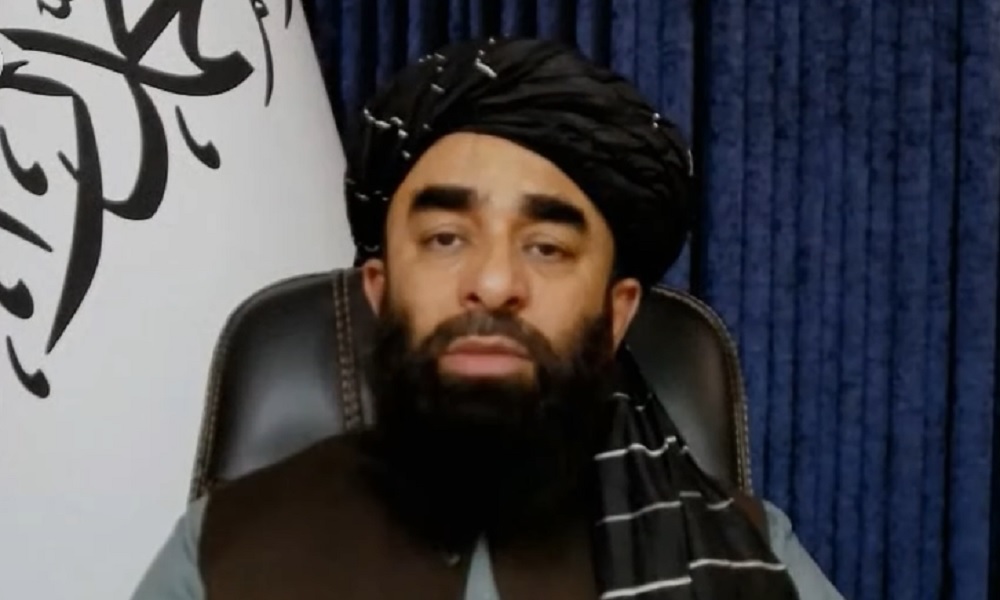
Zabihullah Mujahid, spokesperson for the Islamic Emirate, says the recent attack on a mosque in Islamabad was the consequence of Pakistan’s longstanding policy of “nurturing Daesh.”
The attack, carried out over a week ago, killed 31 people and injured 170 others.
In an interview with Iran Radio, Mujahid stated: “Daesh is an enemy like a snake; if you raise it in your sleeve, it will eventually bite you.”
He argued that Pakistan’s instrumental use of Daesh for “covert and intelligence-driven objectives” harms not only the people of Pakistan but also has negative repercussions for the people of Afghanistan.
Mujahid once again rejected allegations that the Islamic Emirate supports Tehrik-e Taliban Pakistan (TTP). He emphasized that no unauthorized armed individual is allowed to operate inside Afghanistan. According to him, the Islamic Emirate had expressed readiness to facilitate the return of “Waziristani migrants,” but Pakistan declined the offer. Instead, at Pakistan’s request, these families were relocated from areas near the Durand Line to other parts of Afghanistan.
Mujahid added that crossing closures have harmed traders in both countries, though he claimed Pakistan has suffered more. He said the crossings will not be reopened unless Pakistan provides a “guarantee” that it will not repeatedly close them due to political considerations.
The minister also called on Afghan business leaders to support the poor and displaced during the upcoming month of Ramazan, urging them to allocate their Zakat to vulnerable citizens.
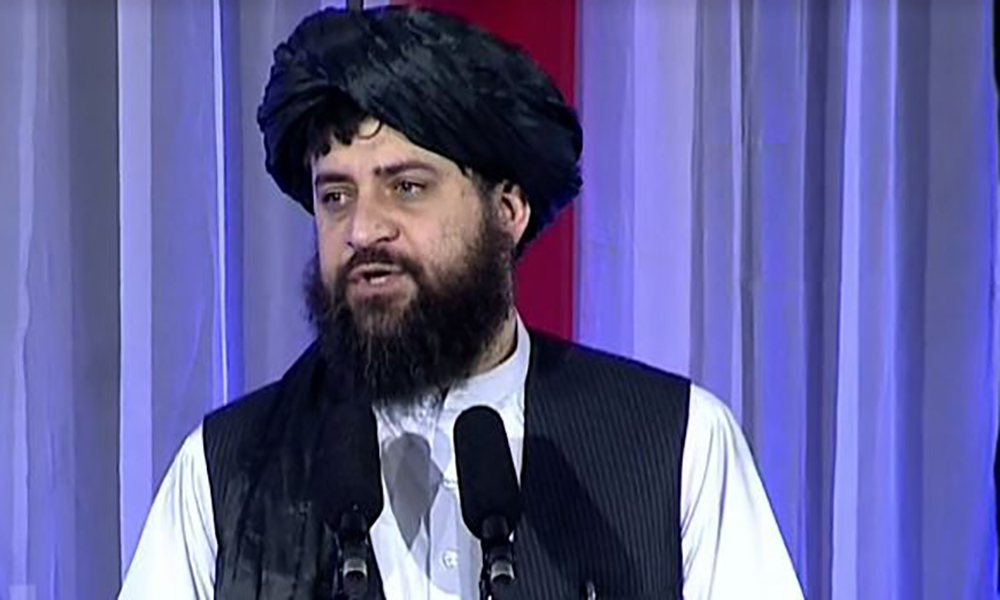
Afghanistan’s Defense Minister, Mohammad Yaqub Mujahid, emphasized the importance of leaving past conflicts behind and setting aside divisions in order to prevent future internal strife.
Speaking on Sunday at a ceremony commemorating the 37th anniversary of the defeat and withdrawal of Soviet forces from Afghanistan, Mujahid warned that a desire for revenge could threaten the stability of the current system.
He stated, “Those who seek power today are no longer even remembered in graves. If you think of the future, think for the people and the nation, and leave a legacy that future generations can be proud of, like our past heroes.”
He underscored that true merit is not determined by language, ethnicity, or position, but by piety and integrity.
The minister also called on Afghan business leaders to support the poor and displaced during the upcoming month of Ramazan, urging them to allocate their Zakat to vulnerable citizens.
“My special message to businessmen is: do not forget your people, and always help them,” Mujahid said.
Highlighting the importance of public cooperation in security, Mujahid added, “Afghanistan today enjoys exceptional security. Citizens must work with security forces to maintain stability. Some countries do not want Afghanistan to be secure; they see their own security in our instability and wish to prosper at the expense of our nation.”
Addressing neighboring countries and the international community, Mujahid affirmed, “Afghanistan is an independent country. We assure all countries that Afghanistan has no threat or bad intentions for you and we will not allow our soil to be used against neighboring countries and we have been able to contain threats against other countries and in this regard, we have full ability and do not need anyone’s help and cooperation.
“We have one request from countries not to create problems for us and not to make excuses, we are ready for any kind of dialogue, but based on mutual respect and national interests, we are ready to negotiate and we will not accept anyone’s orders in this regard, and if someone makes excuses, our message is clear: this approach benefits neither you nor the Afghan people.”
He further stated that even countries that previously invaded or occupied Afghanistan are invited to build relations, but always based on mutual interest and respect. He called for the establishment of a “fresh page” for positive and constructive relations.
Meanwhile, Abdul Salam Hanafi, Administrative Deputy of the Prime Minister’s Office, said that the Afghan nation has never accepted foreign occupation. He said this day in Afghanistan’s history was unforgettable and a source of national pride.
He added that under the Islamic Emirate, drug trafficking and cultivation have been banned, families of martyrs receive designated support, and all orphans are cared for without discrimination, with approximately 13–14 billion Afghanis allocated for their welfare.
Hanafi also emphasized that drug addiction among youth was fueled by foreign powers, while its treatment is now managed by the Islamic Emirate.
Hanafi concluded by urging civil servants to treat the Afghan people with compassion, remain humble in office, and utilize all available resources to preserve the Islamic system.
Separately, Noor Muhammad Saqib, Minister of Hajj and Religious Affairs, highlighted the need for constant preparedness against threats, stating that Afghans should not rely solely on past victories over powerful nations but remain vigilant against any potential dangers in the future.





Afghanistan’s semi-final hopes hang in the balance after two T20 World Cup defeats
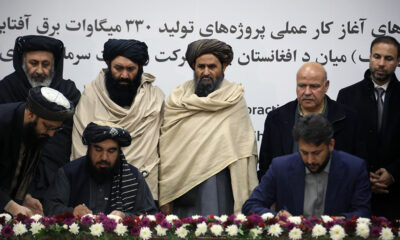

Afghanistan signs 845MW Power deal with Azizi energy; Baradar meets company Chief to advance investment plans


AFC U17 Men’s Asian Cup Saudi Arabia 2026 Draw sets stage for continental showdown
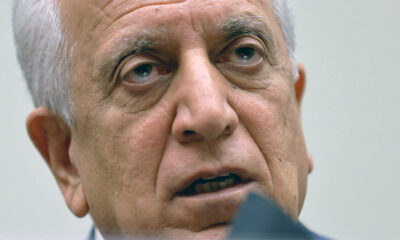

Khalilzad questions whether Pakistan played a ‘double game’ in Afghanistan war


Pressure rises on Dubai port giant DP World over chief’s alleged Epstein ties


Winter Olympics 2026: Wednesday brings records, first-ever golds and thrilling action

Pakistan appoints two consuls general in Kandahar and Mazar-e-Sharif
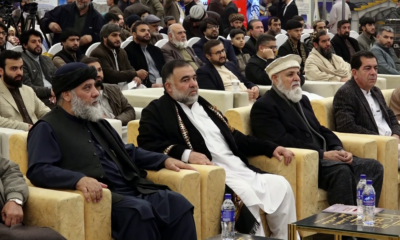

Afghanistan moving toward development and industrialization every day: Azizi