
Latest News
Bayat Power set to launch phase two of its gas to electricity power generating project


Bayat Power is hoping to start work on phase two of Bayat Power-1 in northern Jawzjan province in order to increase its electricity production output for Afghanistan.
Company officials said Sunday they have started discussions with relevant government departments in order to start the project.
Mohammad Shoaib Sahibzada, the technical head of Bayat Power, said once complete the second phase of the power plant project will add about 100 megawatts of electricity to the national grid. He said eventually, phase three will push output up to 200 megawatts.
In 2019, Bayat Power started work on Bayat Power-1’s 40MW gas-fired turbine, which achieved commercial operation later that year in Sheberghan. The plant uses Siemens Energy’s SGT-A45 mobile gas turbine, which will be integrated into phase two of the project.
Sahibzada meanwhile said phase one of the project, completed in November four years ago, has an output capacity of 40 megawatts and has provided hundreds of thousands of people with electricity in this time.
He also stated that the SGT-A45 turbine has the ability to produce 300 million kilowatts of electricity annually, which will be supplied to residential areas, mosques, universities, schools and hospitals in Jawzjan, Sar-e-Pul and Balkh provinces.
“The leadership of Bayat Power is in contact with the relevant departments and officials. Talks have started so that we can begin and implement the second phase of this project,” said Sahibzada.
He added that they have a contract with Da Afghanistan Breshna Sherkat (DABS), the country’s power supply company, for the distribution and regulation of electricity produced by Bayat Power, and that the company has signed another contract with Afghan Gas Company to increase the supply of natural gas.
Sahibzada also said Bayat Power has close working partnerships with DABS, Afghan Gas and other institutions including the Ministries of Mines and Petroleum, Energy and Water, as well as Siemens Energy – all of which help to provide more electricity to the nation.
“The benefits of this project from the point of view of electricity supply is that it was already able to provide electricity to hundreds of thousands of families, and the installed turbine has the [output] capacity of 40 megawatts of electricity,” Sahibzada added.
He also said phase two will bring the company closer to reaching its goal of producing 300 million kilowatt hours of electricity annually.
The Islamic Emirate has meanwhile welcomed Bayat Power’s plans to expand the output capacity. The IEA’s spokesman Zabihullah Mujahid said the Islamic Emirate gives its full support to the private sector.
“For the Islamic Emirate of Afghanistan, electrical energy is very important, it has vital value. Therefore, the Islamic Emirate pays a lot of attention to the private sector, if a company obtains an achievement, it means that it has been paid attention to. The Islamic Emirate has used all the possibilities to support the private sector and they are definitely moving forward,” said Mujahid.
Bayat Power was founded by the Bayat Group in 2013 with the aim of providing domestically produced electricity to the people of Afghanistan.
The power plant utilizes advanced and efficient technology, offering significantly more power and higher efficiency compared to other mobile gas turbines worldwide.
The project, in addition to generating significant tax revenues to the government, has created thousands of direct and indirect job opportunities for Afghans, contributing to the nation’s economic condition and fostering new technical skill sets amongst talented citizens.
Bayat Power, is in fact a trailblazer in Afghanistan’s independent power production sector, and just last week was awarded the prestigious Asian Power Award 2023 for its groundbreaking gas-fired mobile power plant.
On hand to accept the award on Wednesday night was Bayat Power’s CEO Ali Kasemi who said it was an honor and a privilege for the company to receive the accolade. He also said the award was an acknowledgement of the hard work and tenacity of Afghans in their quest for energy security and self-sufficiency in the power sector.
“Bayat Power is extremely proud that the Asian Power Awards have recognized our project as the Gas Power Project of the Year in Afghanistan. But we are even prouder of our continued efforts to improve the lives of Afghans across the country, enabling students to study at night, allowing health workers to provide critical services 24/7, supporting factory production, and lighting up cities, streets, mosques, and homes nationwide,” said Kasemi.


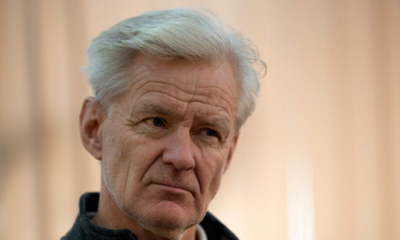


A representative of the Islamic Emirate of Afghanistan (IEA) said at a forum in China that a recent security operation in the northern province of Badakhshan demonstrated the capabilities of the country’s security forces to counter threats to stability.
The remarks were made at the 2026 Conference of the Global Public Security Cooperation Forum (Lianyungang) in China, where a delegation from Afghanistan’s Ministry of Interior participated. The delegation was led by Zainullah Abir, chief of staff of the minister’s office, and Abdul Rahim Saqib, a senior adviser to the ministry.
Addressing the conference, the Islamic Emirate representative cited the recent operation in Badakhshan as an example of the security forces’ ability to confront groups and individuals it described as disrupting security.
“With the assistance of Allah, our security forces have the capability to prevent any form of insecurity within the country, suppress those who disrupt security, and thwart the objectives and malicious intentions of groups seeking to destabilize Afghanistan,” he said.
He described the recent failure of what he called “security disruptors” in Badakhshan as a clear example of that capability.
The official also said Afghanistan’s security forces were committed to preventing the country’s territory from being used to carry out attacks or create insecurity against Afghans, neighboring countries or other states.
He called for greater regional cooperation on security issues, including intelligence sharing, border security, and joint efforts to combat narcotics and smuggling.
The Afghan representative also praised China’s role in supporting peace and stability in the region and said Kabul was prepared to expand security cooperation with Beijing and other regional countries.
He said Afghanistan sought peace, security and economic development based on mutual respect and shared interests.
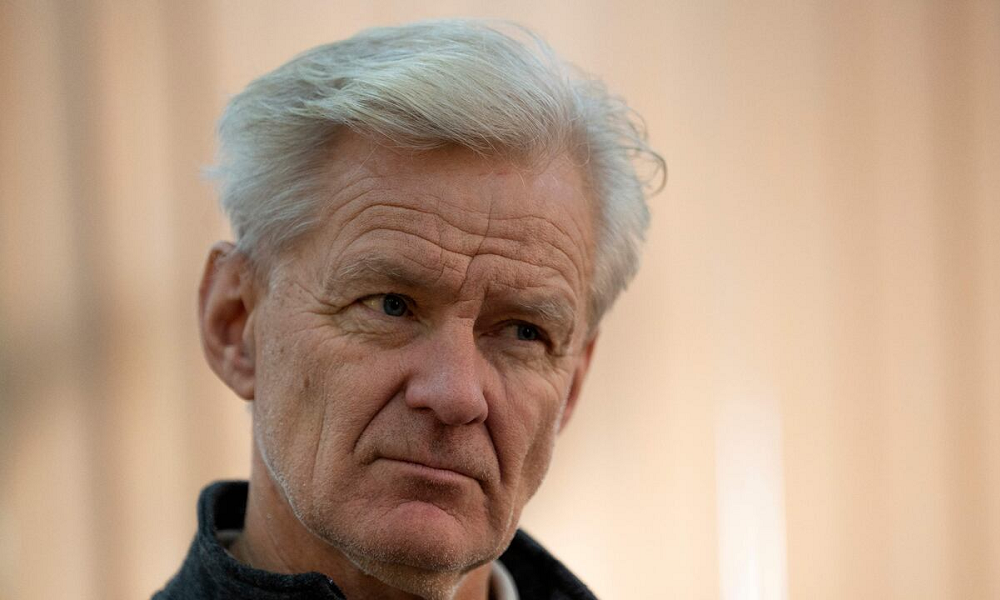
The head of the Norwegian Refugee Council (NRC), Jan Egeland, has urged governments in Europe, North America and elsewhere to reopen their embassies in Afghanistan and engage directly with the Islamic Emirate authorities.
Speaking to AFP in Kabul on Thursday, Egeland said governments should continue pressing the IEA for women’s rights while also providing humanitarian assistance to a population facing a deepening crisis.
He stressed that diplomatic engagement would not necessarily mean formally recognising the IEA authorities, whose government is officially recognised only by Russia.
“Our appeal is… come here and engage with us,” Egeland said, calling on governments to demand rights for women and girls while also offering assistance to them.
His comments came as international aid to Afghanistan has fallen sharply since the Islamic Emirate returned to power in 2021. The United Nations said it had received less than 30 percent of the funding needed to provide life-saving assistance as of late August.
Egeland also criticised governments that publicly advocate for Afghan women’s rights while reducing humanitarian funding.
“It is hypocrisy when one does that from abroad in a seminar in some capital in Europe and cut aid for food to Afghan girls and even for primary education for Afghan girls,” he said.
Latest News
Instability in Afghanistan stalls regional transport projects: Pakistan envoy
The envoy said that Pakistan will participate in the Moscow-format consultations on Afghanistan in October.

Instability in Afghanistan has effectively stalled Pakistan’s regional transport connectivity projects, Pakistan’s Ambassador to Russia Faisal Niaz Tirmizi said, stressing that Islamabad wants to see a stable Afghan state integrated into the region.
In an interview with Russian newspaper Izvestia, Tirmizi said Pakistan had hoped the Afghan government would become part of the regional process, but continued instability had hindered Islamabad’s efforts to develop overland connections with Central Asia and Iran.
“Our transport connectivity projects have effectively stalled precisely because of this instability,” Tirmizi said.
He added that a stable Afghanistan would significantly improve regional trade and transportation.
“If Afghanistan were stable, overland routes to Central Asia and Iran would be much more efficient,” the ambassador said.
Tirmizi said Islamabad remains particularly concerned about militant groups operating from Afghanistan, describing the country as a haven for extremists and terrorists.
He warned that the threat extends beyond Pakistan, saying instability in Afghanistan poses risks to China, Tajikistan, Uzbekistan and Russia as well.
The envoy said that Pakistan will participate in the Moscow-format consultations on Afghanistan in October.


Afghan official highlights Badakhshan operation at China security forum

NRC chief urges West to reopen embassies in Afghanistan and engage with IEA

Instability in Afghanistan stalls regional transport projects: Pakistan envoy

Khalilzad says IEA has ‘surprisingly’ been good for US counterterrorism interests

Saudis shut down oil pipeline as Houthis tighten grip on Red Sea shipping

Four mediators struggle to secure lasting Pakistan-Afghanistan ceasefire

HesabPay unveils new visa card and digital payment app in Kabul

Juma Khan Fateh surrenders to IEA forces in Badakhshan

Afghanistan’s trade diversification challenges Pakistan

Syria and Saudi Arabia condemn Kabul bombing, express solidarity with Afghanistan

Exclusive interview with ACB CEO Naseeb Khan

Saar: UN reaffirming support for Afghanistan discussed

Saar: Pakistan’s decision to expel Afghan medical students discussed

Tahawol: Victory of Germany’s far-right party in state election discussed

Saar: UN Human Rights Council meeting on Afghanistan reviewed
-
 Latest News4 days ago
Amnesty International condemns Pakistan order requiring Afghan medical students to return
-
 Latest News4 days ago
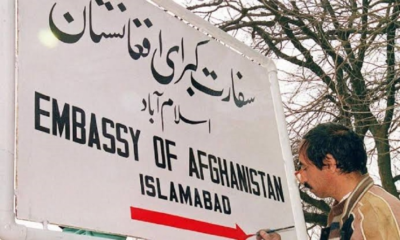
Afghan Embassy in Islamabad calls for halt to expulsion of Afghan students
-
 Latest News4 days ago
Kabul police spokesman condemns Pakistan order expelling Afghan medical students
-
 Latest News4 days ago
IEA: US military equipment left in Afghanistan belongs to Afghan government
-
 Latest News5 days ago
New faculty of aerospace engineering established at Kabul Polytechnic University
-
 Latest News4 days ago
Qatar reaffirms commitment to supporting dialogue and engagement on Afghanistan
-

 Science & Technology4 days ago
AI could pose ‘existential’ risk to humanity, UN rights chief warns
-
 Latest News4 days ago
UN states Afghanistan continues to face consequences of decades of conflict and disasters