
Latest News
Britain’s war in Afghanistan has cost over $31 billion

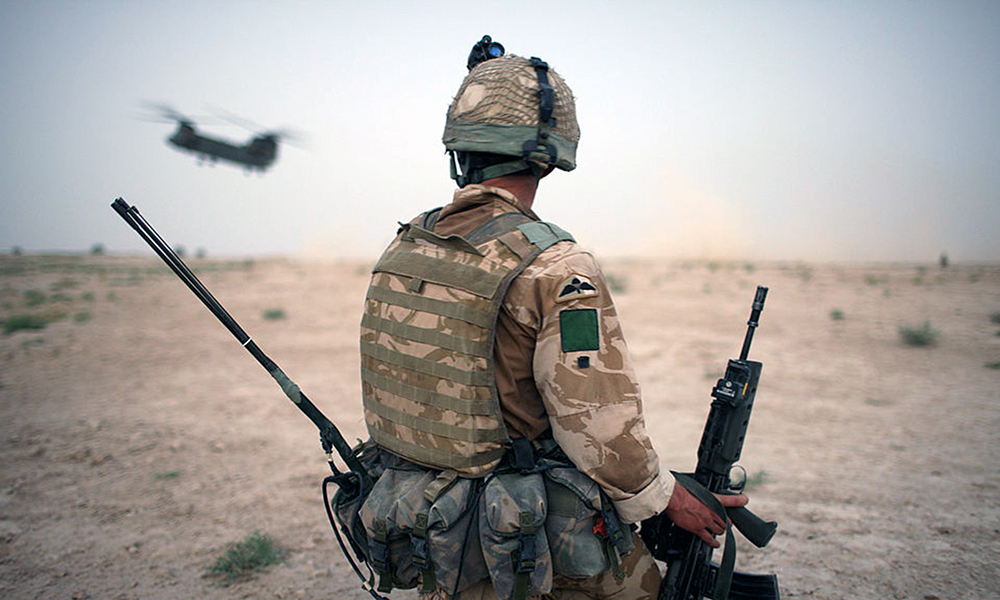
Britain’s war in Afghanistan has cost UK taxpayers £22.2billion ($31.3 billion), the United Kingdom’s government has revealed.
According to a report in the UK’s Mirror on Monday, is likely to be even higher because the bill disclosed by Defence Minister James Heappey only counts cash from a special Whitehall fund for the conflict.
Revealing the cost in a written parliamentary answer, Heappey said: “As at May 2021, the total cost of Operation Herrick to HM Treasury Special Reserve is £22.2billion,” the Mirror reported.
The Mirror also reported that while the financial cost is huge, the impact on some UK servicemen and women has been devastating.
“There were 457 fatalities on, or subsequently due to, Op Herrick. Of which 403 were due to hostile action. Op Herrick ran between January 1, 2006 and November 30, 2014, during which there were 10,382 UK Service personnel casualties. Of these 5,705 were injuries, and the remainder being illness or disease,” said Heappey.
“Between January 1, 2006 and March 31, 2021, there were 645 UK Service personnel who were categorised as very seriously injured, seriously injured or who sustained a traumatic or surgical amputation due to Op Herrick.
“This includes any amputations in recent years that were elective or necessary during treatment as a result of previous injuries sustained,” the Mirror quoted Heappey as saying.
British combat troops left Afghanistan in 2014 and the UK’s remaining 750 troops – Black Watch soldiers who are involved in training local forces after – started to pull out of the country last month.
Most are expected to have returned home by the end of next month.
Heappey meanwhile said: “The majority of UK military equipment will be returned to the UK.
“Some equipment may be demilitarised and disposed of in theatre should it be deemed uneconomical to recover to the UK.”
The Mirror meanwhile reported that on Sunday it emerged dozens of RAF transport planes will be sent to fly 3,000 Afghan interpreters and their families from Kabul to the UK amid fears for their safety after allied troops leave.












Kazakhstan’s Foreign Minister Mukhtar Tileuberdi has called for pragmatic and coordinated international engagement with Afghanistan, saying the country’s long-term stability is closely linked to the security and sustainable development of Central Asia.
Speaking during the general debate of the 81st session of the United Nations General Assembly in New York on Friday, Tileuberdi said humanitarian assistance to Afghanistan remains essential but alone cannot break the cycle of poverty, displacement and dependency.
He said Kazakhstan supports a “pragmatic, coordinated and step-by-step” approach to international engagement with Afghanistan, with the United Nations playing a central role.
Tileuberdi also said Kazakhstan is working with the UN to operationalize the United Nations Regional Centre for the Sustainable Development Goals for Central Asia and Afghanistan in Almaty.
He said the success of the centre should be measured by the results and assistance it delivers to the region.


Abu Muslim Farah defeat Khurasan Faryab 2-0 in ACL season six

Saar: Concerns over Pakistan’s political crisis discussed

Afghanistan Champions League: Omar Zawak Herat beat Toofan Herat 1-0

Blast in Pakistan’s Dera Ismail Khan kills 11, injures 30

Ariana Afghan Airlines increases Kabul-Delhi cargo flights

Saudi energy group signs major Afghanistan deals covering gas exploration and pipeline plans

Trump floats idea of renaming Atlantic or Pacific Ocean

US hits Egyptian bank branches with Iran sanctions as war marks six months

Nepal flood rescue mission enters critical phase as thousands remain missing

Iranian clubs to face Gulf opponents at neutral venues in Asian Champions League Elite
Saar: Concerns over Pakistan’s political crisis discussed

Exclusive interview with Abdul Latif Mansoor, Minister of MRRD

Tawsia: Overview of Afghanistan’s iron mines

Tahawol: Discussion on fresh Pakistani airstrikes on Afghanistan

Saar: Calls for international support for Afghanistan discussed
-

 World5 days ago
CNN, MS NOW and Politico sue Trump, challenging White House ban
-

 Latest News4 days ago
Ariana Afghan Airlines ranks seventh among 45 Central Asian airlines
-

 Latest News5 days ago
UN reiterates call for respect for international law after Kunar airstrikes
-

 Regional4 days ago
US and Iran hold first talks since June after Trump’s ‘annihilation’ threat
-

 Latest News4 days ago
Silk Road highway in Wakhan corridor now reaches the China border
-

 Regional3 days ago
Iran airlines cancel flights as US sanctions hit
-

 Latest News5 days ago
Afghan Official: Pakistan’s airstrikes will not go unanswered
-

 Regional5 days ago
G7 foreign ministers call on Iran to stop arming Houthis