
Latest News
Chad President Idriss Deby killed in battle

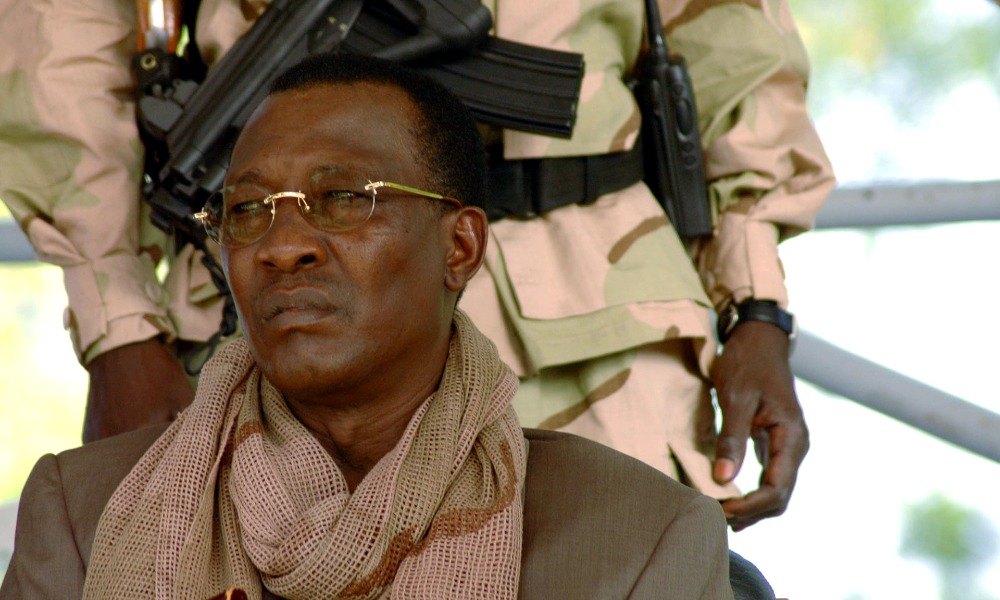
Chad’s President Idriss Deby, who ruled his country for more than 30 years and was an important Western ally in the fight against Islamist militants in Africa, has been killed in a battle against rebels in the north.
His son, Mahamat Idriss Deby Itmo, was named interim president by a transitional council of military officers, army spokesman Azem Bermendao Agouna said on state television.
Deby, 68, took power in a rebellion in 1990 and was one of Africa’s longest-ruling leaders, surviving numerous coup attempts and rebellions. His death could deepen Chad’s problems, and those of its allies.
On the domestic front, the military is divided and the opposition bridling against years of repressive rule.
Internationally, France and the United States will be hoping their counter-terrorism efforts are not now pushed off course. France said that it had lost “brave friend” and Chad “a great soldier”.
He was killed just after he was declared winner of a presidential election that would have given him a sixth term in office. Most of the opposition boycotted the vote.
Deby – who often joined soldiers on the battlefront in his military fatigues – visited troops on the frontline on Monday after rebels based across the northern frontier in Libya advanced hundreds of km (miles) south toward the capital N’Djamena.
“Marshal Idriss Deby Itno, as he did each time that the institutions of the republic were gravely threatened, took control of operations during the heroic combat led against the terrorists from Libya. He was wounded during the fighting and died once repatriated to N’Djamena,” Bermendao said.
The government and National Assembly have been dissolved and a nationwide curfew imposed from 6 p.m. to 5 a.m.
“The National Council of Transition reassures the Chadian people that all measures have been taken to guarantee peace, security and the republican order,” Bermendao said.
The military council said it would lead a transition for a period of 18 months leading to free and fair elections.
Deby had pushed through a new constitution in 2018 that would have allowed him to stay in power until 2033. He said before last week’s election: “I know in advance that I will win, as I have done for the last 30 years.”
He was dealing with mounting public discontent over his management of Chad’s oil wealth and crackdowns on opponents. In the election results, Deby claimed 79% of the vote.
A Reuters reporter in N’Djamena said people were in a panic as news of his death spread, fearing that fighting could break out in the city. Many were fleeing to the outskirts and roads were jammed with traffic.
Western countries had counted on Deby as an ally in the fight against Islamist militants, including Boko Haram in the Lake Chad Basin and groups linked to al Qaeda and Islamic State in the Sahel.
France, the former colonial power, had based its Sahel counter-terrorism operations in N’Djamena. Chad had announced in February the deployment of 1,200 troops to complement 5,100 French soldiers in the area.
The French presidency praised Deby and affirmed its support for Chad’s stability and territorial integrity. In a statement, it noted the formation of the interim council headed by Mahamat Idriss Deby Itmo but said it hoped there would be a quick and peaceful return to civilian rule.
Déby’s death could mean tremendous uncertainty for Chad, said Nathaniel Powell, author of a history of French military involvement in Chad.
“The swift announcement of the establishment of a military council and naming his son Mahamat as head of state however indicates regime continuity,” Powell told Reuters.
“This probably aims to counter any coup-making efforts from within the security establishment and to reassure Chad’s international partners…that they can still count on the country for its continued contributions to international counter-terrorist efforts in the Sahel.”
A regional diplomat said the naming of Deby’s son as interim president was problematical as the speaker of parliament should have taken power on his death.
“That in itself is a coup,” the diplomat told Reuters. “He has been grooming the son for some time.”
The latest rebel actions had already caused alarm in Washington and other Western capitals.
Fighters of the Libya-based Front for Change and Concord in Chad (FACT) attacked a border post on election day then advanced hundreds of kilometres (miles) south through the vast country.
But the Chadian military appeared to have slowed its progress about 300 km (185 miles) from N’Djamena.
The rebels acknowledged on Monday they suffered losses on Saturday but said they were back on the move on Sunday and Monday.
Deby loved to vist troops on the frontlines. He joined the army in the 1970s when Chad was engaged in a long civil war. He received military training in France and returned to Chad in 1978, throwing his support behind President Hissène Habré and eventually becoming commander-in-chief of the armed forces.
He seized power in 1990, leading a rebel army in a three-week offensive staged from neighbouring Sudan to topple Habre, a man accused of widespread human rights abuses.





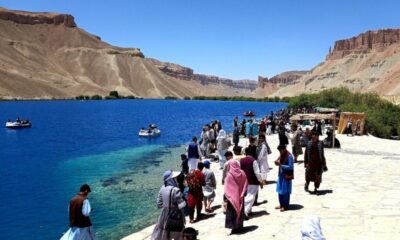

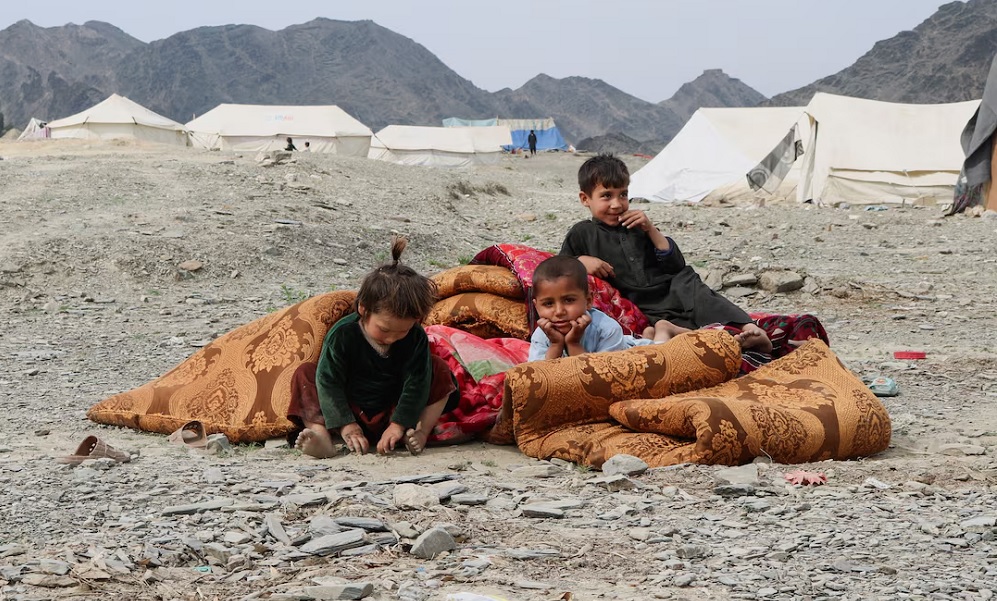
A group of religious scholars from Afghanistan and Pakistan have called on authorities in both countries to extend the pause in hostilities, initially announced for Eid ul-Fitr, until Eid ul-Adha.
The appeal comes after Attaullah Tarar, Pakistan’s Information Minister, announced a temporary ceasefire from March 18–19 midnight until March 23–24 midnight.
In a joint statement signed by 11 Pakistani clerics and as many Afghan clerics, the scholars emphasized that their initiative aims to promote a sustainable and dignified resolution to tensions between Islamabad and Kabul, Dawn newspaper reported.
The clerics urged both Pakistani authorities and the Afghan side to extend the ceasefire to allow pilgrims to perform Hajj in a peaceful environment. They added that this “peace movement” goes beyond the ceasefire appeal and includes broader diplomatic and social efforts to resolve longstanding issues between the two countries.
The scholars expressed hope that their efforts would lead to a mutually acceptable solution and help lay the foundation for lasting stability and regional harmony.
The Ministry of Foreign Affairs of the Islamic Emirate of Afghanistan announced on Tuesday the release of American citizen Dennis Coyle from prison.
According to the ministry, Coyle’s mother had written to the leader of the Islamic Emirate demanding amnesty and the release of her son on the occasion of Eid. The Supreme Court considered time served sufficient and decided to release him.
The Ministry of Foreign Affairs stated that this action was carried out on the basis of humanitarianism and good faith, and it believes that such measures can strengthen trust between countries. The ministry also expressed hope that both countries, in the future, can find solutions to remaining issues through mutual understanding and constructive dialogue.
The Islamic Emirate also expressed appreciation for the cooperation of the United Arab Emirates in this matter.
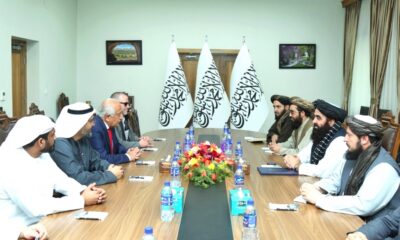
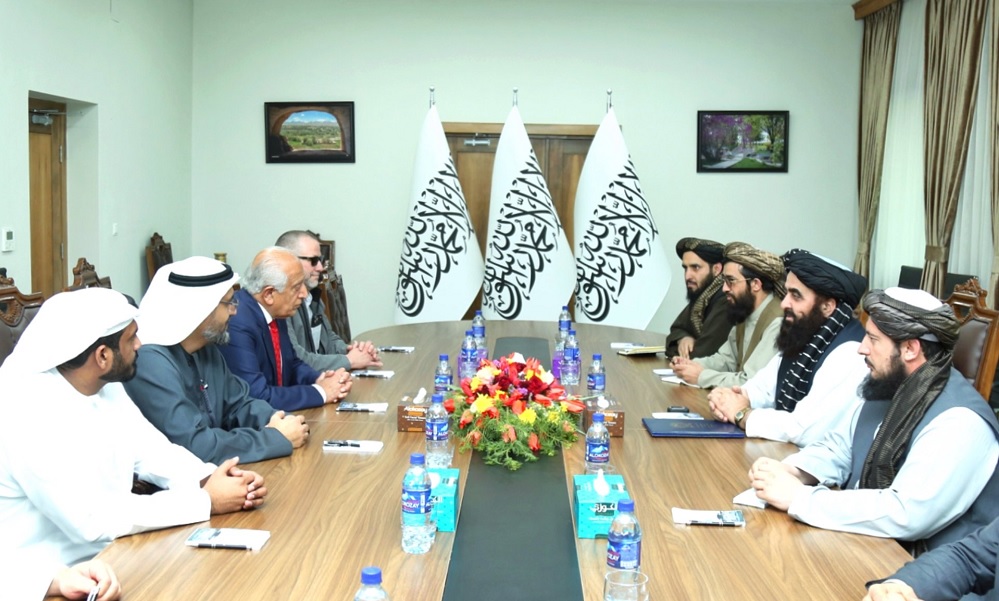
Separately, for Coyle’s release, an American delegation, including Zalmay Khalilzad, former U.S. Special Representative for Afghanistan, met on Tuesday with Amir Khan Muttaqi, the Foreign Minister of the Islamic Emirate.
The meeting was also attended by Saif Mohammed Al-Ketbi, Ambassador of the UAE in Kabul, and a member of the prisoner’s family.
According to the Ministry of Foreign Affairs, Muttaqi stated that the Islamic Emirate has not detained any citizen of any country to achieve political objectives; rather, detentions were the result of legal violations, and individuals were released after completing judicial procedures.
At the meeting, Khalilzad praised the action of the Islamic Emirate and emphasized the importance of continuing discussions on all issues between the two countries, expressing hope for further progress in the future.
Muttaqi also stressed that Kabul and the UAE should provide standard consular services to their citizens, and that the Afghan government is fully prepared in this regard.
He thanked Sheikh Mohamed bin Zayed Al Nahyan, President of the UAE, for their constructive role in facilitating the release of the prisoner and referred to the UAE as a close friend of Afghanistan.
Earlier, Muttaqi had also praised the role of the State of Qatar in facilitating information exchange between the Islamic Emirate and the prisoner’s family.
Additionally, the UAE ambassador expressed his country’s readiness to play a role in humanitarian institutions and called such developments beneficial for everyone.


‘Made in Afghanistan’ expo opens in Tashkent

Afghan, Pakistani clerics urge extension of ceasefire until Eid ul-Adha

Israel strikes Tehran as Trump says US negotiating to end war

Tahawol: Escalating threats between Iran-US discussed

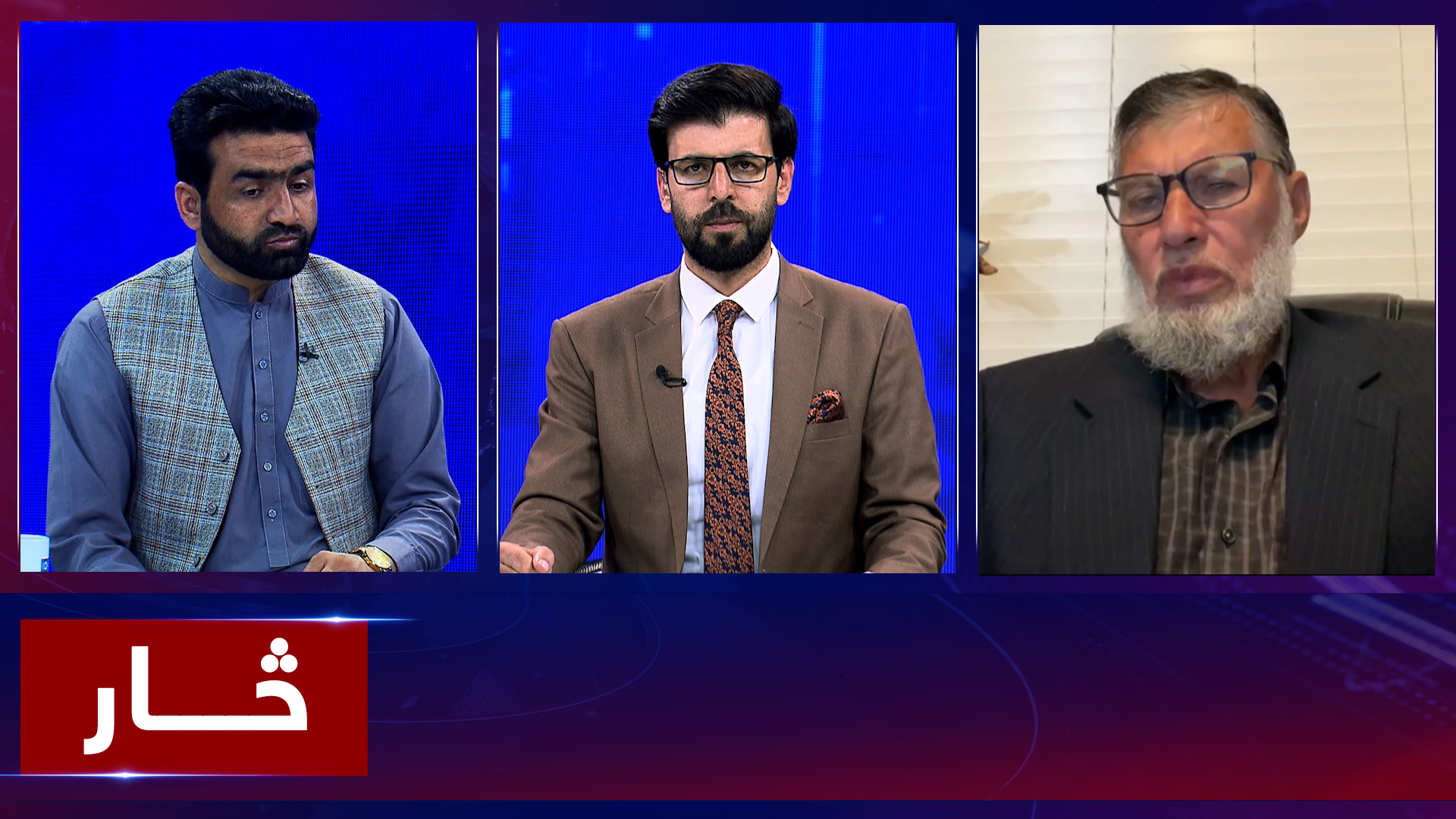
Saar: Discussion on criticism of Pakistan’s policies

Pakistani military jet downed in Afghanistan’s Jalalabad, pilot captured alive

Afghan Air Force conducts airstrikes in Islamabad, other cities

Prominent Muslim scholar issues fatwa calling for Afghanistan-Pakistan ceasefire

Afghan air force strikes key Pakistani military installations in retaliatory operation

IEA: Special circle in Pakistan has launched mission to destabilize region
Tahawol: Escalating threats between Iran-US discussed

Tahawol: Possibility of US ground forces entering Iran war discussed

Saar: Using US prisoners as political pressure

Tahawol: Pakistan’s efforts to destabilise Afghanistan

Saar: Decline in international assistance to Afghanistan
-
 Sport5 days ago
Afghanistan national buzkashi falls short in Kokpar World Championship semifinals
-
 Latest News3 days ago
Deadly violence likely without dialogue between Afghanistan and Pakistan: ICG
-
 Sport4 days ago
Ireland to host Afghanistan for ODI series in August
-
 Latest News4 days ago
Mojtaba Khamenei calls for improved Afghanistan–Pakistan relations, offers help
-
 Latest News4 days ago
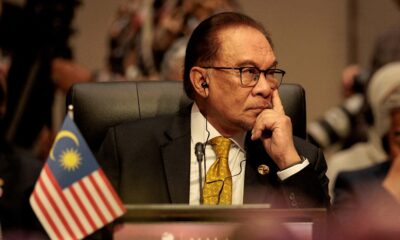
Malaysian PM welcomes temporary Afghanistan–Pakistan truce, urges lasting peace
-

 Latest News2 days ago
Pakistan seeks Russian mediation to resolve Afghanistan tensions
-
 International Sports3 days ago
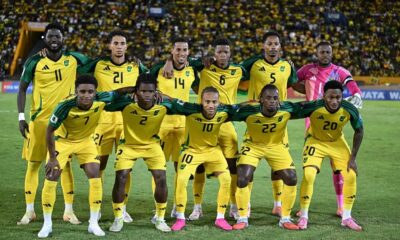
FIFA World Cup 2026: Play-Off Tournament takes centre stage
-
 Sport3 days ago
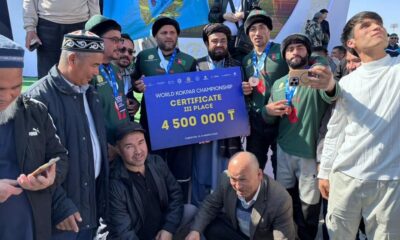
Afghanistan secures third place at 2026 World Kokpar Championship