
Latest News
CIA chief reportedly made unannounced trip to Kabul

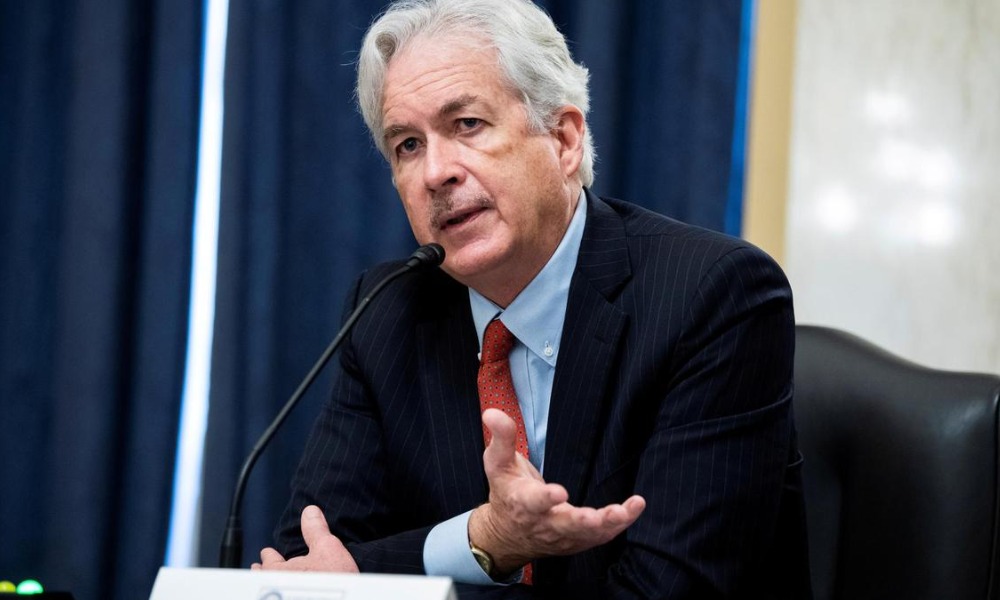
CIA Director William Burns reportedly made an unannounced visit to Kabul recently amid mounting concerns about Afghansitan’s capability to fight terrorism once the US and NATO forces withdraw.
The Associated Press reported Saturday that two credible sources had confirmed the visit. In Washington, the CIA declined to comment when asked by AP about the director’s schedule and the agency’s role in Afghanistan.
However, a senior former Afghan security official told AP that two of six units trained and run by the CIA to track militants have already been transferred to Afghan control.
Two Afghan officials told AP that Burns quietly visited Kabul last weekend. They would not say whom Burns met with, but said some of the discussions addressed Afghanistan’s preparedness after the U.S. pullout.
Burns also reportedly reassured Afghan officials that the U.S. would continue to be engaged in counterterrorism efforts.
AP reports that concerns are mounting that Afghanistan’s security forces won’t be able to halt a march by Taliban insurgents on government-held territory or battle terrorist groups without the help of U.S. and NATO soldiers.
The former security official told AP he believes terrorism-fighting capabilities will be significantly reduced once the roughly 2,500 to 3,500 U.S. troops and 7,000 allied NATO soldiers leave.
The official said the CIA had been training and running Afghan special forces known as Counter Terrorism Pursuit Teams, or CTPT.
According to AP, the teams are located in the provinces of Kunar, Paktia, Kandahar, Kabul, Khost and Nangarhar.
The official said the plan is to gradually hand them over to the National Directorate of Security (NDS). So far, the Kunar and Paktia units have been transferred to Afghan control, he said.
The CTPT teams are feared by many Afghans and have been implicated in extra-judicial killings of civilians. In 2019, the head of the Afghan intelligence service, Masoom Stanikzai, was forced to resign after one of these units was implicated in the summary execution of four brothers.
Earlier this year, in Afghanistan’s eastern Khost province, one of the teams was accused of gunning down civilians in a counterterrorism operation. The United Nations has also criticized the tactics of these units, previously blaming them for a rise in civilian casualties along with insurgent groups.
The former security official said that without the U.S. troops, Afghanistan’s technical intelligence gathering will suffer. Right now, some of the greatest successes in fighting terrorism and the narcotics trade have come from U.S. intelligence gathering, he said.
Meanwhile, a Western diplomat in Afghanistan said the unexpected U.S. announcement of an unconditional withdrawal left many security questions unanswered — such as what happens to NATO’s surveillance equipment and the giant blimp that hovers over the capital. The blimp provides real-time intelligence and 24-hour surveillance.
AP reported that David Barrett, a professor at Villanova University who specializes in the history of intelligence policy, said the troop pullout will reduce the amount of intelligence gathered by the military and ultimately provided to the CIA. But the U.S. can still monitor electronic communications and other signals with its advanced technology, and could intervene militarily if it assessed a threat to an American target, he said.
“We have amazing capabilities for knowing what’s happening on the ground,” he said. “If anyone, anywhere in Afghanistan decides they want to develop any ability to strike the U.S., they would be making a very big mistake.”












Kazakhstan’s Foreign Minister Mukhtar Tileuberdi has called for pragmatic and coordinated international engagement with Afghanistan, saying the country’s long-term stability is closely linked to the security and sustainable development of Central Asia.
Speaking during the general debate of the 81st session of the United Nations General Assembly in New York on Friday, Tileuberdi said humanitarian assistance to Afghanistan remains essential but alone cannot break the cycle of poverty, displacement and dependency.
He said Kazakhstan supports a “pragmatic, coordinated and step-by-step” approach to international engagement with Afghanistan, with the United Nations playing a central role.
Tileuberdi also said Kazakhstan is working with the UN to operationalize the United Nations Regional Centre for the Sustainable Development Goals for Central Asia and Afghanistan in Almaty.
He said the success of the centre should be measured by the results and assistance it delivers to the region.


Abu Muslim Farah defeat Khurasan Faryab 2-0 in ACL season six

Saar: Concerns over Pakistan’s political crisis discussed

Afghanistan Champions League: Omar Zawak Herat beat Toofan Herat 1-0

Blast in Pakistan’s Dera Ismail Khan kills 11, injures 30

Ariana Afghan Airlines increases Kabul-Delhi cargo flights

Saudi energy group signs major Afghanistan deals covering gas exploration and pipeline plans

Trump floats idea of renaming Atlantic or Pacific Ocean

US hits Egyptian bank branches with Iran sanctions as war marks six months

Nepal flood rescue mission enters critical phase as thousands remain missing

Iranian clubs to face Gulf opponents at neutral venues in Asian Champions League Elite
Saar: Concerns over Pakistan’s political crisis discussed

Exclusive interview with Abdul Latif Mansoor, Minister of MRRD

Tawsia: Overview of Afghanistan’s iron mines

Tahawol: Discussion on fresh Pakistani airstrikes on Afghanistan

Saar: Calls for international support for Afghanistan discussed
-

 World5 days ago
CNN, MS NOW and Politico sue Trump, challenging White House ban
-

 Latest News3 days ago
Ariana Afghan Airlines ranks seventh among 45 Central Asian airlines
-

 Latest News5 days ago
UN reiterates call for respect for international law after Kunar airstrikes
-

 Regional4 days ago
US and Iran hold first talks since June after Trump’s ‘annihilation’ threat
-

 Latest News3 days ago
Silk Road highway in Wakhan corridor now reaches the China border
-

 Latest News5 days ago
Afghan Official: Pakistan’s airstrikes will not go unanswered
-

 Regional3 days ago
Iran airlines cancel flights as US sanctions hit
-

 Sport5 days ago
Afghan boxing referee heads to China for international festival