
Latest News
Concerns over slow implementation of Ghani-Abdullah agreement

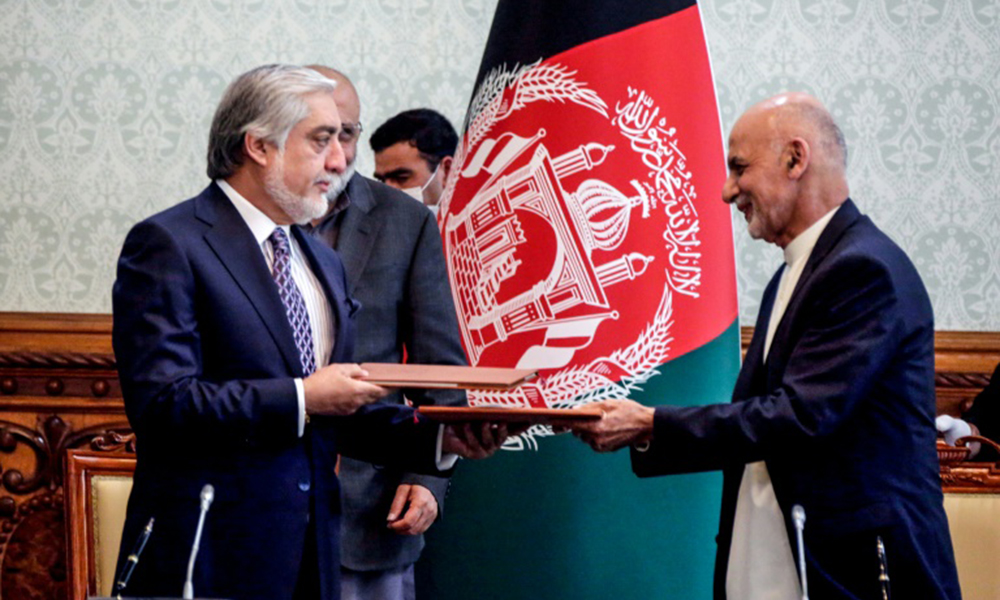
Following the signing of the political agreement between President Ghani and Abdullah Abdullah, no significant progress has been made in implementing the agreement.
Nearly a month has passed since the signing of the political agreement between President Ghani and Abdullah Abdullah, but no fundamental work has been done to implement elements of the agreement.
Arg has so far nominated seven ministers for President Ghani’s share, while Abdullah has not yet nominated any. Also, he has not finalized appointments in the High Reconciliation Council which is chaired by Abdullah. All these have created concerns among politicians.
Abdullah’s associates underlined that fundamental work has begun in the High Council of National Reconciliation, and he will nominate his share of the cabinet within a few days.
“When the political agreement was signed between the two sides, people hoped that a reconciliation council would be formed as soon as possible, but neither the reconciliation council nor the cabinet had been completed,” said Shahzada Masood, a politician. “These two should be completed as soon as possible, so the Intra-Afghan talks, which we hope for, will take place in the coming weeks.”
On the other hand, giving the rank of marshals to General Dostum, Abdullah’s political partner, has not yet been officially granted by the president.
Associates of General Dostum say that the marshall rite will be held in Kabul in the next few days.
“Marshall Abdul Rashid Dostum, one of Afghanistan’s leaders and a member of the Security Council, will be in Kabul in the coming days for a special ceremony,” said Bashir Ahmad Tahianj, spokesman for the Afghan National Movement.
There are concerns about the lack of progress in government structures after the signing of a political agreement between Arg and Sapidar.
The presidential palace has not commented on the matter yet.



A 6.1-magnitude earthquake struck Afghanistan on Saturday afternoon, according to the United States Geological Survey (USGS).
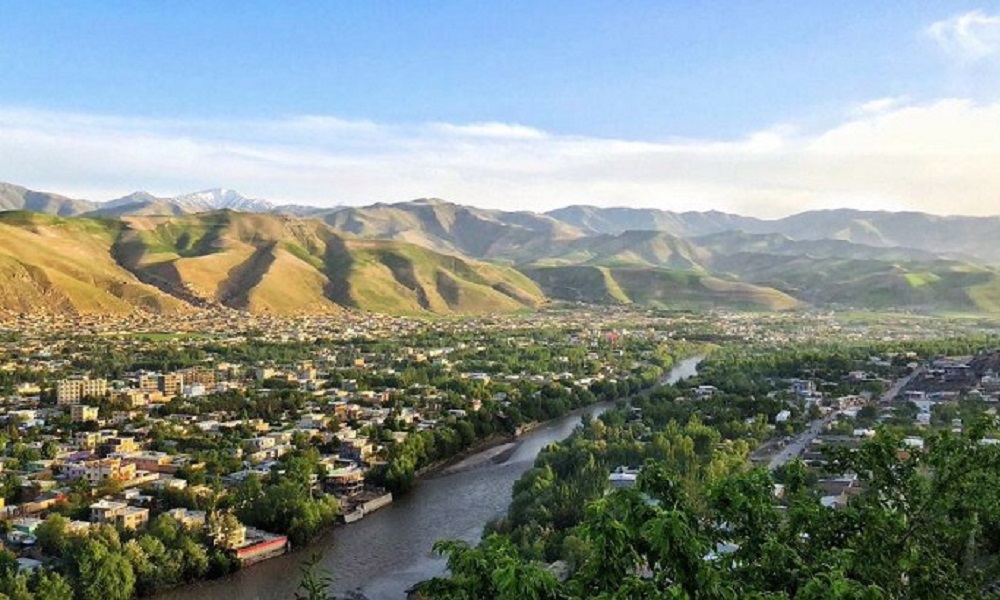
The quake’s epicenter was reported in Jurm district of Badakhshan province, with a depth of 208.3 kilometers.
So far, there have been no immediate reports of casualties or damage following the tremor.
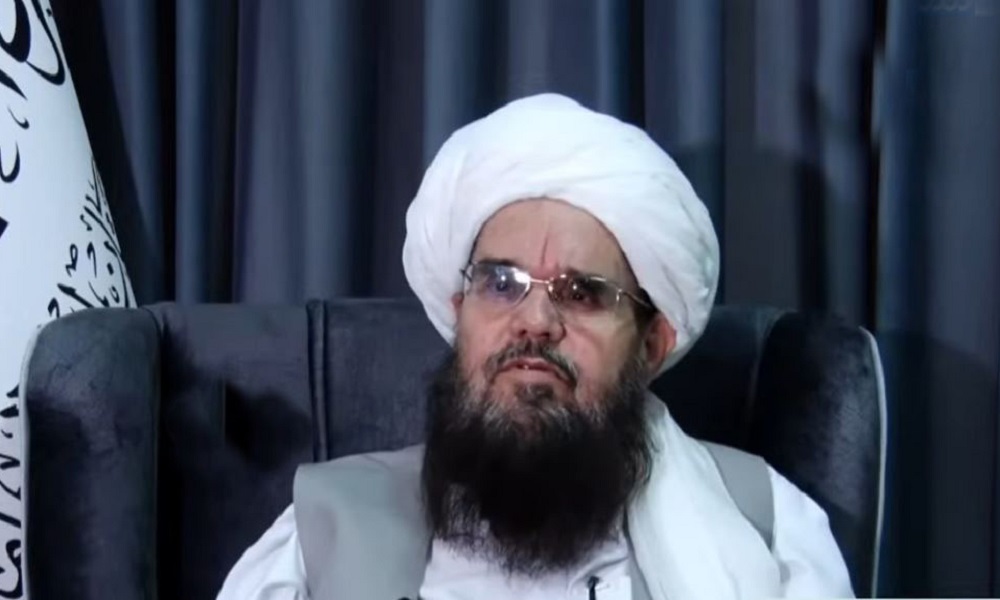
Shahabuddin Delawar, Head of the Commission for Contact with Afghan Personalities, says Afghanistan has achieved security, unified governance, brotherhood, and progress for the first time in 47 years under the administration of the Islamic Emirate of Afghanistan (IEA).
Speaking at a meeting in Kabul on Saturday, Delawar said Afghanistan had lacked a unified system over the past four decades, but added that with the return of the Islamic Emirate, the issue has now been resolved.
Referring to Ashura commemorations held on Friday, he said the occasion was observed peacefully across the country under full security.
Delawar also urged exiled Afghan politicians to return, saying the commission was established to serve Afghans and address the concerns of returning figures. He added that any legal disputes involving returnees would be handled exclusively through the commission.
He further said the Islamic Emirate has expanded treatment centers and intensified anti-narcotics efforts since regaining power, claiming this has led to a significant decline in drug addiction.
Addressing the issue of international legitimacy, Delawar said he understood why the United States has not recognized the Islamic Emirate, arguing that Washington suffered a defeat in Afghanistan that it cannot easily overlook.
“They have suffered a major defeat that they cannot forget; if they recognize us, they will face questions from their own people,” Delawar said.
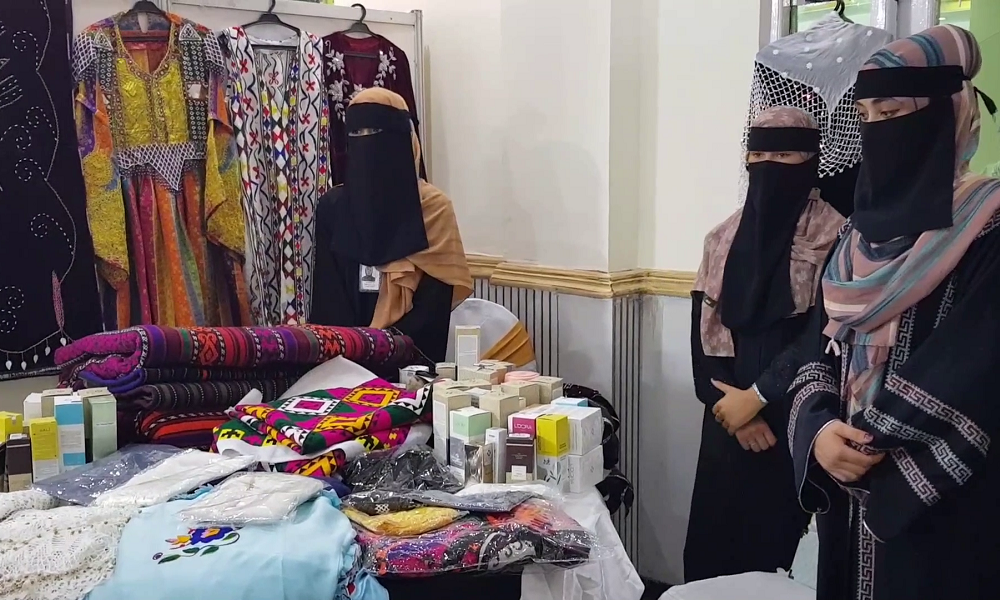
The European Union says it is implementing hundreds of millions of euros in projects to support small and medium-sized enterprises (SMEs) in Afghanistan and help expand economic opportunities across the country.
Speaking to Ariana News, EU Chargé d’Affaires in Kabul, Veronika Boskovic Pohar, said the programs are aimed at creating jobs for skilled workers, women, youth, and returnees, while also strengthening the private sector. She added that alongside international support, Afghan authorities also have a role in facilitating economic growth.
According to Pohar, the EU is currently implementing projects worth €156 million focused on livelihoods, durable solutions, job creation, and women’s economic empowerment. She said an additional €40 million program specifically designed to support returnees will be launched in the near future.
She noted that the EU is gradually shifting its focus from emergency humanitarian aid toward long-term sustainable solutions, particularly for internally displaced people and returnees in Afghanistan.
Meanwhile, the United Nations, marking World Day of Small and Medium Enterprises, said SMEs account for more than 90 percent of businesses worldwide and play a critical role in employment and economic growth.
UN spokesperson Stéphane Dujarric stressed that stronger investment, innovation, and sustainable industrial development are essential to help businesses withstand economic challenges and build resilient economies.
Afghan private sector representatives and economic analysts say greater support for SMEs could help the country address economic challenges faster, increase employment, and promote sustainable long-term development.


Afghanistan, Uzbekistan set for friendly cricket clash in Khost

Saar: Concerns over Afghan deportations from Europe discussed

6.1-magnitude earthquake hits Afghanistan, epicenter in Badakhshan

Delawar says Afghanistan has achieved security and unity after 47 years

EU announces major funding to support Afghan small businesses

Norway’s Viking-inspired World Cup team photo goes viral

TAPI project advances in Afghanistan as 84kms of pipeline laid

Afghanistan’s trade with Central Asia records sharp growth

Afghanistan to play in Diamond Jubilee Tournament opener against Maldives

Gaikwad set to replace injured Kohli for Afghanistan ODI Series
Saar: Concerns over Afghan deportations from Europe discussed

Exclusive interview with Polleak Ok Serei, UNODC Representative for Afghanistan

Tahawol: Germany’s defense of engagement with IEA discussed

Saar: Rejection of security threats from Afghan soil discussed

Tahawol: Efforts to eliminate drugs across Afghanistan discussed
-
 International Sports4 days ago
Knockout picture begins to take shape at FIFA World Cup 2026
-
 Latest News2 days ago
TAPI project sees rapid progress in Afghanistan
-
 Latest News5 days ago
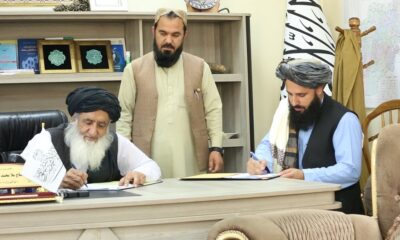
Contract signed for reconstruction of 15km section of Salang Highway
-
 Latest News4 days ago
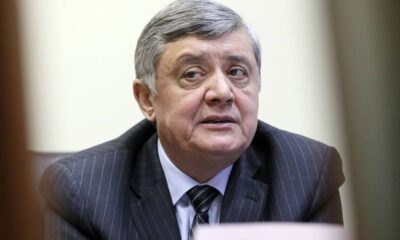
Afghanistan’s SCO participation blocked over one member’s objection, Kabulov says
-
 International Sports23 hours ago
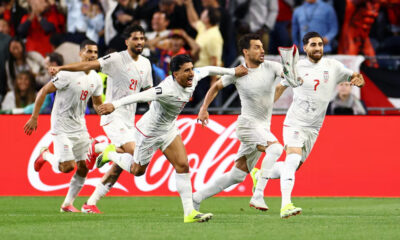
FIFA World Cup: Iran held by Egypt after controversial late goal Is disallowed
-
 Latest News4 days ago
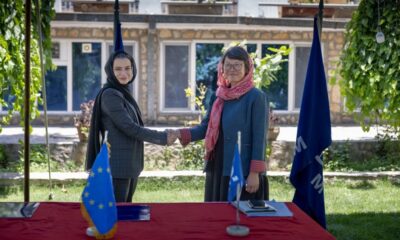
EU allocates 20 million euros to support returnees in Afghanistan
-

 International Sports3 days ago
FIFA World Cup: Messi turns 39, shows no signs of stopping
-

 International Sports5 days ago
Messi breaks World Cup scoring record as Argentina reach knockout stage