
Latest News
Egeland says Donald Trump’s aid pause ‘disastrous’ for Afghanistan
Trump signed an executive order temporarily suspending all US foreign assistance programs pending reviews to determine whether they are aligned with his policy goals

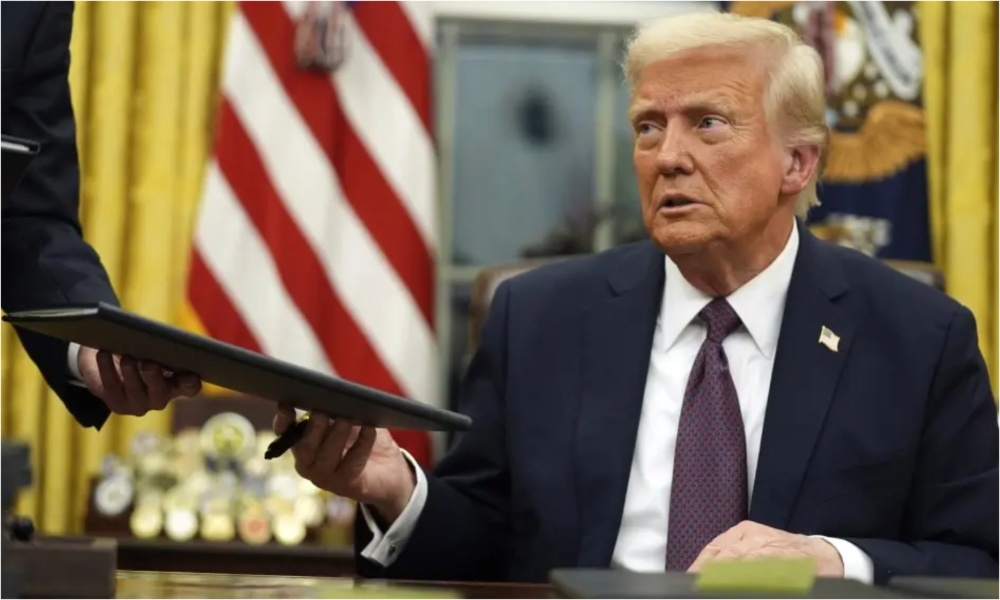
The head of a major humanitarian organisation said U.S. President Donald Trump’s order to halt foreign aid for 90 days would have immediate and disastrous consequences in Afghanistan where relief operations are already stretched thin.
Trump signed an executive order temporarily suspending all US foreign assistance programs pending reviews to determine whether they are aligned with his policy goals.
It was not immediately clear how much assistance would initially be affected by the Monday order as funding for many programs has already been appropriated by Congress and is obligated to be spent, if not already spent.
The scope of the order was not clear, including whether it applied to Afghanistan’s humanitarian funding, which is channelled through NGOs and United Nations agencies.
Jan Egeland, the secretary general of the Norwegian Refugee Council, told Reuters that the decision had left agencies reeling as they braced for further cuts from the biggest donor to Afghanistan.
“A 90-day suspension of all aid, no new grants, no new transfer of funding, will have disastrous consequences immediately … for an already starved aid operation for very poor and vulnerable girls and women and civilians in Afghanistan,” he said during a video interview from Kabul late on Tuesday.
Afghanistan is home to more than 23 million people requiring humanitarian assistance – more than half the country’s population – but aid has shrunk as donors face competing global crises and diplomats raise concerns about the Islamic Emirate’s restrictions on women in most areas of public life, including education and health.
Development funding that formed the backbone of government finances was cut after the IEA took over and foreign forces left in 2021.
Reuters reported last year that non-governmental groups played a critical role in filling the humanitarian void.
“If you go back in time it was a well funded operation, we got development assistance, then we could have perhaps have lived through three months of suspension, we cannot any more,” Egeland said.
Trump told a rally shortly before taking office that aid to Afghanistan would be contingent on getting back billions of dollars of military equipment that U.S. forces left behind.











Kazakhstan’s Foreign Minister Mukhtar Tileuberdi has called for pragmatic and coordinated international engagement with Afghanistan, saying the country’s long-term stability is closely linked to the security and sustainable development of Central Asia.
Speaking during the general debate of the 81st session of the United Nations General Assembly in New York on Friday, Tileuberdi said humanitarian assistance to Afghanistan remains essential but alone cannot break the cycle of poverty, displacement and dependency.
He said Kazakhstan supports a “pragmatic, coordinated and step-by-step” approach to international engagement with Afghanistan, with the United Nations playing a central role.
Tileuberdi also said Kazakhstan is working with the UN to operationalize the United Nations Regional Centre for the Sustainable Development Goals for Central Asia and Afghanistan in Almaty.
He said the success of the centre should be measured by the results and assistance it delivers to the region.


Abu Muslim Farah defeat Khurasan Faryab 2-0 in ACL season six

Saar: Concerns over Pakistan’s political crisis discussed

Afghanistan Champions League: Omar Zawak Herat beat Toofan Herat 1-0

Blast in Pakistan’s Dera Ismail Khan kills 11, injures 30

Ariana Afghan Airlines increases Kabul-Delhi cargo flights

Saudi energy group signs major Afghanistan deals covering gas exploration and pipeline plans

Trump floats idea of renaming Atlantic or Pacific Ocean

US hits Egyptian bank branches with Iran sanctions as war marks six months

Nepal flood rescue mission enters critical phase as thousands remain missing

Iranian clubs to face Gulf opponents at neutral venues in Asian Champions League Elite
Saar: Concerns over Pakistan’s political crisis discussed

Exclusive interview with Abdul Latif Mansoor, Minister of MRRD

Tawsia: Overview of Afghanistan’s iron mines

Tahawol: Discussion on fresh Pakistani airstrikes on Afghanistan

Saar: Calls for international support for Afghanistan discussed
-

 World5 days ago
CNN, MS NOW and Politico sue Trump, challenging White House ban
-

 Latest News3 days ago
Ariana Afghan Airlines ranks seventh among 45 Central Asian airlines
-

 Latest News5 days ago
UN reiterates call for respect for international law after Kunar airstrikes
-

 Regional4 days ago
US and Iran hold first talks since June after Trump’s ‘annihilation’ threat
-

 Latest News3 days ago
Silk Road highway in Wakhan corridor now reaches the China border
-

 Latest News5 days ago
Afghan Official: Pakistan’s airstrikes will not go unanswered
-

 Sport4 days ago
Afghan boxing referee heads to China for international festival
-
 Regional5 days ago
G7 foreign ministers call on Iran to stop arming Houthis