
Business
Foreign ministry says CPEC project will help boost economy

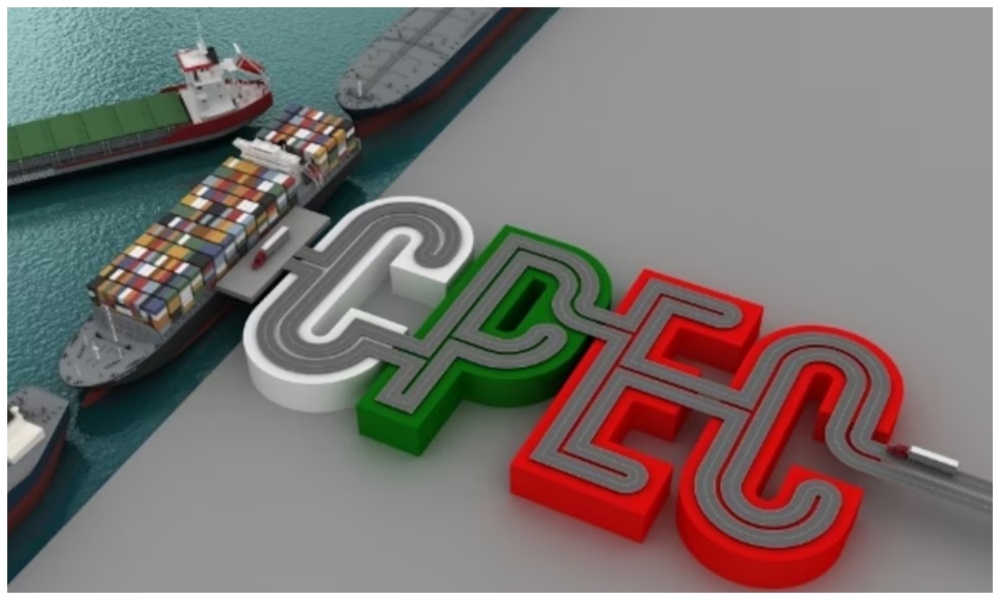
Hafiz Zia Ahmad Takal, the spokesman of the Ministry of Foreign Affairs of the Islamic Emirate, says that by connecting to the China-Pakistan Economic Corridor (CPEC), Afghanistan will be able to connect to the countries of the region and Europe and continue to attract investment.
Takal said that with the advent of security in the country, it is now necessary to implement large projects, including projects such as CPEC.
China-Pakistan Economic Corridor is a framework of regional connectivity.
CPEC will not only benefit China and Pakistan but will have a positive impact on Iran, Afghanistan, Central Asian Republic, and the region.
“Afghanistan will play a key role in connecting the countries of the region. Considering the geographical location of Afghanistan, it is a very important point, especially for Asian countries, which can be used in the connection and transit of the region,” Takal said.
“Islamic Emirate of Afghanistan has provided investment grounds for the international community and regional countries to invest in Afghanistan and implement their projects,” he said.
This comes after the recent tripartite meeting of the Foreign Ministers of the Islamic Emirate, China and Pakistan in Islamabad, where it was announced that Afghanistan would be included in this key project.
In a statement issued after the meeting, the group noted the importance of continuing economic cooperation with Afghanistan and the implementation of TAPI, CASA-1,000 and railway projects. Pakistan’s Foreign Minister Bilawal Bhutto Zardari and China’s Foreign Minister Qin Gang stated that the purpose of Afghanistan’s inclusion in CPEC is to continue economic cooperation with Afghanistan.
The Islamic Emirate of Afghanistan has said that being included in this project would be highly beneficial to Afghanistan as it would allow for improved import of goods and for export of domestic products.
The China-Pakistan Economic Corridor (CPEC) is part of China’s initiative called “One Belt One Road”, which China is hoping will connect regional countries and boost trade.







Business
Uzbekistan, Kazakhstan target Afghanistan in push to expand regional trade
According to Uzbek media, the initiative was discussed during the Uzbek-Kazakh Business Forum in Tashkent.
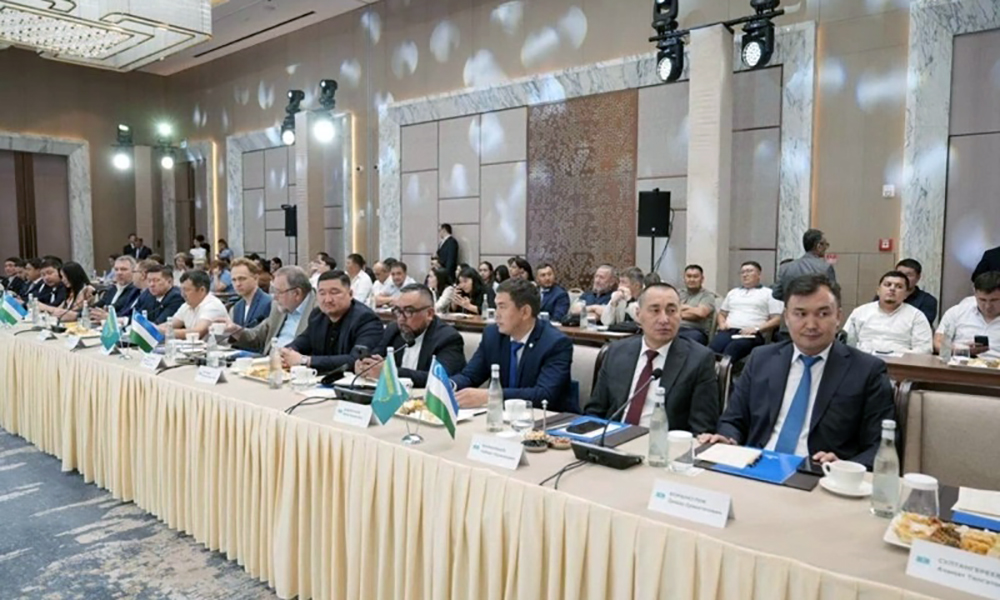
Uzbekistan and Kazakhstan are seeking to deepen economic cooperation and jointly expand into new regional markets, including Afghanistan, as part of broader efforts to strengthen trade and investment across Central Asia and the Middle East.
According to Uzbek media, the initiative was discussed during the Uzbek-Kazakh Business Forum in Tashkent, where business leaders and trade associations from both countries explored opportunities to promote their products in third-country markets, particularly Afghanistan, Syria and Iraq.
Afghanistan featured prominently in the discussions, with participants noting that Kazakhstan’s exports to Afghanistan reached nearly $500 million during the first seven months of 2025—almost matching the country’s total exports to Afghanistan for all of 2024. Officials said the long-term goal is to increase exports to $3 billion.
The forum also highlighted growing imports of mineral raw materials from Afghanistan. Participants discussed a proposed agreement to supply Afghan zinc ore to the Almalyk Mining and Metallurgical Complex in Uzbekistan.
Beyond Afghanistan, delegates examined emerging business opportunities in Syria and Iraq, where reconstruction efforts are expected to drive demand for food products, construction materials and industrial goods.
The forum also focused on improving regional logistics. Officials discussed using available capacity on Turkish freight trucks transiting Uzbekistan, a move expected to reduce transport costs and improve access to regional markets.
At the conclusion of the forum, both sides agreed to organise joint business missions to third-country markets, including Aleppo, Syria, in late September and Erbil, Iraq, in early October, with the aim of strengthening commercial partnerships and identifying new investment opportunities.
The discussions reflect growing economic cooperation between Uzbekistan and Kazakhstan as both countries seek to expand regional connectivity, diversify exports and strengthen trade links with neighbouring markets, including Afghanistan.
Business
Uzbekistan’s Fergana region strengthens economic ties with Afghanistan
The meeting followed a Fergana delegation’s visit to Afghanistan on July 26-27, during which officials and business representatives held talks in Kabul and Mazar-i-Sharif.
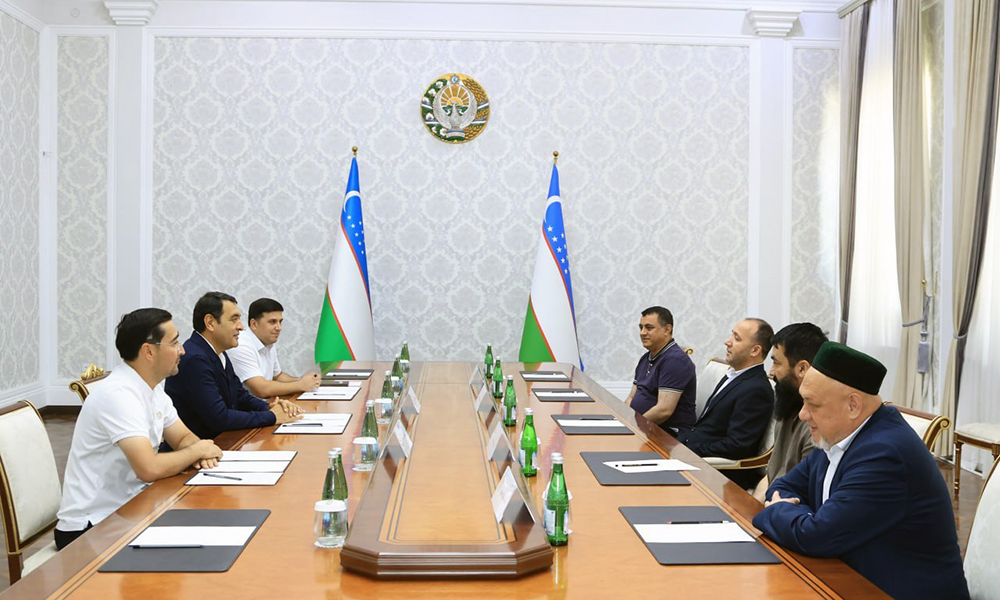
Uzbekistan’s Fergana region is moving to deepen economic cooperation with Afghanistan after officials and business leaders agreed to fast-track joint investment projects and expand bilateral trade.
According to a statement from the Fergana Regional Administration, Governor Khayrullo Bozorov met with leading Afghan business figures, including Emerald Diamond Trading Director Abdul Hamid Anyuri, Kam Air Director Atilla Azimi, Tojmahal Petroleum Director Abdul Latif Nawruzi, and their regional partners to discuss practical measures for strengthening economic ties.
The meeting followed a Fergana delegation’s visit to Afghanistan on July 26-27, during which officials and business representatives held talks in Kabul and Mazar-i-Sharif. The delegation also inaugurated Fergana Trade Houses in both cities to promote trade and commercial cooperation.
“The parties agreed to accelerate the implementation of joint investment projects, increase bilateral trade and elevate cooperation to a new level,” the regional administration said.
Discussions focused on turning agreements reached during the Afghanistan visit into practical projects, identifying new investment opportunities, and expanding trade between the two sides. Afghan business representatives expressed interest in working with Fergana companies in key sectors including trade, agriculture, aviation, energy and logistics, while presenting several new investment initiatives.
Bozorov reaffirmed Fergana’s commitment to strengthening economic relations with Afghanistan, saying the regional administration stands ready to support joint projects and create favourable conditions for closer business cooperation.
The regional administration said the meeting reflects growing momentum in economic engagement between Uzbekistan and Afghanistan, with both sides seeking to expand cross-border trade, attract investment and develop new commercial partnerships as part of broader efforts to strengthen regional economic connectivity.
Business
Afghanistan invites Iranian investors to expand economic cooperation
Discussions focused on expanding private-sector cooperation, increasing joint investment, and boosting bilateral trade between the two countries.
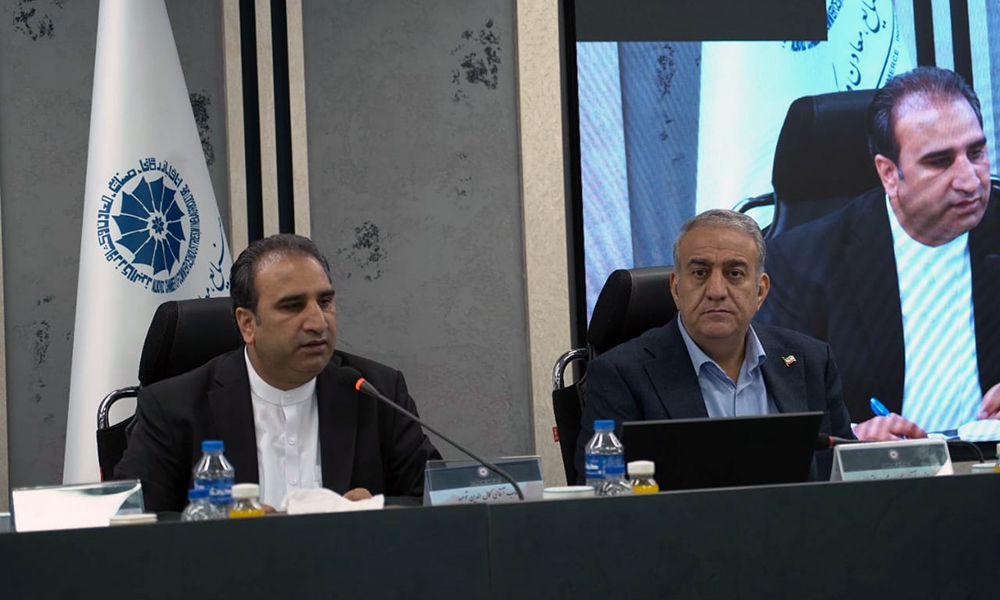
Afghanistan has invited Iranian investors to explore business opportunities and participate in joint economic projects as the country seeks to strengthen investment and trade ties with its western neighbor.
Kamaluddin Tawhidi, head of the Afghanistan-Iran Joint Chamber of Commerce, made the appeal during a visit to Iran, where he attended the “Economic Cooperation Opportunities with Afghanistan” conference in Alborz Province, according to Iran’s state broadcaster.
Speaking at the event, Tawhidi highlighted Afghanistan’s investment potential and encouraged Iranian businesses to take advantage of opportunities across a range of economic sectors.
Discussions focused on expanding private-sector cooperation, increasing joint investment, and boosting bilateral trade between the two countries.
Tawhidi said stronger economic partnerships could create new business opportunities and support broader regional economic growth.
The meeting comes as Afghanistan continues efforts to attract foreign investment and deepen economic cooperation with neighboring countries.


Debate with Nooruddin Azizi, Minister of Industry and Commerce

Saar: Marking IEA’s fifth anniversary in Afghanistan discussed

Afghanistan’s economy has seen significant growth over the past five years: IEA

Afghanistan expresses regret over civilian death in Tajikistan border incident

UK Special Envoy: Afghanistan’s future matters to its people, region and Britain

Pakistan’s governance system has ‘collapsed’: Mohsin Naqvi

Spain sweep FIFA World Cup player awards after historic triumph

Afghanistan temporarily eases fuel import standards to help curb rising prices

First Chinese transit shipment arrives in Herat via Iran’s railway corridor

Afghanistan, India discuss ways to boost trade and investment ties
Debate with Nooruddin Azizi, Minister of Industry and Commerce
Saar: Marking IEA’s fifth anniversary in Afghanistan discussed

Tawsia: $420M investment in TAPI gas distribution network in Herat discussed

Tahawol: Trade cooperation between Afghanistan and Iran discussed

Saar: Discussion on Islamic Emirate’s five-year journey
-

 Latest News2 days ago
HesabPay unveils new visa card and digital payment app in Kabul
-

 International Sports2 days ago
AFC Champions League Elite draw nears as Al-Nassr seeded above Al-Hilal
-
 Sport4 days ago
Abasin Defenders beat Shamshad Eagles by four wickets in Kabul Premier League
-

 Sport3 days ago
Afghanistan to host India for three-match T20I series in Delhi
-

 Sport3 days ago
Afghanistan face Ireland with series win in sight
-
 Latest News2 days ago
Afghan envoy invites Fazlur Rehman to embassy event marking IEA’s return to power
-

 Latest News4 days ago
IEA denies it is holding Afghan-American Mahmood Shah Habibi
-

 World5 days ago
More than 100 killed after strongest quake this century hits western Colombia