
World
Four major Western nations recognise Palestinian state, to fury of Israel
Israeli Prime Minister Benjamin Netanyahu condemned the move.


Britain, Canada, Australia and Portugal all recognised a Palestinian state on Sunday in a move borne out of frustration over the Gaza war and intended to promote a two-state solution, prompting a furious response from Israel, Reuters reported.
The decision by four nations from the West, which has traditionally allied with Israel, aligned them with more than 140 other countries also backing Palestinians’ aspiration to forge an independent homeland from the occupied territories.
Britain’s decision carried particular symbolism given its major role in Israel’s creation as a modern nation in the aftermath of World War Two.
“Today, to revive the hope of peace for the Palestinians and Israelis, and a two-state solution, the United Kingdom formally recognises the State of Palestine,” said Prime Minister Keir Starmer.
“The man-made humanitarian crisis in Gaza reaches new depths. The Israeli government’s relentless and increasing bombardment of Gaza, the offensive of recent weeks, the starvation and devastation are utterly intolerable.”
Other nations, including France, are expected to follow suit this week at the United Nations General Assembly in New York.
Israeli Prime Minister Benjamin Netanyahu condemned the move.
“I have a clear message to those leaders who recognise a Palestinian state after the horrific massacre of October 7: You are giving a huge reward to terrorism,” he said, referring to Palestinian militant group Hamas’ 2023 attack on Israel that triggered the nearly two-year war in Gaza.
“And I have another message for you: It will not happen. A Palestinian state will not be established west of the Jordan River.”
The Hamas-led attack on Israel killed 1,200 people and saw 251 others taken hostage, according to Israeli tallies.
Israel’s ensuing campaign in Gaza has killed more than 65,000 Palestinians, most of them civilians, according to local health authorities, spread famine, demolished most buildings and displaced most of the population – often multiple times.
“It is a human duty of every respectful and free human being in the world to support Palestinians during the ordeal they are going through and Britain’s role now comes within this,” said Sharaf Al Tarda, a Palestinian resident of Hebron in the Israeli-occupied West Bank.
Hamas welcomed the move but said it must be accompanied by “practical measures” to end the war in Gaza and prevent Israel from annexing the West Bank, read the report.
Palestinian President Mahmoud Abbas said recognition would help pave the way for the “State of Palestine to live side by side with the State of Israel in security, peace, and good neighbourliness”.
Starmer wrote to Abbas to confirm Britain’s decision, noting that London had backed a Jewish homeland in 1917 while also pledging to protect the rights of non-Jewish communities.
Western governments have been under pressure from many in their parties and populations angry at the ever-rising death toll in Gaza, images of starving children and their states’ inability to rein in Israel, even continuing to provide arms.
Londoners voiced mixed reactions on Sunday.
“A whole lot needs to happen and peace needs to come to that region,” said 56-year-old charity director Michael Angus. “This is the first step in actually acknowledging that those people have a right to have somewhere to call home.”
Announcing his country’s decision, Canadian Prime Minister Mark Carney said it would empower those seeking peaceful co-existence and the end of Hamas. “This in no way legitimises terrorism, nor is it any reward for it,” he added.
Portugal’s Foreign Affairs Minister Paulo Rangel said this recognition was a “fundamental line of Portuguese foreign policy”. Speaking to reporters at the headquarters of Portugal’s permanent mission to the United Nations in New York, he said: “Portugal advocates the two-state solution as the only path to a just and lasting peace…a ceasefire is urgent.”
The United States, Israel’s closest ally, did not comment immediately on the decision by three of its allies to recognise a Palestinian state, but President Donald Trump has previously made clear he opposes such a move.
Israeli Security Minister Itamar Ben-Gvir said he would propose that the cabinet apply sovereignty in another Israeli-occupied Palestinian territory, the West Bank. That would represent de facto annexation of land seized in a 1967 war.
British troops captured Jerusalem from the Ottoman Empire in 1917, and in 1922 the League of Nations awarded Britain an international mandate to administer Palestine during the post-war deal-making that redrew the map of the Middle East.
Mandy Damari, the British mother of released British-Israeli hostage Emily Damari, told Reuters on Sunday that Starmer was “under a two-state delusion” given that the Gaza Strip’s government was still Hamas whose mission was to destroy Israel.
“He is rewarding Hamas for the 7th October barbaric and savage attack on Israel when the hostages are still not back, the war is not over and Hamas are still in power in Gaza.”
Husam Zomlot, head of the Palestinian Mission to the UK, watched on his phone as Starmer announced Britain’s recognition of a Palestinian state.
At the London headquarters of the mission, which may now be upgraded to an embassy, there were smiles and embraces, Reuters reported.
“Today is a moment when the UK Prime Minister and the British government, on behalf of their people, stand and say: ‘We must correct history, we must right the wrongs’,” Zomlot said.






World
Three killed, two injured in shooting at Idaho shopping center
Authorities said at least two other people were wounded and transported for medical treatment. Their conditions were not immediately released.

Three people, including the suspected gunman, were killed and at least two others were injured after a shooting at a busy shopping area in Twin Falls, Idaho, on Saturday, local authorities said.
The incident occurred at around 2:30 p.m. local time near an In-N-Out Burger restaurant in a high-traffic commercial district, according to Josh Palmer, the city’s public information coordinator.
Twin Falls Police Chief Matthew Hicks said the suspected shooter was among the dead and confirmed that the threat to the community had been eliminated.
“At this point, the shooter is no longer a threat,” Hicks told reporters, adding that investigators are working to identify the suspect and determine a motive for the attack.
Authorities said at least two other people were wounded and transported for medical treatment. Their conditions were not immediately released.
Following the shooting, the Twin Falls Police Department temporarily closed roads surrounding the scene, including a nearby bridge, as officers secured the area and launched an investigation.
Twin Falls, with a population of about 47,400, is located in Idaho’s Magic Valley region.
Police have not yet released additional details about the victims or the circumstances surrounding the shooting, and the investigation remains ongoing.
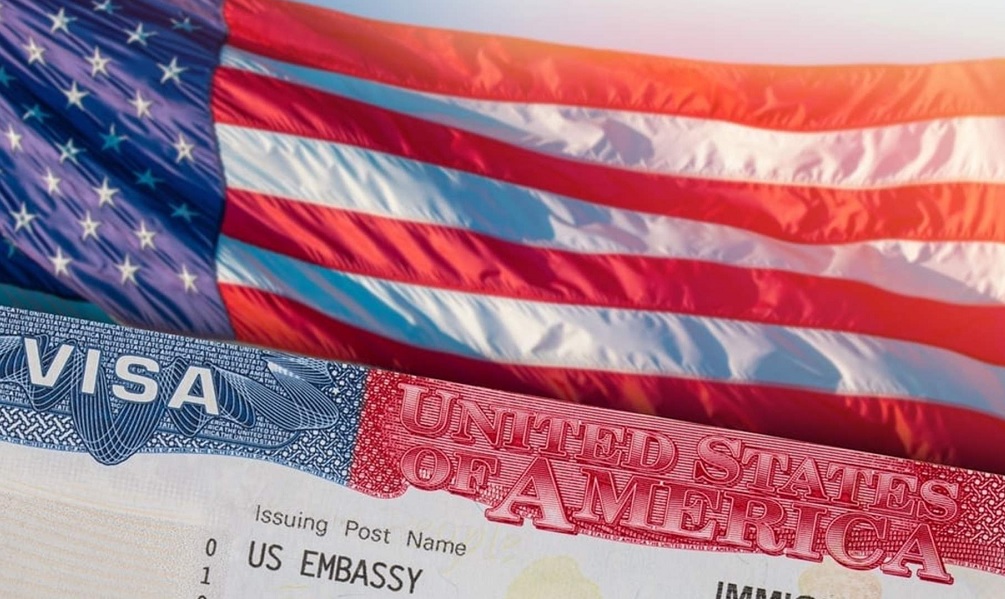
The U.S. State Department will make permanent a visa bond program that could require applicants from 50 countries, mostly from Africa, to post bonds of up to $20,000 when seeking U.S. visas, according to a federal noticeposted online on Friday.
The Federal Register notice applies to B1 and B2 visas, which are issued for business and tourism travel.
“Consular officers may require covered nonimmigrant visa applicants to post a bond of up to $20,000 as a condition of visa issuance, as determined by the consular officers,” the notice said.
“The 2025 visa bond pilot, which provided a framework for the Department of State, the Department of Homeland Security, and the Department of the Treasury to assess the feasibility of administering a visa bond program, has provided sufficient data to suggest that a visa bond program is an effective tool for enforcing compliance among bonded visa holders.”
In the pilot program, consular officers could require bonds of $5,000, $10,000 or up to $15,000. The final rule eliminates the $5,000 option and raises the maximum bond to $20,000.
The final rule goes into effect on August 3 when it is scheduled for publication in the Federal Register. In the list of 50 countries for whose citizens this program applies, 30 are from Africa.
U.S. officials say the policy is intended to reduce visa overstays. Immigration advocates argue it will deter legitimate travel to the United States.
Rights advocates say President Donald Trump’s aggressive immigration crackdown violates free speech and due process, while creating an unsafe environment for ethnic minorities and encouraging racial profiling. Trump has defended the measures as necessary to bolster national security.
While Trump says he wants to curb illegal immigration, his administration has made legal immigration more difficult, for example, by imposing new and expensive fees for applicants of certain visas and by enforcing social media vetting for applicants and immigrants already in the country.


Kabul opens cardiac hospital for children

Bomb carried by woman kills three, injures 21 near Moscow restaurant, authorities say

Karzai voices concern over reported visa problems facing Afghan students in Pakistan

AFC confirms clubs for 2026/27 competitions; draw set for August 18

Mujahid: Afghanistan-Pakistan tensions benefit neither side

Pakistan’s governance system has ‘collapsed’: Mohsin Naqvi

India offers 1,000 online scholarships for Afghan students for 2026-27 academic year

Cricket world pays tribute to Afghanistan fast bowler Shapoor Zadran

Turkey spent over $120 million to prepare airport for Qatar-donated U.S. presidential aircraft

Thousands pay final respects as Afghan cricketer Shapoor Zadran buried in Kabul

Saar: Trade shifts from Pakistan to Central Asia and Iran discussed

Tawsia: Efforts to increase Ghori cement production discussed

Tahawol: Germany’s deportation of non-criminal Afghan refugees

Saar: Discussion on ongoing US-Iran tensions

Tahawol: Calls for implementation of development projects in Afghanistan
-
 Latest News2 days ago
Pakistan’s governance system has ‘collapsed’: Mohsin Naqvi
-

 Sport4 days ago
Afghanistan set for crucial five-match ODI series against Ireland
-

 Sport4 days ago
Afghanistan futsal team heads to Thailand for Continental Championship
-
 Latest News4 days ago
MSF urges Pakistan to halt forced returns of Afghan refugees
-
 Business4 days ago
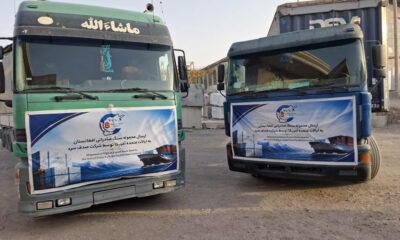
Afghanistan exports first stone shipment to US in $100,000 trade milestone
-

 Sport3 days ago
Qosh Tepa crowned champions of inaugural Afghanistan Wrestling Premier League
-

 Regional4 days ago
Oman presents Iran with Gulf-backed plan for voluntary fees to use Hormuz
-
 Latest News4 days ago
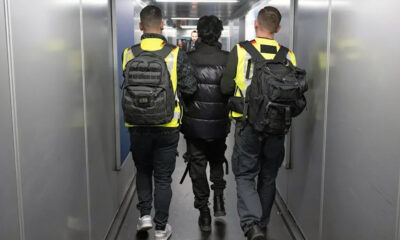
Germany deports first Afghan without criminal record since 2021, Reuters reports