
Latest News
Ghani gives UNICEF’s polio unit boss 24 hours to leave Afghanistan

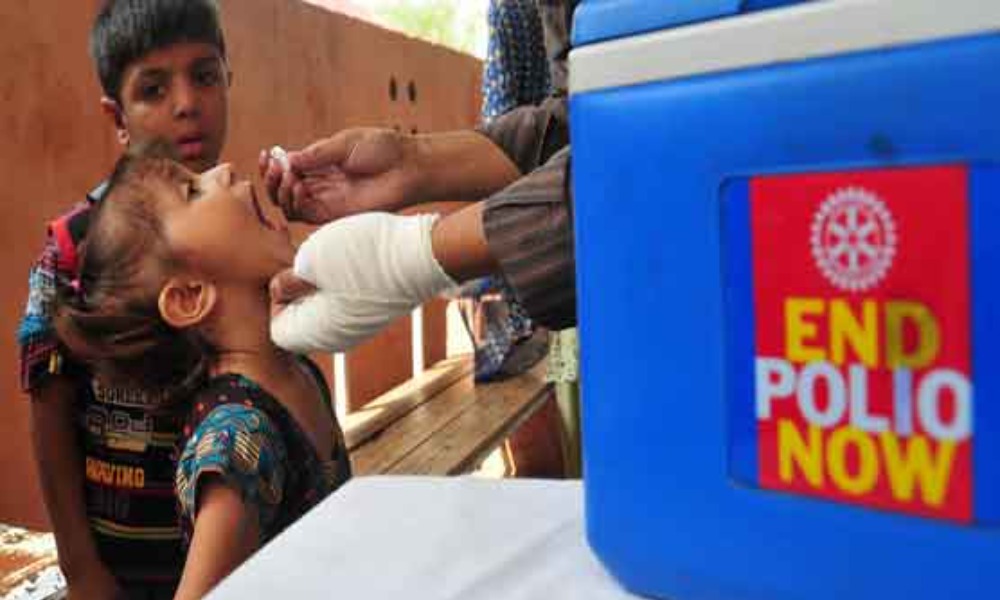
President Ashraf Ghani gave Mohammed Mohammedi, the head of the United Nations Children’s Fund’s (UNICEF) polio eradication team in Afghanistan, 24 hours to leave the country, a presidential spokesman said.
According to a Facebook post on Wednesday by Dawa Khan Menapal, Mohammedi was given notice to leave the country for “ignoring the president and for the lack of transparency in his work.”
Meanwhile the Ministry of Public Health said that UNICEF had spent $22 million on an awareness campaign around polio but failed to provide a report to government.
According to Masooma Ghafari, the deputy spokeswoman for the health ministry, there was still an increase in the number of cases despite money having been spent on polio campaigns.
“We need to bring changes in the section,” she said.
Ghani’s sudden move to have Mohammedi expelled drew sharp criticism from some analysts who felt the move would have a negative effect on aid coming in from international organizations.
“Unfortunately, President Ghani’s act with an international organization was startling, and the act will affect the planning of international organizations badly,” said Asif Mobaligh, an international affairs analyst.
Ghani chats to Bill and Melinda Gates about polio concerns
The sudden move to expel Mohammedi also comes just days after Ghani held a telephone conference call with Bill and Melinda Gates whose Foundation is a key donor in Afghanistan’s drive to rid the country of wild polio.
During the meeting the Gates and Ghani expressed their concerns over the surge in polio cases in Afghanistan due to restrictions imposed by the Taliban in areas under their control, the Presidential Palace said in a statement after the virtual meeting.
“The two sides also held a comprehensive discussion on reforming the polio vaccine implementation process and increasing facilities in this regard,” the statement read.
Bill and his wife Melinda run the Bill and Melinda Gates Foundation – a funding organization. Polio eradication is one of their top priorities.
The virtual meeting on Monday night came after the Afghan Ministry of Public Health claimed that more than 3.5 million children have been deprived of anti-polio vaccinations due to Taliban restrictions.
Lancet reports 2020 was a bad year for polio
Earlier this month, the world’s leading medical journal, The Lancet, reported that there is growing concern about the effect the COVID-19 pandemic could have on global efforts to eradicate the disease.
Polio vaccination campaigns in Afghanistan were stopped in March last year for several months before being restarted in August.
Speaking to The Lancet, Mohammedi said the decision to halt vaccinations had been “a precautionary measure” as they did not want to contribute towards the spread of COVID-19.
“We didn’t want to replace one virus with another,” he said.
In 2020, 56 polio cases were reported in Afghanistan; in 2019 the number was 29.
UNICEF however estimates that last year, about 50 million children in Afghanistan and Pakistan missed out on vaccines because of the disruption in immunisation due to the pandemic.
Abdul Quayum Pokhla, director of the Regional Emergency Operation Centre for polio in
Kandahar, meanwhile told The Lancet that “2020 was another bad year not just for the south, but for the whole country.”
He said: “The virus spread not just to endemic areas in Afghanistan, but to some free zones. We’ve missed so many children and it will lead to reduced immunity. We are expecting more cases – the virus is circulating in the environment.”
UNICEF states that since 2018, approximately one million children just in southern Afghanistan have missed out on polio vaccinations because of insecurity.
“When it comes to a rise in polio cases, does it make a difference to have 50 or 100 cases? It’s the same root causes,” Mohammedi said.
“We have issues with access and this lack of access has been underestimated by the polio programme. For more than two and a half years some areas have had no access [to vaccines] but the strategy is the same”.
He said “polio is not a priority except for people working for the programme. We have donors that have become massively passive. We need active donors. The UN talks about polio as
if it’s a priority, but it’s not at all. If it were a top priority, the game would change.

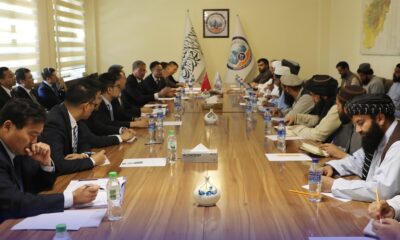




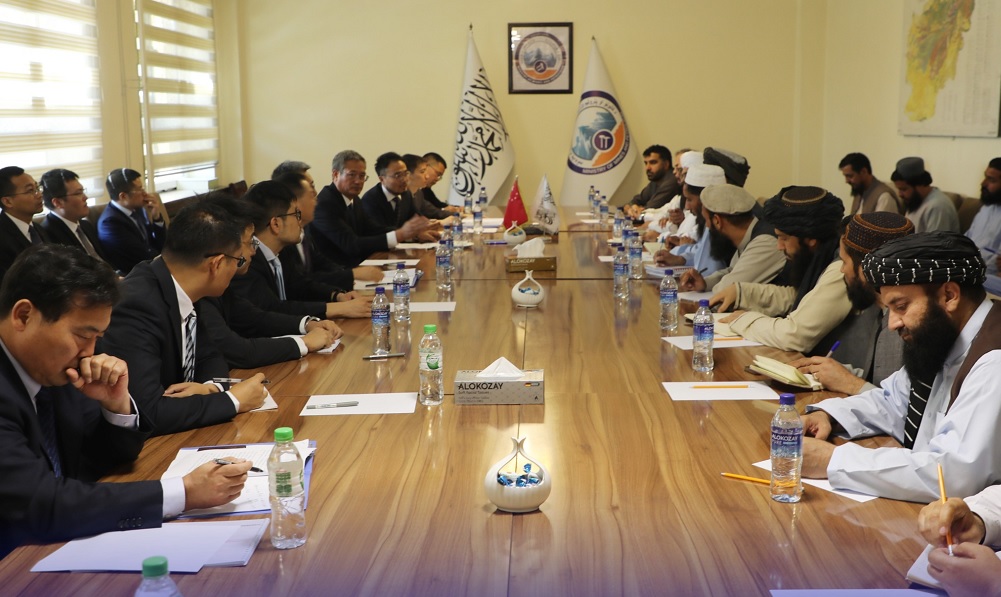
Afghanistan’s Ministry of Mines and Petroleum called for the accelerated implementation of the Mes Aynak copper mining project during a high-level meeting with a Chinese delegation in Kabul.
According to a ministry statement, Abdul Rahman Qanit, Deputy Minister for Policy and Programs, met on Sunday with a delegation led by Wei Huaxiang, General Consul of the Asian Affairs Department of China’s Ministry of Foreign Affairs, along with China’s ambassador to Afghanistan, to discuss progress on the long-delayed project.
The meeting focused on the current status of the Mes Aynak copper mine, one of Afghanistan’s largest mining projects, as well as the challenges, technical requirements, and practical steps needed to move the project forward.
Both sides reviewed recent developments and explored ways to accelerate implementation. The Chinese delegation highlighted the longstanding friendly relations between Afghanistan and China and shared its assessment of the project’s progress, operational conditions, and existing challenges.
The delegation also presented a number of proposals aimed at facilitating further advancement of the project.
Qanit emphasized the strategic significance of Mes Aynak for both countries, describing it as a major economic project with the potential to strengthen bilateral cooperation and contribute to Afghanistan’s economic development.
He stated that there are currently no major obstacles preventing the start of practical work and urged the contracting company to fulfill its commitments without further delay so that implementation can begin as soon as possible.
The discussions come as Afghan authorities seek to accelerate the development of the country’s vast mineral resources and attract greater foreign investment into the mining sector.
Mes Aynak meanwhile is one of the world’s largest undeveloped copper deposits. A mining contract was awarded to a Chinese consortium in 2008, but the project has remained stalled for years due to security, archaeological, contractual, and political challenges.
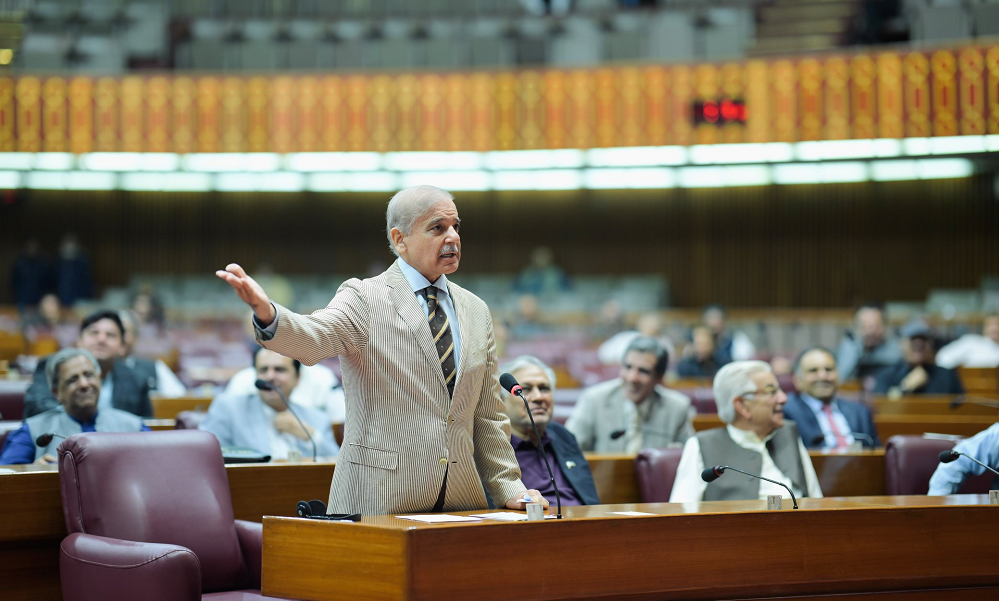
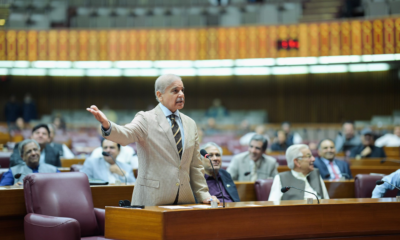
Pakistan’s Prime Minister, Shehbaz Sharif, has defended the decision to erect a fence along the disputed Durand Line, describing it as a necessary measure to safeguard national security and protect Pakistani citizens from security threats.
Addressing a session of Pakistan’s National Assembly on Saturday, Sharif said the government had invested heavily in constructing fences and security infrastructure along the Durand Line. He argued that the expense was justified as part of broader efforts to strengthen security and combat terrorism.
“Regarding the Durand Line that you referred to, constructing a fence along the border was the right and appropriate step for ensuring Pakistan’s security and protecting its people,” Sharif told lawmakers. “If this fencing can save even the life of one child from the threat of terrorism, then all the money spent on this approximately 2,000-kilometer border is justified, even if it amounts to billions of rupees.”
The Pakistani prime minister’s remarks come amid continuing debate over the status of the Durand Line, a longstanding source of disagreement between Afghanistan and Pakistan. Islamabad has consistently maintained that fencing is a security necessity aimed at preventing cross-frontier militancy and illegal movement.
However, many Afghan analysts argue that the issue extends beyond security concerns. They contend that the Durand Line carries deep historical, political, cultural, and social significance for communities living on both sides of the line and cannot be viewed solely through a security lens.
Pakistan has repeatedly defended its fencing project in recent years, citing the need to curb terrorism and enhance frontier management. Nevertheless, the Durand Line remains one of the most sensitive and unresolved issues in relations between Kabul and Islamabad.
Latest News
UN Security Council to decide future of UNAMA mission in Afghanistan
According to UNAMA, its current mandate is set to expire on June 16, and members of the Security Council are expected to discuss whether the mission will be extended and how its activities in Afghanistan will continue.
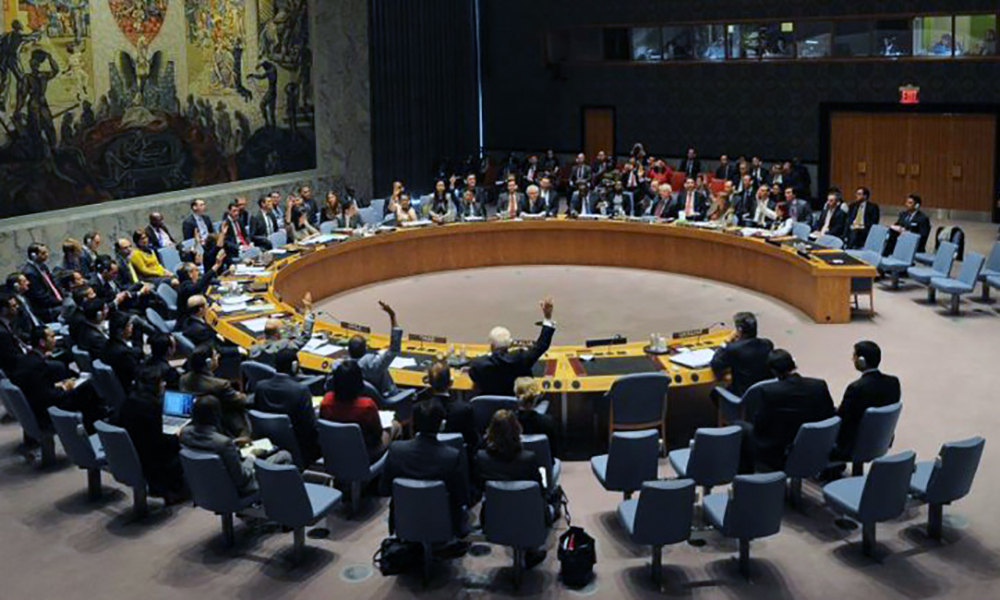
The United Nations Assistance Mission in Afghanistan (UNAMA) has announced that the UN Security Council will hold a meeting on Monday, June 15, to review the future of the mission’s mandate in Afghanistan.
According to UNAMA, its current mandate is set to expire on June 16, and members of the Security Council are expected to discuss whether the mission will be extended and how its activities in Afghanistan will continue.
UNAMA has been operating in Afghanistan since 2002, playing a key role in political engagement, humanitarian coordination, and facilitating international assistance efforts across the country.
The upcoming Security Council session is expected to be closely watched, as the future of the UN mission remains an important issue for Afghanistan and the international community.


Tahawol: Pakistan PM defending Durand Line fencing

Saar: Afghanistan-Pakistan tensions discussed

Afghan officials press Chinese delegation on Mes Aynak mining project

Health ministry urges greater public participation in blood donation

Shehbaz Sharif defends Durand Line fencing as essential for Pakistan’s security

Norway’s Viking-inspired World Cup team photo goes viral

Large blast near Beit Shemesh part of pre-planned test: Israeli defense firm

Trump returns from China with stability but little progress

Afghanistan announce squad for India series

Afghanistan, Russia sign military cooperation agreement
Tahawol: Pakistan PM defending Durand Line fencing
Saar: Afghanistan-Pakistan tensions discussed

Saar: Possible agreement between Iran and US discussed

Tawsia: Increase in Afghanistan’s saffron exports discsused

Tahawol: Middle East crisis and future of Islamic world discussed
-

 International Sports5 days ago
One Day to Go: Everything you need to know about FIFA World Cup 2026
-

 Sport3 days ago
Afghanistan A edge India A by four runs in rain-hit Tri-Nation opener
-
 Latest News5 days ago
Pakistani airstrikes on civilian areas in three Afghan provinces kill 13
-

 International Sports4 days ago
Mexico and South Africa set to open historic 2026 World Cup
-
 Regional5 days ago
Pakistan says all aboard military helicopter killed in crash in Pakistani Kashmir
-

 Regional5 days ago
Iran targets US bases in Jordan and the Gulf after Trump orders strikes near Hormuz
-
 Latest News2 days ago
Final round of 1405 Kankor exam concludes in Afghanistan
-
 World4 days ago
US, Iran exchange attacks as Trump threatens further escalation