
Latest News
Haqqani delivers speech to security forces, warns the public unlicensed weapons are illegal
GDI head rejected repeated claims by international organizations and countries that some militant groups are active in Afghanistan.

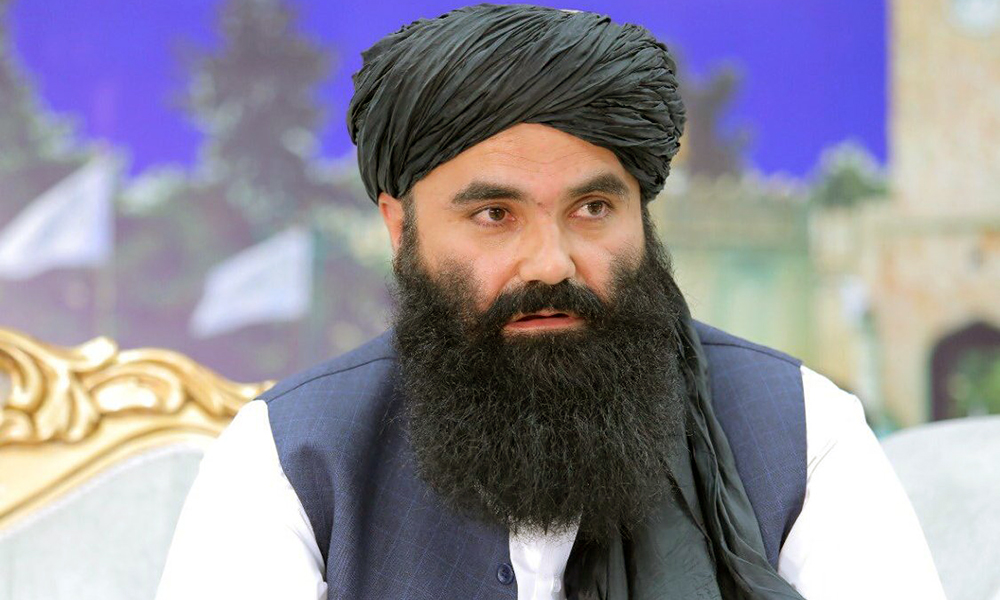
Acting Minister of Interior Affairs, Sirajuddin Haqqani made it clear on Thursday that it is illegal to carry unlicensed weapons in the country.
Addressing an ‘appreciation ceremony’ for security forces, Haqqani said this applies to both individuals and companies. He said individuals and companies need permits to have weapons.
He also spoke about security across the country and said sincerity, good management and improved services of security forces are the basis of providing a solid security platform for the people.
“Today, the security created in our country is basically the product of the rule of the Sharia system. The security created is in fact a great blessing from Allah, whose durability lies in gratitude to the Almighty Allah, obedience to the Sharia ruler (the supreme leader), better interaction with the people, and harmony among themselves,” said Haqqani.
According to him, all factors that cause instability of society must be prevented in the Sharia system.
“Without responsible persons, no one has the right to carry weapons without a permit, apart from the Emirate’s organizations; if it is security companies, businessmen, the private sector, or any person who wants to carry weapons they must obtain permits,” Haqqani added.
He also warned that any responsible person who undermines the security of the people will be investigated by the authorities.
Regarding the structure of the Ministry of Interior Affairs, he said that there are approximately 230,000 policemen and efforts are being made by the ministry to “professionalize” them.
Haqqani also said that another major factor in ensuring security is good coordination between the ministries of interior, defense and the General Directorate of Intelligence (GDI), which he said “has won the trust of the people and the world.”
The GDI head, Abdulhaq Wasiq, said at the same event that the three entities have joint and separate responsibilities in terms of preventing crime, ensuring national security and other tasks. He also said these three bodies also work with other ministries when needed.
Wasiq said GDI performs its duties in accordance with the law and that all laws have been approved according to Islamic Sharia and Hanafi jurisprudence. He said the laws have been approved by scholars and experts of the relevant department, and ratified by the supreme leader of the Islamic Emirate.
“Unlike the structure and strategy of the past intelligence organizations, the intelligence officers of the Islamic Emirate are bound by Islamic Sharia and the law. When they commit a violation, they are investigated. Alhamdulillah, intelligence (GDI) is now a reformed and law-abiding organization,” said Wasiq.
He also said “negative propaganda” is occasionally detected by some circles that attempt to present a false image of the directorate.
“This propaganda is a one-sided lie, the facts are clear to the people of Afghanistan and all the countries of the world, and these biased circles are known by all the countries of the region and the world who want peace and prosperity in the world,” he added.
According to him, Afghanistan is now on the list of safe countries in the world, terrorist groups have been suppressed, and have been forced to flee Afghanistan. He said: “They are now outside the borders of Afghanistan.”
“Our security performance has proven to the world that the Islamic Emirate has the capacity to provide Afghanistan’s security and can fulfill its obligations in this regard.”
Wasiq did however call on the international community to make sure they had the facts and not believe false information.
“The media reports about the presence of various [terrorist] groups in Afghanistan are not true, but all these reports are political and are aimed at misleading the public.”
Wasiq also rejected repeated claims by international organizations and countries that some militant groups are active in Afghanistan.
He said it was the opposite and that “Afghanistan is a victim of the destructive activities of some groups that have centers and operate in the neighborhood of Afghanistan and the region.”
According to him, the Islamic Emirate of Afghanistan has not only ensured the physical security of the people, but also paid special attention to maintaining psychological security.
Wasiq also said the current security situation in the country was a divine blessing and asked the people to cooperate with security institutions.
He also urged security officials to focus on their responsibilities and respect the people.
Haqqani meanwhile once again called on Afghans who live abroad to return to their homeland and stand by the regime.
He said: “Afghanistan is the common home of all Afghans and the dignity of each person is protected in his home.”
He assured the people and all embassies and diplomatic missions in Afghanistan that the police force in coordination with the defense and intelligence departments are responsible for their security and will be at their service around the clock.
He added that while Afghanistan’s assets are unjustly blocked and the country is subjected to economic sanctions, the Ministry of Interior has managed to eradicate drug cultivation on the orders of the leader of the Islamic Emirate.
He stated that: “I still assure our people that we will reduce the cultivation, production and trafficking of drugs to zero.”
Related Stories:
Afghans will have a good future under the shadow of Islamic system: Haqqani
Haqqani says foreign enemies will not invade Afghanistan in near future





Latest News
Airstrike on Kabul drug rehabilitation centre sparks legal concerns
Amnesty International’s Deputy Regional Director for Research, Isabelle Lassee, said the scale of casualties suggests the presence of a significant civilian population at the site.
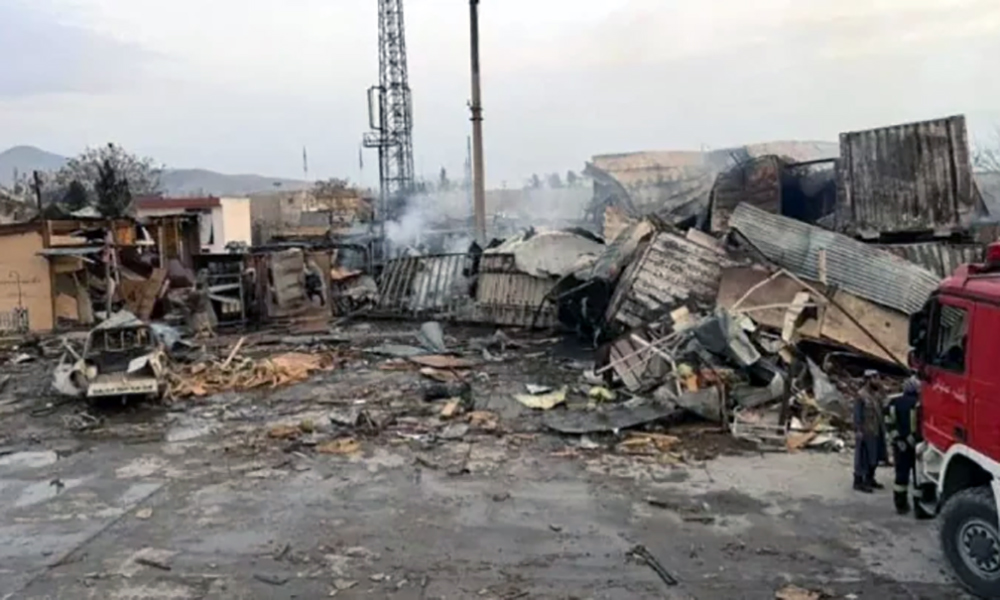
An airstrike on a drug rehabilitation facility in Kabul has drawn sharp criticism from Amnesty International, raising serious questions about compliance with international humanitarian law.
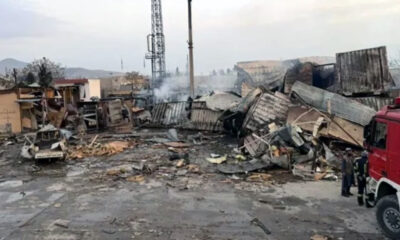
The strike, carried out on 16 March, targeted a site at Camp Phoenix, a former military base that has functioned largely as a rehabilitation centre since 2016. Pakistani officials have claimed the attack was aimed at an ammunition depot allegedly located within the compound.
Responding to those claims, Amnesty International’s Deputy Regional Director for Research, Isabelle Lassee, said the scale of casualties suggests the presence of a significant civilian population at the site.
“While the total number of casualties has yet to be independently verified, it is clear that the attack caused extensive civilian harm, with reports indicating hundreds killed or injured,” she said.
Lassee emphasized that the facility was widely known to house civilians undergoing treatment, and warned that any military action should have taken this into account. “Pakistan’s military should have taken all feasible precautions to avoid harming civilians and civilian infrastructure,” she added.
She further noted that even if a military target had been present within the compound, international law requires that any strike be proportionate, ensuring that civilian harm is not excessive in relation to the anticipated military advantage.
“The scale of destruction raises serious concerns about whether an adequate proportionality assessment was conducted and whether sufficient steps were taken to verify the target and minimize civilian casualties,” Lassee said.
Amnesty International has called on Pakistani authorities to disclose the intelligence behind the strike and to launch an independent, impartial, and transparent investigation into the incident. The organization stressed that findings should be made public to ensure accountability.
The group also urged all parties involved in the conflict to adhere strictly to international humanitarian law and to protect civilian infrastructure, including medical and rehabilitation facilities.
The airstrike formed part of Pakistan’s “Operation Ghazab Lil Haq,” which included strikes in both Kabul and Nangarhar Province. The targeted rehabilitation centre, known as Omid, reportedly had the capacity to accommodate around 2,000 individuals.
Casualty figures remain contested. Islamic Emirate officials claim more than 400 civilians were killed and over 200 injured, though these numbers have not been independently verified. The United Nations has so far confirmed 143 deaths.
The strike comes amid escalating tensions between Afghanistan and Pakistan. According to the United Nations Assistance Mission in Afghanistan, at least 76 civilian casualties had already been recorded since the conflict intensified in February.
Pakistani officials, meanwhile, reported civilian casualties on their side of the border, including four deaths in Bajaur district on 15 March and the killing of a child in North Waziristan earlier in the month, allegedly due to cross-border fire from Afghanistan.
The latest developments underscore growing concerns about civilian safety as hostilities between the two countries continue to intensify.
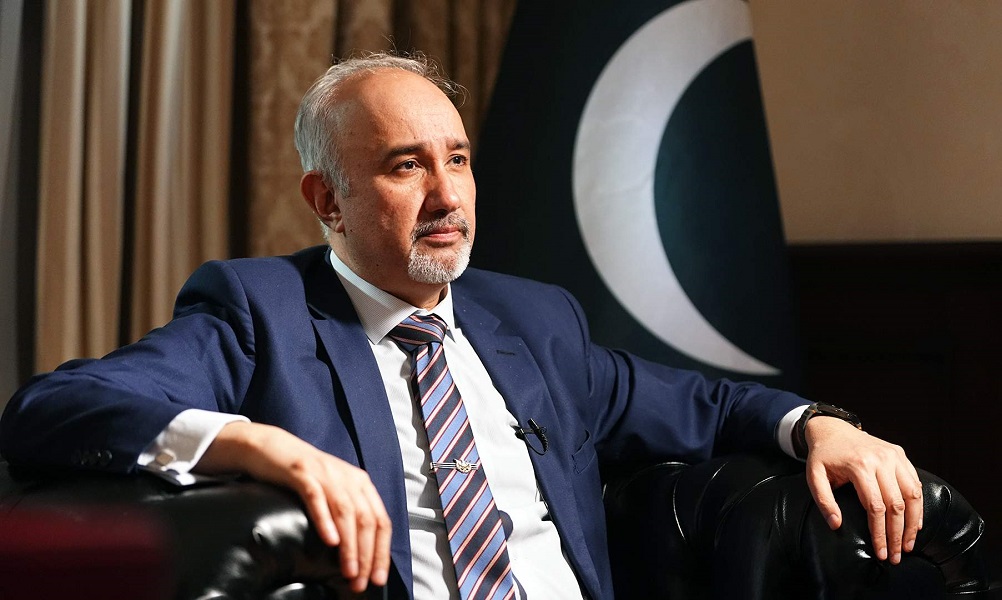
Pakistan’s ambassador to Russia, Faisal Niaz Tirmizi, has confirmed that Islamabad has asked Moscow to mediate in the ongoing conflict with Afghanistan.
In an interview with Russian daily Izvestia, Tirmizi said Pakistan is engaging with Russia and appreciates the “wonderful offer” to help resolve tensions. He noted that proposals from Russia, China, Qatar, Turkey, and Saudi Arabia led to an agreement on a temporary ceasefire.
“We tell all our interlocutors: please tell the Taliban (IEA) not to use this opportunity simply to regroup, recuperate, rearm, and re-attack,” Tirmizi said. “Because such large states as Russia or Pakistan cannot be destabilized by terrorist acts.”
The ambassador emphasized that decades of war in Afghanistan have affected not only Kabul and Islamabad but also neighboring countries, including Iran, Tajikistan, Turkmenistan, Uzbekistan, and even Russia. “Therefore, we must all trade with each other, develop education, art, and culture. Terrorism is the wrong way to go,” he added.
The appeal for mediation comes amid rising cross-Durand Line tensions and violence that have killed hundreds and displaced thousands in recent weeks.
Pakistani officials have repeatedly claimed that militant attacks in the country are organized in Afghanistan.
The IEA however denies the claim saying that Afghanistan is not responsible for Pakistan’s “security failure.”


Airstrike on Kabul drug rehabilitation centre sparks legal concerns

Trump backs down on strikes on Iran’s power network, says US and Tehran holding talks

Iran says coastal attack will lead to full Gulf closure and mine-laying

Afghanistan expresses condolences after deadly helicopter crash in Qatar

IPL 2026: Ishan Kishan named Sunrisers’ interim captain ahead of opening clash

Pakistani military jet downed in Afghanistan’s Jalalabad, pilot captured alive

Afghan Air Force conducts airstrikes in Islamabad, other cities

Prominent Muslim scholar issues fatwa calling for Afghanistan-Pakistan ceasefire

Afghan air force strikes key Pakistani military installations in retaliatory operation

IEA: Special circle in Pakistan has launched mission to destabilize region

Tahawol: Possibility of US ground forces entering Iran war discussed

Saar: Using US prisoners as political pressure

Tahawol: Pakistan’s efforts to destabilise Afghanistan

Saar: Decline in international assistance to Afghanistan

Tawsia: Assessment of Afghanistan’s economic activities in 1404
-
 Latest News5 days ago
Pakistani shelling hits Kunar districts despite ‘pause in hostility’ over Eid
-

 Sport4 days ago
Afghanistan national buzkashi falls short in Kokpar World Championship semifinals
-

 Regional4 days ago
Pakistan among top nuclear threats to America, US intelligence chief tells senate
-

 Sport3 days ago
Ireland to host Afghanistan for ODI series in August
-
 Latest News5 days ago
Peshawar High Court grants bail to 68 detained Afghan nationals, including minors
-
 World5 days ago
US weighs troop deployment as Iran war enters new phase
-
 Latest News3 days ago
Mojtaba Khamenei calls for improved Afghanistan–Pakistan relations, offers help
-
 Latest News4 days ago
Security Sources: Pakistani military shelling in Kunar and Nuristan leaves female doctor dead