
Latest News
Iran is willing to give Trump diplomacy ‘another chance’, senior Iranian official says
Trump said on Wednesday he preferred a verified nuclear peace agreement with Iran, according to a post on his Truth Social account.

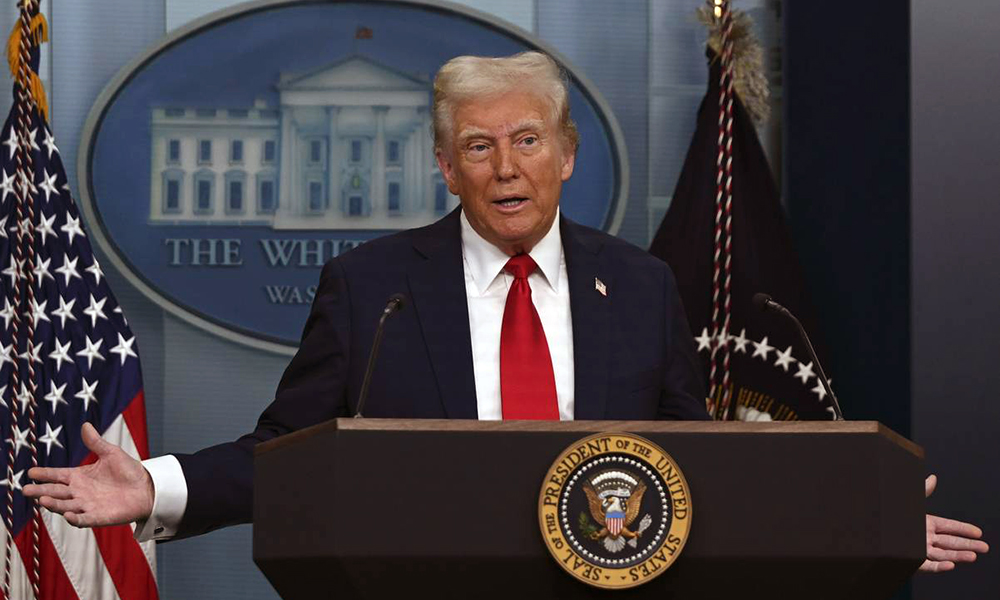
Iran is ready to give the United States a chance to resolve disputes between the arch foes, a senior Iranian official told Reuters on Wednesday, a day after President Donald Trump restored his “maximum pressure” campaign on the country, Reuters reported.
Earlier, Iranian Foreign Minister Abbas Araqchi said that U.S. concerns about Iran developing nuclear weapons were not a complicated issue and could be resolved given Tehran’s opposition to weapons of mass destruction.
“The clerical establishment’s will is to give diplomacy with Trump another chance, but Tehran is deeply concerned about Israel’s sabotage,” said the senior official.
The official said Tehran wanted the United States to “rein in Israel if Washington is seeking a deal” with the Islamic Republic.
Trump said on Wednesday he preferred a verified nuclear peace agreement with Iran, according to a post on his Truth Social account.
Trump’s “maximum pressure” campaign on Iran includes efforts to drive its oil exports down to zero in order to stop Tehran from obtaining a nuclear weapon.
Iranian President Masoud Pezeshkian, however, downplayed the impact of sanctions on Iran, read the report.
“America threatens new sanctions, but Iran is a powerful and resource-rich country that can navigate challenges by managing its resources,” Pezeshkian said in a televised inauguration ceremony.
Tehran has long said its nuclear programme is entirely peaceful and it has no intention to build nuclear weapons.
But with its regional allies either dismantled or gravely weakened since the start of the Hamas-Israel conflict in Gaza in October 2023, and mounting discontent among many Iranians at the state of the economy, analysts say the clerical establishment has few options other than to strike a deal with Trump.
The fall of Bashar al-Assad in Syria in December, a crucial ally of Tehran, has severely disrupted Tehran’s “Axis of Resistance”, a network of regional armed groups, militants and allied states, to counter Israel and the United States, while asserting its influence throughout the Middle East.
In 2018, then-President Trump ditched Tehran’s 2015 nuclear pact with world powers and reimposed sanctions that have crippled the country’s economy. The harsh measures prompted Tehran to violate the nuclear pact’s nuclear limitations, Reuters reported.
The official also said Tehran disagreed with “any displacement of Gazans, but Iran-U.S. talks are a separate matter”, referring to Trump’s remarks that the U.S. would take over war-ravaged Gaza and create a “Riviera of the Middle East” after resettling Palestinians elsewhere.
“Iran does not agree with any displacement of Palestinians and has communicated this through various channels. However, this issue and the path of Iran’s nuclear agreement are two separate matters and should be pursued separately,” the official said.












Kazakhstan’s Foreign Minister Mukhtar Tileuberdi has called for pragmatic and coordinated international engagement with Afghanistan, saying the country’s long-term stability is closely linked to the security and sustainable development of Central Asia.
Speaking during the general debate of the 81st session of the United Nations General Assembly in New York on Friday, Tileuberdi said humanitarian assistance to Afghanistan remains essential but alone cannot break the cycle of poverty, displacement and dependency.
He said Kazakhstan supports a “pragmatic, coordinated and step-by-step” approach to international engagement with Afghanistan, with the United Nations playing a central role.
Tileuberdi also said Kazakhstan is working with the UN to operationalize the United Nations Regional Centre for the Sustainable Development Goals for Central Asia and Afghanistan in Almaty.
He said the success of the centre should be measured by the results and assistance it delivers to the region.


Abu Muslim Farah defeat Khurasan Faryab 2-0 in ACL season six

Saar: Concerns over Pakistan’s political crisis discussed

Afghanistan Champions League: Omar Zawak Herat beat Toofan Herat 1-0

Blast in Pakistan’s Dera Ismail Khan kills 11, injures 30

Ariana Afghan Airlines increases Kabul-Delhi cargo flights

Saudi energy group signs major Afghanistan deals covering gas exploration and pipeline plans

Trump floats idea of renaming Atlantic or Pacific Ocean

US hits Egyptian bank branches with Iran sanctions as war marks six months

Nepal flood rescue mission enters critical phase as thousands remain missing

Iranian clubs to face Gulf opponents at neutral venues in Asian Champions League Elite
Saar: Concerns over Pakistan’s political crisis discussed

Exclusive interview with Abdul Latif Mansoor, Minister of MRRD

Tawsia: Overview of Afghanistan’s iron mines

Tahawol: Discussion on fresh Pakistani airstrikes on Afghanistan

Saar: Calls for international support for Afghanistan discussed
-

 World5 days ago
CNN, MS NOW and Politico sue Trump, challenging White House ban
-

 Latest News4 days ago
Ariana Afghan Airlines ranks seventh among 45 Central Asian airlines
-

 Latest News5 days ago
UN reiterates call for respect for international law after Kunar airstrikes
-

 Regional4 days ago
US and Iran hold first talks since June after Trump’s ‘annihilation’ threat
-

 Latest News4 days ago
Silk Road highway in Wakhan corridor now reaches the China border
-

 Regional3 days ago
Iran airlines cancel flights as US sanctions hit
-

 Latest News5 days ago
Afghan Official: Pakistan’s airstrikes will not go unanswered
-

 Regional5 days ago
G7 foreign ministers call on Iran to stop arming Houthis