
Regional
Iran’s parliament ousts economy minister over economic mismanagement
The parliament has ousted Hemmati in a no confidence vote almost eight months after President Masoud Pezeshkian appointed his cabinet.

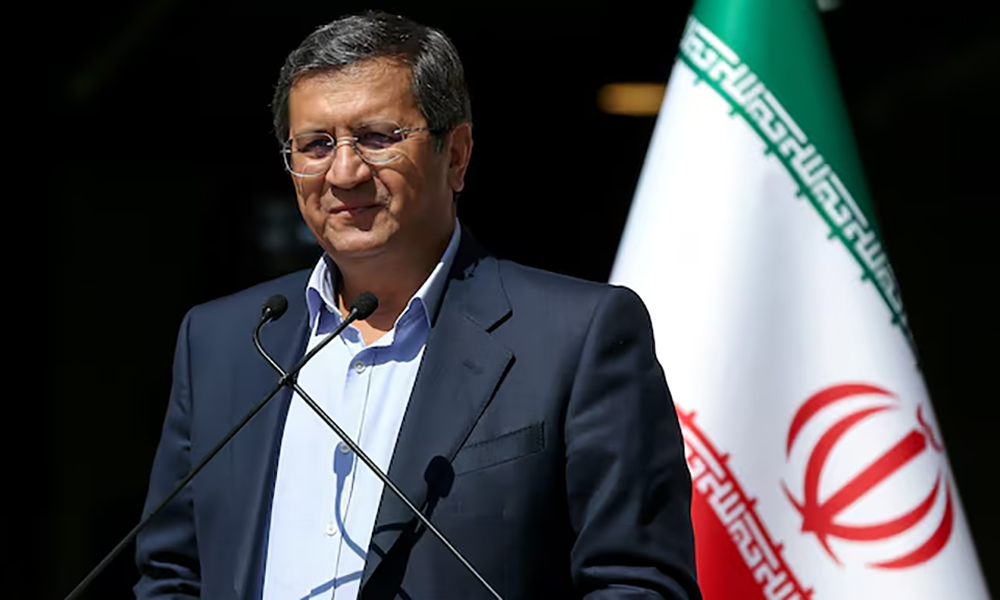
Iran’s parliament voted on Sunday to remove the country’s Economy Minister Abdolnaser Hemmati from office over mismanagement of the economy and a plunging national currency, state media reported.
The parliament has ousted Hemmati in a no confidence vote almost eight months after President Masoud Pezeshkian appointed his cabinet.
Over the eight-month period, Iran’s currency has lost close to half of its value against the U.S. dollar, according to unofficial websites, such as alanchand.com.
The Iranian rial now trades at 927,000 to the U.S. dollar, against 595,500 in August of last year.
Parliamentarians opposing Hemmati argued that he had failed to prevent price increases in basic goods such as medicine, food and housing while being unable to control the foreign exchange market, state media said.
Hemmati had prioritised ending U.S. sanctions on Iran and removing the country from the Financial Action Task Force’s blacklist, state media said.
This was opposed by MPs who believe Tehran should focus on “neutralising” sanctions.
Hemmati’s supporters said it was not the right time to remove the economy minister as Iran remained under U.S. sanctions and replacing him would cause further instability, according to state media.
The economy is the top challenge for Iran’s ruling clerics, who fear a revival of protests by lower and middle-income communities angry at growing poverty that have erupted since 2017.
U.S. President Donald Trump has reinstated his “maximum pressure” campaign aiming to cut Iran’s oil exports to zero.
In the vote, 182 parliament members backed the no confidence motion on Hemmati, while 89 voted against the measure, according to state media.





Regional
Pakistan to host talks with Saudi Arabia, Turkey, Egypt amid Iran war diplomacy
Turkish Foreign Minister Hakan Fidan said the meeting would seek to establish a mechanism aimed at de-escalation.
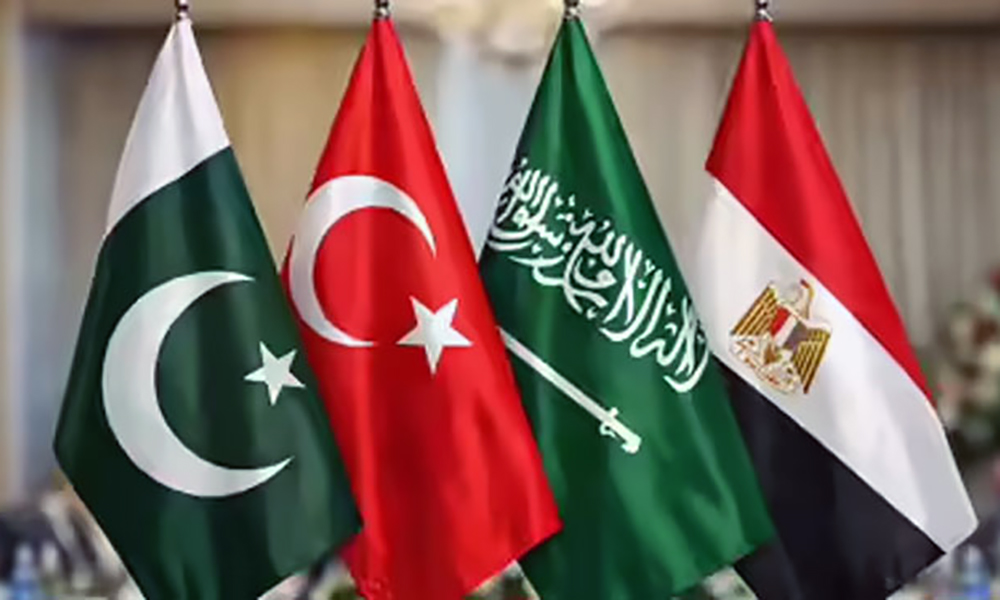
Pakistan will host Saudi Arabia, Turkey and Egypt for talks from Sunday on the Iran war as Islamabad positions itself as a potential venue for U.S.-Iran negotiations on the month-old conflict, Reuters reported.
The four countries’ foreign ministers will hold “in-depth discussions on a range of issues, including efforts to de-escalate tensions in the region” during the two-day talks, Pakistan’s foreign ministry said in a statement on Saturday.
Turkish Foreign Minister Hakan Fidan said the meeting would seek to establish a mechanism aimed at de-escalation.
“We would discuss where the negotiations in this war are heading and how these four countries assess the situation and what can be done,” he told broadcaster A Haber late on Friday.
The four nations have been involved in trying to mediate between Washington and Tehran in the war launched by the U.S. and Israel on February 28, and all are acutely vulnerable to threats to energy supplies and trade routes.
Pakistan has conveyed to Tehran a U.S. proposal for ending the war and offered to host talks, with Iranian officials indicating any negotiations could take place in Pakistan or Turkey.
U.S. President Donald Trump has said talks with Iran were going “very well,” but Tehran denies talking with Washington.
Iran has been reviewing the 15-point U.S. proposal, although one official has dismissed it as “one-sided and unfair”. Its demands range from dismantling Iran’s nuclear programme to curbing its missile development and effectively handing over control of the Strait of Hormuz, according to sources and reports.
Turkey’s Fidan told an Istanbul conference on Saturday that the world’s new “polycentric system” requires a solution to guarding vital energy and trade routes. He said Turkey’s high-level dialogue aims to swiftly chart out “actionable steps” to end the war before there is further destruction to the region and global economy.
Regional
Twelve US troops wounded in Iran strike on base in Saudi Arabia, US official says
Earlier on Friday, the U.S. military said 273 of them had already returned to duty. Thirteen U.S. troops have been killed in the conflict.

Twelve U.S. troops were wounded, two of them seriously, in an Iranian military strike on Prince Sultan Air Base in Saudi Arabia, a U.S. official told Reuters on Friday.
The latest casualties add to the more than 300 U.S. military service members who have been wounded since the war against Iran started on February 28.
Earlier on Friday, the U.S. military said 273 of them had already returned to duty. Thirteen U.S. troops have been killed in the conflict.
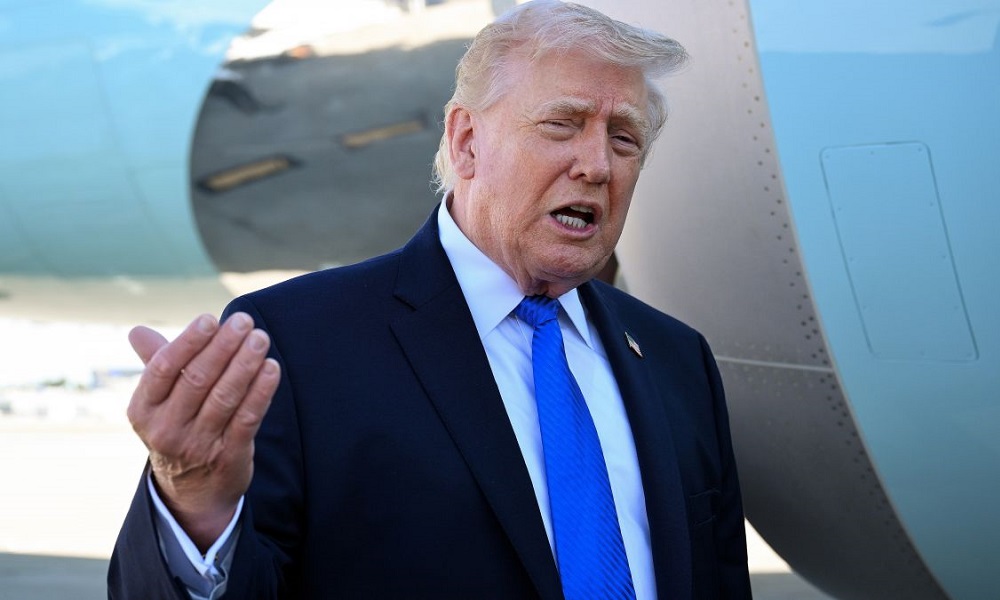
U.S. President Donald Trump announced a new extension of his deadline for Iran to reopen the Strait of Hormuz or face the destruction of its energy plants, after Iran rejected his 15-point proposal to end the war he launched with Israel.
Iran gave no direct indication that it was ready for negotiation or compromise. The Islamic Revolutionary Guard Corps issued a statement reaffirming that all shipping “to and from ports of allies and supporters of the Israeli-American enemies” to any destination was prohibited.
The war has spread across the Middle East, killing thousands of people and causing the biggest disruption in history to energy supplies, hitting the global economy with soaring oil, gas and fertiliser prices that have fuelled inflation fears.
The U.S. and Israel launched strikes on Iran on February 28 during talks with Tehran about its nuclear programme that had not yet yielded a deal. Attacks on Israel by Iran’s Lebanese ally Hezbollah then triggered an Israeli onslaught there that has displaced a fifth of Lebanon’s population.
On Thursday, Trump threatened during a cabinet meeting to increase pressure on Iran if it did not make a deal. He later posted on social media that he would pause threatened attacks on Iranian energy plants for 10 days until April 6 at 8 p.m. Eastern daylight time (0000 GMT on April 7).
“Talks are ongoing and, despite erroneous statements to the contrary by the Fake News Media, and others, they are going very well,” he added in his Truth Social post.


Tahawol: Efforts for Kabul-Islamabad de-escalation

Saar: Restrictions on girls’ education in Afghanistan discussed

Bamyan hosts ski competition sponsored by AWCC

Afghan FM meets Iran’s acting ambassador in Kabul, discusses regional issues

Pentagon preparing for weeks of ground operations in Iran, Washington Post reports

Pakistani military jet downed in Afghanistan’s Jalalabad, pilot captured alive

Prominent Muslim scholar issues fatwa calling for Afghanistan-Pakistan ceasefire

Afghan air force strikes key Pakistani military installations in retaliatory operation

IEA Supreme Leader issues Eid-ul-Fitr message urging unity and support for Islamic system

14 Pakistani soldiers killed after military post falls along Durand line: MoD
Tahawol: Efforts for Kabul-Islamabad de-escalation
Saar: Restrictions on girls’ education in Afghanistan discussed

Tahawol: Concerns over spread of Middle East crisis discussed

Saar: Weakening relations between Kabul and Washington discussed

Exclusive interview with Indrika Ratwatte, Deputy UN Special Representative for Afghanistan
-
 Latest News3 days ago
Tajikistan shifts stance on Afghanistan amid rising border tensions
-
 Latest News2 days ago
Russia deems US military presence in Afghanistan unacceptable
-
 Latest News2 days ago
IEA says Iranian drivers no longer need visas to enter Afghanistan
-
 Latest News4 days ago
Two civilians killed, eight injured in fresh shelling by Pakistan in Kunar
-

 Sport4 days ago
IPL 2026: RCB sold for $1.78 billion in landmark deal
-

 Sport3 days ago
Afghanistan to face Myanmar in crucial AFC clash
-

 Sport3 days ago
Myanmar trump Afghanistan 2-1 in Asian Cup Qualifier
-

 Business5 days ago
‘Made in Afghanistan’ expo opens in Tashkent