
World
Justin and Sophie Trudeau separate after 18 years of marriage

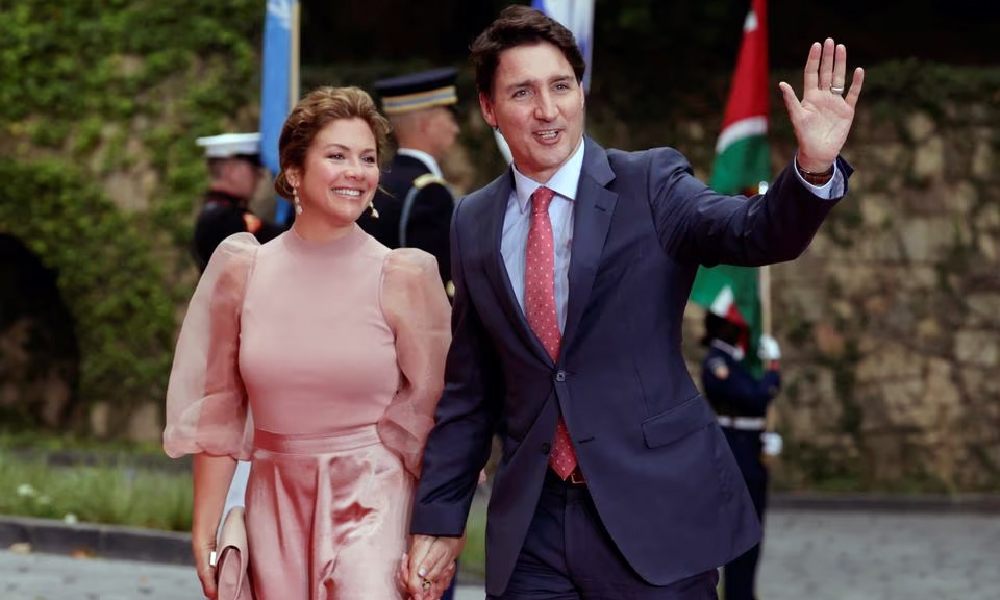
Canadian Prime Minister Justin Trudeau and his wife Sophie said on Wednesday they were separating in an unexpected announcement that appeared to mark the end of the couple’s 18-year high-profile marriage, Reuters reported.
The couple had talked frankly in the past about difficulties in their relationship and in recent years were seen less often together in public.
Trudeau, 51, and Sophie Gregoire Trudeau, 48, were married in May 2005 and have three children, aged 15, 14 and nine. On their anniversary in 2020, he described her as “my rock, my partner, and my best friend.”
For Trudeau, there are also painful historical parallels. His father, former Prime Minister Pierre Trudeau, separated from his wife, Margaret, in 1977, when he was in office.
The development is one of the biggest personal crises for Trudeau since he became prime minister in 2015, especially since he often stresses the importance of family life, read the report.
The couple made the announcement a week after Trudeau unveiled a massive cabinet shuffle in a bid to boost the fortunes of his Liberal Party, which is trailing in the polls. Aides said he was determined to lead the Liberals into the next election, which must be held by October 2025.
“Sophie and I would like to share the fact that after many meaningful and difficult conversations, we have made the decision to separate,” Trudeau said on Instagram. Gregoire Trudeau posted an almost identical message on her own Instagram account.
The Canadian Broadcasting Corp said Public Safety Minister Dominic LeBlanc, one of Trudeau’s closest allies, would brief members of the cabinet later on Wednesday.
The CBC also said Trudeau was likely to speak publicly about the separation this week.
Trudeau’s office said the two had signed a legal agreement, stressing that the couple would focus on raising their children. The family will go on vacation together next week.
Gregoire Trudeau will be moving into separate accommodation in Ottawa but plans to spend plenty of time with the children in Rideau Cottage, the prime minister’s official residence, to ensure they have as normal an upbringing as possible, said a source familiar with the situation, Reuters reported.
The source, who requested anonymity because of the extreme sensitivity of the situation, said the couple would have joint custody of the children.
Gregoire Trudeau, an advocate for gender equality who studied commerce at university, was working as a reporter when she met Trudeau in 2003. They married two years later.
Trudeau was only 43 when he became prime minister in late 2015 and the sharply-dressed couple quickly captured the attention of the world media, read the report.
In October 2015, the New York Post dubbed her “the hottest first lady in the world.”
Vogue magazine ran a glowing profile of the two in its January 2016 issue, complete with photos of them embracing. A long piece in the magazine about Trudeau said he “shocks some with his public displays of affection toward his wife”.
In the early years after Trudeau took office, he and Sophie were often seen together at social functions and on foreign trips. In February 2018, during a visit to India, the two of them dressed in colorful costumes most days, prompting derisive comments back home.
Trudeau, though, made clear even before he became prime minister that the two had faced challenges, writing in his autobiography Common Ground in 2014 that “our marriage isn’t perfect, and we have had difficult ups and downs.”
In recent years, Gregoire Trudeau has curtailed joint appearances with her husband and signs of stress were clear.
On their wedding anniversary last year, she said in a social media post that “we have navigated through sunny days, heavy storms, and everything in between and it ain’t over.”
She went on: “long-term relationships are challenging in so many ways”.
The two of them did travel to London in May for the coronation of King Charles and were together when U.S. President Joe Biden visited in late March.
As recently as Monday, Trudeau was still wearing his wedding ring, Reuters reported.




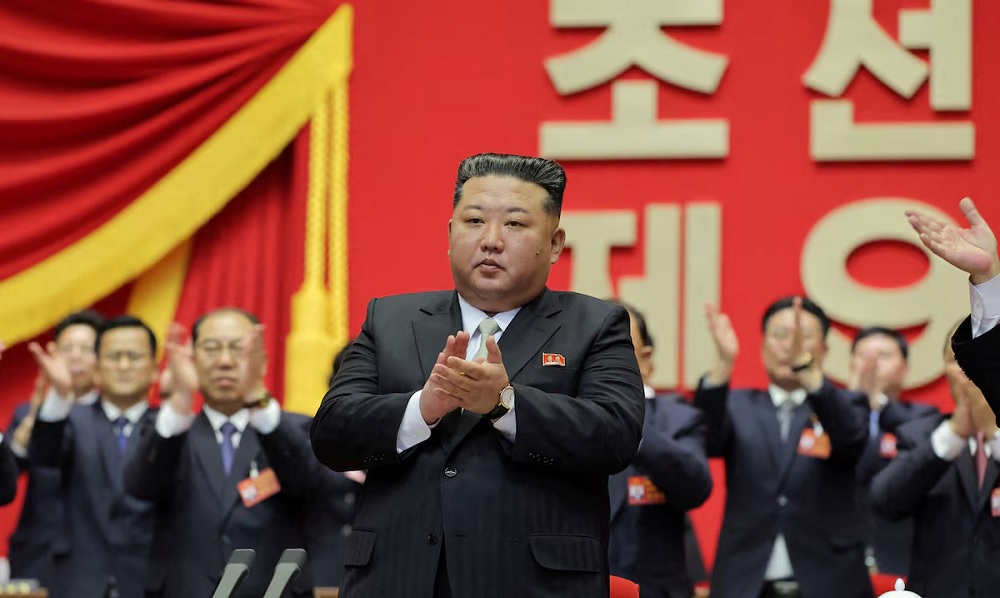
North Korean leader Kim Jong Un was reappointed as president of state affairs, state media KCNA reported on Monday, after the isolated nation convened the first session of its Supreme People’s Assembly a day earlier.
The meeting in Pyongyang will discuss amendments and supplements to the socialist constitution, as well as the election of the chairman of the State Affairs Commission and other state leadership bodies, Reuters reported.
The assembly, North Korea’s rubber-stamp legislature that formally approves state policy, typically meets following a ruling Workers’ Party Congress to turn party decisions into law.
The meeting will also review the country’s economic five-year plan announced at the ninth party congress held in February, KCNA said.
Attention has been focused on whether Pyongyang will revise its constitution to formalise leader Kim Jong Un’s “two hostile states” policy toward South Korea.
In recent years, Kim has abandoned Pyongyang’s long-standing goal of peaceful reunification and redefined the South as a hostile state.
Kim’s powerful sister, Kim Yo Jong, was notably absent from KCNA’s list of members of the State Affairs Commission, the country’s highest leadership body, on which she had served since 2021.
South Korea’s Unification Ministry said it was looking into why she was no longer listed, but analysts said the move did not necessarily signal a loss of influence.
“Her absence suggests not a decline in status but a strategic division of roles,” said Lim Eul-chul, a professor at Kyungnam University, adding that the younger Kim continues to wield real power as a department director in the ruling Workers’ Party, where she may play a higher-level, party-centred role coordinating policy.
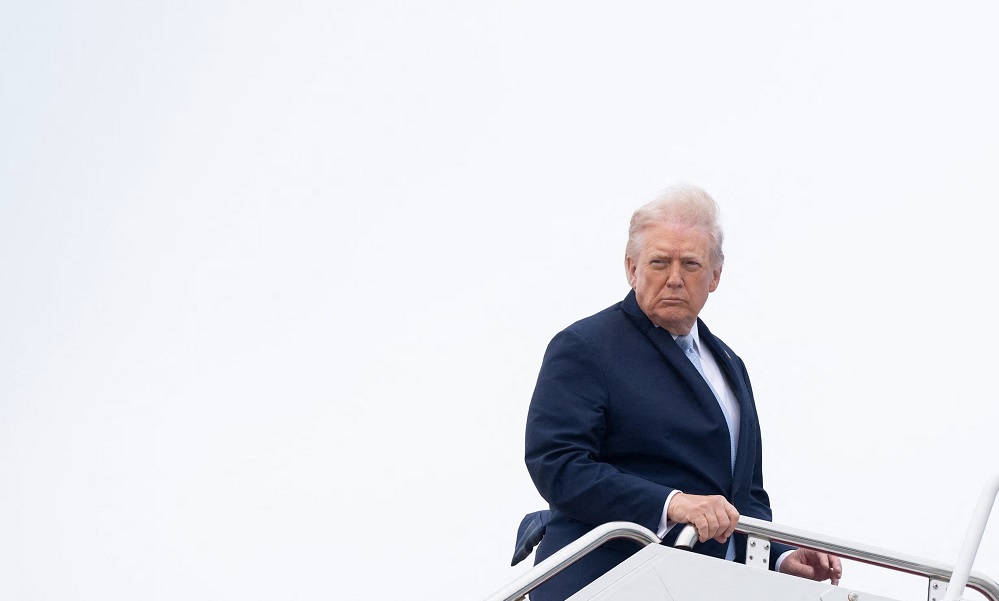
U.S. President Donald Trump on Saturday threatened to “obliterate” Iran’s power plants if Tehran does not fully reopen the Strait of Hormuz within 48 hours, a significant escalation barely a day after he talked about “winding down” the war.
“If Iran doesn’t FULLY OPEN, WITHOUT THREAT, the Strait of Hormuz, within 48 HOURS from this exact point in time, the United States of America will hit and obliterate their various POWER PLANTS, STARTING WITH THE BIGGEST ONE FIRST!” Trump said on social media, Reuters reported.
Trump’s ultimatum would expand the scope of U.S. strikes to infrastructure that affects daily civilian life in Iran.
The threat of Iranian attacks has kept most ships from getting through the strait, a narrow waterway that serves as the conduit for around a fifth of global oil and liquefied natural gas supplies, threatening a global energy shock. Its near-closure sent European gas prices surging as much as 35% last week.
Iran’s Khatam al-Anbiya military command headquarters said Sunday that if the U.S. attacks Iran’s fuel and energy infrastructure, then Iran would target all U.S. energy, information technology and desalination infrastructure in the region.
Energy prices spiked last week after Iran responded to an Israeli attack on its major gas field by hitting Qatar’s Ras Laffan Industrial City, which processes around a fifth of the world’s liquefied natural gas, causing damage that will take years to repair.
The threats to Gulf infrastructure came as the conflict entered dangerous new territory.
Israeli officials said Iranian forces had for the first time fired long-range missiles, expanding the risk of attacks beyond the Middle East, even as an Iranian strike injured dozens of people not far from Israel’s nuclear site.
Iran launched two ballistic missiles with a range of 4,000 km (2,500 miles) at the U.S.-British military base at Diego Garcia in the Indian Ocean, Israeli military chief Eyal Zamir said. The Israeli military said it was the first time Iran had used long-range missiles since the United States and Israel began attacking Iran on February 28.
“These missiles are not intended to strike Israel. Their range reaches European capitals – Berlin, Paris, and Rome are all within direct threat range,” Zamir said in a statement on Saturday.
A source at Britain’s defense ministry said the attack had occurred before the government gave specific authorization on Friday for the U.S. to use British military bases to carry out strikes on Iranian missile sites.
More than 2,000 people have been killed during the war. In Israel, 15 people have been killed in Iranian strikes.
TRUMP SENDS MIXED SIGNALS
Trump and his administration have sent mixed messages about U.S. goals throughout the war, now in its fourth week, leaving U.S. allies struggling to respond.
Trump’s ultimatum on Saturday was the most abrupt shift yet. Trump’s rhetoric pivoted from a drawdown to an explicit 48-hour countdown to strike Iran’s power infrastructure, even as U.S. Marines and heavy landing craft continue heading to the region.
Iran’s largest power plants include the Damavand power plant near Tehran (2,868 megawatts of capacity), the Kerman plant in southeastern Iran (1,910 MW), and the Ramin steam power plant in Khuzestan province (1,890 MW), according to industry and energy databases.
The country’s sole nuclear plant at Bushehr on Iran’s southern coast produces about 1,000 MW.
Earlier this month, Trump raised the idea of destroying Iran’s power grid even while downplaying the notion. “We could take apart their electric capacity within one hour, and it would take them 25 years to rebuild,” Trump told reporters on March 11. “So ideally, we’re not going to be doing that.”
U.S. voters appear increasingly concerned that the war could expand. Energy price shocks are fuelling inflation, hitting consumers and businesses hard, a major political liability for Trump as he seeks to justify the war to the public before November elections in which control of Congress is at stake.
Trump had also accused NATO allies of cowardice over their reluctance to help open the strait. Some allies have said they will consider it, but most say they are reluctant to join a war that Trump started without consulting them.
IRANIAN STRIKES HIT SOUTHERN ISRAEL
The Israeli military said on Sunday that it is conducting strikes in Tehran, hours after attacks on southern Israel.
Late on Saturday, Iranian missiles hit the southern Israeli cities of Dimona and Arad, injuring dozens of people, including children, in separate strikes. Iran’s Revolutionary Guards said in a statement early Sunday that they targeted “military installations” and security centers in southern Israel.
Israeli military spokesperson Brigadier General Effie Defrin said in a post on X that the country’s air defenses were functioning but did not intercept the strikes. “We will investigate the incident and learn from it,” he said.
Israel’s secretive nuclear reactor is about 13 km (8 miles) southeast of Dimona. Both cities lie near several military sites, including Nevatim Air Base, one of the country’s largest.
“This has been a very difficult evening in the battle for our future,” Israeli Prime Minister Benjamin Netanyahu said in a statement released by his office following the strike on Arad.
“We are determined to continue striking our enemies on all fronts,” the statement said.
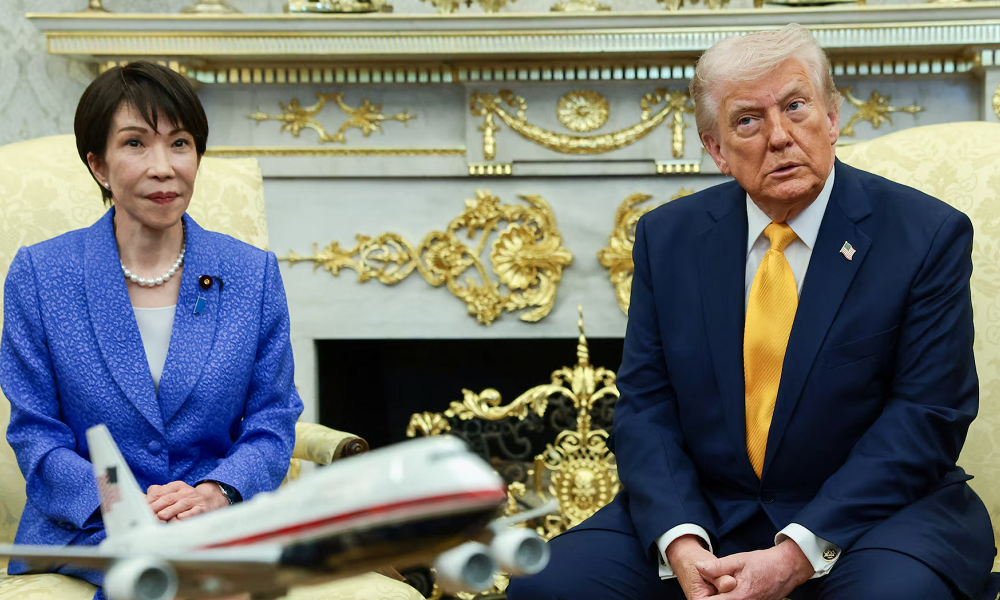
U.S. President Donald Trump on Thursday compared recent U.S. strikes on Iran to Japan’s 1941 attack on Pearl Harbor, as he defended his administration’s military actions during a meeting with Japanese Prime Minister Sanae Takaichi at the White House.
Responding to a question about why allies were not informed in advance, Trump said the element of surprise was intentional. “We wanted surprise. Who knows better about surprise than Japan?” he said, referencing the attack on Attack on Pearl Harbor.
The remark appeared to catch Takaichi off guard, as she reacted visibly during the Oval Office meeting.
Japan’s 1941 attack on the U.S. naval base in Hawaii killed more than 2,300 Americans and led the United States to enter World War II. Then-President Franklin D. Roosevelt famously described the day as “a date which will live in infamy.”
The war ended in 1945 after U.S. atomic bombings of Atomic bombings of Hiroshima and Nagasaki.
Trump’s comments drew mixed reactions in Japan. Some observers said the comparison was inappropriate given its historical sensitivity, while others downplayed it as a joke.
Speaking in Tokyo, engineer Yuta Nakamura said Takaichi had been placed in a difficult position but handled the moment carefully. Meanwhile, retiree Tokio Washino said the reference made him feel uneasy, given Japan’s wartime history.


Airstrike on Kabul drug rehabilitation centre sparks legal concerns

Trump backs down on strikes on Iran’s power network, says US and Tehran holding talks

Iran says coastal attack will lead to full Gulf closure and mine-laying

Afghanistan expresses condolences after deadly helicopter crash in Qatar

IPL 2026: Ishan Kishan named Sunrisers’ interim captain ahead of opening clash

Pakistani military jet downed in Afghanistan’s Jalalabad, pilot captured alive

Afghan Air Force conducts airstrikes in Islamabad, other cities

Prominent Muslim scholar issues fatwa calling for Afghanistan-Pakistan ceasefire

Afghan air force strikes key Pakistani military installations in retaliatory operation

IEA: Special circle in Pakistan has launched mission to destabilize region

Tahawol: Possibility of US ground forces entering Iran war discussed

Saar: Using US prisoners as political pressure

Tahawol: Pakistan’s efforts to destabilise Afghanistan

Saar: Decline in international assistance to Afghanistan

Tawsia: Assessment of Afghanistan’s economic activities in 1404
-
 Latest News5 days ago
Pakistani shelling hits Kunar districts despite ‘pause in hostility’ over Eid
-

 Sport4 days ago
Afghanistan national buzkashi falls short in Kokpar World Championship semifinals
-
 Regional4 days ago
Pakistan among top nuclear threats to America, US intelligence chief tells senate
-

 Sport3 days ago
Ireland to host Afghanistan for ODI series in August
-
 Latest News5 days ago
Peshawar High Court grants bail to 68 detained Afghan nationals, including minors
-
 World5 days ago
US weighs troop deployment as Iran war enters new phase
-
 Latest News3 days ago
Mojtaba Khamenei calls for improved Afghanistan–Pakistan relations, offers help
-
 Latest News4 days ago
Security Sources: Pakistani military shelling in Kunar and Nuristan leaves female doctor dead