
Regional
Key aide of Pakistan’s Imran Khan resigns amidst standoff with army

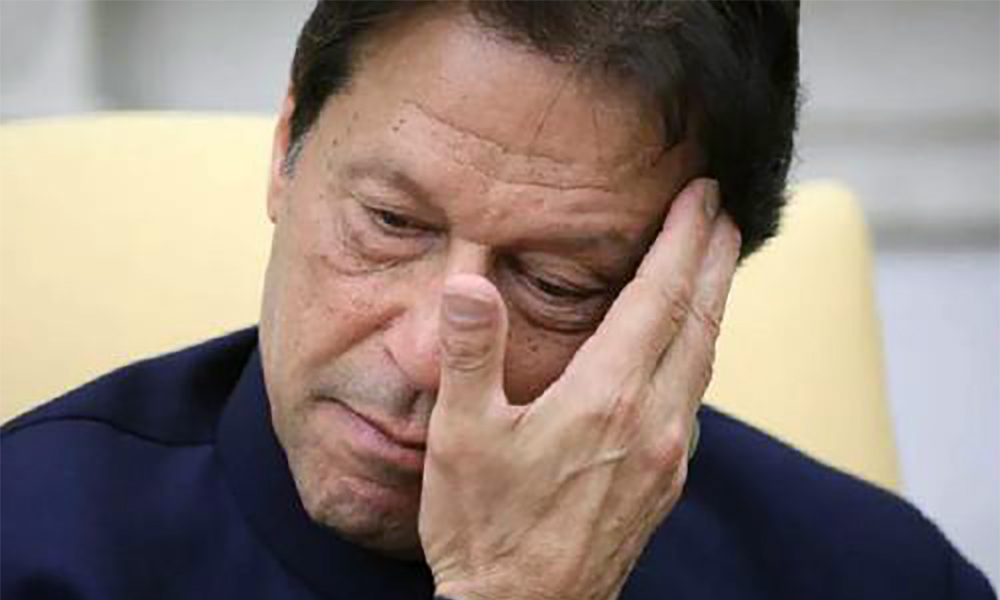
A key aide of former Pakistani Prime Minister Imran Khan said on Wednesday he was quitting politics, dealing a further blow to the embattled ex-premier’s party as a standoff with the military intensified, Reuters reported.
Former Information Minister Fawad Chaudhry’s resignation is the latest – and highest profile – in a string of departures from Khan’s Pakistan Tehreek-e-Insaf (PTI) party, which the civilian government on Wednesday threatened to ban.
“I have decided to take a break from politics, therefore, I have resigned from party position and parting ways from Imran Khan,” Chaudhry said in a post on Twitter.
The former information minister spent days in detention after violent protests swept the country this month after the detention of Khan on corruption charges, read the report.
Chaudhry condemned the protests by Khan’s supporters, who attacked military installations, including army headquarters, and government buildings.
Khan says the corruption allegations were fabricated and that his associates are being forced out under duress from the government and the military in a manoeuvre to dismantle his party before elections scheduled later this year.
He has been embroiled in a tussle with the military since he was removed from power last year in a parliamentary vote which he says was orchestrated by the country’s top generals. The military denies this.
Khan is Pakistan’s most popular leader according to local polls, while the military is its most powerful institution, having ruled directly or overseen governments throughout Pakistan’s 75-year history, Reuters reported.
The face-off has raised new fears about the stability of the nuclear-armed South Asian country of 220 million people as it struggles with its worst economic crisis in decades.
Chaudhry is the second former federal minister to leave Khan. On Tuesday, former Human Rights Minister Shireen Mazari announced she was leaving politics, citing health concerns, after spending 12 days in detention.
Most of the top leaders of the PTI have been taken into custody. A number of former parliamentarians and mid-tier leaders have quit the party or politics entirely over the last few days.
Another key aide, former Finance Minister Asad Umar also announced on Wednesday, hours after he was released from detention, that he was resigning from his party position of secretary general.
Defence Minister Khawaja Asif told reporters on Wednesday that the government is considering banning the PTI for attacking the “very basis of state” and this could not be tolerated.
A ban would be likely to further enrage Khan’s supporters and exacerbate the confrontation with the military establishment.
PTI party lawyer Ali Zafar said any such step would be challenged in court. He said an entire party cannot be blamed for acts committed by individuals.
Khan, 70, became prime minister in 2018 with the tacit support of the military, though both sides denied it at the time. But he later fell out with the generals after being seen as having tried to interfere in key promotions in the security sphere.
After being removed from power last year, Khan has been campaigning for a snap general elections, rallying supporters across the country. But the prime minister who replaced him, Shahbaz Sharif, has rejected calls for a poll ahead of the due date late this year.
Khan has said the corruption charges were made up to banish him from politics.
He was detained on May 9 but was later freed on bail.
In an address on Wednesday, Khan said he would form a negotiating committee that will offer to talk with state authorities to seek a way out of the impasse, Reuters reported.
He said if that committee was convinced the matter could be resolved by him stepping aside from politics or from not holding snap elections, he would comply.





Regional
Iran says Hormuz open to all but ‘enemy-linked’ ships
The threat of Iranian attacks during the U.S.-Israeli war on Iran has kept most ships from getting through the narrow strait, the conduit for around a fifth of global oil and liquefied natural gas supplies, threatening a global energy shock.
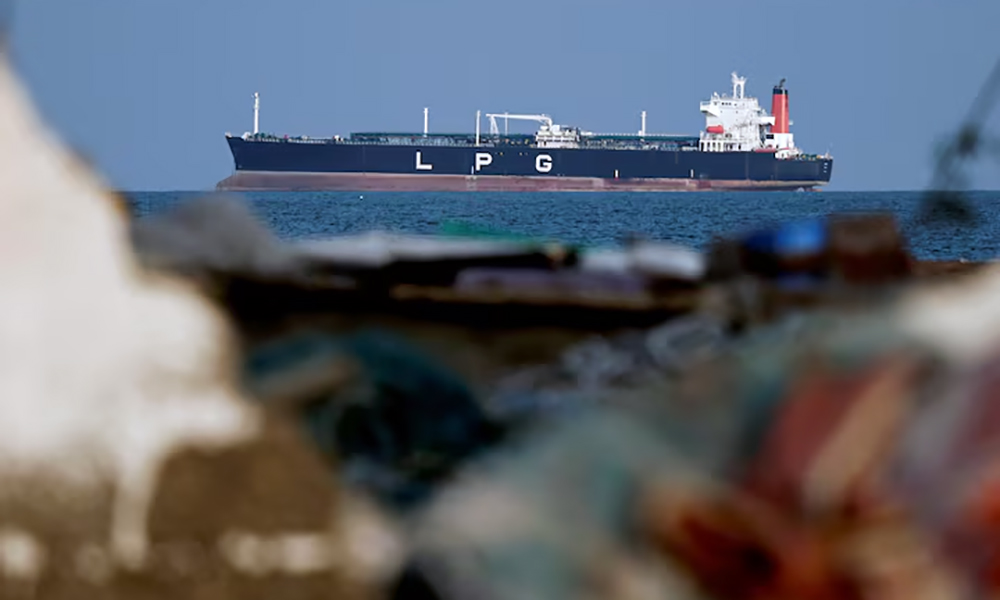
The Strait of Hormuz remains open to all shipping except vessels linked to “Iran’s enemies”, Iranian media reports published on Sunday quoted Iran’s representative to the U.N. maritime agency as saying.
Ali Mousavi’s comments came from an interview published on Friday by Chinese news agency Xinhua, before U.S. President Donald Trump’s threat to target Iranian power plants if the strait was not “fully open” within 48 hours.
The threat of Iranian attacks during the U.S.-Israeli war on Iran has kept most ships from getting through the narrow strait, the conduit for around a fifth of global oil and liquefied natural gas supplies, threatening a global energy shock.
Mousavi, who is also Iran’s ambassador to the UK, was also quoted as saying that Tehran would continue to cooperate with the International Maritime Organisation (IMO) to improve maritime safety and protect seafarers in the Gulf, adding that ships not belonging to “Iran’s enemies” could pass the strait by coordinating security and safety arrangements with Tehran.
“Diplomacy remains Iran’s priority. However, a complete cessation of aggression as well as mutual trust and confidence are more important,” Mousavi said, adding that Israeli and U.S. attacks against Iran were at the “root of the current situation in the Strait of Hormuz”.
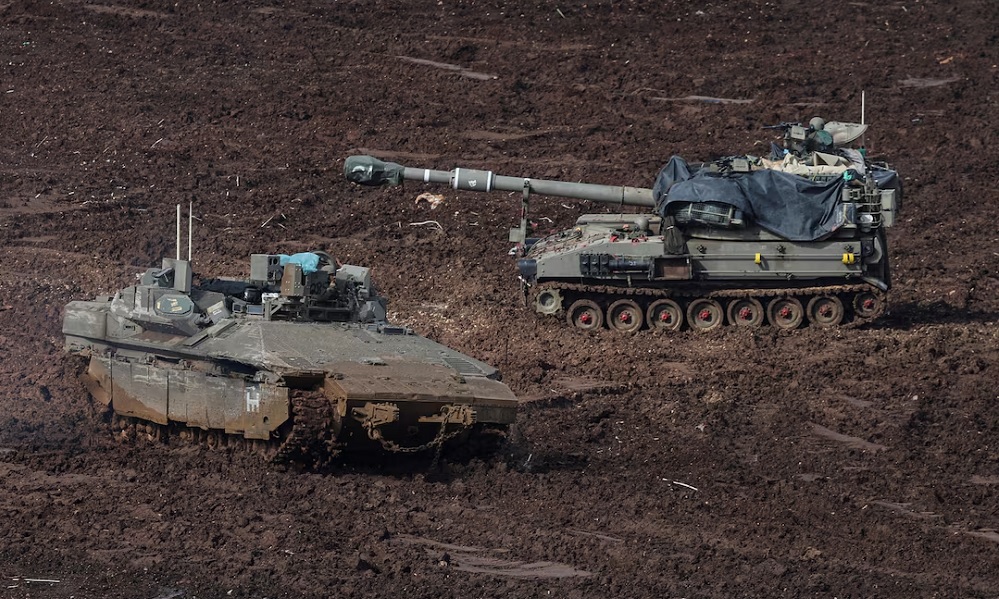
President Donald Trump said the U.S. was considering “winding down” its military operation against Iran, as Iran and Israel traded attacks on Saturday and Iranian media said the nuclear enrichment facility in Natanz had been attacked.
In a social media post, Trump said the U.S. was close to meeting its goals but insisted that other countries should take the lead in policing the vital shipping lane of the Strait of Hormuz, whose near-closure threatens a global energy shock, Reuters reported.
Trump and his administration have sent mixed messages about U.S. goals throughout the war, now entering its fourth week, leaving traditional U.S. allies struggling to respond.
In less than 24 hours, Trump suggested the war could wind down as the Iranian threat was being eliminated, while at the same time U.S. Marines and heavy landing craft were headed to the region on a mission whose goals were not immediately clear.
“We are getting very close to meeting our objectives as we consider winding down our great Military efforts in the Middle East with respect to the Terrorist Regime of Iran,” Trump said on Truth Social.
“The Hormuz Strait will have to be guarded and policed, as necessary, by other Nations who use it — The United States does not!” he added. “If asked, we will help these Countries in their Hormuz efforts, but it shouldn’t be necessary once Iran’s threat is eradicated.”
IRAN REPORTS ATTACK ON NATANZ NUCLEAR ENRICHMENT PLANT More than 2,000 people have been killed in Iran since the U.S. and Israel attacked on February 28, while Americans appear increasingly concerned at signs the war could expand further.
Vital energy infrastructure in Iran and neighbouring Gulf states has been attacked, sending oil prices up 50% and threatening a global economic shock.
Trump had also accused NATO allies, which have not been consulted about the war, of cowardice over their reluctance to help open the Strait of Hormuz.
As the fighting continued, the Iranian media said U.S.-Israeli forces had attacked the Shahid Ahmadi-Roshan Natanz enrichment complex on Saturday morning. Technical experts found that no radioactive leaks had occurred and nearby residents were not at risk. Israel said it was unaware of such a strike.
Israel also attacked Beirut, saying it was targeting Hezbollah as it steps up airstrikes targeting the Iran-backed Lebanese militia in the deadliest spillover from the war on Iran since Hezbollah fired on Israel in support of Tehran on March 2.
Israel said Saturday’s attacks on Iran included Tehran, Karaj, west of the capital, and the central city of Isfahan. Three members of a family were killed in a strike on a residential building in the city of Ramsar, Iranian media quoted a local governor as saying.
Before its strikes on Lebanon, the Israeli military said it had issued evacuation warnings for seven neighbourhoods in the southern suburbs of Beirut. Four Hezbollah militants were killed in southern Lebanon, one in a “ground engagement” and three using tank fire, it said.
More than 1,000 people have been killed in Lebanon and over 1 million displaced in the Israeli attacks.
Air raid sirens in Israel warned of incoming missiles from early morning, sending millions to shelters as the blasts of interceptions rang out from above. There were no immediate reports of casualties.
Israel’s military said search and rescue teams were headed to impact sites in central Israel.
Iran fired two ballistic missilesat the U.S.-British military base Diego Garcia in the Indian Ocean but did not hit the base, the Wall Street Journal reported.
EUROPEAN GAS PRICES SURGE
Natural gas prices in Europe surged as much as 35% this week as Iran and Israel hit some of the region’s most important gas infrastructure. The European Union urged members to lower gas-storage targets and start refilling reserves gradually to curb demand, the Financial Times reported on Saturday.
The Strait of Hormuz, conduit for around a fifth of global oil and liquefied natural gas supplies, has been effectively closed to most shipping.
Leading allies of the U.S. from Europe as well as Japan and Canada have pledged to join “appropriate efforts” to ensure safe passage through the strait, but Germany and France have spelled out that fighting must stop first.
Foreign Minister Abbas Araqchi told Kyodo news agency that Iran was ready to let Japan-related vessels pass through the narrow waterway. Japan gets around 90% of its oil shipments via the strait.
The White House, in an effort to increase supply and lower prices, said it would waive sanctions on Iranian oil for 30 days to allow the sale of 140 million barrels on tankers. The administration had previously eased sanctions on a similar amount of Russian oil.
As Muslims celebrated Eid al-Fitr on Friday to end the fasting month of Ramadan and Iranians marked Nowruz, the Persian New Year, Iran’s new supreme leader, Ayatollah Mojtaba Khamenei, issued a message of defiance.
Khamenei – who did not appear at Eid prayers and has not been seen in public since the initial Israeli attack that killed his father and predecessor, Ayatollah Ali Khamenei – said in his statement that Iranians had responded with unity and resistance and “dealt a disorienting blow to the enemy”.
Russian President Vladimir Putin also sent Nowruz greetings to Iran’s leaders, using the occasion to say Moscow remained a loyal friend and reliable partner.
The extent of Moscow’s support for Iran is in dispute though. Some Iranian sources say they have had little real help from Moscow in the biggest crisis for Iran since the U.S.-backed shah was toppled in the 1979 Islamic Revolution.
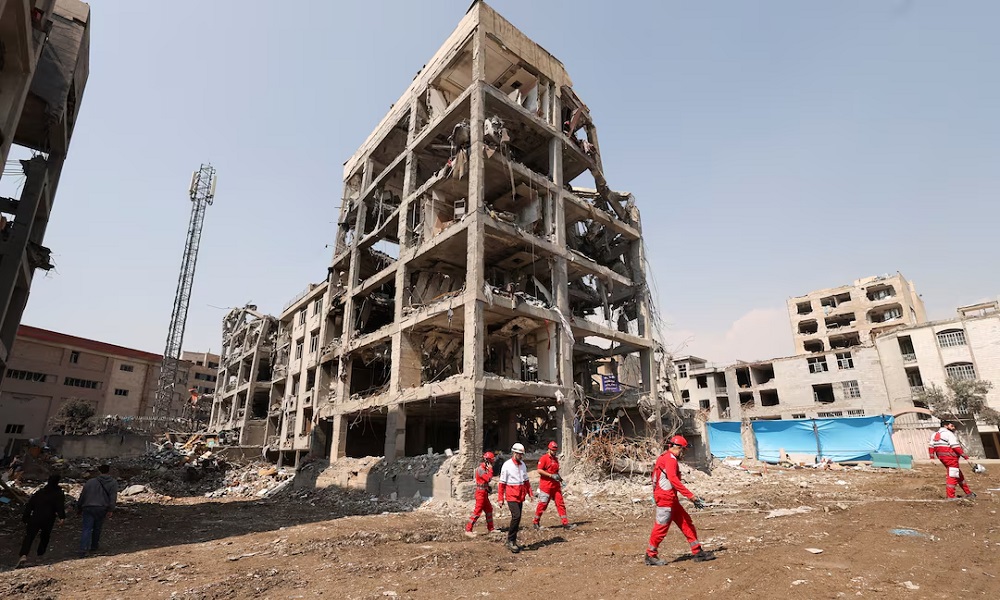
Israel launched a fresh wave of strikes on Iran on Friday, intensifying a rapidly escalating regional conflict that has already spread beyond its initial front lines and shaken global energy markets.
The latest attacks came a day after U.S. President Donald Trump urged Israel not to repeat strikes on Iranian natural gas infrastructure—an escalation that had significantly raised tensions in what is increasingly seen as a joint U.S.-Israeli confrontation with Tehran.
According to a spokesperson for the Israel Defense Forces, the military had “begun a wave of strikes against the infrastructure of the Iranian terror regime in the heart of Tehran,” though no further details were provided.
The conflict, which began on February 28 after diplomatic efforts over Iran’s nuclear program collapsed, has killed thousands, drawn in neighboring countries, and disrupted the global economy.
In the early hours of Friday, Bahrain, Kuwait, and the United Arab Emirates reported missile attacks following days of Iranian strikes targeting regional energy infrastructure.
Energy markets have been particularly volatile. Prices surged Thursday after Iran retaliated against an Israeli strike on a major gas field by hitting Ras Laffan Industrial City in Qatar, a key processing center for roughly one-fifth of the world’s liquefied natural gas. The damage is expected to take years to repair.
Meanwhile, Saudi Arabia’s primary Red Sea export hub also came under attack, even as the kingdom sought to reroute shipments to bypass disruptions caused by Iran’s threat to the Strait of Hormuz—a critical passageway for about 20% of global oil supplies.
Despite the attacks, oil prices edged lower on Friday after European nations and Japan offered to help secure maritime routes through the strait, and the United States signaled plans to increase oil production.
The strikes on energy infrastructure highlight Iran’s capacity to impose significant economic costs in response to military pressure, as well as the limitations of existing air defense systems in protecting key assets across the Gulf.
Facing political pressure at home over rising fuel prices ahead of midterm elections, Trump criticized allies for what he described as a cautious response to U.S. calls for coordinated action to secure the Strait of Hormuz.
“I told him, ‘Don’t do that,’ and he won’t do that,” Trump said Thursday, referring to Israeli Prime Minister Benjamin Netanyahu and further strikes on energy infrastructure.
Netanyahu later confirmed that Israel had acted alone in the attack on Iran’s South Pars gas field and acknowledged Trump’s request to avoid further escalation in that sector.
He added that Iran had been “decimated” and no longer possessed the capability to enrich uranium or produce ballistic missiles, though he suggested that any fundamental political change in Tehran would require a “ground component,” without elaborating further.


Tahawol: Possibility of US ground forces entering Iran war discussed

Water crisis deepens in Afghanistan as families struggle for access

Saar: Using US prisoners as political pressure

Afghani strengthens nearly 10% against US dollar amid banking sector reforms

Iran says Hormuz open to all but ‘enemy-linked’ ships

Pakistani military jet downed in Afghanistan’s Jalalabad, pilot captured alive

Afghan Air Force conducts airstrikes in Islamabad, other cities

Prominent Muslim scholar issues fatwa calling for Afghanistan-Pakistan ceasefire

Afghan air force strikes key Pakistani military installations in retaliatory operation

IEA: Special circle in Pakistan has launched mission to destabilize region
Tahawol: Possibility of US ground forces entering Iran war discussed
Saar: Using US prisoners as political pressure

Tahawol: Pakistan’s efforts to destabilise Afghanistan

Saar: Decline in international assistance to Afghanistan

Tawsia: Assessment of Afghanistan’s economic activities in 1404
-
 Latest News4 days ago
IEA announces temporary pause in defensive operations against Pakistan for Eid
-
 Latest News5 days ago
Pakistan opposes normal Afghanistan–India relations: Shaheen
-
 Latest News4 days ago
Pakistani shelling hits Kunar districts despite ‘pause in hostility’ over Eid
-
 Latest News5 days ago
Karzai accuses Pakistan of seeking to destabilise Afghanistan after Kabul strike
-
 Regional5 days ago
Iran strikes Tel Aviv with cluster warheads in retaliation for killing of security chief
-

 Sport3 days ago
Afghanistan national buzkashi falls short in Kokpar World Championship semifinals
-

 Regional4 days ago
Pakistan among top nuclear threats to America, US intelligence chief tells senate
-
 Latest News5 days ago
Muslim scholars condemn Kabul hospital attack, urge ceasefire