
Regional
Khamenei downplays US talks prospects as some Iranians’ hopes stir, currency gains
Iran’s clerical rulers have publicly said that demands such as dismantling the country’s peaceful nuclear programme or its conventional missile capabilities were off the table.

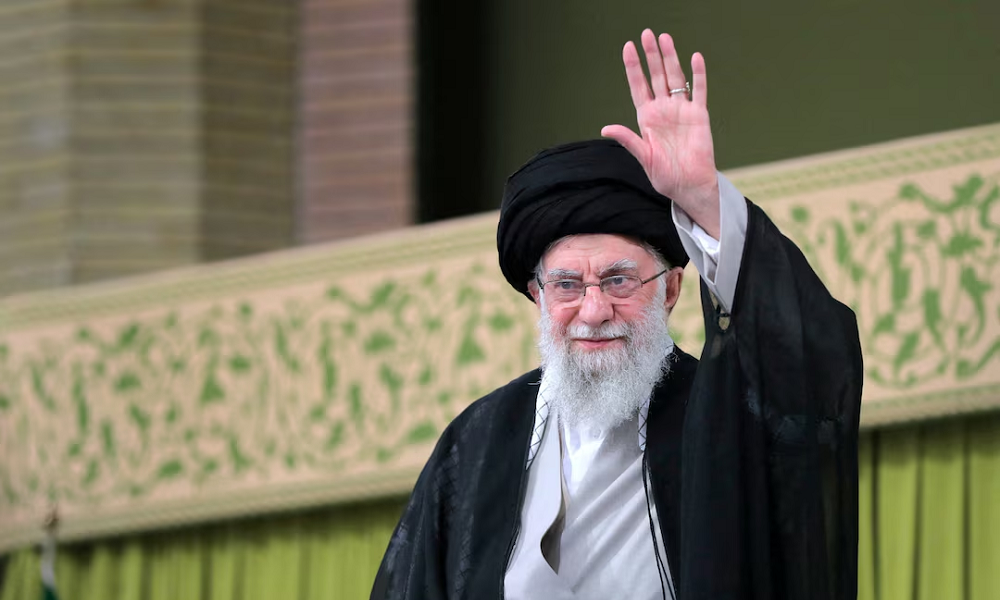
Iran’s Supreme Leader Ayatollah Ali Khamenei sought on Tuesday to play down expectations of a breakthrough in nuclear talks with the U.S., following stirrings of hope among some Iranians weary of economic hardships that have at times sparked public unrest.
Failure to reach a deal with President Donald Trump to end Iran’s decades-long dispute with the West could profoundly hurt the Islamic Republic, Iranian politicians and insiders have said, even if Washington is subsequently portrayed by Tehran as the guilty party.
A second round of nuclear talks will be held in Muscat on April 19.
Iran’s battered rial currency has gained some 20% against the dollar in the past few days, with many Iranians hoping an deal to end Iran’s economic isolation may be within reach.
“We are neither overly optimistic nor pessimistic regarding them. After all, it is a process which was decided and its first steps have been well implemented,” Khamenei said in a meeting with officials, according to state media.
White House special envoy Steve Witkoff, who leads the talks with Iran, said that Trump has asked him to “create a tough, fair deal that will endure.”
“Any final arrangement must set a framework for peace, stability, and prosperity in the Middle East – meaning that Iran must stop and eliminate its nuclear enrichment and weaponization program,” Witkoff posted on X on Tuesday.
Iran’s clerical rulers have publicly said that demands such as dismantling the country’s peaceful nuclear programme or its conventional missile capabilities were off the table.
Tehran has approached the talks warily, doubting the likelihood of an agreement and suspicious of Trump, who abandoned Tehran’s 2015 nuclear pact with six world powers during his first term in 2018. He has repeatedly threatened to use military force if there is no deal.
“From here on, it (the talks) must be followed through carefully, with red lines clearly defined for both the other side and for us. The negotiations may lead to results, or they may not,” said Khamenei.
“Avoid linking the country’s fate to these talks.”
Some Iranian officials have suggested that Trump’s business background could make him more receptive to a deal if it includes economic incentives, such as a potential purchase of U.S.-made planes or unlocking of Iran’s economy for U.S. investors.
But a number of Iranian newspapers have warned about inflating public expectations with “baseless hype”.
“Why do you make promises about the talks that cannot be fulfilled? … Don’t undermine public trust with promises made only for fleeting media attention,” wrote the Khorasan newspaper on Monday, in response to comments by an official that raised hopes of economic breakthroughs from the talks.
Since relations with Washington collapsed after Iran’s 1979 Islamic revolution that ousted the U.S.-backed Shah, enmity toward the U.S. has been a rallying point for Iran’s rulers.
But inflation, unemployment and lack of investment as a result of crippling sanctions, reimposed after Trump ditched the 2015 nuclear pact, persuaded Khamenei to support talks with the Trump administration.
Tehran’s concerns were exacerbated by Trump’s speedy revival of his first term’s “maximum pressure” campaign aimed at driving Iran’s oil exports towards zero with more sanctions.
Since 2019, Iran has far surpassed its uranium enrichment limits, according to the International Atomic Energy Agency (IAEA). Tehran is producing stocks of fissile purity well above what Western powers say is justifiable for a civilian energy programme and close to weapons grade.
Tehran has long denied seeking nuclear weapons.
“What Tehran wants in return (from the U.S.) is for sanctions to be removed on several sectors. Once those sanctions are removed, the U.S. cannot bring them back under other pretexts.” the state-run Tehran Times newspaper reported on Monday.







Regional
Arab states condemn Israel’s move to expand powers in occupied West Bank
Israel’s security cabinet approved measures that will make it easier for Jewish settlers to purchase land in the West Bank and grant Israeli authorities greater powers in areas under Palestinian control.
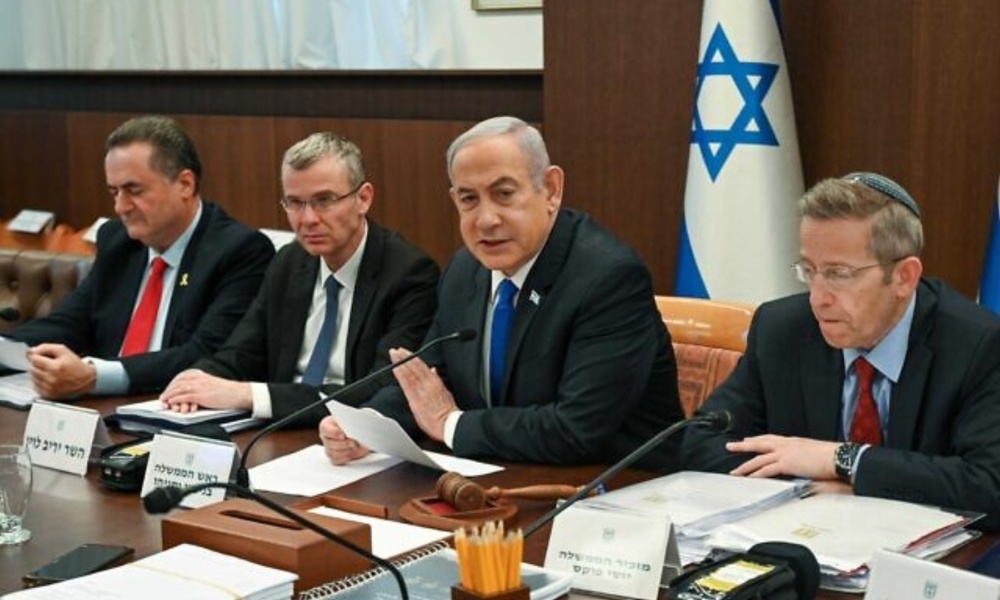
Saudi Arabia, Jordan and the United Arab Emirates led regional condemnation on Monday of Israel’s decision to ease settlement expansion and broaden its authority across the occupied West Bank, a move critics say amounts to de facto annexation.
Israel’s security cabinet approved measures on Sunday that will make it easier for Jewish settlers to purchase land in the West Bank and grant Israeli authorities greater powers in areas nominally under Palestinian control, Reuters reported citing two senior Israeli ministers.
Finance Minister Bezalel Smotrich, an ultranationalist figure in Prime Minister Benjamin Netanyahu’s coalition, said the decisions would “continue to kill the idea of a Palestinian state.”
In a joint statement, foreign ministers from several Middle Eastern and Muslim-majority countries — including Egypt and Turkey — denounced the measures as illegal under international law and warned they would undermine prospects for a two-state solution and regional stability.
Jordan, Egypt, the UAE and Turkey all maintain diplomatic ties with Israel, while Saudi Arabia has said it will not normalise relations without the establishment of a Palestinian state.
Most countries view the West Bank, occupied by Israel since 1967, as the core of a future Palestinian state.
Israeli Defence Minister Israel Katz and Smotrich said the cabinet had repealed a pre-1967 Jordanian-era law that kept land registries confidential and scrapped a permit requirement for land purchases, steps they said would simplify transactions for Jewish buyers.
Settlement watchdog Peace Now said the move violated international law and marked a significant step toward annexation. “This treats the West Bank as normal Israeli territory rather than occupied land,” said Hagit Ofran of the group.
The cabinet also expanded Israeli enforcement powers over water use, archaeological sites and environmental issues into Areas A and B of the West Bank — zones that, under the 1993 Oslo accords, are under Palestinian or joint control. Peace Now said the changes could pave the way for wider demolitions of Palestinian property and further restrictions on Palestinian development.
U.N. Secretary-General Antonio Guterres expressed “grave concern,” warning the measures were eroding the viability of a two-state solution, his spokesperson said.
In Hebron, Palestinians said the decisions would accelerate settlement growth and home demolitions. “It becomes easier to confiscate land, expand settlements and demolish Palestinian homes,” said Issa Amr of the group Youth Against Settlements.
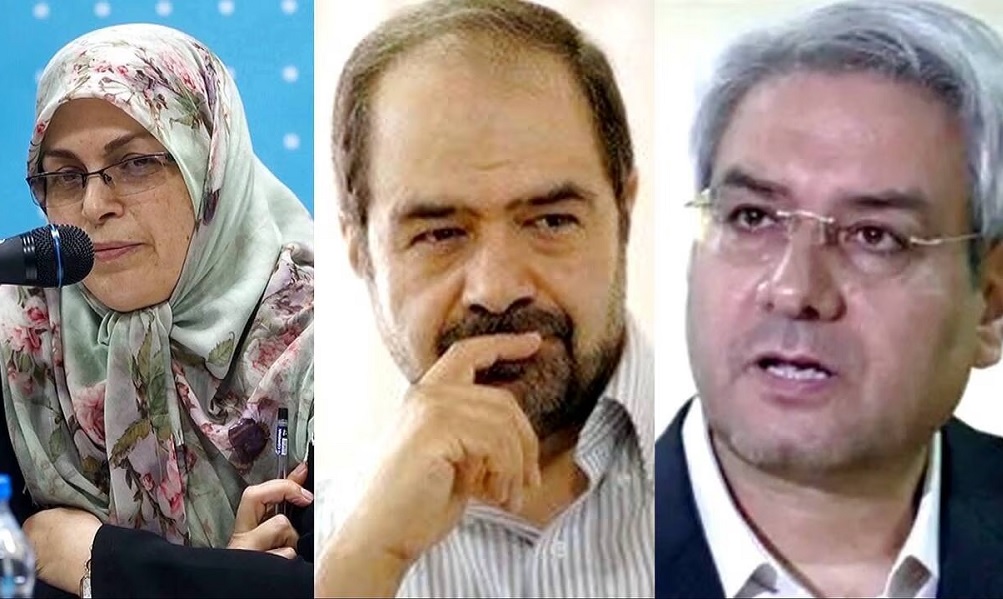
The Islamic Iran Nation’s Union Party sought the release of secretary-general Azar Mansouri, the Shargh newspaper said on Monday, after her arrest along with other members of the Reform Front, an umbrella body of Iranian reformists and moderates.
A campaign of mass arrests and intimidation has led to the arrests of thousands as authorities seek to deter further protests after last month’s crackdown on the bloodiest unrest since the 1979 Islamic Revolution.
On Sunday, state media said three senior figures from Iran’s Reform Front were arrested, among them Ebrahim Asgharzadeh, Mohsen Aminzadeh, and Azar Mansouri, who acts as the front’s head, according to Reuters.
Shargh said at least two more Reform Front members were asked to report to the prosecutor’s office in Tehran’s Evin prison on Tuesday.
The Reform Front’s spokesperson, Javad Emam, was also arrested, Mansouri’s lawyer, Hojjat Kermani, said on Monday, adding that it was unclear what charges faced those detained.
“We basically don’t know what caused these arrests, because the Reform Front has not yet issued a statement about the recent events (protests),” Kermani told the Iranian Labour News Agency (ILNA). “Individuals may have commented on their own.”
On Sunday, the judiciary’s media outlet Mizan said “four important political elements supporting the Zionist (regime) and the United States” were indicted, but gave no details.
Tehran has blamed unrest-related violence on “rioters and armed terrorists” it says were backed by its key enemies, Israel and the United States.
Past Reform Front statements have been highly critical of authorities. After the 12-day war against Israel, its members warned that “incremental collapse” awaited the country if it did not adopt fundamental reforms.
Kermani said the recent arrests were not related to a judicial case launched against the Front after that statement, however.
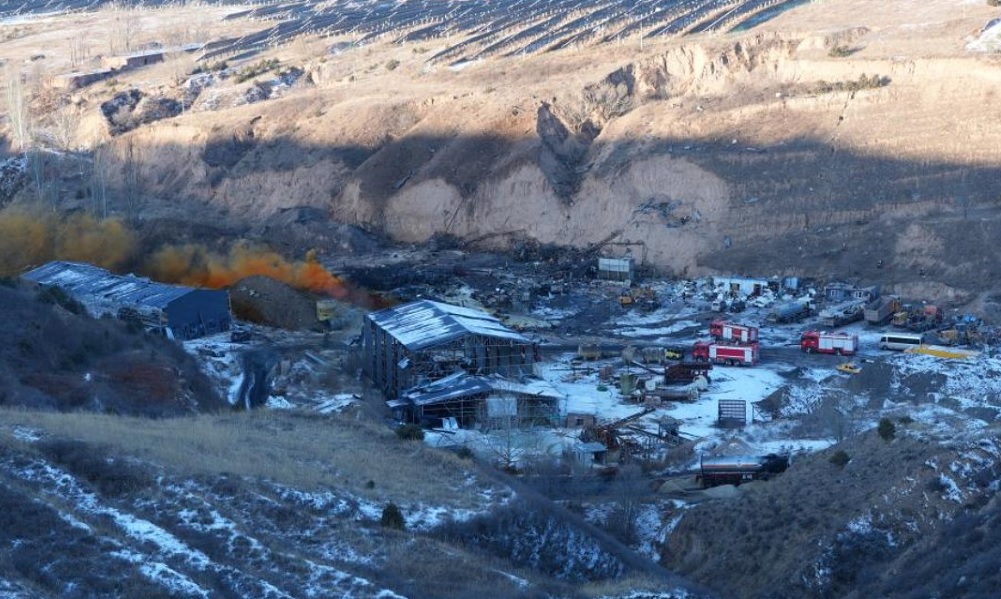
An explosion at a small biotech company in northern China early Saturday killed eight people, China’s state media reported on Sunday.
The explosion occurred in Shuoyang in the Shanxi province in the early morning of Saturday, state media reported, according to Reuters.
The legal representative of Jiapeng Biotechnology has been detained and the city has set up an accident investigation team, Xinhua News Agency reported.
The firm is located in a mountain hollow and dark yellow smoke was seen billowing from the accident site, Xinhua said.
Reuters was not able to contact the company, which does not maintain a website. The cause of the reported explosion was not immediately clear.
Founded in June 2025, Jiapeng Biotechnology conducts research on animal feed, coal products and building materials, according to its corporate registration.


Tahawol: Tajikistan’s expanding relations with Afghanistan reviewed

Saar: Criticism of Pakistan’s policies on Afghanistan discussed

Ministries of Public Health and Higher Education sign cooperation agreement

UNAMA holds new round of Working Group meetings on counter-narcotics and private sector

Economic Commission approves national policy for development of agriculture

Afghanistan–China joint market opens in Kabul

Pakistan approves re-export of stranded Afghan transit trade cargo

Pakistan army orders evacuation of Tirah Valley, fears of mass displacement grow

Afghan traders sign deal to import pharmaceuticals from Bangladesh

Uzbekistan pushes forward with Trans-Afghan railway project
Tahawol: Tajikistan’s expanding relations with Afghanistan reviewed
Saar: Criticism of Pakistan’s policies on Afghanistan discussed

Tahawol: Pakistan’s Foreign Policy Failure of Towards Afghanistan discussed

Saar: Regional Problems, Opportunities, and Challenges discussed

Saar: Afghanistan’s relations and opportunities with regional countries
-
 Latest News3 days ago
Afghanistan to grant one- to ten-year residency to foreign investors
-

 Sport5 days ago
Indonesia shock Japan to reach historic AFC Futsal Asian Cup final
-
 Sport3 days ago
Iran clinch AFC Futsal Asian Cup 2026 in penalty shootout thriller
-
 Latest News4 days ago
Afghanistan says Pakistan is shifting blame for its own security failures
-

 International Sports2 days ago
Winter Olympics gain momentum as medal table takes shape
-
 Latest News4 days ago
Traffic police receive new cars
-
 Regional4 days ago
Iran’s FM calls Oman-mediated talks with US ‘good start’
-
 Latest News3 days ago
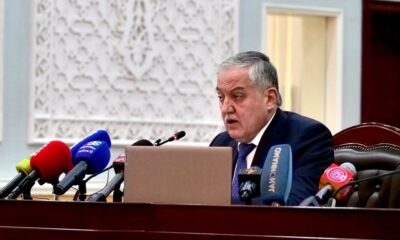
Tajik foreign minister urges international community to help Afghanistan address its challenges