
Regional
Lebanon’s army chief elected president, showing weakened Hezbollah


Lebanon’s parliament elected army chief Joseph Aoun head of state on Thursday, filling the vacant presidency with a general who has U.S. support and showing the weakened sway of the Iran-backed Hezbollah group after its devastating war with Israel.
In a speech to the chamber, Aoun, 60, vowed to work to ensure the state has the exclusive right to carry arms, drawing loud applause as lawmakers from Hezbollah — which runs its own military forces — sat still, Reuters reported.
He promised to rebuild south Lebanon and other parts of the country he said had been destroyed by Israel, and also to prevent Israeli attacks on Lebanon, which was mired in deep economic and political crises even before the latest conflict. “Today, a new phase in the history of Lebanon begins,” he said.
His election reflected shifts in the power balance in Lebanon and the wider Middle East, with Shi’ite Muslim Hezbollah badly pummelled from last year’s war, and its Syrian ally Bashar al-Assad toppled in December.
It also indicated a revival of Saudi influence in a country where Riyadh’s role was eclipsed by Iran and Hezbollah long ago.
Israeli Foreign Minister Gideon Saar congratulated Lebanon, saying on X he hoped Aoun’s election would contribute towards stability and good neighbourly relations.
U.S. ambassador Lisa Johnson, attending the session, told Reuters she was “very happy” with Aoun’s election.
The presidency, reserved for a Maronite Christian in Lebanon’s sectarian power-sharing system, has been vacant since Michel Aoun’s term ended in October 2022, with deeply divided factions unable to agree on a candidate able to win enough votes in the 128-seat parliament.
Joseph Aoun fell short of the 86 votes needed in a first round vote, but crossed the threshold with 99 votes in a second round, after lawmakers from Hezbollah and its Shi’ite ally the Amal Movement backed him.
Hezbollah lawmaker Mohammed Raad said that by delaying their vote for Aoun, the group had “sent a message that we are the guardians of national consensus”.
Momentum built behind Aoun on Wednesday as Hezbollah’s long preferred candidate, Suleiman Frangieh, withdrew and declared support for the army commander, and as French and Saudi envoys shuttled around Beirut, urging his election in meetings with politicians, three Lebanese political sources said.
A source close to the Saudi royal court said French, Saudi, and U.S. envoys had told Parliament Speaker Nabih Berri, a close Hezbollah ally, that international financial assistance – including from Saudi Arabia – hinged on Aoun’s election.
“There is a very clear message from the international community that they are ready to support Lebanon, but that needs a president, a government,” Michel Mouawad, a Christian lawmaker opposed to Hezbollah who voted for Aoun, told Reuters.
“We did get a message from Saudi of support,” he added.
The Saudi king and crown prince congratulated Aoun.
FRANCE URGES FORMATION OF STRONG GOVERNMENT
His election is a first step towards reviving government institutions in a country which has had neither a head of state nor a fully empowered cabinet since Aoun left office.
Lebanon, its economy still reeling from a financial collapse in 2019, is in dire need of aid to rebuild from the war, which the World Bank estimates cost the country $8.5 billion.
Much of the damage is in majority Shi’ite areas where Hezbollah draws support. Hezbollah has urged Arab and international support for Lebanon.
Lebanon’s system of government now requires Aoun to convene consultations with lawmakers to nominate a Sunni Muslim prime minister to form a new cabinet, a process that can often be protracted as factions barter over ministerial portfolios.
France said the election opened a new page for Lebanon.
“This election must now be followed by the appointment of a strong government” capable of “carrying out the reforms necessary for Lebanon’s economic recovery, stability, security and sovereignty,” French foreign ministry spokesman Christophe Lemoine said.
Lebanon’s international bonds, which have been in default since 2020, rallied after Aoun’s victory was announced.
Aoun has played a key role in shoring up a ceasefire between Hezbollah and Israel which was brokered by Washington and Paris in November. The terms require the Lebanese army to deploy into south Lebanon as Israeli troops and Hezbollah withdraw forces.
Opponents of his candidacy said his election was the result of foreign pressure. Lawmaker Gebran Bassil, leader of one of the biggest Christian factions, told the session that many lawmakers had received “instructions from abroad”.
But Melhem Riachi, a Christian lawmaker who voted for Aoun, said the election marked the end of the previous era with “an Iranian face”. “This is the era of Lebanon’s harmony with the international community,” he said.



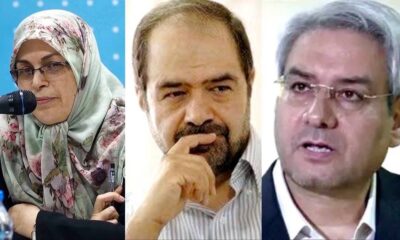



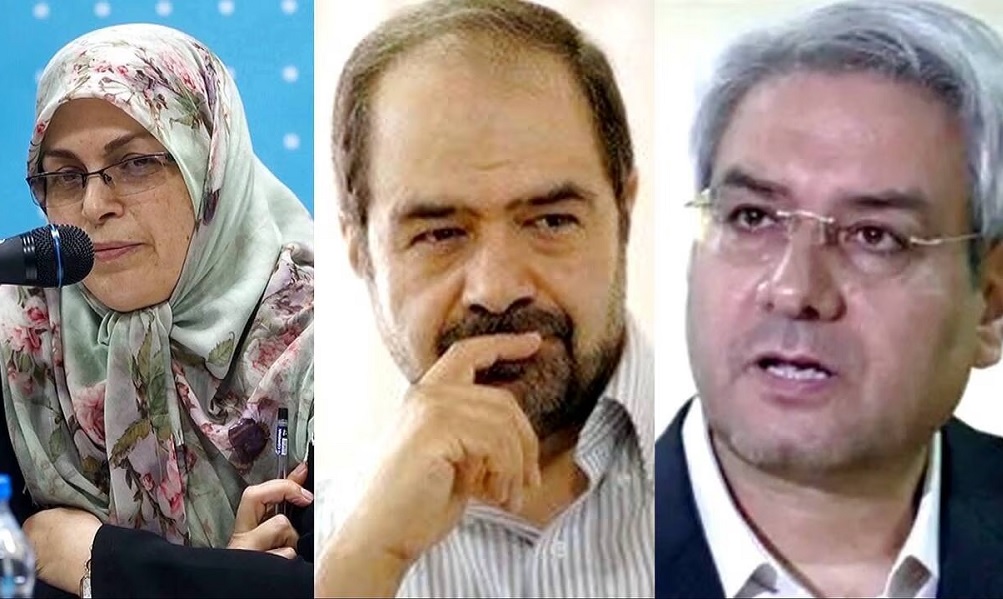
The Islamic Iran Nation’s Union Party sought the release of secretary-general Azar Mansouri, the Shargh newspaper said on Monday, after her arrest along with other members of the Reform Front, an umbrella body of Iranian reformists and moderates.
A campaign of mass arrests and intimidation has led to the arrests of thousands as authorities seek to deter further protests after last month’s crackdown on the bloodiest unrest since the 1979 Islamic Revolution.
On Sunday, state media said three senior figures from Iran’s Reform Front were arrested, among them Ebrahim Asgharzadeh, Mohsen Aminzadeh, and Azar Mansouri, who acts as the front’s head, according to Reuters.
Shargh said at least two more Reform Front members were asked to report to the prosecutor’s office in Tehran’s Evin prison on Tuesday.
The Reform Front’s spokesperson, Javad Emam, was also arrested, Mansouri’s lawyer, Hojjat Kermani, said on Monday, adding that it was unclear what charges faced those detained.
“We basically don’t know what caused these arrests, because the Reform Front has not yet issued a statement about the recent events (protests),” Kermani told the Iranian Labour News Agency (ILNA). “Individuals may have commented on their own.”
On Sunday, the judiciary’s media outlet Mizan said “four important political elements supporting the Zionist (regime) and the United States” were indicted, but gave no details.
Tehran has blamed unrest-related violence on “rioters and armed terrorists” it says were backed by its key enemies, Israel and the United States.
Past Reform Front statements have been highly critical of authorities. After the 12-day war against Israel, its members warned that “incremental collapse” awaited the country if it did not adopt fundamental reforms.
Kermani said the recent arrests were not related to a judicial case launched against the Front after that statement, however.
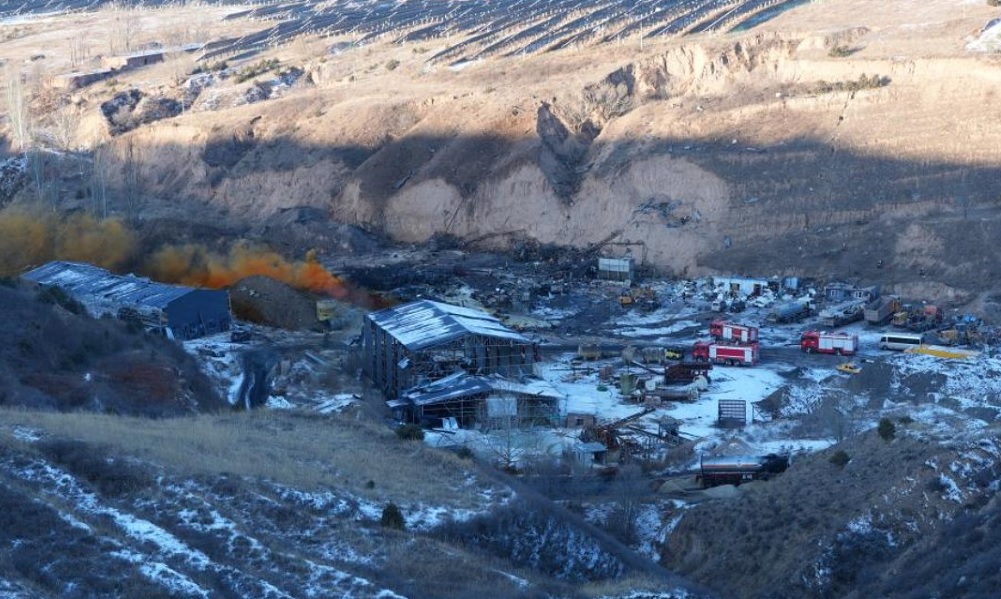
An explosion at a small biotech company in northern China early Saturday killed eight people, China’s state media reported on Sunday.
The explosion occurred in Shuoyang in the Shanxi province in the early morning of Saturday, state media reported, according to Reuters.
The legal representative of Jiapeng Biotechnology has been detained and the city has set up an accident investigation team, Xinhua News Agency reported.
The firm is located in a mountain hollow and dark yellow smoke was seen billowing from the accident site, Xinhua said.
Reuters was not able to contact the company, which does not maintain a website. The cause of the reported explosion was not immediately clear.
Founded in June 2025, Jiapeng Biotechnology conducts research on animal feed, coal products and building materials, according to its corporate registration.
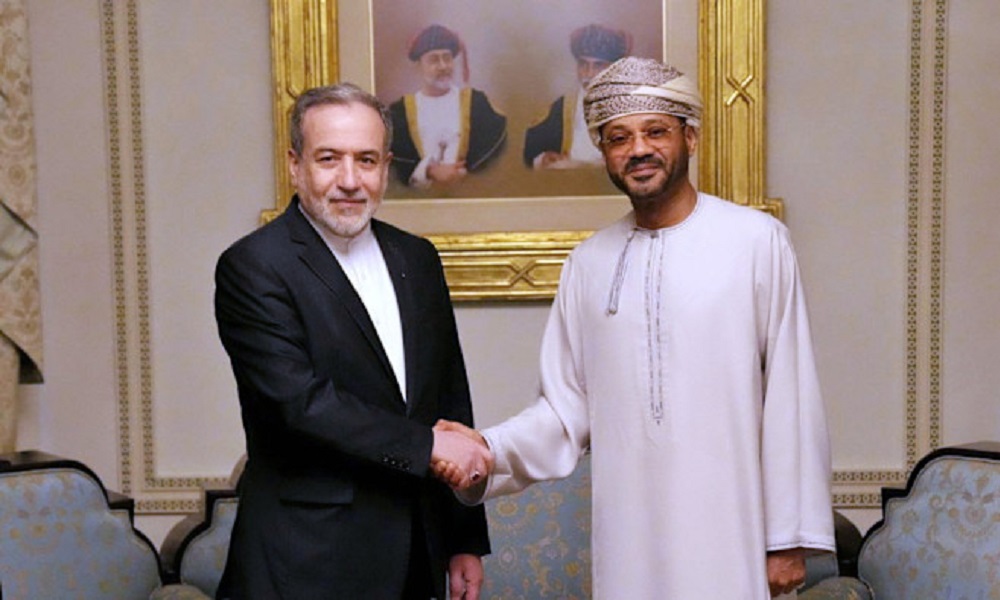
Iran’s foreign minister on Friday described talks with the United States in Oman as a “good start,” saying the negotiations “can also have a good continuation,” Iranian state media reported.
The discussions, mediated by Oman, marked a resumption of nuclear diplomacy between Tehran and Washington. Iranian state media said the current round of talks concluded on Friday, with both delegations returning to their respective capitals.
Speaking to state media reporters in Muscat, Iranian Foreign Minister Abbas Araghchi said the talks’ progress depends on the U.S. and on decisions made in Tehran.
Araghchi said a “significant challenge” remains, citing a prevailing atmosphere of distrust. He said Iran’s priority is to overcome this distrust and then establish an agreed framework for the talks and the issues on the table.
He described the talks as a fresh round of dialogue after eight turbulent months that included a war, saying the accumulated distrust presents a major obstacle to negotiations.
“If this same approach and perspective are maintained by the other side, we can reach an agreed framework in future sessions,” Araghchi said, adding that he did not want to judge prematurely.
Iranian Foreign Ministry spokesman Esmaeil Baqaei also confirmed on the social media platform X that both sides agreed to continue talks and would decide the next round in consultation with their capitals.


Tahawol: Pakistan’s Foreign Policy Failure of Towards Afghanistan discussed

Saar: Regional Problems, Opportunities, and Challenges discussed

Pakistan to repatriate nearly 20,000 Afghans awaiting US resettlement

Terrorist activities observed along Afghanistan borders, says Lavrov

Afghan border minister holds phone talks with Iran’s deputy foreign minister

Afghanistan–China joint market opens in Kabul

Pakistan approves re-export of stranded Afghan transit trade cargo

ATN secures broadcast rights to Carabao Cup semis across Afghanistan

Pakistan army orders evacuation of Tirah Valley, fears of mass displacement grow

Afghan traders sign deal to import pharmaceuticals from Bangladesh
Tahawol: Pakistan’s Foreign Policy Failure of Towards Afghanistan discussed
Saar: Regional Problems, Opportunities, and Challenges discussed

Saar: Afghanistan’s relations and opportunities with regional countries

Tahawol: Kabul’s response to Pakistan’s new accusation discussed

Saar: Discussion on Iran-US talks in Oman
-
 Latest News3 days ago
Afghanistan to grant one- to ten-year residency to foreign investors
-
 Latest News5 days ago
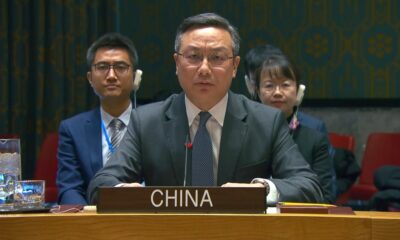
Terrorist threat in Afghanistan must be taken seriously, China tells UNSC
-
 Sport4 days ago
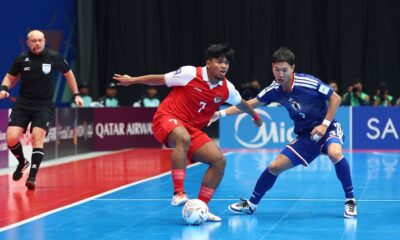
Indonesia shock Japan to reach historic AFC Futsal Asian Cup final
-
 Sport5 days ago
Milano Cortina 2026 Winter Olympics: What You Need to Know
-
 Sport2 days ago
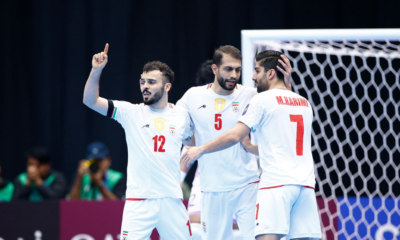
Iran clinch AFC Futsal Asian Cup 2026 in penalty shootout thriller
-
 Latest News5 days ago
US Justice Department to seek death penalty for Afghan suspect in National Guard shooting
-
 Latest News3 days ago
Afghanistan says Pakistan is shifting blame for its own security failures
-
 Latest News5 days ago
Uzbekistan, Kazakhstan discuss cooperation on Afghanistan