
Latest News
Mujib Excluded from Squad for Ireland Test

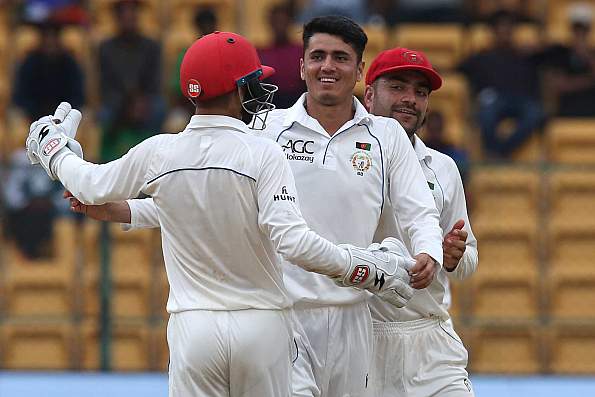
Mujeeb Ur Rahman has been left out of Afghanistan’s 14-member Test squad that will take on Ireland next month in Dehradun.
Both teams play each other in all three formats from February 21.
The other notable absentee was opener Mohammad Shahzad. He couldn’t find a place in the T20I side, but was included to play the ODIs and Test match.
There were three new additions in the Afghanistan squad from their inaugural Test against India last year: left-hand batsman Ikram Ali Khil, left-arm seamer Waqar Salamkheil and allrounder Sharafuddin Ashraf.
Both Ikram and Waqar are yet to make an international appearance for Afghanistan.
Ikram has scored 343 runs from six first-class games at an average of 38.11, while Waqar has 56 wickets at an average of 21.46 from seven first-class matches.
Sharafuddin, on the other hand, has played 14 ODIs and six T20Is.
Zahir Khan, the left-arm wristspinner, found a place in both ODI and T20I squads, while left-arm orthodox spinner Zia-Ur-Rehman was included in the T20I side. Ikram is part of the ODI squad as well.
Before the only Test, the two sides will play three T20Is followed by five ODIs. For both Afghanistan and Ireland this will be their second Test.
As preparation, the Afghanistan players had trained in Chennai and Bengaluru prior to the series.
T20I squad: Asghar Afghan (capt), Usman Ghani, Najeeb Tarakai, Hazratullah Zazai, Samiullah Shinwari, Mohammad Nabi, Shafiqullah Shafaq, Rashid Khan, Najibullah Zadran, Karim Janat, Farid Malik, Sayed Shirzad, Zia-Ur-Rehman, Mujeeb Ur Rahman, Zahir Khan, and Sharafuddin Ashraf.
ODI squad: Asghar Afghan (capt), Mohammad Shahzad, Noor Ali Zadran, Javed Ahmadi, Hazratullah Zazai, Rahmat Shah, Samiullah Shinwari, Mohammad Nabi, Najibullah Zadran, Ikram Ali Khil, Hashmatullah Shahidi, Rashid Khan, Karim Janat, Gulbadin Naib, Aftab Alam, Dawlat, Zahir Khan, Farid Malik, Mujeeb Ur Rahman, Shapoor Zadran, and Sayed Shirzad.
Test squad: Asghar Afghan (capt), Mohammad Shahzad, Ihsan Janat, Javed Ahmadi, Rahmat Shah, Nasir Jamal, Hashmatullah Shahidi, Ikram Ali Khil, Mohammad Nabi, Rashid Khan, Wafadar Momand, Yamin Ahmadzai, Sharafuddin Ashraf, and Waqar Salamkheil.
With inputs from Espncricinfo

Latest News
Major fire in Mandawi Kabul market contained, extensive losses prevented
Local shopkeepers said the fire broke out around 4 a.m.
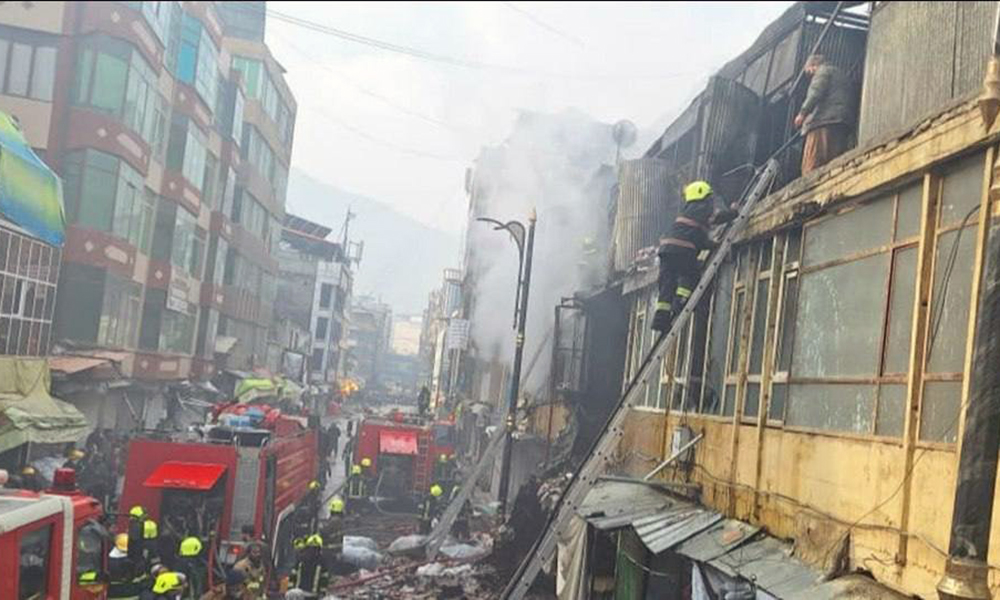
The Ministry of Interior reported that personnel from the General Directorate of Firefighting and Emergency Response successfully prevented the further spread of a fire at Mandawi market on Kabul early Sunday morning.
Abdul Mateen Qani, spokesperson for the ministry, said that the fire destroyed 10 storage facilities and 8 shops. He added that initial losses are estimated at around $700,000, but timely action by firefighting personnel saved property worth approximately $2.2 million.
Qani explained that the fire was caused by an electrical short circuit. He praised the rapid and effective containment operations, which prevented more extensive damage.
Local shopkeepers said the fire broke out around 4 a.m.
Latest News
Bush Institute criticizes Trump administration’s Afghan immigration freeze
The statement drew sharp responses from figures aligned with Trump.
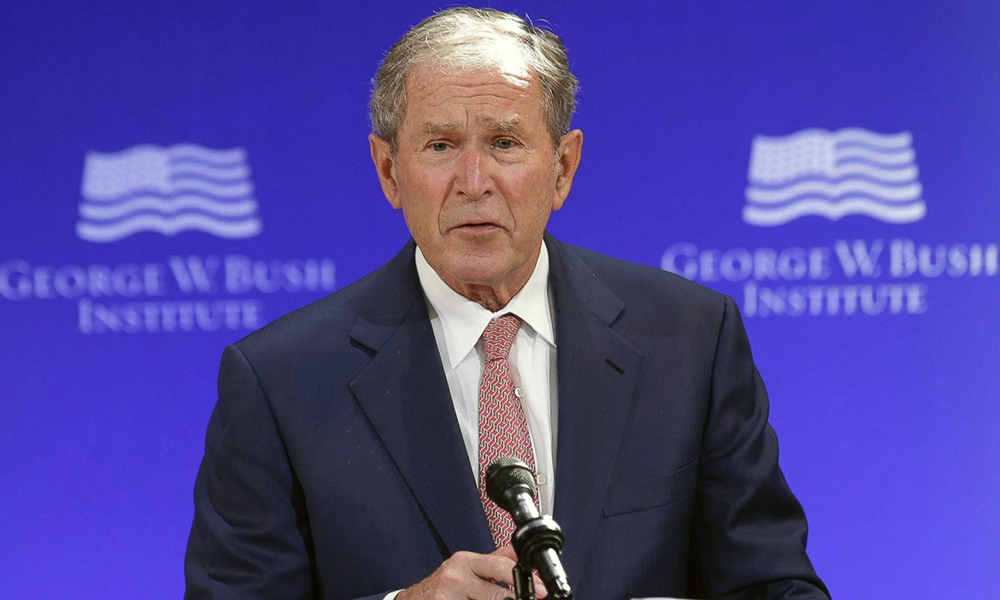
The George W. Bush Institute has pushed back against the Trump administration’s decision to pause and review immigration applications from Afghanistan and 18 other countries, arguing that entire populations should not be penalized for the alleged crimes of one individual.
The policy review followed the November shooting of two National Guard members in Washington, D.C., allegedly carried out by an Afghan national who had previously worked with the CIA in Afghanistan and was granted asylum in the United States earlier this year.
In a statement posted on social media on Friday, the George W. Bush Presidential Center said the alleged actions of one man had “derailed the lawful U.S. immigration applications of people from 18 countries so far, including Afghanistan.” The Center added that Afghans are facing growing uncertainty both inside Afghanistan and in the United States, urging Americans to consider “why we can’t turn our back on Afghans and other immigrants due to one man’s crime.”
The Bush Institute argued that elected officials should focus on examining whether the attack could have been prevented, rather than imposing sweeping measures on Afghans who are lawfully living in or seeking entry to the U.S. It emphasized that many Afghans had “risked their lives over the last two decades” by working alongside the United States in pursuit of stability and prosperity, and said they “shouldn’t bear the burden of one man’s heinous crimes.”
The statement drew sharp responses from figures aligned with Trump. Mike Davis, a prominent Trump loyalist and legal adviser in the administration, criticized the Bush Institute’s intervention by citing past remarks from former President George W. Bush about avoiding public criticism of sitting presidents. Davis suggested the former president and his affiliated institutions should refrain from weighing in on current policy debates unless directly asked.
Davis, who previously worked in the Office of Political Affairs during the Bush administration and later assisted Supreme Court Justice Neil Gorsuch in securing a position at the Department of Justice, framed his response as a defense of presidential discretion.
Trump’s White House Deputy Chief of Staff and Homeland Security Adviser Stephen Miller responded more bluntly. In a separate post, Miller accused the Bush Institute of advocating “unfettered migration from the most dangerous nations on planet earth,” and suggested the Institute was minimizing security risks posed by some migrants.
The exchange highlights deep divisions within the Republican Party over immigration policy, particularly concerning Afghanistan, as the Trump administration continues its review of asylum and immigration applications from countries deemed high risk.
Latest News
Three Afghan migrants freeze to death near Iran border
Amnesty International this week urged countries to halt forced returns to Afghanistan, citing a “real risk of serious harm” to those sent back.
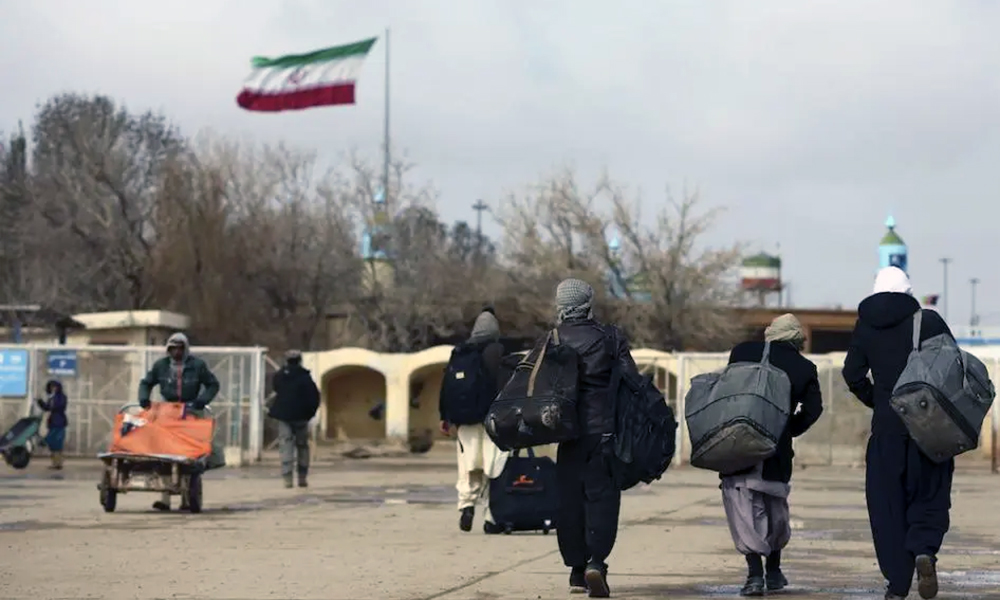
Three Afghan migrants have died from exposure while attempting to cross illegally into Iran amid freezing temperatures in Afghanistan’s western province of Herat, an Afghan army official said on Saturday.
The victims were part of a group that tried to cross the Iran–Afghanistan border earlier this week but was stopped by Afghan border forces. “Three people who wanted to illegally cross the border died due to the severe cold,” the official told AFP, speaking on condition of anonymity.
He added that the body of a shepherd was also discovered in the mountainous Kohsan district, apparently after succumbing to the extreme weather. Search operations were carried out on Wednesday night, but the bodies were recovered the following day.
The incident comes as Afghanistan faces a sharp rise in returnees from neighboring countries. According to the UN refugee agency (UNHCR), more than 1.8 million Afghans were forced to return from Iran between January and the end of November 2025, with most cases described as “forced and coerced returns.”
UNHCR has warned that the large-scale returns, often carried out under harsh conditions, are placing enormous strain on Afghanistan’s already fragile services and resources, increasing the risk of renewed displacement, including further migration back to Iran and Pakistan.
Amnesty International this week urged countries to halt forced returns to Afghanistan, citing a “real risk of serious harm” to those sent back.
Afghanistan is grappling with overlapping crises, including the aftermath of two major earthquakes in recent months, heightened vulnerability to climate change, and ongoing international sanctions.
The United Nations has condemned restrictions on women and girls—excluding them from many jobs and public spaces—as “gender apartheid.”
Meanwhile, the UN World Food Programme says more than 17 million people across the country are currently facing acute food insecurity.


Major fire in Mandawi Kabul market contained, extensive losses prevented

Bush Institute criticizes Trump administration’s Afghan immigration freeze

US, Russian officials meet in Florida for more Ukraine talks

Three Afghan migrants freeze to death near Iran border

Tahawol: Iran’s pledges to facilitate trade with Afghanistan discussed

Afghanistan U19 cricket team defeats India A U19

Afghanistan economy under pressure as Pakistan shocks reshape trade flows

Gaza death toll tops 70,000, health ministry says

India set to establish pharmaceutical factories in Afghanistan: MoIC

Afghanistan offers tax breaks, free land to attract Indian investors
Tahawol: Iran’s pledges to facilitate trade with Afghanistan discussed

Saar: Discussion on severe tensions between Kabul and Islamabad

Tawsia: India’s enthusiasm for investing in Afghanistan discussed

Tahawol: Global concerns over migration escalation discussed

Saar: Calls for Afghanistan’s balanced, economy-oriented foreign policy discussed
-

 International Sports4 days ago
IPL 2026: Teams take shape after auction as franchises balance star power and depth
-
 Sport5 days ago
Abu Muslim Farah crowned champions of fifth season of Afghanistan Champions League
-

 International Sports4 days ago
ILT20: Abu Dhabi Knight Riders end Desert Vipers’ unbeaten run in dramatic one-run win
-
 Latest News2 days ago
Afghan border forces prevent illegal entry of hundreds into Iran
-
 Latest News5 days ago
High-level Kyrgyz delegation arrives in Kabul
-
 Latest News5 days ago
Russia calls for broad engagement with Afghan authorities
-
 Regional4 days ago
Pakistan’s military chief Asim Munir in spotlight over Trump’s Gaza plan
-
 Latest News4 days ago
Afghanistan, Kyrgyzstan discuss expanding trade and economic cooperation