
World
N.Korea resumes missile tests with first launch in a month

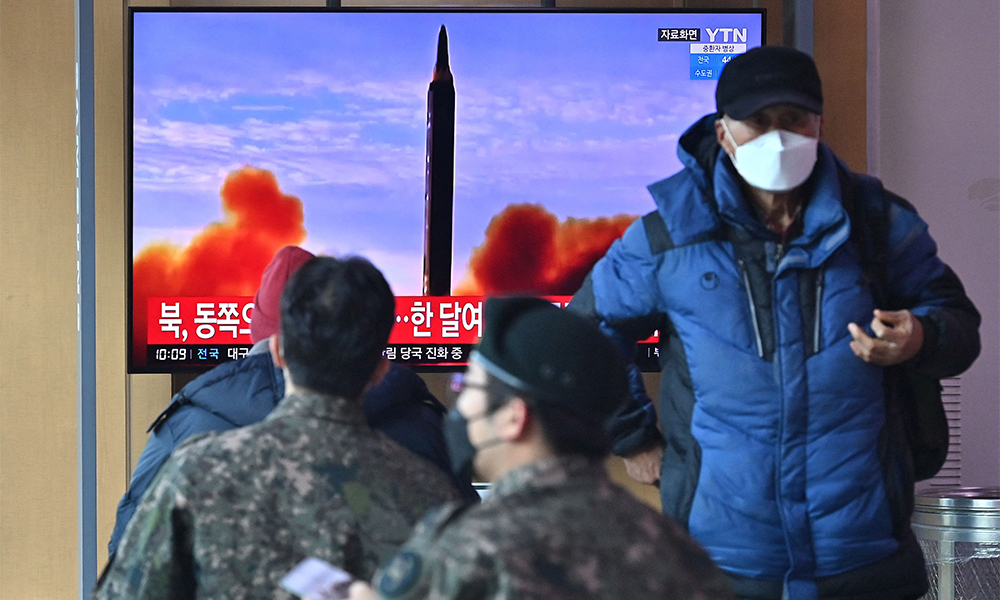
North Korea fired what could be a ballistic missile on Sunday, military officials in South Korea and Japan said, in what would be the first test since the nuclear-armed country conducted a record number of launches in January, Reuters reported.
South Korea’s Joint Chiefs of Staff reported that North Korea had fired a suspected ballistic missile toward the sea off its east coast from a location near Sunan, where Pyongyang’s international airport is located.
According to Reuters the airport has been the site of missile tests, including a pair of short-range ballistic missiles fired on Jan. 16.
Sunday’s missile flew around to a maximum altitude of around 620 km (390 miles), to a range of 300 km (190 miles), JCS said.
Analysts said the flight data didn’t closely match earlier tests, and suggested it could be a medium-range ballistic missile fired on a “lofted” trajectory.
“There have been frequent launches since the start of the year, and North Korea is continuing to rapidly develop ballistic missile technology,” Japan’s Defense Minister Nobuo Kishi said in a televised statement. North Korea was threatening the security of Japan, the region and the international community, he said.
The United States condemned the latest launch and called on North Korea to cease destabilising acts, but said the test did not pose an immediate threat, said the U.S. military’s Indo-Pacific Command, read the report.
North Korea’s last test was on Jan. 30, when it fired a Hwasong-12 intermediate range ballistic missile.
The largest weapon test-fired since 2017, the Hwasong-12 was reported to have flown to an altitude of about 2,000 km (1,200 miles) and range of 800 km (500 miles). That capped a record month of mostly short-range missile launches in January.
LAUNCH AMID S.KOREA ELECTION, ‘PUTIN’S WAR’
Sunday’s launch came less than two weeks ahead of South Korea’s March 9 presidential election, amid fears by some in Seoul and Tokyo that Pyongyang may push ahead with missile development while international attention is focused on Russia’s invasion of Ukraine.
“This launch comes as the international community is responding to the Russian invasion of Ukraine, and if North Korea is making use of that situation, it is something we cannot tolerate,” Kishi said.
South Korea’s National Security Council convened an emergency meeting to discuss the launch, which it called “regrettable”, according to a statement from the presidential Blue House, Reuters reported.
“Launching a ballistic missile at a time when the world is making efforts to resolve the Ukraine war is never desirable for peace and stability in the world, the region, and on the Korean Peninsula,” the statement said.
The leading conservative candidate, Yoon Suk-Yeol, warned last week that North Korea could see the Ukraine crisis as “an opportunity for launching its own provocation.”
Candidates and analysts have noted, however, that even before the invasion North Korean leader Kim Jong Un was overseeing an increase in missile tests as talks with the United States and its allies remain stalled.
“Putin’s War shapes almost all geopolitics right now, and should factor somewhere in Kim’s calculus — but even ‘taking advantage of distraction’ seems to presume too much, since (North Korea) was already testing aggressively before the war,” John Delury, a professor at South Korea’s Yonsei University, said on Twitter.
OLYMPIC LULL IN TESTING
China’s representative on the Korean Peninsula, Liu Xiaoming, said on Sunday he spoke by phone with his U.S. counterpart, Sung Kim, and urged the United States to address North Korea’s legitimate and reasonable concerns with greater attention, so as to create conditions for restarting dialogue.
“I pointed out that, under current situation, relevant parties should be cautious in words and actions, avoid stimulating each other, so as to prevent escalation of tension on the Korean Peninsula,” Liu said on Twitter, without specifying when the phone conversation took place and without mentioning the latest test.
North Korea, which has close ties to China, did not test any missiles during the Beijing Olympics in February. The 2022 Winter Paralympics begin in Beijing on Friday.
Complaining of unrelenting “hostile policies” from the United States, North Korea has suggested it could resume testing its longer-range missiles or even nuclear weapons.
Pyongyang has an ambitious schedule of military modernisation, and the Kim regime’s strength and legitimacy have become tied to testing ever-better missiles, said Leif-Eric Easley, a professor at Ewha University in Seoul.
“North Korea is not going to do anyone the favour of staying quiet while the world deals with Russia’s aggression against Ukraine,” he said.
Washington says it is open to talks with North Korea without preconditions, but Pyongyang has so far rejected those overtures as insincere, Reuters reported.
North Korea’s ballistic missile launches are banned by United Nations Security Council resolutions, which have imposed sanctions on the country over its missile and nuclear weapons programmes.
In its first comments since Russia’s Thursday invasion of Ukraine, North Korea’s foreign ministry on Saturday posted a statement by a researcher calling the United States the “root cause” of the European crisis for pursuing unilateral sanctions and pressure while disregarding Russia’s legitimate demands for its security.

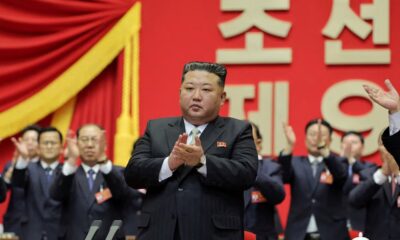



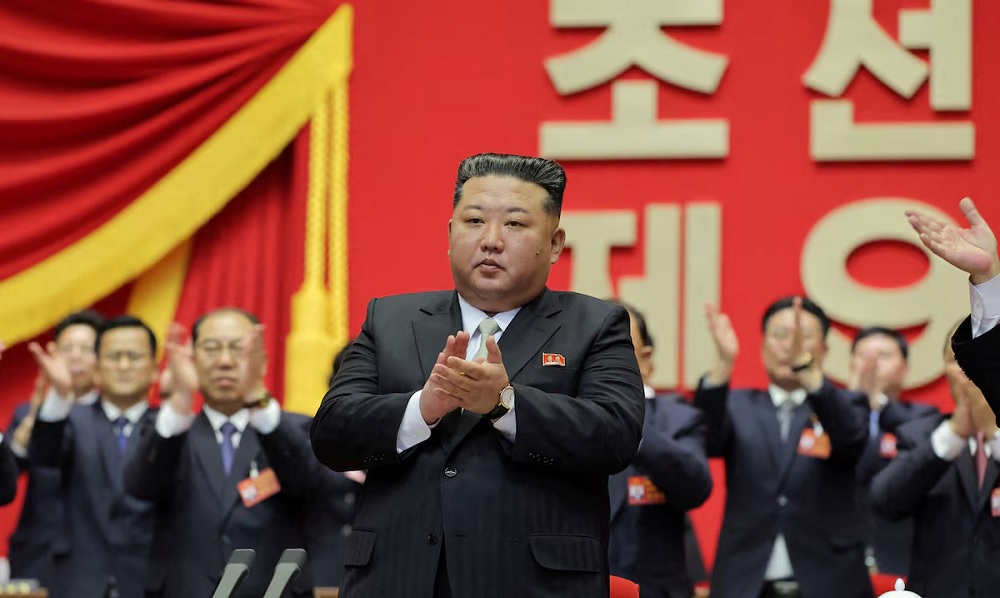
North Korean leader Kim Jong Un was reappointed as president of state affairs, state media KCNA reported on Monday, after the isolated nation convened the first session of its Supreme People’s Assembly a day earlier.
The meeting in Pyongyang will discuss amendments and supplements to the socialist constitution, as well as the election of the chairman of the State Affairs Commission and other state leadership bodies, Reuters reported.
The assembly, North Korea’s rubber-stamp legislature that formally approves state policy, typically meets following a ruling Workers’ Party Congress to turn party decisions into law.
The meeting will also review the country’s economic five-year plan announced at the ninth party congress held in February, KCNA said.
Attention has been focused on whether Pyongyang will revise its constitution to formalise leader Kim Jong Un’s “two hostile states” policy toward South Korea.
In recent years, Kim has abandoned Pyongyang’s long-standing goal of peaceful reunification and redefined the South as a hostile state.
Kim’s powerful sister, Kim Yo Jong, was notably absent from KCNA’s list of members of the State Affairs Commission, the country’s highest leadership body, on which she had served since 2021.
South Korea’s Unification Ministry said it was looking into why she was no longer listed, but analysts said the move did not necessarily signal a loss of influence.
“Her absence suggests not a decline in status but a strategic division of roles,” said Lim Eul-chul, a professor at Kyungnam University, adding that the younger Kim continues to wield real power as a department director in the ruling Workers’ Party, where she may play a higher-level, party-centred role coordinating policy.
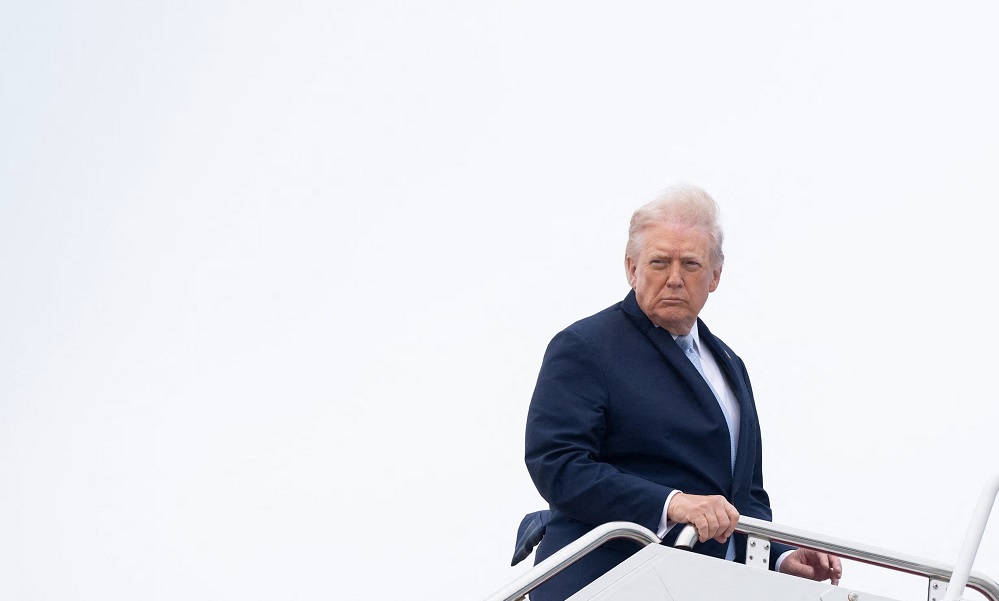
U.S. President Donald Trump on Saturday threatened to “obliterate” Iran’s power plants if Tehran does not fully reopen the Strait of Hormuz within 48 hours, a significant escalation barely a day after he talked about “winding down” the war.
“If Iran doesn’t FULLY OPEN, WITHOUT THREAT, the Strait of Hormuz, within 48 HOURS from this exact point in time, the United States of America will hit and obliterate their various POWER PLANTS, STARTING WITH THE BIGGEST ONE FIRST!” Trump said on social media, Reuters reported.
Trump’s ultimatum would expand the scope of U.S. strikes to infrastructure that affects daily civilian life in Iran.
The threat of Iranian attacks has kept most ships from getting through the strait, a narrow waterway that serves as the conduit for around a fifth of global oil and liquefied natural gas supplies, threatening a global energy shock. Its near-closure sent European gas prices surging as much as 35% last week.
Iran’s Khatam al-Anbiya military command headquarters said Sunday that if the U.S. attacks Iran’s fuel and energy infrastructure, then Iran would target all U.S. energy, information technology and desalination infrastructure in the region.
Energy prices spiked last week after Iran responded to an Israeli attack on its major gas field by hitting Qatar’s Ras Laffan Industrial City, which processes around a fifth of the world’s liquefied natural gas, causing damage that will take years to repair.
The threats to Gulf infrastructure came as the conflict entered dangerous new territory.
Israeli officials said Iranian forces had for the first time fired long-range missiles, expanding the risk of attacks beyond the Middle East, even as an Iranian strike injured dozens of people not far from Israel’s nuclear site.
Iran launched two ballistic missiles with a range of 4,000 km (2,500 miles) at the U.S.-British military base at Diego Garcia in the Indian Ocean, Israeli military chief Eyal Zamir said. The Israeli military said it was the first time Iran had used long-range missiles since the United States and Israel began attacking Iran on February 28.
“These missiles are not intended to strike Israel. Their range reaches European capitals – Berlin, Paris, and Rome are all within direct threat range,” Zamir said in a statement on Saturday.
A source at Britain’s defense ministry said the attack had occurred before the government gave specific authorization on Friday for the U.S. to use British military bases to carry out strikes on Iranian missile sites.
More than 2,000 people have been killed during the war. In Israel, 15 people have been killed in Iranian strikes.
TRUMP SENDS MIXED SIGNALS
Trump and his administration have sent mixed messages about U.S. goals throughout the war, now in its fourth week, leaving U.S. allies struggling to respond.
Trump’s ultimatum on Saturday was the most abrupt shift yet. Trump’s rhetoric pivoted from a drawdown to an explicit 48-hour countdown to strike Iran’s power infrastructure, even as U.S. Marines and heavy landing craft continue heading to the region.
Iran’s largest power plants include the Damavand power plant near Tehran (2,868 megawatts of capacity), the Kerman plant in southeastern Iran (1,910 MW), and the Ramin steam power plant in Khuzestan province (1,890 MW), according to industry and energy databases.
The country’s sole nuclear plant at Bushehr on Iran’s southern coast produces about 1,000 MW.
Earlier this month, Trump raised the idea of destroying Iran’s power grid even while downplaying the notion. “We could take apart their electric capacity within one hour, and it would take them 25 years to rebuild,” Trump told reporters on March 11. “So ideally, we’re not going to be doing that.”
U.S. voters appear increasingly concerned that the war could expand. Energy price shocks are fuelling inflation, hitting consumers and businesses hard, a major political liability for Trump as he seeks to justify the war to the public before November elections in which control of Congress is at stake.
Trump had also accused NATO allies of cowardice over their reluctance to help open the strait. Some allies have said they will consider it, but most say they are reluctant to join a war that Trump started without consulting them.
IRANIAN STRIKES HIT SOUTHERN ISRAEL
The Israeli military said on Sunday that it is conducting strikes in Tehran, hours after attacks on southern Israel.
Late on Saturday, Iranian missiles hit the southern Israeli cities of Dimona and Arad, injuring dozens of people, including children, in separate strikes. Iran’s Revolutionary Guards said in a statement early Sunday that they targeted “military installations” and security centers in southern Israel.
Israeli military spokesperson Brigadier General Effie Defrin said in a post on X that the country’s air defenses were functioning but did not intercept the strikes. “We will investigate the incident and learn from it,” he said.
Israel’s secretive nuclear reactor is about 13 km (8 miles) southeast of Dimona. Both cities lie near several military sites, including Nevatim Air Base, one of the country’s largest.
“This has been a very difficult evening in the battle for our future,” Israeli Prime Minister Benjamin Netanyahu said in a statement released by his office following the strike on Arad.
“We are determined to continue striking our enemies on all fronts,” the statement said.
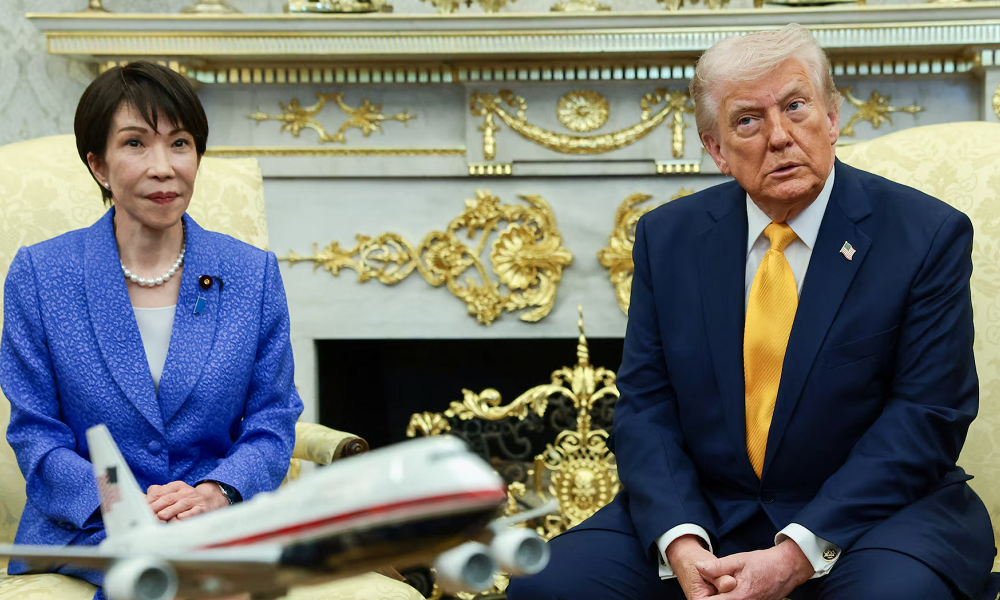
U.S. President Donald Trump on Thursday compared recent U.S. strikes on Iran to Japan’s 1941 attack on Pearl Harbor, as he defended his administration’s military actions during a meeting with Japanese Prime Minister Sanae Takaichi at the White House.
Responding to a question about why allies were not informed in advance, Trump said the element of surprise was intentional. “We wanted surprise. Who knows better about surprise than Japan?” he said, referencing the attack on Attack on Pearl Harbor.
The remark appeared to catch Takaichi off guard, as she reacted visibly during the Oval Office meeting.
Japan’s 1941 attack on the U.S. naval base in Hawaii killed more than 2,300 Americans and led the United States to enter World War II. Then-President Franklin D. Roosevelt famously described the day as “a date which will live in infamy.”
The war ended in 1945 after U.S. atomic bombings of Atomic bombings of Hiroshima and Nagasaki.
Trump’s comments drew mixed reactions in Japan. Some observers said the comparison was inappropriate given its historical sensitivity, while others downplayed it as a joke.
Speaking in Tokyo, engineer Yuta Nakamura said Takaichi had been placed in a difficult position but handled the moment carefully. Meanwhile, retiree Tokio Washino said the reference made him feel uneasy, given Japan’s wartime history.


UN chief urges investment in water systems to advance gender equality

North Korea’s Kim Jong Un reappointed as president of state affairs, KCNA says

Tahawol: Possibility of US ground forces entering Iran war discussed

Water crisis deepens in Afghanistan as families struggle for access

Saar: Using US prisoners as political pressure

Pakistani military jet downed in Afghanistan’s Jalalabad, pilot captured alive

Afghan Air Force conducts airstrikes in Islamabad, other cities

Prominent Muslim scholar issues fatwa calling for Afghanistan-Pakistan ceasefire

Afghan air force strikes key Pakistani military installations in retaliatory operation

IEA: Special circle in Pakistan has launched mission to destabilize region
Tahawol: Possibility of US ground forces entering Iran war discussed
Saar: Using US prisoners as political pressure

Tahawol: Pakistan’s efforts to destabilise Afghanistan

Saar: Decline in international assistance to Afghanistan

Tawsia: Assessment of Afghanistan’s economic activities in 1404
-
 Latest News5 days ago
IEA announces temporary pause in defensive operations against Pakistan for Eid
-
 Latest News5 days ago
Pakistan opposes normal Afghanistan–India relations: Shaheen
-
 Latest News4 days ago
Pakistani shelling hits Kunar districts despite ‘pause in hostility’ over Eid
-
 Latest News5 days ago
Karzai accuses Pakistan of seeking to destabilise Afghanistan after Kabul strike
-

 Sport3 days ago
Afghanistan national buzkashi falls short in Kokpar World Championship semifinals
-

 Regional4 days ago
Pakistan among top nuclear threats to America, US intelligence chief tells senate
-
 Latest News5 days ago
Muslim scholars condemn Kabul hospital attack, urge ceasefire
-
 Latest News4 days ago
Peshawar High Court grants bail to 68 detained Afghan nationals, including minors