
Latest News
RSF sounds alarm on World Press Freedom Day

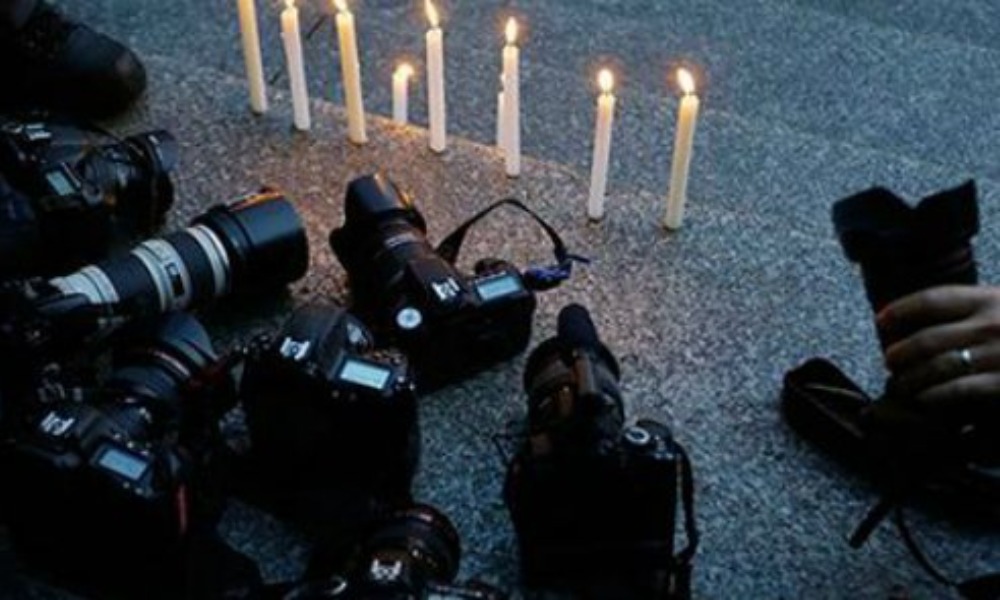
On the occasion of World Press Freedom Day, Reporters Without Borders (RSF) and the Centre for the Protection of Afghan Women Journalists (CPAWJ) on Monday sounded the alarm about the plight of the media and the future for journalism in Afghanistan.
In a statement issued by the RSF, the organizations said: “The press freedom situation is disastrous in Afghanistan 14 months after the Taliban and United States signed a peace accord on 29 February 2020, and eight months after the Taliban and Afghan government began peace talks.”
At least 20 journalists and media workers have been the victims of targeted attacks in the past six months and eight, including four women, have been killed. Around 30 others have received death threats in connection with their journalistic work, RSF stated.
“The climate of terror keeps on growing and particularly affects women journalists, whose situation was already precarious.
“The precarity of Afghan women journalists has increased not only as a result of the physical dangers but also as a result of the Covid-19 lockdown,” CPAWJ director Farida Nekzad said.
“At least 20% of them have lost their jobs or have been forced to take unpaid leave by their employers.”
UNAMA also called for the campaign of violence against journalists and media workers in the country to end.
“Journalists must be protected, and those who commit acts of violence and murder against workers in the sector must be brought to justice,” UNAMA said in a statement.
“We recognise that female journalists and media professionals are particularly at risk. The impunity for such crimes remains a serious challenge and creates a chilling environment, limiting the media sector’s ability to operate freely.
“Afghanistan’s free and independent media sector has been hard won. Many Afghans have sacrificed their time, their energy, their money and, for some, their lives to build this crucial public good. We pledge our continued support in defence of a free and independent Afghan media. It must be defended,” the statement read.
Afghanistan’s chairman of the High Council for National Reconciliation Abdullah Abdullah also acknowledged the importance of the day and tweeted: “While I am celebrating the remarkable achievements of Afghanistan’s media and our courageous journalists, I also recognize and remember their sacrifices in defending and shaping a vibrant free press.
“As always I am committed to a free press and access to information,” he said.
The wider international community in Afghanistan also issued a statement on reaffirming commitment to supporting Afghan journalists and the media sector.
“The UK remains committed to supporting Afghanistan. A free and independent media and a strong media sector is an essential part of an inclusive and representative Afghanistan. As we transition to a new chapter of international support for Afghanistan, as Afghanistan’s international friends and partners, we reaffirm our commitment to stand by its journalists and the media sector”
“As Afghanistan’s international friends and partners, we reaffirm our commitment to stand by its journalists and the media sector.
“We continue to support Afghan journalists, to stand up for their rights, and to oppose undue restrictions on their work,” the statement read.
The international community also condemned the campaign of violence against journalists and media professionals and said this “must end”.
“Journalists must be protected, and those who commit acts of violence and murder against workers in the sector must be brought to justice.
We recognise that female journalists and media professionals are particularly at risk. The impunity for such crimes remains a serious challenge and creates a chilling environment, limiting the media sector’s ability to operate freely,” read the statement.
“Afghanistan’s free and independent media sector has been hard won. Many Afghans have sacrificed their time, their energy, their money and, for some, their lives to build this crucial public good. We pledge our continued support in defence of a free and independent Afghan media. It must be defended.”












Kazakhstan’s Foreign Minister Mukhtar Tileuberdi has called for pragmatic and coordinated international engagement with Afghanistan, saying the country’s long-term stability is closely linked to the security and sustainable development of Central Asia.
Speaking during the general debate of the 81st session of the United Nations General Assembly in New York on Friday, Tileuberdi said humanitarian assistance to Afghanistan remains essential but alone cannot break the cycle of poverty, displacement and dependency.
He said Kazakhstan supports a “pragmatic, coordinated and step-by-step” approach to international engagement with Afghanistan, with the United Nations playing a central role.
Tileuberdi also said Kazakhstan is working with the UN to operationalize the United Nations Regional Centre for the Sustainable Development Goals for Central Asia and Afghanistan in Almaty.
He said the success of the centre should be measured by the results and assistance it delivers to the region.


Abu Muslim Farah defeat Khurasan Faryab 2-0 in ACL season six

Saar: Concerns over Pakistan’s political crisis discussed

Afghanistan Champions League: Omar Zawak Herat beat Toofan Herat 1-0

Blast in Pakistan’s Dera Ismail Khan kills 11, injures 30

Ariana Afghan Airlines increases Kabul-Delhi cargo flights

Saudi energy group signs major Afghanistan deals covering gas exploration and pipeline plans

Trump floats idea of renaming Atlantic or Pacific Ocean

US hits Egyptian bank branches with Iran sanctions as war marks six months

Nepal flood rescue mission enters critical phase as thousands remain missing

Iranian clubs to face Gulf opponents at neutral venues in Asian Champions League Elite
Saar: Concerns over Pakistan’s political crisis discussed

Exclusive interview with Abdul Latif Mansoor, Minister of MRRD

Tawsia: Overview of Afghanistan’s iron mines

Tahawol: Discussion on fresh Pakistani airstrikes on Afghanistan

Saar: Calls for international support for Afghanistan discussed
-

 World5 days ago
CNN, MS NOW and Politico sue Trump, challenging White House ban
-

 Latest News3 days ago
Ariana Afghan Airlines ranks seventh among 45 Central Asian airlines
-

 Latest News4 days ago
UN reiterates call for respect for international law after Kunar airstrikes
-

 Regional3 days ago
US and Iran hold first talks since June after Trump’s ‘annihilation’ threat
-

 Latest News3 days ago
Silk Road highway in Wakhan corridor now reaches the China border
-

 Latest News5 days ago
Afghan Official: Pakistan’s airstrikes will not go unanswered
-

 Regional5 days ago
G7 foreign ministers call on Iran to stop arming Houthis
-

 Regional3 days ago
Iran airlines cancel flights as US sanctions hit