
Regional
Satellite photos show Iran expanding missile production
Three Iranian officials, who asked not to be identified because they were not authorized to speak publicly, confirmed that Modarres and Khojir are being expanded to boost production of conventional ballistic missiles.

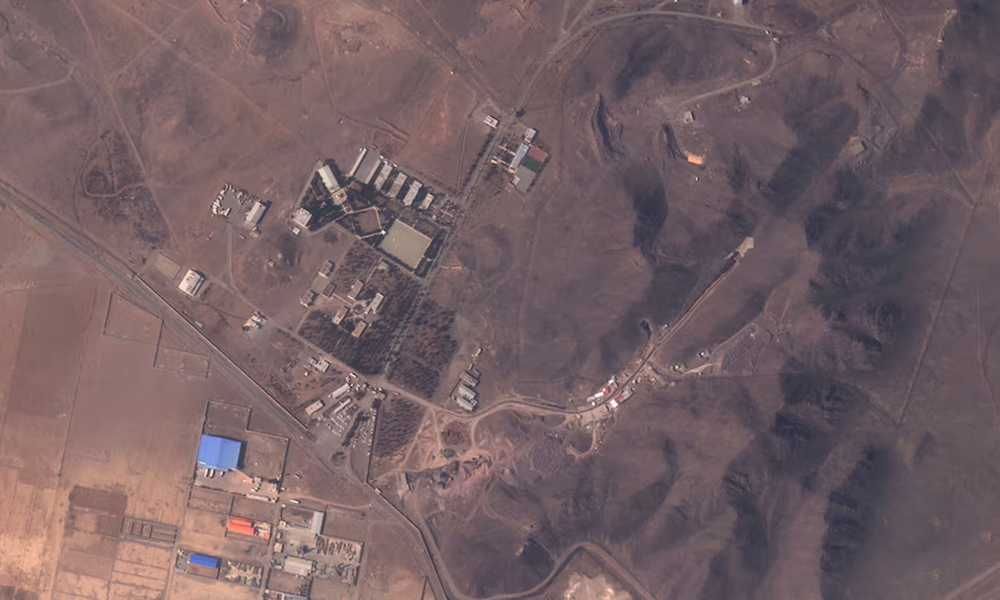
Recent satellite imagery shows major expansions at two key Iranian ballistic missile facilities that two American researchers assessed are for boosting missile production, a conclusion confirmed by three senior Iranian officials.
The enlargement of the sites follows an October 2022 deal in which Iran agreed to provide missiles to Russia, which has been seeking them for its war against Ukraine. Tehran also supplies missiles to Yemen’s Houthi rebels and the Lebanese militia Hezbollah, both members of the Iran-backed Axis of Resistance against Israel, according to U.S. officials.
Images taken by commercial satellite firm Planet Labs of the Modarres military base in March and the Khojir missile production complex in April show more than 30 new buildings at the two sites, both of which are located near Tehran.
The images, reviewed by Reuters, show many of the structures are surrounded by large dirt berms. Such earthworks are associated with missile production and are designed to stop a blast in one building from detonating highly combustible materials in nearby structures, said Jeffrey Lewis of the Middlebury Institute of International Studies at Monterey.
The expansions began at Khojir in August last year and at Modarres in October, Lewis said, based on images of the sites.
Iran’s arsenal is already the largest in the Middle East, estimated at more than 3,000 missiles, including models designed to carry conventional and nuclear warheads, experts say.
Three Iranian officials, who asked not to be identified because they were not authorized to speak publicly, confirmed that Modarres and Khojir are being expanded to boost production of conventional ballistic missiles.
“Why shouldn’t we?” said one official.
A second Iranian official said some of the new buildings would also allow a doubling of drone manufacturing. Drones and missile components would be sold to Russia, drones would be provided to the Houthis and missiles to Hezbollah, the source added.
Reuters was unable independently to confirm the Iranian officials’ comments.
Iran’s mission to the United Nations did not respond to a Reuters request for comment on the expansion of the complexes. Tehran has previously denied providing drones and missiles to Russia and the Houthis. Hezbollah’s media office did not immediately respond to requests for comment.
Houthi spokesperson Mohammed Abdulsalam said a boost in Iran’s weapons manufacturing would not have any impact in Yemen because the Houthis develop and manufacture aircraft independent of Iran.
Lewis analyzed the Planet Labs imagery with Decker Eveleth, an associate research analyst at CNA, a Washington thinktank, as part of a Middlebury project that monitors Iranian missile infrastructure.
“We know that Russia is on the hunt for low-cost missile capabilities, and it has gone to Iran and North Korea,” said Lewis.
Moscow and Pyongyang have denied the transfer of North Korean missiles to Russia. The Russian embassy in Washington and North Korea’s mission to the United Nations did not immediately respond to requests for comment for this story.
The two U.S. researchers said in separate interviews that it was not clear from the photos what kinds of missiles would be produced at the new facilities, which still appeared to be under construction.
Any increase in Tehran’s missile or drone production would be concerning to the United States, which has said that Iranian drones help sustain Russia’s assault on Ukrainian cities, and to Israel as it fends off attacks from Iran-backed groups, including Hezbollah.
The U.S. Office of the Director of National Intelligence declined to comment on the reseachers’ analysis.
A U.S. National Security Council spokesperson declined to confirm their assessment, adding that the United States has implemented various measures, including sanctions, intended to constrain Iranian missile and drone production and exports.
Reuters in February reported that Iran had sent surface-to-surface ballistic missiles to Russia for use against Ukraine. Iran denied providing the weapons. Washington said it could not confirm the transfers but it assumed Tehran intended to provide missiles to Moscow.
NEW BUILDINGS, DIRT BERMS
Shahid Modarres and Khojir are overseen by the Islamic Revolutionary Guard Corps (IRGC), the elite paramilitary organization that plays a central role in Iran’s missile and nuclear programs. It controls large segments of the Iranian economy and answers directly to Iran’s supreme leader, Ayatollah Ali Khamenei.
The complexes have long been associated with the development and production of Iran’s short- and medium-range ballistic missiles and rockets for the country’s space program.
On Nov. 12, 2011, a massive explosion destroyed a large swath of Shadid Modarres associated with solid fuel missiles, killing 17 IRGC officers. They included Gen. Hassan Moqaddam, regarded by Iran as the “architect” of its ballistic missile program.
Construction at Shahid Modarres, which began again after the 2011 explosion, accelerated last year, the second Iranian official said.
“I think the Iranians may have chosen not to berm the buildings (before the explosion) because they didn’t want to draw attention to them,” said Lewis. “They learned the hard way.”
Eveleth and Lewis said the sites’ long history with Iran’s missile program – Shahid Modarres is considered by some experts as its birthplace – and the numerous dirt berms support their assessment that Tehran is expanding ballistic missile production.
“When we see where you basically have an entire production line that is bermed like that, that’s usually missiles,” said Eveleth. – Reuters






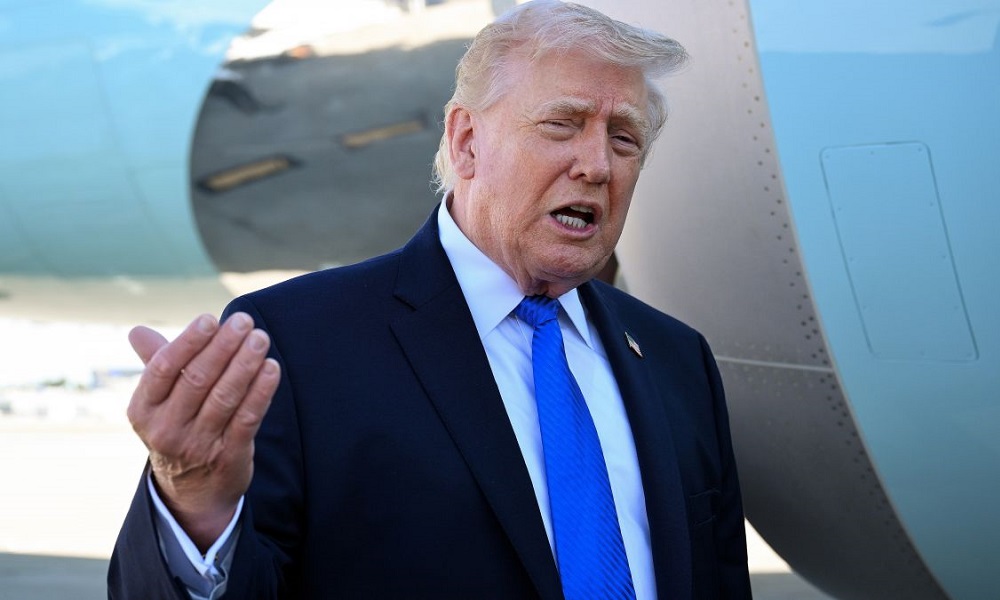
U.S. President Donald Trump announced a new extension of his deadline for Iran to reopen the Strait of Hormuz or face the destruction of its energy plants, after Iran rejected his 15-point proposal to end the war he launched with Israel.
Iran gave no direct indication that it was ready for negotiation or compromise. The Islamic Revolutionary Guard Corps issued a statement reaffirming that all shipping “to and from ports of allies and supporters of the Israeli-American enemies” to any destination was prohibited.
The war has spread across the Middle East, killing thousands of people and causing the biggest disruption in history to energy supplies, hitting the global economy with soaring oil, gas and fertiliser prices that have fuelled inflation fears.
The U.S. and Israel launched strikes on Iran on February 28 during talks with Tehran about its nuclear programme that had not yet yielded a deal. Attacks on Israel by Iran’s Lebanese ally Hezbollah then triggered an Israeli onslaught there that has displaced a fifth of Lebanon’s population.
On Thursday, Trump threatened during a cabinet meeting to increase pressure on Iran if it did not make a deal. He later posted on social media that he would pause threatened attacks on Iranian energy plants for 10 days until April 6 at 8 p.m. Eastern daylight time (0000 GMT on April 7).
“Talks are ongoing and, despite erroneous statements to the contrary by the Fake News Media, and others, they are going very well,” he added in his Truth Social post.
Regional
Russia sought to blackmail US using intelligence to Iran, Zelenskiy says
Zelenskiy, who said on Monday that Ukraine’s military intelligence has “irrefutable” evidence that Russia is continuing to provide intelligence to Iran.
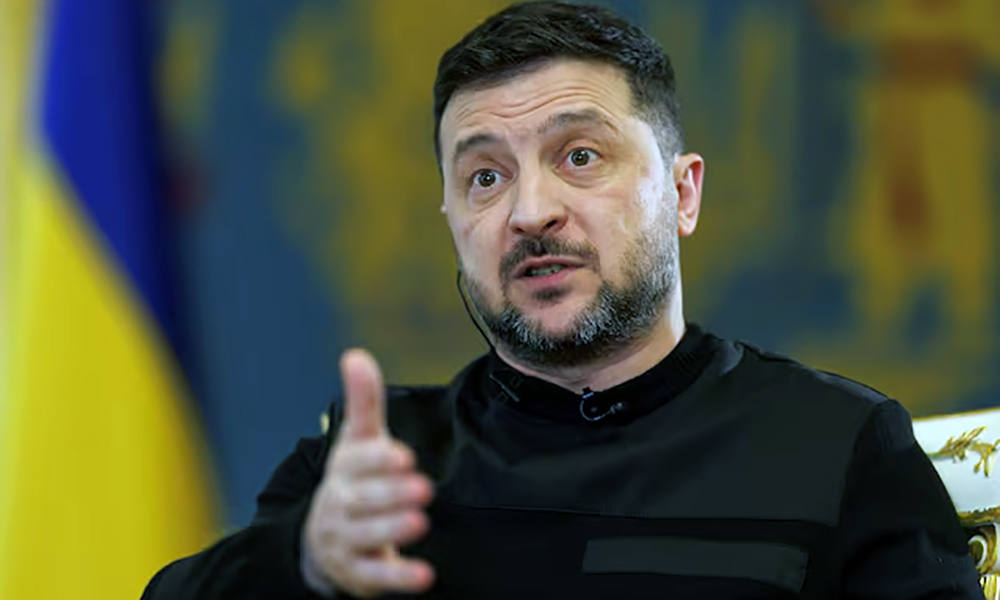
Russia sought to blackmail the United States by offering to stop sharing military intelligence with Iran if, in return, Washington would cut off Ukraine from its intelligence data, President Volodymyr Zelenskiy said on Wednesday.
Zelenskiy, who said on Monday that Ukraine’s military intelligence has “irrefutable” evidence that Russia is continuing to provide intelligence to Iran, told Reuters he had seen the data but provided no further details, Reuters reported.
Speaking in his presidential compound in Kyiv, Zelenskiy said that some Iranian drones, used to attack U.S. military assets and its allies during the war in the Middle East, contained Russian components.
“I have reports from our intelligence services showing that Russia is doing this and saying: ‘I will not pass on intelligence to Iran if America stops passing intelligence to Ukraine.’ Isn’t that blackmail? Absolutely,” Zelenskiy said.
He did not say who, according to the reports, Russia was addressing the comments to. Russia has denied assisting Iran in its month-old conflict with the United States and Israel – a denial that Washington said earlier this month that it had also received directly from Moscow when the issue was discussed.
Ukraine, which has faced sustained attacks by Iranian-designed Shahed drones since Russia launched its invasion in 2022, is helping several Gulf states – including Saudi Arabia, the United Arab Emirates, and Qatar – to counter drone attacks on their territory, the president said.
Zelenskiy said he hoped that Ukraine would be able to reach long-term deals with some Gulf countries that would raise funds for the production of Ukrainian drone interceptors or receiving much-needed air-defence missiles, read the report.
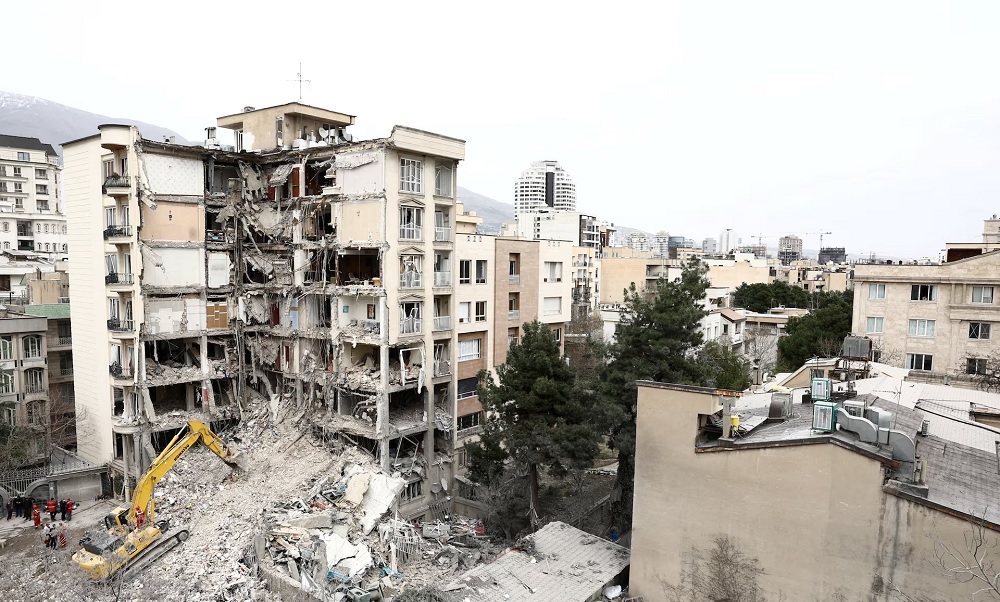
Israel struck the Iranian capital Tehran on Wednesday, Israeli military and Iranian media said, as President Donald Trump said the U.S. was making progress in its efforts to negotiate an end to the war, with reports of a 15-point plan sent to Tehran.
The Israeli Defense Forces said in a Telegram post it had launched a wave of strikes targeting infrastructure across Tehran. The semi-official Iranian SNN News Agency said the strikes hit a residential area in the city, with rescuers searching the rubble, Reuters reported.
Kuwait and Saudi Arabia said on Wednesday they had repelled fresh drone attacks, without stating where they originated. Drones targeted a fuel tank at Kuwait International Airport, causing a fire but no casualties, Kuwait’s Civil Aviation Authority said.
Iran’s Revolutionary Guards said it had launched a new wave of attacks against locations in Israel including Tel Aviv and Kiryat Shmona, as well as U.S. bases in Kuwait, Jordan and Bahrain, Iranian state media reported.
Trump said on Tuesday the U.S. was in “negotiations” to end the war, which has already killed thousands and created the worst energy shock in history, leading to global fuel shortages and roiling markets.
Stocks rose and oil prices fell on Wednesday on reports the U.S. is seeking a month-long ceasefire and had sent a 15-point plan to Iran for discussion, raising hopes for a resumption of oil exports out of the Persian Gulf.
Trump told reporters at the White House the U.S. was talking to “the right people” in Iran to end hostilities, adding the Iranians wanted to reach a deal very badly.
Iran’s powerful parliament speaker Mohammad Baqer Qalibaf on Monday dismissed such reports as “fake news.”
15 POINT PLAN SENT TO IRAN
The New York Times reported on Tuesday that Washington sent Iran a 15-point plan to end the war in the Middle East. Israel’s Channel 12, quoting three sources, said the U.S. was seeking a month-long ceasefire to discuss the 15-point plan.
A source familiar with the matter confirmed that the U.S. had sent a plan to Iran but provided no further details.
The Israeli media outlet said the plan would include the dismantling of Iran’s nuclear programme, ceasing support for proxy groups, such as Lebanon’s Hezbollah, and the reopening of the Strait of Hormuz.
The U.S. and Israel launched strikes on Iran on February 28 after saying they had failed to make enough headway in talks aimed at ending Iran’s nuclear programme, although mediator Oman said significant progress had been made.
Since then, Iran has attacked countries that host U.S. bases, struck Gulf energy infrastructure and effectively closed the Strait of Hormuz, conduit for a fifth of the world’s oil and liquefied natural gas.
Iran has told the United Nations Security Council and the International Maritime Organization that “non-hostile vessels” may transit the Strait of Hormuz if they coordinate with Iranian authorities, according to a note seen by Reuters on Tuesday.
The effective closure of the waterway, where 20% of the world’s oil and gas normally transits, has created the worst energy supply shock in history, sent fuel prices soaring, and disrupted global aviation.
PAKKISTAN OFFERS TO HOLD US-IRAN TALKS
Pakistan’s Prime Minister Shehbaz Sharif said on Tuesday he was willing to host talks between the U.S. and Iran on ending the war, a day after Trump postponed threats to bomb Iranian power plants after what he called “productive” talks.
Pakistan has long-standing ties to neighbouring Iran’s Islamic Republic and has been building a relationship with Trump.
Despite reports of negotiations, the Pentagon is expected to send thousands of soldiers from the U.S. Army’s elite 82nd Airborne Division to the Middle East, two people familiar with the matter told Reuters on Tuesday, adding to a massive U.S. military buildup.
The forces will add to the 50,000 U.S. troops already in the region and accelerate Washington’s massive U.S. military buildup there, fuelling fears of a longer conflict.


Exclusive interview with Indrika Ratwatte, Deputy UN Special Representative for Afghanistan

US Vice President Vance emerges as key figure in Iran peace efforts: Report

Tawsia: Efforts to boost Afghanistan’s domestic production and economic diplomacy

Trump extends deadline for striking Iranian energy plants to April 7

IEA says Iranian drivers no longer need visas to enter Afghanistan

Pakistani military jet downed in Afghanistan’s Jalalabad, pilot captured alive

Afghan Air Force conducts airstrikes in Islamabad, other cities

Prominent Muslim scholar issues fatwa calling for Afghanistan-Pakistan ceasefire

Afghan air force strikes key Pakistani military installations in retaliatory operation

IEA: Special circle in Pakistan has launched mission to destabilize region
Exclusive interview with Indrika Ratwatte, Deputy UN Special Representative for Afghanistan
Tawsia: Efforts to boost Afghanistan’s domestic production and economic diplomacy

Tahawol: Discussion on day 27 of Iran–US war

Saar: Islamic Emirate confident of Durand Line control

Tahawol: Efforts to release Mohammad Rahim from Guantanamo Bay Detention Camp
-

 Latest News4 days ago
Pakistan seeks Russian mediation to resolve Afghanistan tensions
-
 Latest News5 days ago
World must re-engage to prevent all-out Afghanistan-Pakistan war: Financial Times
-
 Latest News3 days ago
Around 2.3 million tourists visited Afghanistan’s recreational areas during Eid: Ghufran
-

 Sport3 days ago
Afghanistan squad hit by withdrawals ahead of AFC Asian Cup Qualifiers
-
 Latest News1 day ago
Tajikistan shifts stance on Afghanistan amid rising border tensions
-
 Latest News3 days ago
Islamic Emirate releases American prisoner Dennis Coyle
-
 Latest News4 days ago
Airstrike on Kabul drug rehabilitation centre sparks legal concerns
-
 Latest News2 days ago
Two civilians killed, eight injured in fresh shelling by Pakistan in Kunar