
Regional
Saudi foreign minister says Trump does not raise risk of Iran-Israel war
Saudi’s Prince Faisal also said the new Syrian government had inherited a broken country with no real institutions and needed international help to rebuild and start from scratch.

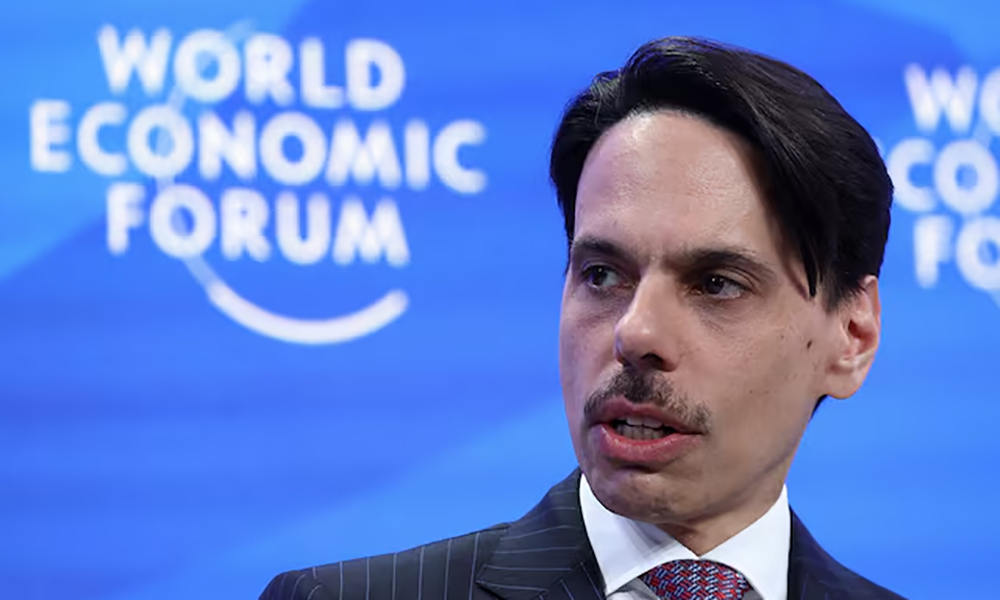
Saudi Arabia’s foreign minister said on Tuesday he did not see Donald Trump’s new administration increasing the risk of an Israel-Iran conflict, addressing an issue the region has feared since the start of Israel’s war in Gaza, Reuters reported.
Prince Faisal bin Farhan Al-Saud also said in Davos that he hoped President Trump’s approach to Iran would be met with a willingness by Tehran to positively engage with the U.S. administration and address the issue of its nuclear programme.
“Obviously a war between Iran and Israel, any war in our region is something we should try to avoid as much as possible,” Prince Faisal said during the World Economic Forum’s annual meeting in the Swiss mountain resort.
“I don’t see the incoming U.S. administration as contributory to the risk of war, on the contrary, President Trump has been quite clear he does not favor conflict.”
Fears of war between Israel and Iran increased after the Tehran-backed Palestinian Hamas group led a deadly cross-border raid on Israel on Oct. 7, 2023, triggering an Israeli military offensive that dragged Iran’s allies, including Lebanon’s Hezbollah and Yemen’s Houthis, into confrontation with Israel, read the report.
Israel unleashed a devastating war against Hamas in Gaza, and Hezbollah in Lebanon, decimating the military structure of both groups, shattering Iran’s network of influence in the Middle East and upending powerful alliances that led to the ousting of Syrian president Bashar al-Assad, another Iran ally.
Fifteen months after the October attacks, a ceasefire deal between Israel and Hamas was reached.
Prince Faisal was speaking at the World Economic Forum’s annual meeting in Switzerland on a panel along with Qatari Prime Minister Sheikh Mohammed bin Abdulrahman Al Thani, who helped broker the ceasefire agreement.
The Qatari premier said the decisive involvement of Trump’s Middle East envoy, Steve Witkoff, had made a profound difference and led to significant progress in reaching the deal.
He said he hoped the Palestinian Authority would return to play a governing role in Gaza once the war with Israel comes to an end, adding that Gazans — and not any other country — should decide how the enclave is to be governed.
How Gaza will be governed after the war was not directly addressed in the deal between Israel and Hamas.
Israel has rejected any governing role for Hamas, which ran Gaza before the war, but it has been almost equally opposed to rule by the Palestinian Authority, the body set up under the Oslo interim peace accords three decades ago that has limited governing power in the West Bank, Reuters reported.
Saudi’s Prince Faisal also said the new Syrian government had inherited a broken country with no real institutions and needed international help to rebuild and start from scratch.
“It is essential to engage, show patience, and extend effective support to the administration in Damascus by putting out a helping hand,” he said.
Lifting the burden of sanctions placed on Syria due to the actions of the previous Assad government would be a key step forward. Although the U.S. and Europe have granted some waivers, further action is necessary, the minister said.
“Syria is a shattered nation in desperate need of rebuilding. The earlier we engage and the more support we offer, the greater the chances of a successful and stable transition,” he said.
Qatar’s Sheikh Mohammed said Trump’s return to the White House presented significant opportunities for collaboration, emphasizing the potential to work together to transform the Middle East into a region of stability and security.
“President Trump’s whole notion of making America great again is something very important. We also want to see the Middle East great again.” he said.
Prince Faisal, whose country shunned Lebanon for years over the strong influence of Hezbollah on state affairs, also said he would visit Beirut later this week, marking the first such trip by a Saudi foreign minister in more than a decade, read the report.
He said the election of a Lebanese president after a lengthy power vacuum was positive, but that Riyadh needed to see real reforms in order to raise its engagement in the country.







Regional
Arab states condemn Israel’s move to expand powers in occupied West Bank
Israel’s security cabinet approved measures that will make it easier for Jewish settlers to purchase land in the West Bank and grant Israeli authorities greater powers in areas under Palestinian control.
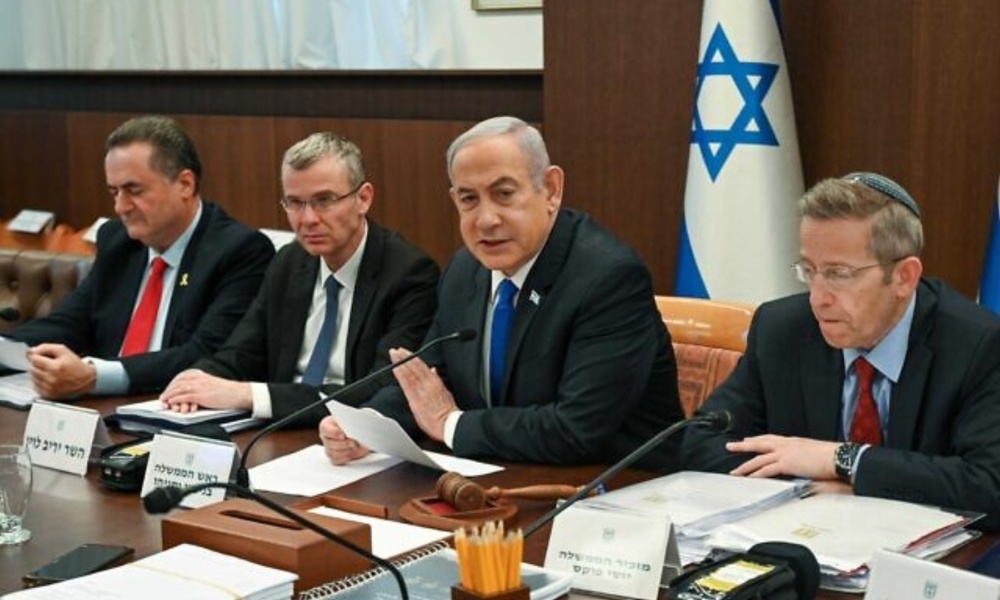
Saudi Arabia, Jordan and the United Arab Emirates led regional condemnation on Monday of Israel’s decision to ease settlement expansion and broaden its authority across the occupied West Bank, a move critics say amounts to de facto annexation.
Israel’s security cabinet approved measures on Sunday that will make it easier for Jewish settlers to purchase land in the West Bank and grant Israeli authorities greater powers in areas nominally under Palestinian control, Reuters reported citing two senior Israeli ministers.
Finance Minister Bezalel Smotrich, an ultranationalist figure in Prime Minister Benjamin Netanyahu’s coalition, said the decisions would “continue to kill the idea of a Palestinian state.”
In a joint statement, foreign ministers from several Middle Eastern and Muslim-majority countries — including Egypt and Turkey — denounced the measures as illegal under international law and warned they would undermine prospects for a two-state solution and regional stability.
Jordan, Egypt, the UAE and Turkey all maintain diplomatic ties with Israel, while Saudi Arabia has said it will not normalise relations without the establishment of a Palestinian state.
Most countries view the West Bank, occupied by Israel since 1967, as the core of a future Palestinian state.
Israeli Defence Minister Israel Katz and Smotrich said the cabinet had repealed a pre-1967 Jordanian-era law that kept land registries confidential and scrapped a permit requirement for land purchases, steps they said would simplify transactions for Jewish buyers.
Settlement watchdog Peace Now said the move violated international law and marked a significant step toward annexation. “This treats the West Bank as normal Israeli territory rather than occupied land,” said Hagit Ofran of the group.
The cabinet also expanded Israeli enforcement powers over water use, archaeological sites and environmental issues into Areas A and B of the West Bank — zones that, under the 1993 Oslo accords, are under Palestinian or joint control. Peace Now said the changes could pave the way for wider demolitions of Palestinian property and further restrictions on Palestinian development.
U.N. Secretary-General Antonio Guterres expressed “grave concern,” warning the measures were eroding the viability of a two-state solution, his spokesperson said.
In Hebron, Palestinians said the decisions would accelerate settlement growth and home demolitions. “It becomes easier to confiscate land, expand settlements and demolish Palestinian homes,” said Issa Amr of the group Youth Against Settlements.
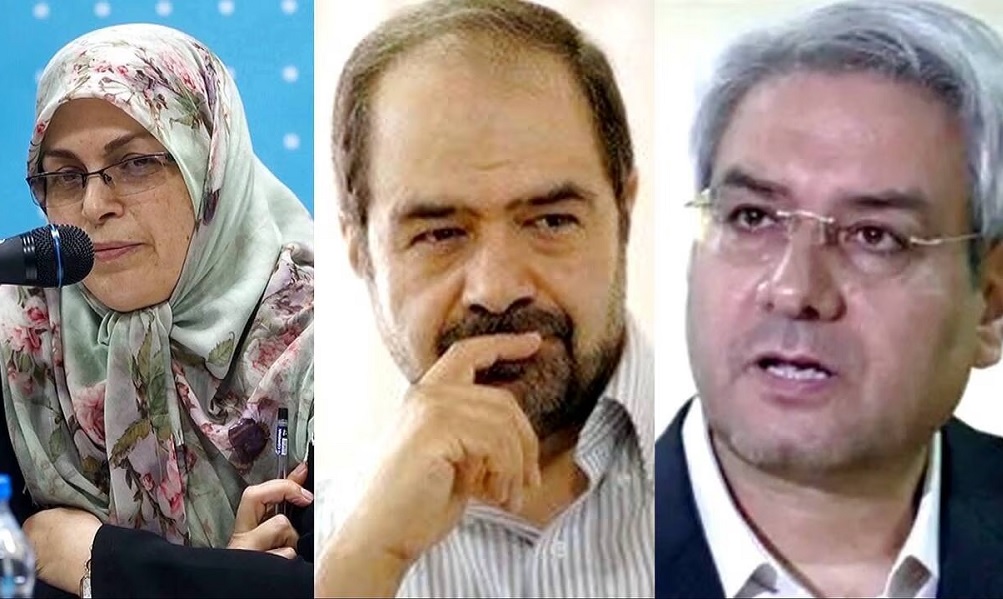
The Islamic Iran Nation’s Union Party sought the release of secretary-general Azar Mansouri, the Shargh newspaper said on Monday, after her arrest along with other members of the Reform Front, an umbrella body of Iranian reformists and moderates.
A campaign of mass arrests and intimidation has led to the arrests of thousands as authorities seek to deter further protests after last month’s crackdown on the bloodiest unrest since the 1979 Islamic Revolution.
On Sunday, state media said three senior figures from Iran’s Reform Front were arrested, among them Ebrahim Asgharzadeh, Mohsen Aminzadeh, and Azar Mansouri, who acts as the front’s head, according to Reuters.
Shargh said at least two more Reform Front members were asked to report to the prosecutor’s office in Tehran’s Evin prison on Tuesday.
The Reform Front’s spokesperson, Javad Emam, was also arrested, Mansouri’s lawyer, Hojjat Kermani, said on Monday, adding that it was unclear what charges faced those detained.
“We basically don’t know what caused these arrests, because the Reform Front has not yet issued a statement about the recent events (protests),” Kermani told the Iranian Labour News Agency (ILNA). “Individuals may have commented on their own.”
On Sunday, the judiciary’s media outlet Mizan said “four important political elements supporting the Zionist (regime) and the United States” were indicted, but gave no details.
Tehran has blamed unrest-related violence on “rioters and armed terrorists” it says were backed by its key enemies, Israel and the United States.
Past Reform Front statements have been highly critical of authorities. After the 12-day war against Israel, its members warned that “incremental collapse” awaited the country if it did not adopt fundamental reforms.
Kermani said the recent arrests were not related to a judicial case launched against the Front after that statement, however.
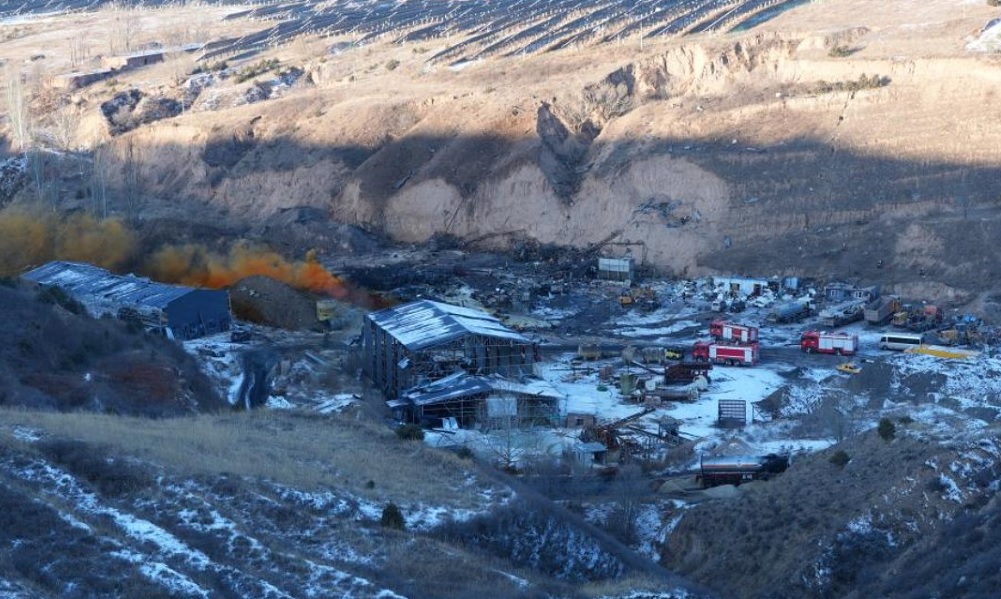
An explosion at a small biotech company in northern China early Saturday killed eight people, China’s state media reported on Sunday.
The explosion occurred in Shuoyang in the Shanxi province in the early morning of Saturday, state media reported, according to Reuters.
The legal representative of Jiapeng Biotechnology has been detained and the city has set up an accident investigation team, Xinhua News Agency reported.
The firm is located in a mountain hollow and dark yellow smoke was seen billowing from the accident site, Xinhua said.
Reuters was not able to contact the company, which does not maintain a website. The cause of the reported explosion was not immediately clear.
Founded in June 2025, Jiapeng Biotechnology conducts research on animal feed, coal products and building materials, according to its corporate registration.


Tahawol: Tajikistan’s expanding relations with Afghanistan reviewed

Saar: Criticism of Pakistan’s policies on Afghanistan discussed

Ministries of Public Health and Higher Education sign cooperation agreement

UNAMA holds new round of Working Group meetings on counter-narcotics and private sector

Economic Commission approves national policy for development of agriculture

Afghanistan–China joint market opens in Kabul

Pakistan approves re-export of stranded Afghan transit trade cargo

Pakistan army orders evacuation of Tirah Valley, fears of mass displacement grow

Afghan traders sign deal to import pharmaceuticals from Bangladesh

Uzbekistan pushes forward with Trans-Afghan railway project
Tahawol: Tajikistan’s expanding relations with Afghanistan reviewed
Saar: Criticism of Pakistan’s policies on Afghanistan discussed

Tahawol: Pakistan’s Foreign Policy Failure of Towards Afghanistan discussed

Saar: Regional Problems, Opportunities, and Challenges discussed

Saar: Afghanistan’s relations and opportunities with regional countries
-
 Latest News3 days ago
Afghanistan to grant one- to ten-year residency to foreign investors
-

 Sport5 days ago
Indonesia shock Japan to reach historic AFC Futsal Asian Cup final
-

 Sport3 days ago
Iran clinch AFC Futsal Asian Cup 2026 in penalty shootout thriller
-
 Latest News4 days ago
Afghanistan says Pakistan is shifting blame for its own security failures
-

 International Sports2 days ago
Winter Olympics gain momentum as medal table takes shape
-

 Latest News3 days ago
Traffic police receive new cars
-
 Regional4 days ago
Iran’s FM calls Oman-mediated talks with US ‘good start’
-
 Latest News2 days ago
Tajik foreign minister urges international community to help Afghanistan address its challenges