
Science & Technology
Trio win physics Nobel for work deciphering chaotic climate

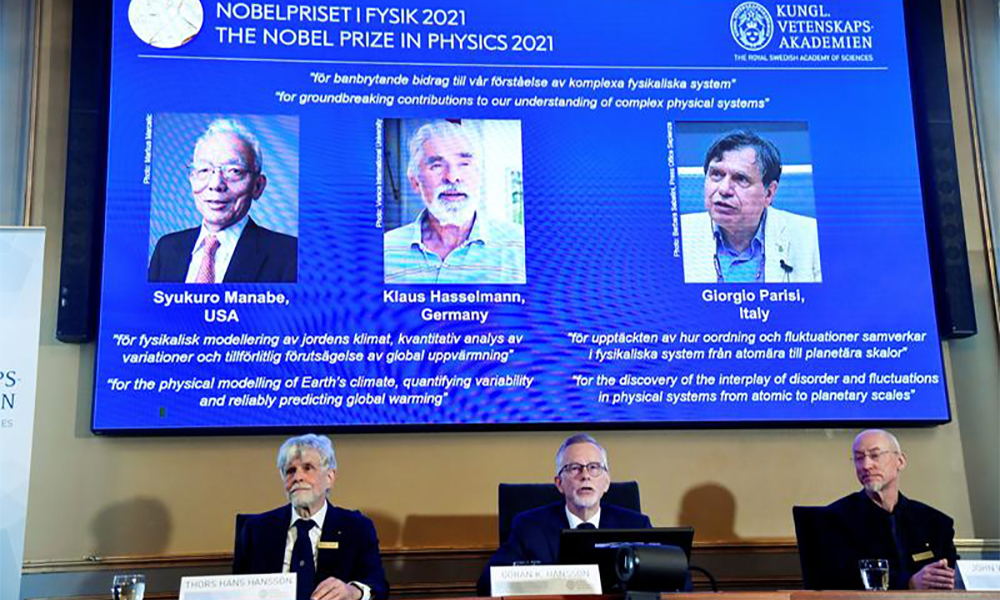
Japanese-born American Syukuro Manabe, German Klaus Hasselmann and Italian Giorgio Parisi won the 2021 Nobel Prize in Physics on Tuesday for work that helps understand complex physical systems such as Earth’s changing climate.
In a decision hailed by the U.N. weather agency as a sign of a consensus forming around man-made global warming, one half of the 10-million Swedish crown ($1.15 million) prize goes in equal parts to Manabe, 90, and Hasselmann, 89, for modelling earth’s climate and reliably predicting global warming.
The other half goes to Parisi for discovering in the early 1980s “hidden rules” behind seemingly random movements and swirls in gases or liquids that can also be applied to aspects of neuroscience, machine learning and starling flight formations.
“Syukuro Manabe and Klaus Hasselmann laid the foundation of our knowledge of the Earth’s climate and how humanity influences it,” the Royal Swedish Academy of Sciences said in a statement. “Giorgio Parisi is rewarded for his revolutionary contributions to the theory of disordered materials and random processes.”
Hasselmann, who is at the Max Planck Institute for Meteorology in Hamburg, told Reuters from his home that he did not want to wake up from what he described as a beautiful dream.
“I am retired, you know, and have been a bit lazy lately. I am happy about the honour. The research continues,” he said.
The Academy said Manabe, who works at Princeton University in the United States, had laid the foundation in the 1960s for today’s understanding of Earth’s climate after moving to the United States from Japan to continue his research.
Interviewed by U.S. and Japanese journalists at his home, Manabe said he believed his award reflected the Academy’s recognition of climate change, which he said will continue to intensify with more droughts, torrential rains, warming of land masses and melting of polar ice.
“Already, as you know, there are many phenomena showing climate change is happening,” he said in Japanese. “And I think that is the reason why the theme of climate change was selected for the award this time.”
Asked in English how he would address climate change sceptics, he smiled and replied, “That problem is about a million times more difficult than understanding climate change. It is very mysterious to me.”
Hasselmann, the Academy said, had developed models about 10 years later that became instrumental in proving that mankind’s carbon dioxide emissions cause rising temperatures in the atmosphere.





Science & Technology
Musk’s Starlink faces high-profile security test in Iran crackdown
Starlink, which is harder for Iran to tamper with than cable and cellphone tower networks, has become crucial for documenting events on the ground.

Iran’s crackdown on dissidents is shaping up as one of the toughest security tests yet for Elon Musk’s Starlink, which has served as a lifeline against state-imposed internet blackouts since its deployment during the war in Ukraine, Reuters reported.
SpaceX, which owns Starlink, made the satellite service free for Iranians this week, placing Musk’s space company at the center of another geopolitical hot spot and pitting a team of U.S.-based engineers against a regional power armed with satellite jammers and signal-spoofing tactics, according to activists, analysts and researchers.
How SpaceX withstands Iranian attacks on its most lucrative line of business is expected to be closely watched by U.S. military forces and intelligence agencies that use Starlink and its military-grade variant Starshield, as well as China, whose own nascent satellite internet constellations are set to rival Starlink in the coming years. With SpaceX weighing a public listing this year, the situation in Iran also represents a high-profile showcase for Starlink to investors.
“We’re in this weird early part of the history of space-delivered communications where SpaceX is the only true provider at this scale,” said John Plumb, the former Pentagon space policy chief under President Joe Biden.
“And these repressive regimes think they can still turn off communications, but I think the day is coming where that’s just not possible,” he said.
Victoria Samson, chief director of space security and stability at the think tank Secure World Foundation, said Russia, which has deployed an array of technologies to counter Starlink in Ukraine, might be keen to examine the effectiveness of Iran’s Starlink interference.
“I think a lot of actors are watching how Starlink fares here,” she said.
Thousands of people protesting Iran’s clerical rule are reported to have been killed in the past week, while Tehran’s order to restrict communications makes it difficult to discern the full extent of its violent crackdown on dissent.
Starlink, which is harder for Iran to tamper with than cable and cellphone tower networks, has become crucial for documenting events on the ground, read the report.
Raha Bahreini, an Iran researcher at Amnesty International, said they had verified dozens of videos from Iran, including footage of protesters killed or injured by Iranian forces, and believe that almost all of them came from people who had access to Starlink. She added, however, that the ongoing communications restrictions have impeded human rights organizations’ communications with people in Iran in efforts to assess the scale of the violence.
Starlink is banned in Iran, yet tens of thousands of terminals may have been smuggled into the country, although it remains unclear how many are in use, according to Holistic Resilience, a U.S. nonprofit that has helped deliver Starlink terminals to Iranians and says it is working with SpaceX to monitor what it describes as Iranian attempts to jam the system.
Consumer Starlink terminals are rectangular antenna dishes that come in two sizes – one roughly the size of a pizza box and a smaller “mobile” one the size of a laptop.
SpaceX did not respond to requests for comment.
The Iranian mission to the United Nations in New York declined to comment on Thursday in response to Reuters’ questions.
Iranian Foreign Minister Abbas Araqchi, speaking to Al Jazeera TV on Monday, said the internet had been cut off “after we confronted terrorist operations and realized orders were coming from outside the country.”
Starlink, the first massive internet-from-space constellation of its kind, has emerged as a crucial tool for communications in wartime and remote areas. The network, which drove SpaceX’s $15 billion revenue in 2024, has expanded the geopolitical power of Musk, who in 2022 asserted control over how and where it was being used by Ukrainian troops fighting back Russian forces.
Roughly 10,000 low-orbiting Starlink satellites zipping above user terminals at an orbital velocity of some 17,000 miles per hour (27,360 kph) make its signals much harder to locate and disrupt than traditional satellite systems designed with a larger, single satellite fixed over a given territory.
Iran is likely using satellite jammers to disrupt the Starlink signals, according to Holistic Resilience and other specialists. Iran also appears to be engaging in so-called spoofing, or broadcasting fake GPS signals to confuse and disable Starlink terminals, according to Nariman Gharib, an Iranian opposition activist and independent cyber espionage investigator based in Britain, Reuters reported.
The GPS spoofing wreaks havoc on a Starlink terminal’s connection and slows internet speeds, said Gharib, who analyzed data from a terminal inside Iran.
“You might be able to send text messages, but forget about video calls,” he said.
Though Starlink is not licensed to operate in Iran, Musk has repeatedly confirmed its presence on his social media platform X, spurring a yearslong effort by the Iranian government to counter the service. Amid protests over the death of Mahsa Amini in December 2022, Musk posted that nearly 100 Starlink terminals were active in the country.
Following the 12-day war between Iran and Israel in June, Iran’s parliament passed a law banning the use of Starlink, introducing severe penalties for those who use or distribute the unlicensed technology, according to Iranian state media.
Iran has also pursued diplomatic channels, urging a panel at the United Nations’ International Telecommunication Union last year to force the United States and Norway — where Starlink is internationally registered — to block the service.
At a July meeting, Iran told the board that Starlink’s use in the country is illegal and said an “invading country” had deployed its terminals on drones during a recent attack.
Iran told the board in November that it was struggling to locate and disable the terminals itself.
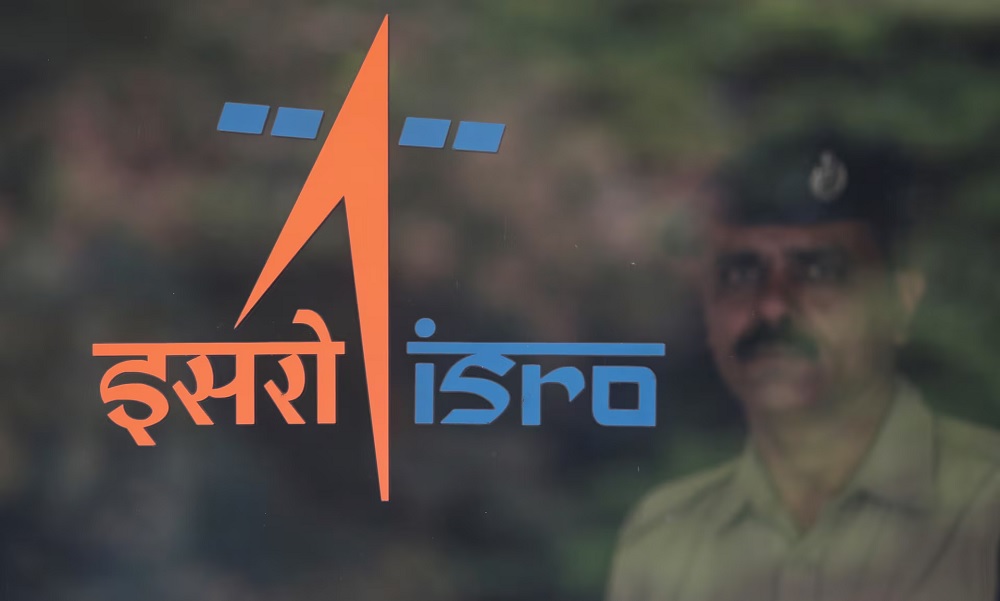
An Indian rocket carrying 16 loads of equipment and experiments including an earth surveillance satellite went off track after liftoff on Monday in a fresh setback to the workhorse launch vehicle of the Indian Space Research Organisation.
It was a second disappointment for the Polar Satellite Launch Vehicle in about eight months, denting its reputation for reliability, with a more than 90% success rate over about 60 past missions, Reuters reported.
The PSLV-C62 lifted off from the Satish Dhawan Space Centre on the island of Sriharikota at 10:18 a.m. (04488 GMT) carrying the EOS-N1 observation satellite and 15 other payloads developed by startups and academic institutions in India and abroad.
The ISRO’s mission control said the rocket performed normally for most of the flight before an unexpected disturbance and deviation from its path.
“The PSLV-C62 mission encountered an anomaly during the end of the PS3 stage. A detailed analysis has been initiated,” ISRO said in a statement, without giving further details on what had gone wrong or where the rocket ended up.
The PSLV has been central to India’s space programme, having launched missions such as Chandrayaan-1 and the Aditya-L1 solar observatory. It also underpins India’s push to open space manufacturing to private industry.
Science & Technology
EU considers making WhatsApp more responsible for tackling harmful content, spokesperson says
WhatsApp was not immediately available to comment.

Meta Platform’s messaging unit WhatsApp will likely be subject to tough online content rules targeting illegal and harmful content after it met the user threshold under this regulation, a European Commission spokesperson said on Friday.
WhatsApp had about 51.7 million average monthly active users of its WhatsApp Channels in the European Union in the first six months of 2025, above the 45-million-user threshold set out in the Digital Services Act (DSA), Reuters reported.
The DSA requires such large platforms to do more to tackle illegal and harmful content. Meta’s Facebook and Instagram, Google’s YouTube, TikTok, Temu and Microsoft’s Linkedin are some of the companies labelled as very large online platforms under the DSA subject to this requirement.
“So the objective for the Commission here is to check what is actually private messaging which doesn’t fall under the scope of the DSA and what are open channels that act more as a social media platform, this falls under the scope of the DSA,” Commission spokesperson Thomas Regnier told a daily news briefing.
“So here we would indeed designate potentially WhatsApp for WhatsApp channels and I can confirm that the Commission is actively looking into it and I wouldn’t exclude a future designation,” he said.
WhatsApp was not immediately available to comment.
Companies risk fines of as much as 6% of their global annual revenue for DSA violations.


Terrorist activities observed along Afghanistan borders, says Lavrov

Afghan border minister holds phone talks with Iran’s deputy foreign minister

OIC Kabul mission chief meets German envoy to discuss Afghanistan situation

Iran arrests at least four reform front politicians

Early medal leaders emerge as Winter Olympics continue in Italy

Afghanistan–China joint market opens in Kabul

Pakistan approves re-export of stranded Afghan transit trade cargo

ATN secures broadcast rights to Carabao Cup semis across Afghanistan

Pakistan army orders evacuation of Tirah Valley, fears of mass displacement grow

Afghan traders sign deal to import pharmaceuticals from Bangladesh

Saar: Afghanistan’s relations and opportunities with regional countries

Tahawol: Kabul’s response to Pakistan’s new accusation discussed

Saar: Discussion on Iran-US talks in Oman

Tawsia: Afghanistan’s interest in buying Russian oil and gas

Tahawol: IEA calls UNSC’s Daesh concerns baseless
-
 Latest News2 days ago
Afghanistan to grant one- to ten-year residency to foreign investors
-
 Latest News4 days ago
Terrorist threat in Afghanistan must be taken seriously, China tells UNSC
-

 Sport5 days ago
Afghanistan beat West Indies in final T20 WC warm-up match
-

 Sport3 days ago
Indonesia shock Japan to reach historic AFC Futsal Asian Cup final
-
 Sport4 days ago
Milano Cortina 2026 Winter Olympics: What You Need to Know
-

 Sport2 days ago
Iran clinch AFC Futsal Asian Cup 2026 in penalty shootout thriller
-
 Latest News4 days ago
US Justice Department to seek death penalty for Afghan suspect in National Guard shooting
-
 Latest News2 days ago
Afghanistan says Pakistan is shifting blame for its own security failures