
Latest News
UN report reveals corrupt judiciary system in cases of violence against women

![LIVE 19 APRIL 0007.avi_snapshot_00.01_[2015.04.19_14.58.49]](https://ariananews.af/wp-content/uploads/2015/04/LIVE-19-APRIL-0007.avi_snapshot_00.01_2015.04.19_14.58.49.jpg)
The United Nation released a report on Sunday called Justice through the Eyes of Afghan Women in which cases of violence against women addressed through mediation and called adjudication.
This is the fifth report since 2010 provided by UNAMA and Office for Human Rights on issues related to the violence against women in which about 110 women are being interviewed from 18 provinces of Afghanistan.
According to the officials this reports was launched after brutal killing of an Afghan girl Farkhunda on the streets of Kabul by mob.
Based on the researches there is a lack of confidence on Afghan judiciary system and the report reveals that 65 percent of violent cases against Afghan women are being resolved through mediation and only five percent is being addressed by judiciary systems.
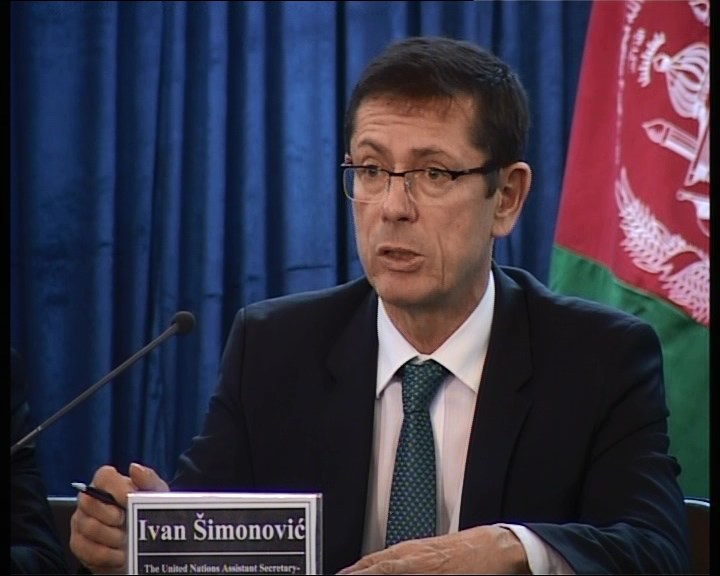
Ivan Simonovic the United Nation Assistant Secretary for Human Rights answers why women prefer mediations than judiciary systems.
“Interviews with women and girls subjected to violence revealed that negative perception of the justice system as slow, corrupt, misuses and lack of proficiency continue to discourage women from pursuing from criminal prosecution of the perpetrators,” he said.
The report also reveals that women are being threatened unfairly while they have addressed their complaints to governmental officials.
Nicholas Haysom, the UN special envoy for Afghanistan expressed the UN concerns regarding mediations on women rights violation cases.
“As demands for justice through mediation in Afghanistan increased in line with prevailing traditions, we encourage the Afghan government to develop policies to protect human rights and improve women access to justice,” Haysom added,” the mediation decisions has taken place in the absence of the victims by the families elders or the decisions are forced over the victims”.
Afghanistan Independent Human Rights Commission (AIHRC) also worries about violation of Afghan women rights.
Sima Samar Head of AIHRC said,” The last thirteen years achievements on human and women rights are fragile, because rule of law is very weak in Afghanistan. Violation against women will not decrease as far as there is a culture of exemption from punishment.”
The studies recommend Afghan government to bring reforms in laws, policies and institutions related to the human rights.
Reported by: Hameed Sediqi

Latest News
Mujahid calls for stronger Afghanistan-Russia relations during Moscow meeting
Mujahid also said Afghan security forces had made major gains against what he referred to as “seditionist networks,” stressing that security and stability had improved across the country.
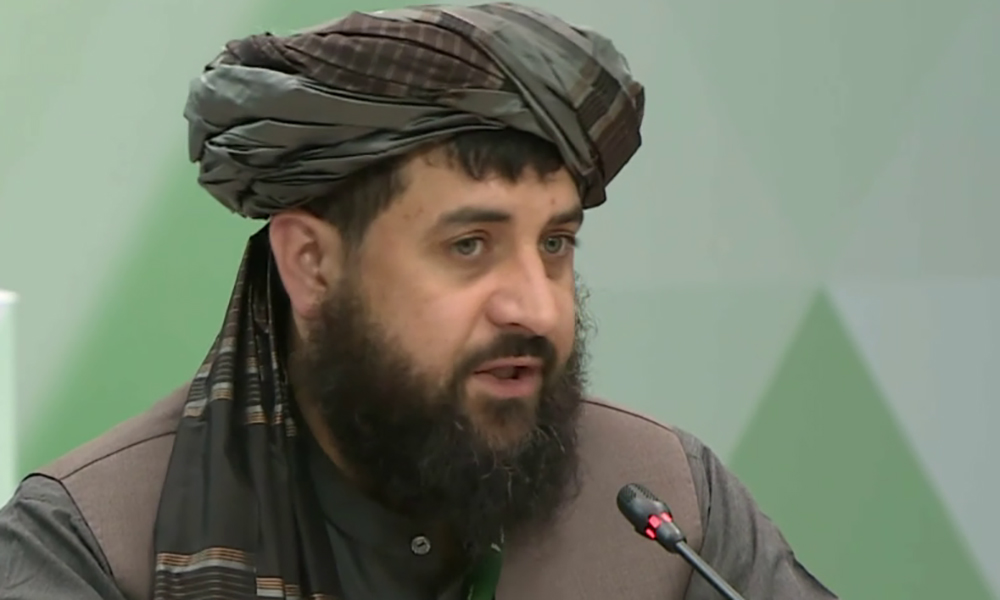
Mawlawi Mohammad Yaqoob Mujahid, Defense Minister of the Islamic Emirate of Afghanistan (IEA), has emphasized the importance of expanding relations with Russia during a meeting with Sergei Shoigu, Secretary of Russia’s Security Council.
This meeting took place on the sidelines of an international security conference in Moscow.
According to details released from the meeting on Wednesday, the two sides discussed bilateral relations, regional security cooperation and the current situation in Afghanistan.
Mujahid described Afghanistan’s relationship with Russia as being of “special importance” and expressed hope that cooperation between the two countries would continue to grow broader, stronger and more comprehensive in the future.
He said Afghanistan continues to face economic and humanitarian challenges following what he described as two decades of U.S. occupation, but added that the Islamic Emirate has made significant progress across multiple sectors since returning to power.
The defense minister stated that the Islamic Emirate has strengthened nationwide security, implemented economic and administrative reforms and achieved political progress within a short period.
Mujahid also said Afghan security forces had made major gains against what he referred to as “seditionist networks,” stressing that security and stability had improved across the country.
The meeting comes amid increasing engagement between Kabul and Moscow, with both sides signaling interest in expanding political, economic and security cooperation.
Latest News
Afghanistan, Russia sign military cooperation agreement
The deal is expected to strengthen defense and security cooperation between the two countries.
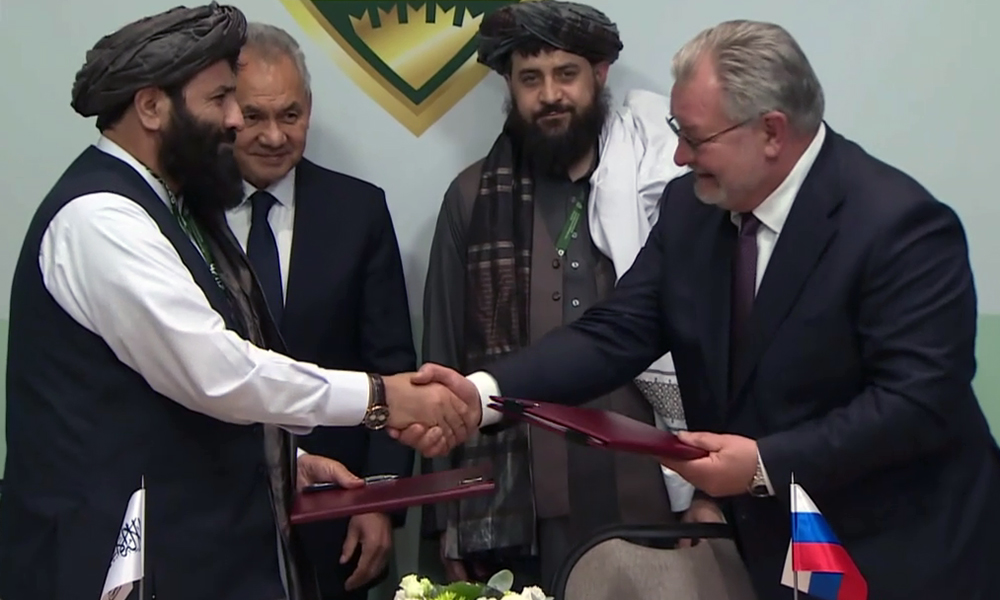
Afghanistan and Russia signed a military-technical cooperation agreement during the International Security Forum held this week in the Moscow region, marking another step in the expanding relationship between Kabul and Moscow.
The agreement was signed on May 27 on the sidelines of the forum, according to Russian media reports. While officials have not publicly disclosed the details of the document, the deal is expected to strengthen defense and security cooperation between the two countries.
The signing comes amid growing diplomatic engagement between the Islamic Emirate of Afghanistan (IEA) and Russia. Afghan Defense Minister Mohammad Yaqoob recently told Russian Security Council Secretary Sergey Shoigu that bilateral cooperation between Kabul and Moscow had significantly expanded in recent months.
Earlier this month in Bishkek, Shoigu said Russia had established direct dialogue with the Islamic Emirate and was working toward what he described as a “full-fledged partnership” with Afghanistan’s current authorities. He also urged regional countries to broaden engagement with Kabul.
Relations between Afghanistan and Russia have steadily improved since the IEA returned to power in 2021. In April 2025, Russia’s Supreme Court suspended the longstanding ban on the Islamic Emirate’s activities in Russia, paving the way for deeper political, economic and security cooperation.
Moscow has increasingly positioned Afghanistan as an important regional partner as Russia seeks to strengthen its influence in Central and South Asia following major geopolitical shifts in the region.
The agreement was signed as Russia continues to expand its broader military posture. Russian lawmakers recently granted President Vladimir Putin greater authority to deploy troops abroad in cases involving the detention of Russian citizens overseas.
The Washington-based Institute for the Study of War has also reported that Russia is expanding its nuclear capabilities at what it described as the fastest pace since the Cold War.
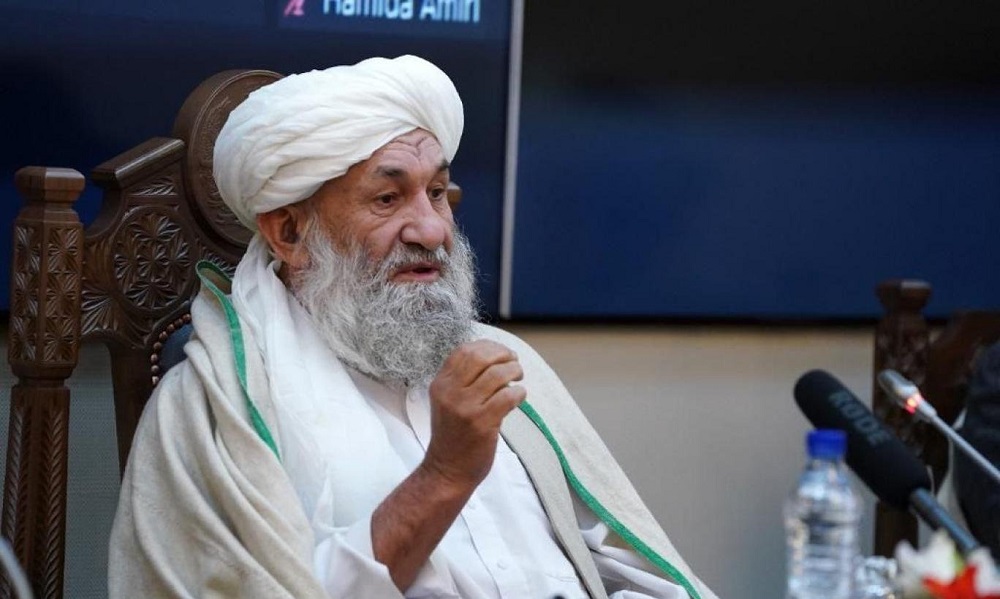
Mohammad Hassan Akhund, in his Eid message, has emphasized stronger support and assistance for returnees and victims of recent floods and earthquakes, saying the Islamic Emirate has worked to help affected families within its available capacity.
He said many of the challenges facing the Muslim world stem from division and self-interest, stressing that unity, cooperation, and solidarity must be strengthened at both individual and societal levels.
The prime minister noted that in recent months millions of migrants have returned to Afghanistan from neighboring countries, while others have been displaced due to natural disasters. He said the authorities have tried to provide assistance to these families to the extent possible.
Mohammad Hassan Akhund also instructed officials to visit families of martyrs, orphans, and people with disabilities during Eid and to listen to public concerns. He further directed security and defense forces to ensure heightened vigilance during the holiday period in order to maintain safety and allow citizens to celebrate Eid in peace.
Eid prayers were also held at the Sapidar Palace in Kabul with the participation of diplomatic representatives and senior officials, while across the country citizens gathered in mosques and open spaces to mark the occasion peacefully.
Residents in various provinces described Eid as a time of reconciliation and unity. A resident of Herat, Hamed, said Eid should be an opportunity to set aside grievances and strengthen bonds of friendship. Another resident, Sultan Ahmad Saber, said Eid is meant to remove divisions, embrace one another, and preserve purity of heart by forgetting past disputes.
In a separate message, former president Hamid Karzai called for the reopening of schools and universities for girls and the creation of job opportunities for women, stressing that Afghanistan’s progress depends on unity, education, and a shared sense of responsibility toward the country.


Norway will come under France’s nuclear umbrella, leaders say

IPL: 15-year-old’s record-breaking blitz sends Rajasthan Royals into Qualifier 2

Mujahid calls for stronger Afghanistan-Russia relations during Moscow meeting

Afghanistan, Russia sign military cooperation agreement

Iran and US trade air strikes after Trump dismisses report of Hormuz deal

New Afghanistan-China transport corridor launched via Turkmenistan

Afghanistan signs $46 million deal to develop standard laboratory complexes

Germany to launch online visa system for Afghan study and work applicants in Pakistan

Afghanistan launches first 5G trial in Kabul to boost telecom services

Large blast near Beit Shemesh part of pre-planned test: Israeli defense firm

Saar: IEA seeking Sharia-based global engagement

Tahawol: Islamic Emirate defense minister’s visit to Russia

Saar: Calls to expand Afghanistan-Qatar ties discussed

Tahawol: Afghanistan-Japan relations reviewed

Saar: Afghanistan’s relations with regional countries, incl Russia and China discussed
-
 Business4 days ago
Major pharma firms eye investment in Afghanistan
-
 Latest News5 days ago
China restricts export of chemical substances to Afghanistan
-
 Latest News4 days ago
Deadly shooting near Kabul’s Sarai Shahzada leaves four dead
-

 Sport3 days ago
IPL 2026 Playoffs Confirmed: RCB, GT, SRH and RR reach top four
-
 Sport1 day ago
Afghanistan announce squad for India series
-
 Regional4 days ago
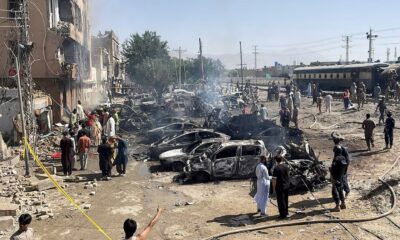
At least 24 killed in deadly train bombing in Pakistan’s Balochistan
-

 Latest News4 days ago
IEA Supreme Leader urges unity, preservation of Islamic system in Eid al-Adha message
-
 Latest News3 days ago
Moscow expects UNAMA mission in Afghanistan to continue under certain conditions: Kabulov