
Latest News
UN rights experts call on Pakistan to stop removal process of Afghan refugees
The experts urged Islamabad to immediately stop mass internal relocations, deportations, arrests, evictions, intimidation and other pressures on Afghans

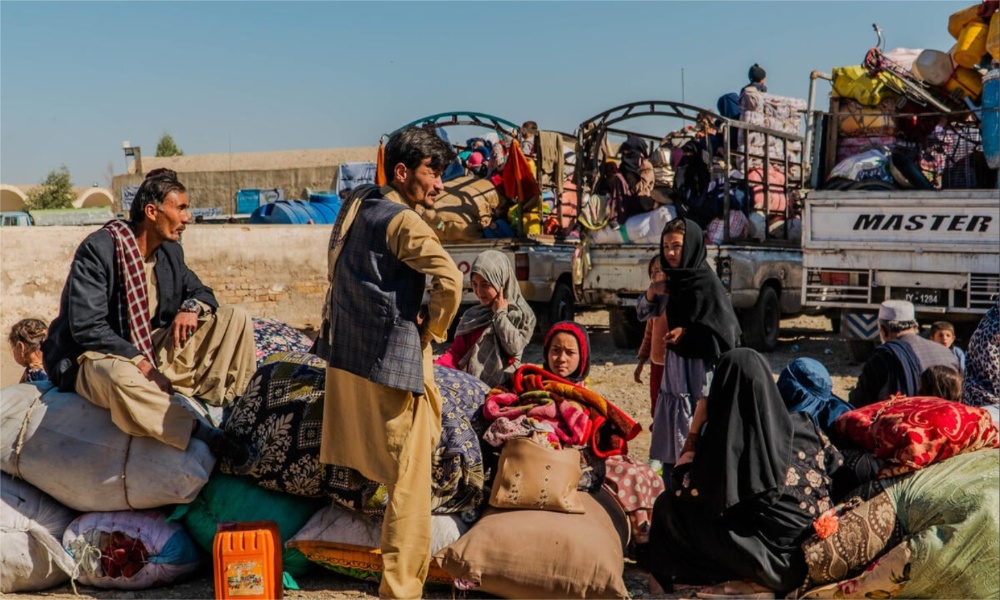
UN human rights experts have called on the Pakistan government to stop their plans to forcibly remove Afghans from the cities of Islamabad and Rawalpindi, nor to deport them to Afghanistan.
According to a statement issued on Friday, the UN experts (as listed below) called on Pakistan to continue its important role as a neighboring country with a long history of hosting Afghan refugees.
The deadline for their voluntary departure was set for 31 March, but Islamabad moved the deadline by a few days to take Eid-ul-Fitr into account.
“Millions of Afghans in Pakistan are at risk of being pushed back to Afghanistan without regard for their genuine protection concerns – including gender-based violence and the systematic dismantling of the rights of women and girls – in violation of international human rights law and refugee law, and disregarding UNHCR’s non-return advisory,” the experts said.
“We urge Pakistan to immediately stop mass internal relocations, deportations, arrests, evictions, intimidation and other pressures on Afghans to cross the border into Afghanistan, and to uphold the absolute and non-derogable principle of non-refoulement,” they said.
The experts expressed particular concern about the gendered and intersectional impact.
The UN experts have repeatedly spoken out against Pakistan’s Illegal Foreigners’ Repatriation Plan of September 2023, which has already pressured hundreds of thousands of Afghans to uproot their lives and return to Afghanistan.
Ahead of the 31 March deadline, the UN documented a worrying increase in arrests of Afghans. Many desperate Afghans have contacted the experts, fearing persecution by the Taliban in Afghanistan if they are forced to return.
“The most vulnerable are Afghan women, girls, LGBTI persons, ethnic and religious minorities, former government officials and security personnel, human rights defenders, and media workers,” the experts said.
“Children, especially unaccompanied, are at heightened risk of trafficking, child marriage and abuse, while persons with disabilities and older persons are also particularly vulnerable. They should all be individually assessed.”
The experts expressed concern about returns of Afghans to Afghanistan from other countries, potentially contravening international human rights and refugee law.
The experts also acknowledged security risks, including terrorist attacks in Afghanistan, as well as Pakistan.
The experts noted that many Afghans who had left for Pakistan, having been given reasonable expectations of being resettled in a third country, had their dreams of a secure future shattered by the sudden halt of resettlement programmes.
They stressed that funding cuts will reduce the ability of the de facto authorities in Afghanistan, together with humanitarian agencies, to support a large influx of people from neighboring countries.
“Abrupt and drastic funding cuts by donors are already having a severe impact on much-needed humanitarian assistance to Afghans,” the experts said.
“Given the deteriorating human rights situation in Afghanistan, durable solutions are needed for Afghans outside the country, with strong support from the broader international community.”
The experts are as follows:
Richard Bennett, Special Rapporteur on the human rights situation in Afghanistan; Siobhán Mullally, Special Rapporteur on trafficking in persons, especially women and children; Laura Nyirinkindi (Chair), Claudia Flores (Vice-Chair), Dorothy Estrada Tanck, Ivana Krstić, and Haina Lu, Working group on discrimination against women and girls; Ben Saul, Special Rapporteur on the promotion and protection of human rights and fundamental freedoms while countering terrorism; Reem Alsalem, Special Rapporteur on violence against women and girls, its causes and consequences; and Balakrishnan Rajagopal, Special Rapporteur on the right to adequate housing.





Latest News
Four members of one family killed in Helmand in Pakistan airstrike
The family, originally from Ghazni province, reportedly operated a small restaurant in the area.
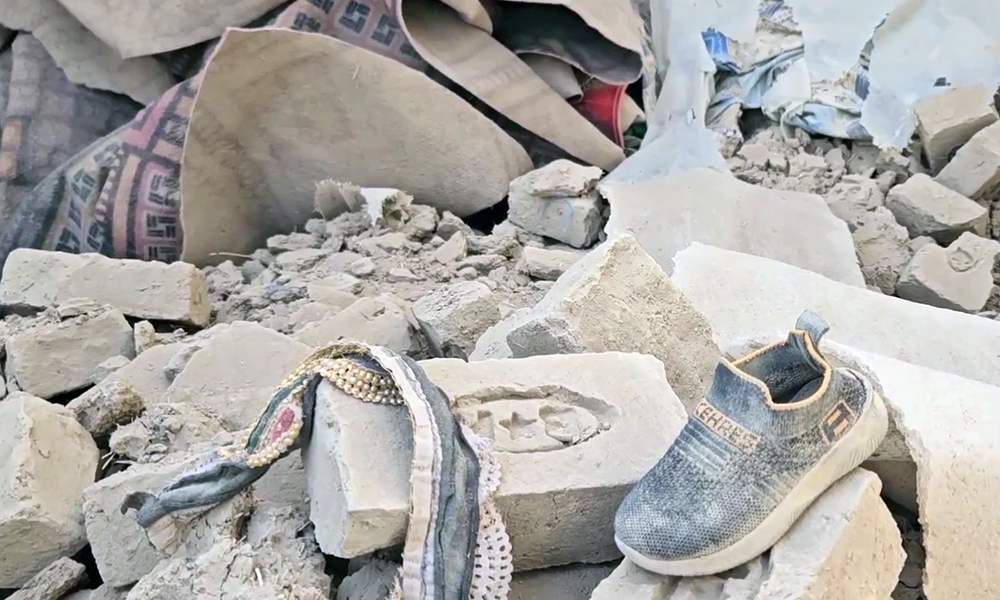
Four members of a family were killed and seven others wounded in an airstrike in Safar area of Garmser district in southern Afghanistan’s Helmand province, according to local reports.
The family, originally from Ghazni province, reportedly operated a small restaurant in the area.
The bodies of those killed and the wounded were transported by helicopter to Ghazni province for burial and medical treatment, according to the reports.
Latest News
UNAMA acting chief visits Islam Qala border to assess support for returnees
UN launched a $529 million response plan aimed at assisting around 2.7 million Afghans expected to return from Iran and Pakistan between April and December 2026.
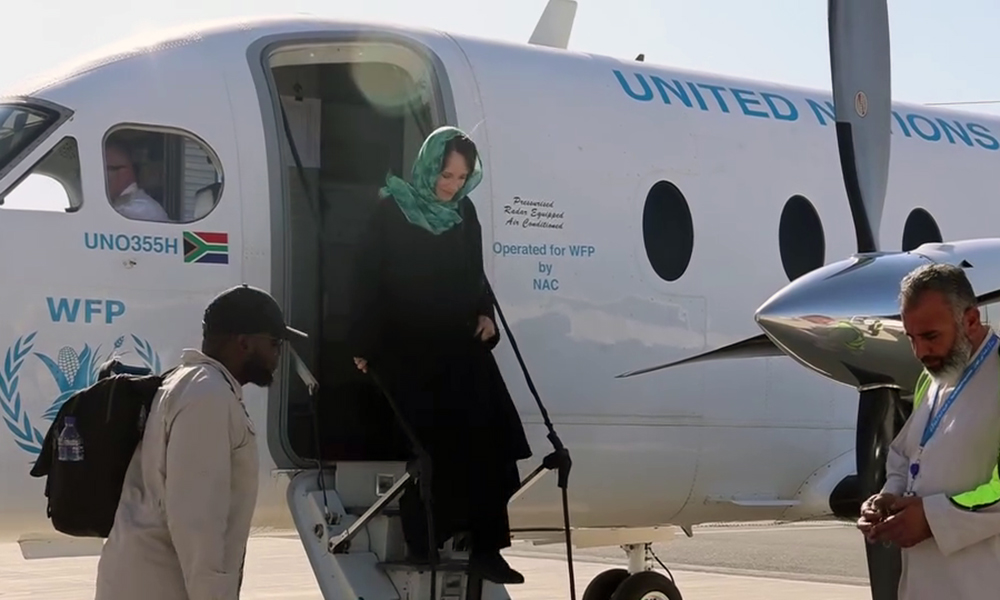
Georgette Gagnon, UNAMA’s acting head, visited western Afghanistan, including the Islam Qala border crossing, to see firsthand UN efforts to support millions of Afghans returning from neighboring Iran and Pakistan.
Earlier this year, the UN launched a $529 million response plan aimed at assisting around 2.7 million Afghans expected to return from Iran and Pakistan between April and December 2026.
Latest News
Trump: Unlike Afghanistan, US took all equipment from Iraq
Trump said the withdrawal from Iraq marked the end of what he described as a costly military involvement, adding that he had set a clear mission and instructed commanders to complete it without allowing the US presence to become permanent.
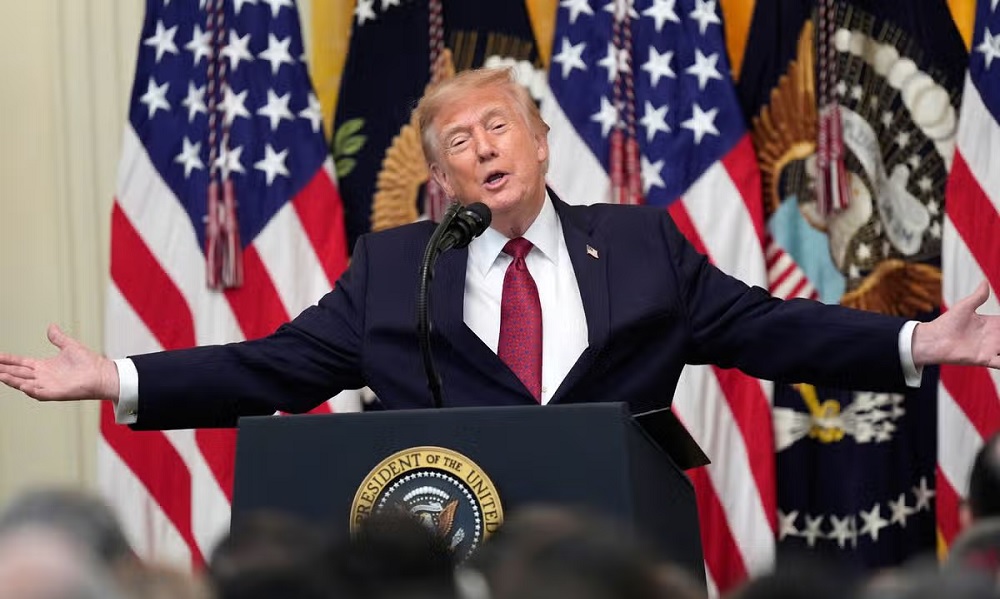
US President Donald Trump on Wednesday compared the withdrawal of US forces from Iraq with the 2021 US withdrawal from Afghanistan, saying military equipment had been left behind in Afghanistan, while US forces leaving Iraq took their equipment with them.
Speaking at a White House event, Trump referred to the final departure of US-led coalition forces and equipment from Erbil Air Base in northern Iraq, which marked the end of the US military mission against Daesh in Iraq.
“I said, take a little longer. Take everyone. We left all of the equipment, if you remember, in Afghanistan. Everything was left behind,” Trump said.
“I said, ‘I want every screw taken. If there’s a screw lying on the ground, take it. If we have a canvas tent, take it.’ We took everything,” he added.
He also mentioned the August 2021 attack at Kabul airport that killed 13 US soldiers.
Trump said he had become acquainted with the families of the US service members killed in the attack and also highlighted those who were seriously wounded.
“What happened to those—to their children should never have been allowed to happen,” he said, adding that 48 wounded service members were severely injured and “never get mentioned.”
Trump said the withdrawal from Iraq marked the end of what he described as a costly military involvement, adding that he had set a clear mission and instructed commanders to complete it without allowing the US presence to become permanent.
The US military announced on Wednesday that its forces and equipment had completed an orderly departure from Erbil Air Base, formally ending Operation Inherent Resolve in Iraq. The US-led mission began in 2014 to fight Daesh after the group seized large areas of Iraq and Syria. The US is continuing its counter-Daesh mission in Syria from a headquarters in Jordan.
Trump said the US had entered Iraq to fight the Islamic State and that the group no longer controlled a territorial “caliphate.”
“We came to fight a caliphate, and there is no longer a caliphate, so we are going home indeed,” he said.


Khurasan Faryab and Ariana Khost settle for 1-1 draw

Four members of one family killed in Helmand in Pakistan airstrike

UNAMA acting chief visits Islam Qala border to assess support for returnees

Rashid Khan, Azmatullah Omarzai maintain top spots in ICC ODI rankings

Trump: Unlike Afghanistan, US took all equipment from Iraq

Saudi energy group signs major Afghanistan deals covering gas exploration and pipeline plans

Iranian clubs to face Gulf opponents at neutral venues in Asian Champions League Elite

Khalilzad: Afghanistan ready to attract major investment

Ariana Television Network secures exclusive rights to Afghanistan’s 2026/27 cricket series

El Niño likely to intensify, may become strongest ever recorded, WMO says

Tahawol: Improvement in Afghanistan-China relations discussed

Saar: Expanding ties with regional and global countries discussed

Tahawol: Absence of Afghanistan’s envoy at UNGA discussed

Saar: Assessment of war between Afghanistan and US discussed

Saar: Afghanistan’s image at UNGA
-

 Sport4 days ago
Afghan bodybuilder Ali Bilal finishes runner-up at Mr Olympia for third straight year
-

 Latest News4 days ago
Afghanistan says 28 killed, 32 captured in Nuristan operation
-
 World4 days ago
Trump rejects Iranian proposal to open Hormuz and end fighting
-

 Sport5 days ago
Afghanistan Champions League: Omar Zawak Herat beat Toofan Herat 1-0
-
 Sport3 days ago
Afghanistan vs India Asian Games quarter-final abandoned without a toss
-
 Latest News4 days ago
UNDP, UN Women launch financing initiative for Afghan women entrepreneurs
-
 Latest News4 days ago
Germany reports 488 Afghans for possible deportation, 267 have no criminal convictions
-
 Regional4 days ago
Aimal Wali Khan calls Dera Ismail Khan attack a ‘state failure’