
Latest News
US airstrikes target Taliban in Helmand province


The United States has carried out a number of airstrikes against the Taliban in the southern Helmand province in the past few days as fierce fighting takes place between Afghan military forces and the Taliban.
A US official told VOA late Wednesday that American forces were actively carrying out airstrikes against the Taliban.
This comes after US Forces Afghanistan and NATO officially started their withdrawal process from the country on Saturday.
The airstrikes also come in the wake of repeated pledges by the US to carry on supporting Afghanistan.
The US official who spoke to VOA, on condition of anonymity, declined to share additional details, citing the need for operational security.
Pentagon press secretary John Kirby meanwhile said during a briefing that as US forces transition out of Afghanistan they will continue to try to support local forces.
He said that “there’s still quite a bit of robust capability” at the disposal of US commanders on the ground.
“To the degree we can, as we transition out, we’re going to continue to try to support Afghan national security forces in the field,” Kirby said.
The US airstrikes come amid intense fighting around the Helmand capital, Lashkargah, that started over the weekend.
On Tuesday, reports indicated over 1,000 families had fled their homes on the outskirts of the city due to heavy fighting.
MSF Afghanistan (Doctors Without Borders) said in a series of tweets on Tuesday that fighting around Lashkargah city increased significantly on Monday.
“Our medical teams treated 53 war-wounded patients on 3 & 4 May,” Sarah Leahy, MSF project coordinator at Boost Provincial Hospital said.
According to her, MSF teams in emergency room and operating theatres have treated people for injuries caused by bullets and shrapnel.
“Patients and staff tell us that access routes to the city are blocked; we’ve seen fewer admissions of children and pregnant women,” she said.
A nurse described helping his family flee from the frontlines: “There was a lot of shooting, bullets coming into our home. People were afraid, running without shoes, without hijabs, without anything.”
One local government official told AFP on Wednesday that US airstrikes were key to stopping the Taliban advance.
“The bombing was intense,” the official, Atiqullah, said. “I have never seen such bombardment in several years.”
Afghan government forces also faced fierce opposition in other areas in the country – including in Ghazni and Baghlan provinces.
But Kirby told journalists during his Wednesday briefing that the “Afghan security forces are more capable than they have been in recent years.”
He said: “They have been in the lead for quite some time.”
Afghan military officials have been equally insistent that they are up to the task.
Ministry of Defense deputy spokesman Fawad Aman told VOA’s Afghan Service on Wednesday: “Currently, ANSDF [Afghan National Security and Defense Forces] 100% independently plan, command and control, and conduct the military operations.”
“There is no support and physical presence of foreign troops in the battlefields,” Aman said.







Latest News
US regime change efforts in Afghanistan ended in failure, says Merz
The Chancellor pointed out that, in his view, the only successful regime change in recent decades occurred in Panama.

German Chancellor Friedrich Merz has criticized the United States’ efforts at regime change in countries like Afghanistan, describing them as largely unsuccessful.
Speaking at a forum in Frankfurt on Friday, organized by the FAZ newspaper, Merz questioned the effectiveness of regime change as a strategy. “Is regime change really the goal?” he asked, adding that such efforts have “mostly gone wrong” in past conflicts, particularly the war in Afghanistan.
Merz expressed significant doubts about the existence of a coherent and successful strategy for regime change, remarking, “I have serious doubts as to whether there is a strategy and whether that strategy is being successfully implemented.” He warned that without a clear plan, such efforts could take even longer to achieve, if at all.
The Chancellor pointed out that, in his view, the only successful regime change in recent decades occurred in Panama. In contrast, Merz stated that most other attempts, including in Afghanistan, have failed to deliver the intended outcomes.
His comments come amid widespread domestic and international criticism of the U.S. military presence and withdrawal from Afghanistan, following nearly two decades of conflict that culminated in the Islamic Emirate’s return to power.
Latest News
Afghan defense forces stand ready to protect national sovereignty: MoD
Sediqullah Nasrat, deputy spokesperson for the Ministry, released a video message stressing that Afghan forces stationed in the eastern zone are steadfast in their positions, remaining vigilant to defend the nation’s sovereignty against any external threats.
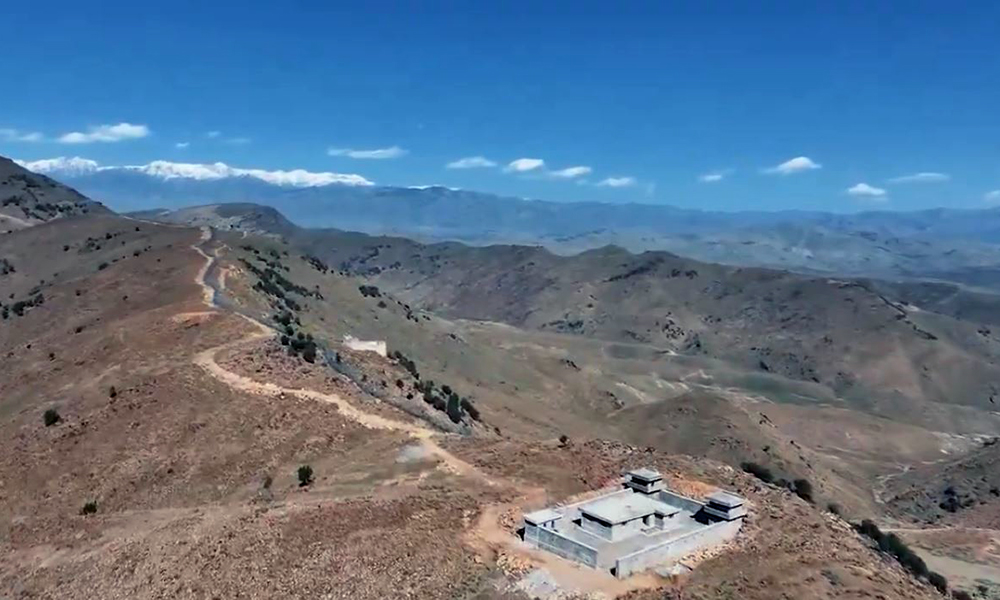
The Ministry of Defense of Afghanistan has reassured the nation that its defense forces are fully prepared to address any security threats along the country’s borders.
Enayatullah Khwarizmi, spokesperson for the Ministry of National Defense of the Islamic Emirate of Afghanistan, made a firm statement asserting that the protection of Afghanistan’s independence and national security is a fundamental responsibility for all members of the Afghan armed forces. He emphasized that this commitment is both a religious and patriotic duty.
In addition, Sediqullah Nasrat, deputy spokesperson for the Ministry, released a video message stressing that Afghan forces stationed in the eastern zone are steadfast in their positions, remaining vigilant to defend the nation’s sovereignty against any external threats. Nasrat further highlighted that the defense forces are leveraging all available resources to ensure the safety, security, and stability of Afghanistan, underscoring their unwavering dedication to serving the Afghan people.
The statements come at a time of heightened regional tensions, as Afghanistan continues to focus on safeguarding its borders and strengthening its defense capabilities.
Latest News
Amnesty International urges IEA to end education ban for girls
In a statement, the human rights organization called on the Islamic Emirate of Afghanistan to ensure that girls can safely return to schools and universities.

Amnesty International has raised serious concerns over the ongoing exclusion of Afghan girls from education, noting that with the start of the new academic year, girls above the sixth grade, including university students, remain barred from schools and higher education.
The South Asia office of Amnesty International highlighted that Afghan girls have been denied access to formal education for over four years, depriving a generation of young women of critical learning opportunities.
In a statement, the human rights organization called on the Islamic Emirate of Afghanistan to ensure that girls can safely return to schools and universities.
Amnesty International warned that continuing restrictions on girls’ education will have severe long-term consequences on the development of the country and the future of its youth.


US regime change efforts in Afghanistan ended in failure, says Merz

Afghan defense forces stand ready to protect national sovereignty: MoD

G7 foreign ministers demand an end to attacks on civilians in Iran war

Amnesty International urges IEA to end education ban for girls

Twelve US troops wounded in Iran strike on base in Saudi Arabia, US official says

Pakistani military jet downed in Afghanistan’s Jalalabad, pilot captured alive

Afghan Air Force conducts airstrikes in Islamabad, other cities

Prominent Muslim scholar issues fatwa calling for Afghanistan-Pakistan ceasefire

Afghan air force strikes key Pakistani military installations in retaliatory operation

IEA: Special circle in Pakistan has launched mission to destabilize region

Exclusive interview with Indrika Ratwatte, Deputy UN Special Representative for Afghanistan

Tawsia: Efforts to boost Afghanistan’s domestic production and economic diplomacy

Tahawol: Discussion on day 27 of Iran–US war

Saar: Islamic Emirate confident of Durand Line control

Tahawol: Efforts to release Mohammad Rahim from Guantanamo Bay Detention Camp
-
 Latest News2 days ago
Tajikistan shifts stance on Afghanistan amid rising border tensions
-
 Latest News4 days ago
Around 2.3 million tourists visited Afghanistan’s recreational areas during Eid: Ghufran
-

 Sport4 days ago
Afghanistan squad hit by withdrawals ahead of AFC Asian Cup Qualifiers
-
 Latest News4 days ago
Islamic Emirate releases American prisoner Dennis Coyle
-
 Latest News3 days ago
Two civilians killed, eight injured in fresh shelling by Pakistan in Kunar
-
 Regional4 days ago
US allies in Middle East ‘edging closer’ to joining conflict
-
 Latest News5 days ago
Airstrike on Kabul drug rehabilitation centre sparks legal concerns
-
 Regional4 days ago
Tehran rejects Trump’s claims of talks, accuses US of spreading ‘fake news’