
World
US envoy leaves Venezuela with six Americans after meeting Maduro

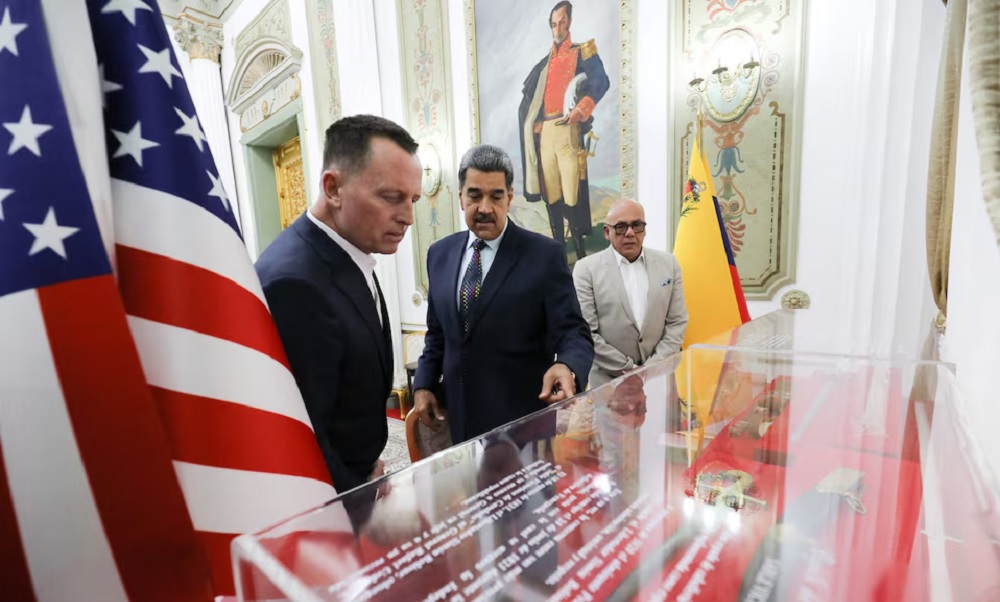
U.S. President Donald Trump’s envoy Richard Grenell said on Friday he was headed back to the United States with six American citizens, a surprise development after he met with Venezuelan President Nicolas Maduro in Caracas.
Officials from the Trump administration had said earlier on Friday that one of Grenell’s top aims for the visit was to secure the release of Americans detained in the country, at a time when the Trump administration has been driving a deportation and anti-gang push in the United States, Reuters reported.
Grenell did not name the six men, shown with him aboard an airplane in a photo he posted online. They were dressed in light blue outfits used by the Venezuelan prison system.
“We are wheels up and headed home with these 6 American citizens,” Grenell posted on X. “They just spoke to @realDonaldTrump and they couldn’t stop thanking him.”
Trump cheered the move in his own post, saying Grenell was bringing “six hostages home from Venezuela.”
It is unclear exactly how many Americans were being held by Venezuela, but Venezuelan officials have spoken publicly of at least nine.
Maduro’s officials have accused most of them of terrorism and said some were high-level “mercenaries”. The Venezuelan government regularly accuses members of the opposition and foreign detainees of conspiring with the U.S. to commit terrorism. U.S. officials have always denied any plots.
“American hostages that are being held in Venezuela … must be released immediately,” Mauricio Claver-Carone, the U.S. special envoy for Latin America, said earlier on Friday, adding the Grenell-Maduro meeting was “not a negotiation in exchange for anything.”
In late 2023, Venezuela’s government released dozens of prisoners, including 10 Americans, after months of negotiations, while the U.S. released a close ally of Maduro.
Maduro told officials in an annual speech to the judiciary late on Friday evening that the meeting between him and Grenell had been positive.
“There are things where we’ve reached initial deals and when they are complied with, new issues will open, hopefully new deals for the good of the two countries and the region,” Maduro said, adding he would be looking to see if what had been discussed with Grenell was reflected in what is communicated by the U.S. about the meeting.
“President Donald Trump, we have made a first step, hopefully it can continue,” Maduro said. “We would like it to continue.”
Maduro and Grenell also discussed migration and sanctions at the presidential palace, the Venezuelan government said in a statement earlier on Friday.
White House press secretary Karoline Leavitt said earlier on Friday that Grenell was also focused on ensuring 400 members of the Tren de Aragua gang in U.S. custody are returned to Venezuela.
An agreement on Tren de Aragua deportations was “non-negotiable,” Claver-Carone said.
Venezuelan attorney general Tarek Saab said last week that the gang had been dismantled in Venezuela in 2023, but that it was willing to restart legal cooperation with the U.S. in order to extradite gang members.
Since taking power on Jan. 20, Trump has kicked off a sweeping immigration crackdown, pledging mass deportations.
Some 600,000 Venezuelans in the United States were eligible for deportation reprieves granted by the previous administration, but U.S. Homeland Security Secretary Kristi Noem said she would cut the duration of the protections. She must decide by Saturday whether to terminate them.







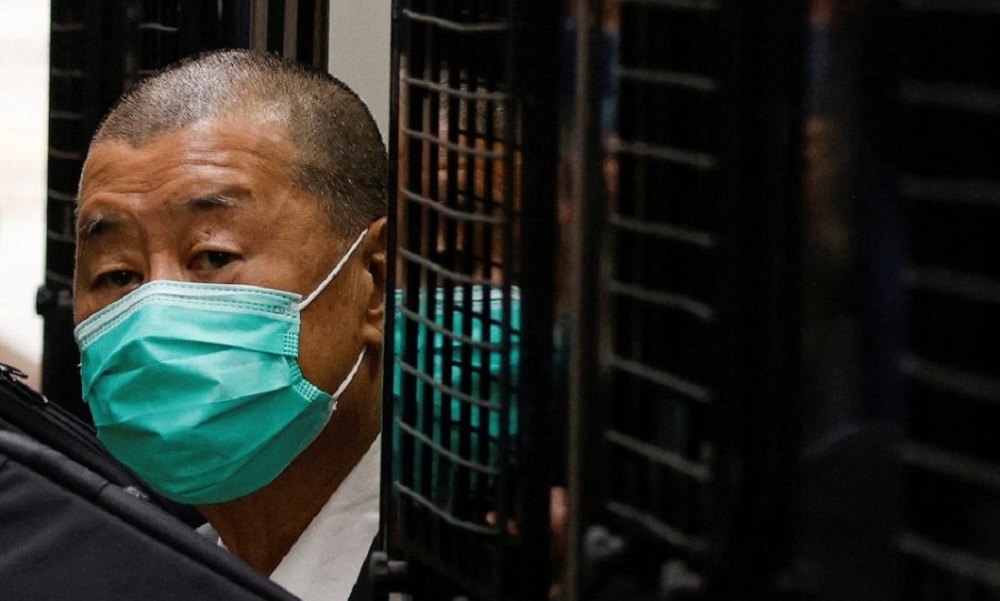
Hong Kong’s most prominent media tycoon Jimmy Lai was sentenced on Monday to a total of 20 years in jail on national security charges comprising two counts of conspiracy to collude with foreign forces and one of publishing seditious materials.
The sentence ends a legal saga spanning almost five years, and Hong Kong’s most high-profile national security hearing. Lai, founder of the now-shuttered Apple Daily newspaper, was first arrested in August 2020 and convicted last year, Reuters reported.
Lai’s sentence of 20 years was within the most severe penalty “band” of 10 years to life imprisonment for offences of a “grave nature”.
The Hong Kong court said Lai’s sentence was enhanced by the fact that he was “mastermind” and driving force behind foreign collusion conspiracies.
The 78-year-old, a British citizen, has denied all the charges against him, saying in court he is a “political prisoner” facing persecution from Beijing.
Lai’s plight has been criticised by global leaders, opens new tab including U.S. President Donald Trump and British Prime Minister Keir Starmer, spotlighting a years-long national security crackdown in the China-ruled Asian financial hub, following mass pro-democracy protests in 2019.
“The rule of law has been completely shattered in Hong Kong. Today’s egregious decision is the final nail in the coffin for freedom of the press in Hong Kong,” said Jodie Ginsberg, CEO of the Committee to Protect Journalism.
“The international community must step up its pressure to free Jimmy Lai if we want press freedom to be respected anywhere in the world.”
Lai arrived to court in a white jacket, with hands held together in a praying gesture as he smiled and waved at supporters.
The case has drawn calls for the long-standing critic of the Chinese Communist Party, who friends and supporters say is in frail health, to be freed.
“The harsh 20-year sentence against 78-year-old Jimmy Lai is effectively a death sentence,” said Elaine Pearson, Asia Director of Human Rghts Watch. “A sentence of this magnitude is both cruel and profoundly unjust.”
Dozens of Lai’s supporters queued for several days to secure a spot in the courtroom, with scores of police officers, sniffer dogs and police vehicles including an armoured truck and a bomb disposal van deployed around the area.
“I feel that Mr. Lai is the conscience of Hong Kong,” said a man named Sum, 64, who was in the queue.
“He speaks up for Hong Kong people, and even for many wrongful cases in mainland China and for the development of democracy. So I feel that spending a few days of my own freedom sleeping out here is better than seeing him locked up inside.”
Starmer raised the case of Lai, who holds British citizenship, in detail during a tête-à-tête with Chinese leader Xi Jinping last month in Beijing’s Great Hall of the People, according to people briefed on the discussions. Britain’s national security adviser, Jonathan Powell, and China’s foreign minister, Wang Yi, were also present.
“I raised the case of Jimmy Lai and called for his release,” Starmer told the UK parliament after his trip.
Trump too, raised Lai’s case with Xi during a meeting last October. Several Western diplomats told Reuters that negotiations to free Lai would likely begin in earnest after he is sentenced, and depending on whether Lai will appeal.
LIFE IN PRISON?
Lai’s family, lawyer, supporters and former colleagues have warned that he could die in prison as he suffers from health conditions including heart palpitations and high blood pressure.
Besides Lai, six former senior Apple Daily staffers, an activist and a paralegal will also be sentenced.
“Jimmy Lai’s trial has been nothing but a charade from the start and shows total contempt for Hong Kong laws that are supposed to protect press freedom,” said the Committee to Protect Journalists’ Asia-Pacific Director Beh Lih Yi.
Beijing, however, says Lai has received a fair trial and all are treated equally under the national security law that has restored order to the city.
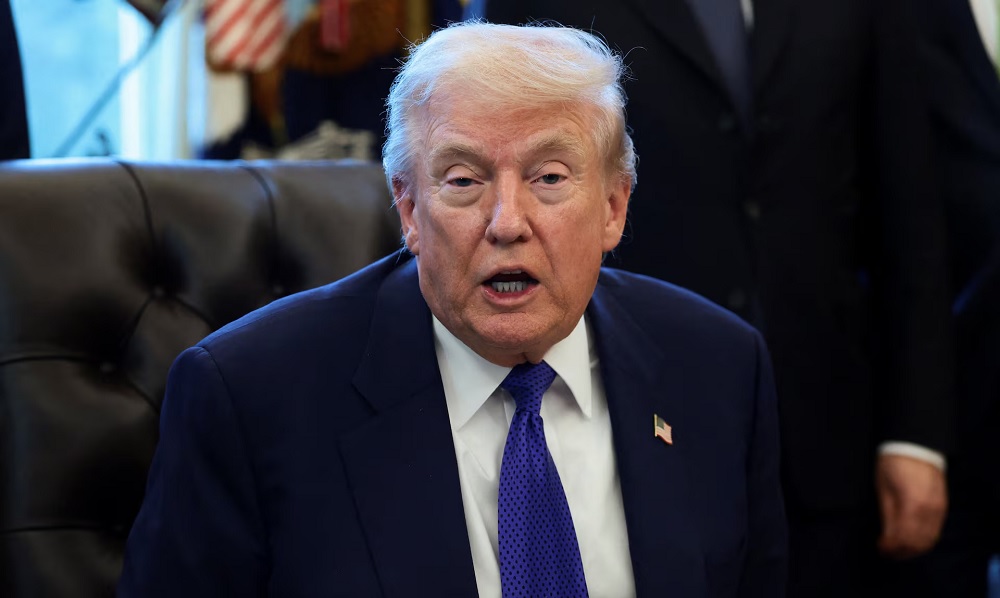
U.S. President Donald Trump signed an executive order on Friday that may impose a 25% tariff on countries that do business with Iran.
The order comes as tensions between Iran and U.S. continue to simmer even as the two countries engaged in talks this week.
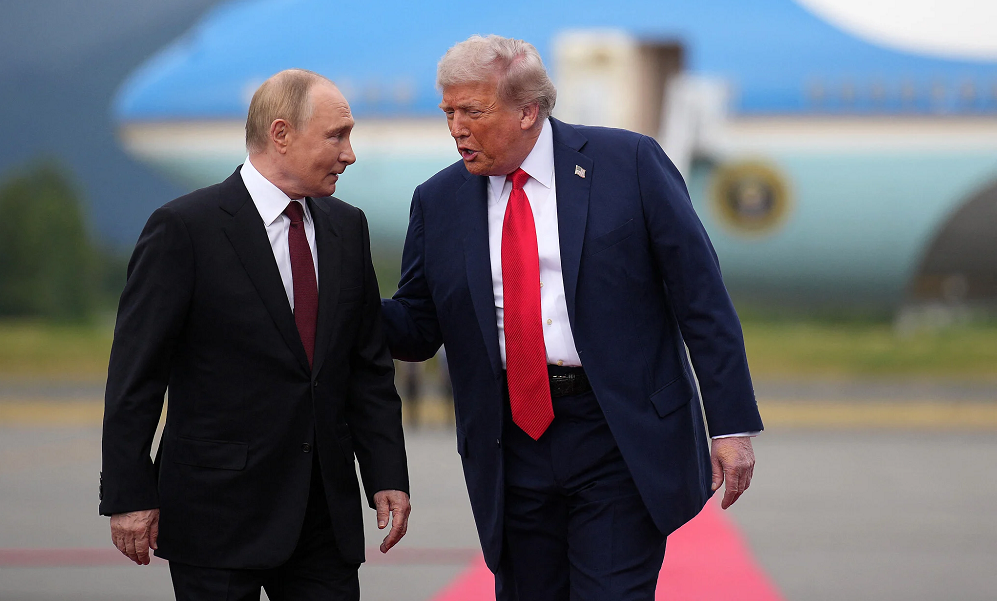
U.S. President Donald Trump on Thursday rejected an offer from his Russian counterpart to voluntarily extend the caps on strategic nuclear weapons deployments after the treaty that held them in check for more than two decades expired.
“Rather than extend “New START … we should have our Nuclear Experts work on a new, improved and modernized Treaty that can last long into the future,” Trump wrote in a post on his Truth Social platform, Reuters reported.
Arms control advocates warn that the expiration of the treaty will fuel an accelerated nuclear arms race, while U.S. opponents say the pact constrained the U.S. ability to deploy enough weapons to deter nuclear threats posed by both Russia and China.
Trump’s post was in response to a proposal by Russian President Vladimir Putin for the sides to adhere for a year to the 2010 accord’s limit of 1,550 warheads on 700 delivery systems — missiles, aircraft and submarines.
New START was the last in a series of arms control treaties between the world’s two largest nuclear weapons powers dating back more than half a century to the Cold War. It allowed for only a single extension, which Putin and former U.S. President Joe Biden agreed to for five years in 2021.
In his post, Trump called New START “a badly negotiated deal” that he said “is being grossly violated,” an apparent reference to Putin’s 2023 decision to halt on-site inspections and other measures designed to reassure each side that the other was complying with the treaty.
Putin cited U.S. support for Ukraine’s battle against Russia’s 2022 full-scale invasion as the reason for his decision.
White House spokeswoman Karoline Leavitt told reporters that the U.S. would continue talks with Russia.
BOTH SIDES SIGNAL OPENNESS TO TALKS
Earlier, Kremlin spokesman Dmitry Peskov said Russia was still ready to engage in dialogue with the U.S. if Washington responded constructively to Putin’s proposal.
“Listen, if there are any constructive replies, of course we will conduct a dialogue,” Peskov told reporters.
The UN has urged both sides to restore the treaty.
Besides setting numerical limits on weapons, New START included inspection regimes experts say served to build a level of trust and confidence between the nuclear adversaries, helping make the world safer.
If nothing replaces the treaty, security analysts see a more dangerous environment with a higher risk of miscalculation. Forced to rely on worst-case assumptions about the other’s intentions, the U.S. and Russia would see an incentive to increase their arsenals, especially as China plays catch-up with its own rapid nuclear build-up.
Trump has said he wants to replace New START with a better deal, bringing in China. But Beijing has declined negotiations with Moscow and Washington. It has a fraction of their warhead numbers – an estimated 600, compared to around 4,000 each for Russia and the U.S.
Repeating that position on Thursday, China said the expiration of the treaty was regrettable, and urged the U.S. to resume dialogue with Russia on “strategic stability.”
UNCERTAINTY OVER TREATY EXPIRY DATE
There was confusion over the exact timing of the expiry, but Peskov said it would be at the end of Thursday.
Russia’s Foreign Ministry said Moscow’s assumption was that the treaty no longer applied and both sides were free to choose their next steps.
It said Russia was prepared to take “decisive military-technical countermeasures to mitigate potential additional threats to national security” but was also open to diplomacy.
That warning was in apparent response to the possibility that Trump could expand U.S. nuclear deployments by reversing steps taken to comply with New START, including reloading warheads on intercontinental ballistic missiles and submarine-launched missiles from which they were removed.
A bipartisan congressionally appointed commission in 2023 recommended that the U.S. develop plans to reload some or all of its reserve warheads, saying the country should prepare to fight simultaneous wars with Russia and China.
Ukraine, which has been at war with Russia since Moscow’s 2022 invasion, said the treaty’s expiry was a consequence of Russian efforts to achieve the “fragmentation of the global security architecture” and called it “another tool for nuclear blackmail to undermine international support for Ukraine.”
Strategic nuclear weapons are the long-range systems that each side would use to strike the other’s capital, military and industrial centres in the event of a nuclear war. They differ from so-called tactical nuclear weapons that have a lower yield and are designed for limited strikes or battlefield use.
If left unconstrained by any agreement, Russia and the U.S. could each, within a couple of years, deploy hundreds more warheads, experts say.
“Transparency and predictability are among the more intangible benefits of arms control and underpin deterrence and strategic stability,” said Karim Haggag, director of the Stockholm International Peace Research Institute.


Tahawol: Pakistan’s Foreign Policy Failure of Towards Afghanistan discussed

Saar: Regional Problems, Opportunities, and Challenges discussed

Pakistan to repatriate nearly 20,000 Afghans awaiting US resettlement

Terrorist activities observed along Afghanistan borders, says Lavrov

Afghan border minister holds phone talks with Iran’s deputy foreign minister

Afghanistan–China joint market opens in Kabul

Pakistan approves re-export of stranded Afghan transit trade cargo

ATN secures broadcast rights to Carabao Cup semis across Afghanistan

Pakistan army orders evacuation of Tirah Valley, fears of mass displacement grow

Afghan traders sign deal to import pharmaceuticals from Bangladesh
Tahawol: Pakistan’s Foreign Policy Failure of Towards Afghanistan discussed
Saar: Regional Problems, Opportunities, and Challenges discussed

Saar: Afghanistan’s relations and opportunities with regional countries

Tahawol: Kabul’s response to Pakistan’s new accusation discussed

Saar: Discussion on Iran-US talks in Oman
-
 Latest News3 days ago
Afghanistan to grant one- to ten-year residency to foreign investors
-
 Latest News5 days ago
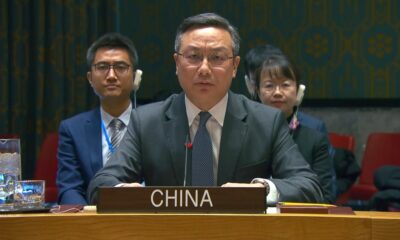
Terrorist threat in Afghanistan must be taken seriously, China tells UNSC
-

 Sport4 days ago
Indonesia shock Japan to reach historic AFC Futsal Asian Cup final
-

 Sport5 days ago
Milano Cortina 2026 Winter Olympics: What You Need to Know
-
 Sport3 days ago
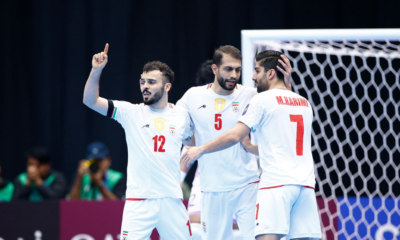
Iran clinch AFC Futsal Asian Cup 2026 in penalty shootout thriller
-
 Latest News5 days ago
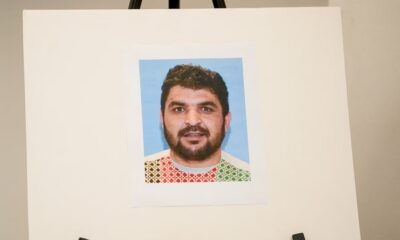
US Justice Department to seek death penalty for Afghan suspect in National Guard shooting
-
 Latest News3 days ago
Afghanistan says Pakistan is shifting blame for its own security failures
-
 Latest News5 days ago
Uzbekistan, Kazakhstan discuss cooperation on Afghanistan