
Latest News
US likely killed Islamic State second-in-command

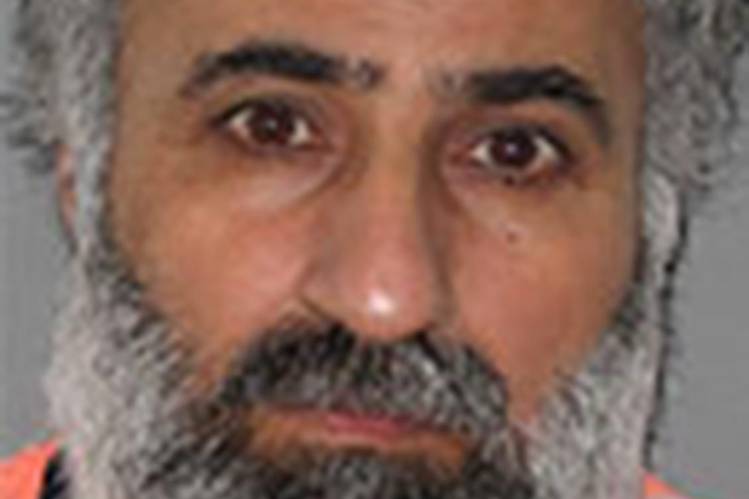
 Islamic State’s second in command and other senior leaders were likely killed this week in a major offensive targeting its financial operations, U.S. Defense Secretary Ash Carter said on Friday, the latest setback for the militant group.
Carter told a Pentagon press briefing the United States believes it killed Haji Iman, a senior leader in charge of finances for the self-declared caliphate, and Abu Sarah, who Carter said was charged with paying fighters in northern Iraq.
U.S. Marine General Joseph Dunford, chairman of the Joint Chiefs of Staff, told the briefing the deaths reflected “indisputable” new momentum in the fight against Islamic State.
U.S. special forces carried out the strike against Haji Iman, officials told Reuters. The original plan was to capture, not kill, him. But after the commandos’ helicopter was fired on from the ground, the decision was made to fire from the air, said one of the officials.
Coalition soldiers rarely operate in Islamic State-held parts of Iraq, where there are no friendly forces to help if a mission runs into trouble.
Dunford said he expected to increase the level of U.S. forces in Iraq from the current 3,800 and bolster the capabilities of Iraqi forces preparing for a major offensive against Islamic State in Mosul, but that those decisions had not been finalized.
“We are systematically eliminating ISIL’s cabinet,” Carter said, using another acronym for the group.
The strike comes amid growing pressure on Islamic State, which is steadily losing territory in Iraq and Syria to U.S.-backed forces.
While the operational significance of removing Haji Iman from the battlefield is not yet clear, it is the latest in a series of strikes against the group’s top leaders, including Abu Omar al-Shishani, described by the Pentagon as the group’s “minister of war,” and a senior Islamic State chemical weapons operative captured by Iraq-based U.S. commandos and turned over to the Iraqi government.
Carter said the killing of Haji Iman, who also went by Abd ar-Rahman Mustafa al-Qaduli and other aliases and who was imprisoned in the region until 2012, would hamper the group’s ability to operate inside and outside of Iraq and Syria. But he conceded that alone was not sufficient to cripple it.
“These leaders have been around for a long time. They are senior, they’re experienced, and so eliminating them is an important objective and it achieves an important result,” he said. “But they will be replaced and we’ll continue to go after their leadership and other aspects of their capability.”
MOSUL OPERATION
U.S. officials said they were helping Iraqis prepare for a major operation in Mosul to take back territory from Islamic State, which aims to establish a caliphate in Iraq and Syria.
U.S. Marines were providing artillery fire at the request of Iraq to help support Iraqi forces moving into new positions, they said. They said Iraqi forces were carrying out the assault and that the U.S. military was not digging in for a larger ground combat role.
Carter said Haji Iman had been involved in external affairs for Islamic State and played a role in recruiting foreign fighters, but could not confirm he had anything to do with this week’s deadly attacks in Brussels, which killed 31 people.
“It’s a big blow to IS,” said Bruce Riedel, a former CIA analyst and Middle East expert at the Brookings Institution think tank. “He has been an important figure going back to a decade ago during Abu Musaib Zarqawi’s era in creating what became ISIS,” he said, using another acronym for the group.
Carter did not explain how the United States had been able to successfully target Islamic State leaders like Haji Iman and al-Shishani.
But the military’s recent successes suggest that bounties on the group’s leaders are yielding tips from members of Islamic State’s top command, said Hisham al-Hashimi, an adviser to the Iraqi government on Islamic State.
The United States offered a reward of up to $7 million for information about Haji Iman, according to the State Department website.
Dunford said the U.S. military had significantly increased intelligence sharing with European militaries in recent months as authorities sought to stem the tide of foreign fighters streaming into Iraq and Syria.
He said fighters from more than 100 countries were now in Syria and Iraq and there were estimates the total exceeded 30,000. Greater cooperation was needed by all those countries to avert attacks like the ones in Brussels, he said.
Written By: Reuters

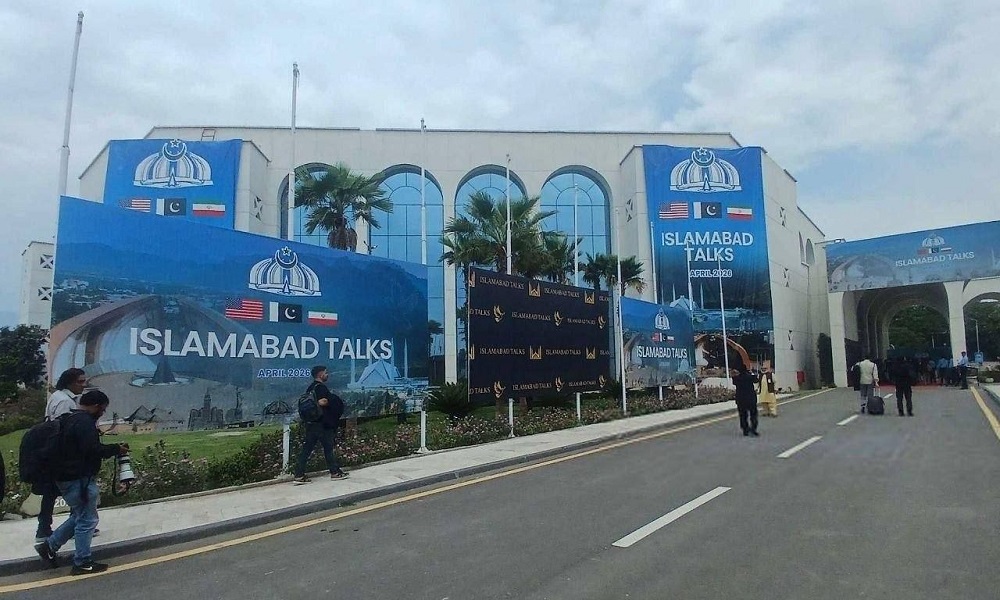
As Iranian and US delegations are present in Islamabad, Iranian media report that talks between the two sides have begun.
The negotiations are being conducted indirectly, with Pakistan acting as a mediator.
According to reports, Iran had set conditions for the start of the talks, including a halt to the war in Lebanon and the release of its frozen assets.
An IRIB correspondent in Islamabad reported that the US has agreed to release Iranian assets, and that the conflict in Lebanon has been limited to the southern part of the country.
However, US officials have not yet confirmed any agreement on the release of Iran’s frozen assets.
The talks come after 40 days of conflict between the United States, Israel, and Iran.
Latest News
Death toll rises in armed attack in Herat; 11 killed, 8 injured
Authorities have confirmed that one suspect has been arrested in connection with the attack.
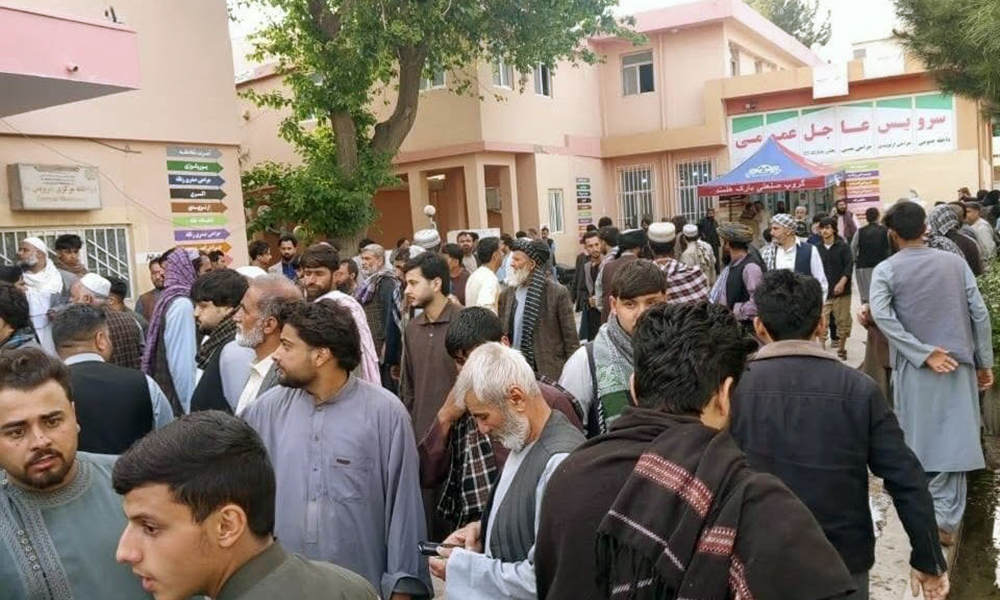
The death toll from a brutal armed attack in the Injil district of Herat province has increased, with local authorities confirming that at least 11 people were killed and 8 others injured.
Ahmadullah Muttaqi, Director of Information and Culture for Herat, reported that the attack occurred around 3:00 PM on Friday when unidentified gunmen opened fire on a group of families who had gathered for a picnic in the village of “Dah Mehre,” located in the Injil district.
Initial reports indicated that four people were killed and 15 others injured. However, as the severity of the injuries became clearer, seven more of the wounded tragically succumbed to their injuries overnight. The latest update puts the death toll at 11, with 8 survivors, two of whom are said to be in critical condition.
Authorities have confirmed that one suspect has been arrested in connection with the attack. Security forces are continuing to investigate the incident, with efforts underway to identify and apprehend additional perpetrators.
The attack has sent shockwaves through the region, with local authorities and communities expressing outrage and concern over the rising violence in the area.
Latest News
UN warns of deepening humanitarian crisis in Afghanistan, calls for urgent aid
Dujarric also highlighted a 5.9-magnitude earthquake that struck the Hindu Kush region on Sunday, causing additional casualties and damage, including in Kabul and nearby areas.
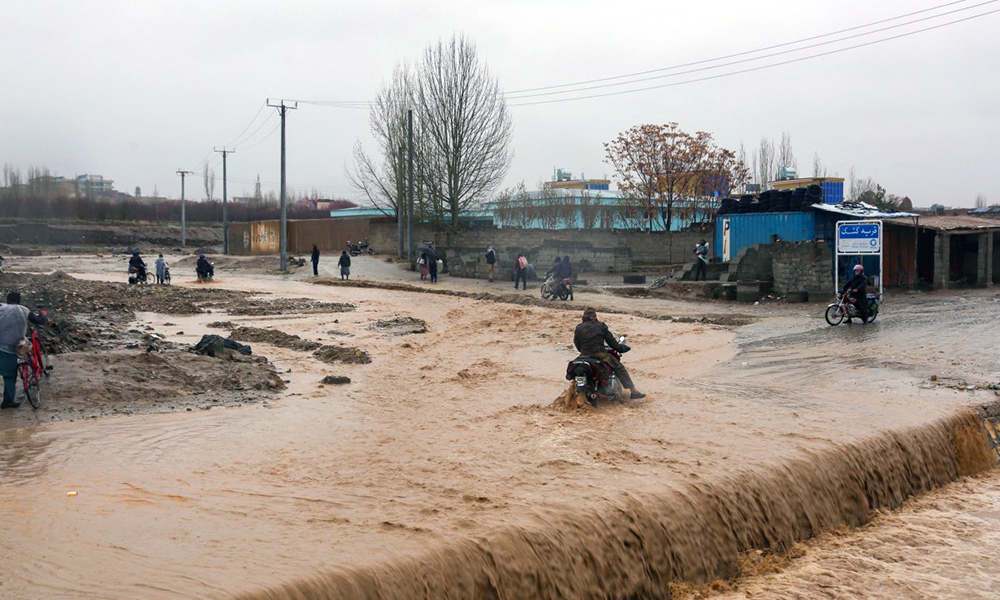
The United Nations has raised alarm over a worsening humanitarian crisis in Afghanistan, citing the combined impact of ongoing conflict and severe weather conditions, and urging the international community to step up assistance.
Speaking at a daily press briefing, UN Secretary-General spokesperson Stéphane Dujarric said that recent heavy rains and flooding have led to significant casualties and widespread destruction across the country.
“Nearly 100 people have reportedly been killed, more than 180 injured, and several others remain missing. Thousands of homes have been severely damaged or completely destroyed, along with critical infrastructure and large areas of agricultural land,” Dujarric said.
He noted that Nangarhar Province in eastern Afghanistan has been among the hardest hit regions, already recovering from a devastating earthquake in September last year.
Dujarric also highlighted a 5.9-magnitude earthquake that struck the Hindu Kush region on Sunday, causing additional casualties and damage, including in Kabul and nearby areas.
“We and our humanitarian partners have so far reached more than 8,000 people with assistance, including food, cash aid, health services, emergency shelter, and other life-saving support,” he added.
The UN said assessments are ongoing to ensure aid reaches the most vulnerable populations, as Afghanistan faces mounting humanitarian challenges amid overlapping crises.


Tahawol: Historic US-Iran talks in Pakistan discussed

Saar: Talks between Iran and US in Pakistan discussed

Iran–US talks kick off in Islamabad

Afghanistan U-17 football team ends CAFA campaign with 3–2 loss to Tajikistan

Iran’s new supreme leader has severe and disfiguring wounds

IEA Supreme Leader issues Eid-ul-Fitr message urging unity and support for Islamic system

IEA supreme leader orders replacement of foreign terminology in official documents

14 Pakistani soldiers killed after military post falls along Durand line: MoD

Afghan airstrikes target Pakistani military sites in retaliation for air attacks

Turkmenistan, Afghanistan discuss steps to speed up land acquisition for TAPI pipeline
Tahawol: Historic US-Iran talks in Pakistan discussed
Saar: Talks between Iran and US in Pakistan discussed

Tawsia: New transit route with Tatarstan, MoU with Uzbekistan discussed

Tahawol: China to host 2nd round of Kabul–Islamabad talks discussed

Saar: Fragile ceasefire in the Middle East reviewed
-
 Latest News4 days ago
China seeking to build trust between Afghanistan and Pakistan
-
 Business4 days ago
Afghanistan, Uzbekistan sign $400 million trade deals in push to deepen ties
-
 International Sports4 days ago
IPL 2026: Rain scuppers KKR vs PBKS match
-
 Latest News5 days ago
Heavy rains in Nangarhar leave 16 dead and injured
-
 Latest News5 days ago
Fragile progress as US–Iran tensions shift toward negotiations, says Khalilzad
-
 Sport4 days ago
Afghanistan U-17s draw 0-0 against Turkmenistan in CAFA campaign
-
 Latest News4 days ago
Japan and UNDP launch $2.35 million livelihoods initiative in Afghanistan
-
 Regional4 days ago
Iran agrees to temporary ceasefire as US pauses attacks