
World
US readies Russia sanctions over Ukraine, unclear if Trump will sign – Reuters

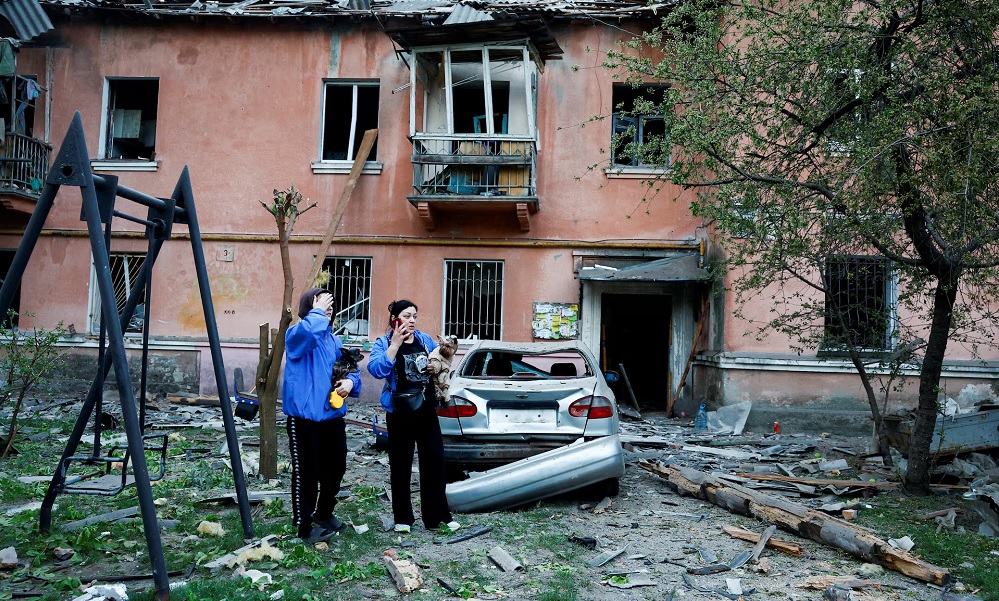
U.S. officials have finalized new economic sanctions against Russia, including banking and energy measures, to intensify pressure on Moscow to embrace U.S. President Donald Trump’s efforts to end its war on Ukraine, Reuters reported on Saturday.
The targets include state-owned Russian energy giant Gazprom and major entities involved in the natural resources and banking sectors, said an administration official, who like the other sources requested anonymity to discuss the issue.
The official provided no further details.
It was far from clear, however, whether the package will be approved by Trump, whose sympathy for Moscow’s statements and actions have given way to frustration with Russian President Vladimir Putin’s spurning of his calls for a ceasefire and peace talks.
The U.S. National Security Council “is trying to coordinate some set of more punitive actions against Russia,” said the source familiar with the issue. “This will have to be signed off by Trump.”
“It’s totally his call,” confirmed a second U.S. official.
“From the beginning, the president has been clear about his commitment to achieving a full and comprehensive ceasefire,” said National Security Council Spokesman James Hewitt. “We do not comment on the details of ongoing negotiations.”
The U.S. Treasury, which implements most U.S. sanctions, did not respond to a request for comment.
An approval by Trump of new sanctions, which would follow the Wednesday signing of a U.S.-Ukraine minerals deal that he heavily promoted as part of his peace effort, could signify a hardening of his stance towards the Kremlin.
Since Russia launched its full-scale invasion of Ukraine in 2022 the United States and its allies have added layer upon layer of sanctions on the country. While the measures have been painful for Russia’s economy, Moscow has found ways to circumvent the sanctions and continue funding its war.
Trump “has been bending over backwards to give Putin every opportunity to say, ‘Okay, we’re going to have a ceasefire and an end to the war,’ and Putin keeps rejecting him,” said Kurt Volker, a former U.S. envoy to NATO who was U.S. special representative for Ukraine negotiations during Trump’s first term. “This is the next phase of putting some pressure on Russia.”
“Putin has been escalating,” he continued. Trump “has got the U.S. and Ukraine now in alignment calling for an immediate and full ceasefire, and Putin is now the outlier.”
Since assuming office in January, Trump has taken steps seen as aimed at boosting Russian acceptance of his peace effort, including disbanding a Justice Department task force formed to enforce sanctions and target oligarchs close to the Kremlin.
He also has made pro-Moscow statements, falsely blaming Ukrainian President Volodymyr Zelenskiy for starting the conflict and calling him a “dictator.”
Meanwhile, Steve Witkoff, Trump’s special envoy, has advocated a peace strategy that would cede four Ukrainian regions to Moscow, and has met Putin four times, most recently last week.
But three days after that meeting, Russian Foreign Minister Sergei Lavrov reiterated Putin’s maximalist demands for a settlement and Moscow’s forces have pressed frontline attacks and missile and drone strikes on Ukrainian cities, claiming more civilian casualties.
Reuters reported in March that the United States was drawing up a plan to potentially give Russia sanctions relief but Trump in recent weeks has expressed frustration with Putin’s foot-dragging on ending the invasion and last Saturday held a “very productive” one-on-one meeting in the Vatican with Zelenskiy.
The next day, Trump said in a post on his Truth Social platform that he was “strongly considering large scale Banking Sanctions, Sanctions and Tariffs on Russia” that would remain until a ceasefire and final peace deal.
Volker said that Russia has been earning hard currency that funds its military through oil and gas sales to countries like India and China and that it would be “very significant” if Trump slapped secondary sanctions on such deals.
Secondary sanctions are those where one country seeks to punish a second country for trading with a third by barring access to its own market, a particularly powerful tool for the United States because of the size of its economy.







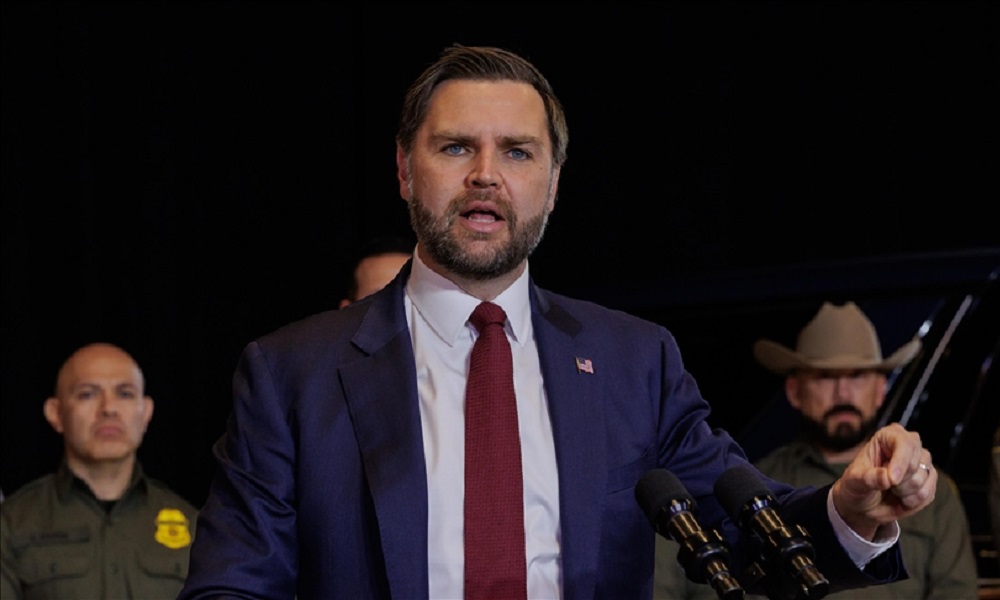
US Vice President JD Vance has taken a leading role in Washington’s efforts to broker peace with Iran, nearly a month into the ongoing conflict, according to US media reports on Friday.
An Axios report says Vance has been actively engaged in behind-the-scenes diplomacy, holding multiple discussions with Israeli Prime Minister Benjamin Netanyahu and coordinating with Gulf allies, while maintaining indirect communication channels with Iranian officials.
The White House reportedly views Vance as a central negotiator due to his senior position and his skepticism toward prolonged military engagements, making him a suitable envoy for sensitive negotiations.
Vance’s efforts include coordination with countries such as the United Arab Emirates and Qatar, focusing on de-escalation, potential peace talks, and regional security.
US President Donald Trump formally confirmed Vance’s role on Thursday, noting that he is working alongside Middle East Envoy Steve Witkoff and Jared Kushner on ongoing negotiations and will brief officials on developments regarding Iran.
White House officials told Axios that Vance’s seniority and opposition to extended foreign conflicts make him a more appealing interlocutor for Iran than other envoys, with Witkoff recommending him as the lead negotiator. “If the Iranians can’t strike a deal with Vance, they don’t get a deal. He’s the best they’re gonna get,” a senior administration official said.
While Vance assumes a larger diplomatic role, Witkoff and Kushner continue handling negotiations. Reports of a confrontation between Vance and Netanyahu were dismissed by US and Israeli sources as inaccurate.
According to the report, Vance initially expressed skepticism about the war’s duration, objectives, and resource impact but supported a strategy of overwhelming force once Trump decided to proceed. Vance remains aligned with Israel while carefully navigating differences between US and Israeli objectives, advisers said.
“He has his own views, but he is going to work according to Trump’s instructions and try to achieve an outcome that the president likes,” a source close to Vance added.
World
Trump signature to appear on US currency, ending 165-year tradition
The Treasury is still producing notes bearing the signatures of former President Joe Biden’s Treasury secretary, Janet Yellen, and former Treasurer Lynn Malerba.
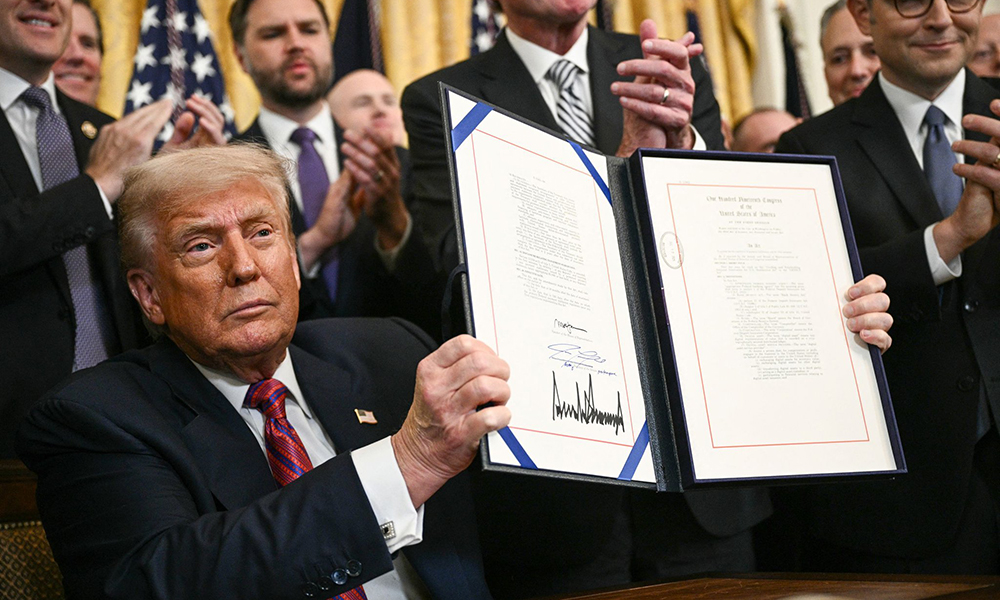
U.S. paper currency will bear President Donald Trump’s signature starting this summer, the first time a sitting president has signed American money, the Treasury Department said on Thursday.
The redesigned notes, planned to mark the 250th anniversary of American independence, will also for the first time in 165 years drop the signature of the U.S. treasurer, who reports to the Treasury Secretary and oversees the Bureau of Engraving and Printing, the U.S. Mint and other Treasury functions, Reuters reported.
The first $100 bills with Trump’s signature and that of U.S. Treasury Secretary Scott Bessent will be printed in June, followed by other bills in subsequent months. The new bills may take several weeks to circulate through banks.
The Treasury is still producing notes bearing the signatures of former President Joe Biden’s Treasury secretary, Janet Yellen, and former Treasurer Lynn Malerba.
Malerba will be the last of an unbroken line of treasurers whose signatures have appeared on U.S. federal currency since 1861, when the U.S. government first issued it.
The signature change is the latest effort by the Trump administration and its allies to put the president’s name on buildings, institutions, government programs, warships and coins. A federal arts panel, whose members Trump appointed, approved last week the design for a commemorative gold coin with Trump’s image.
Bessent said in a statement that the move was appropriate for the U.S. 250th anniversary, given strong U.S. economic growth and financial stability during Trump’s second term, read the report.
“There is no more powerful way to recognize the historic achievements of our great country and President Donald J. Trump than U.S. dollar bills bearing his name, and it is only appropriate that this historic currency be issued at the Semiquincentennial,” Bessent said.
An effort for a circulating $1 Trump coin was set back by laws prohibiting the depiction of living individuals on U.S. coins.
A statute governing the printing of Federal Reserve notes gives the Treasury broad discretion to change designs to guard against counterfeiting. The law requires keeping certain elements, including the words “In God We Trust,” and only allows portraits of deceased individuals.
The overall designs of bills will not change, except for Trump’s signature replacing the Treasurer’s, Treasury officials said. A mock-up of the $100 bill with Trump’s signature was not immediately available.
Malerba, the former treasurer, declined comment on the Trump administration’s move.
Her predecessor, Jovita Carranza, who served as treasurer in Trump’s first term, called the change “a powerful symbol of American resilience, the enduring strength of free enterprise and the promise of continued greatness.”
The current treasurer, Brandon Beach, whose name has not appeared on the currency, also issued a supportive statement, saying Trump was the architect of a “golden age economic revival.”
World
Trump to hit Iran harder if Tehran does not accept defeat, White House says
Talks with Iran were still under way, Leavitt said. “Talks continue. They are productive, as the president said on Monday, and they continue to be,” she added.
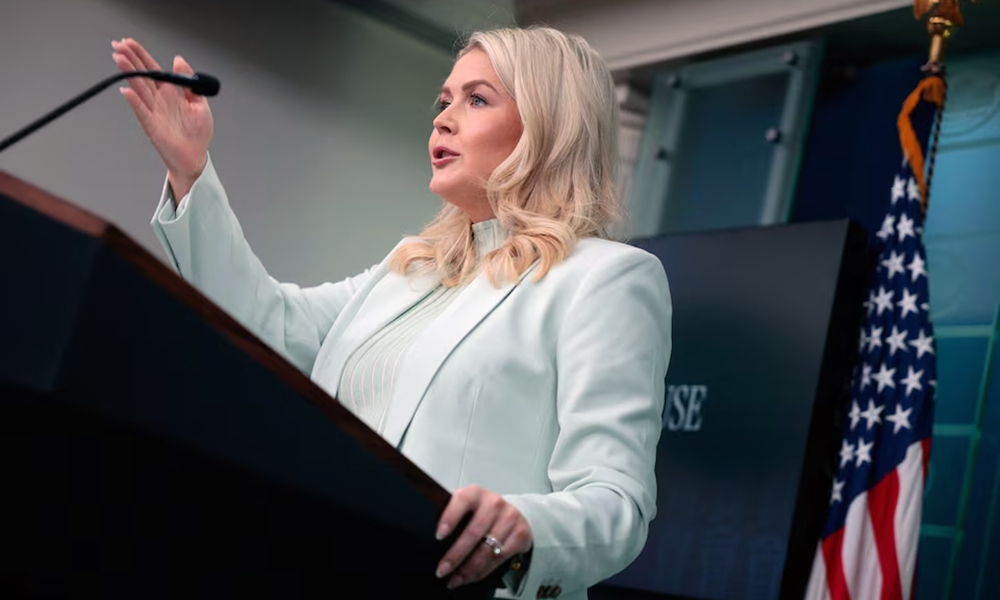
President Donald Trump will hit Iran harder if Tehran fails to accept that the country has been “defeated militarily,” White House press secretary Karoline Leavitt said on Wednesday.
“President Trump does not bluff and he is prepared to unleash hell. Iran should not miscalculate again,” Leavitt told reporters in a press briefing.
“If Iran fails to accept the reality of the current moment, if they fail to understand that they have been defeated militarily, and will continue to be, President Trump will ensure they are hit harder than they have ever been hit before,” she said.
As the joint U.S.-Israeli war on Iran entered its fourth week, there have been efforts by multiple countries such as Pakistan, Turkey and Egypt to mediate.
Iran is still reviewing a U.S. proposal to end the war, despite an initial response that was negative, a senior Iranian official told Reuters on Wednesday, indicating that Tehran had so far stopped short of rejecting it outright.
Talks with Iran were still under way, Leavitt said. “Talks continue. They are productive, as the president said on Monday, and they continue to be,” she added.
Citing unnamed sources, media outlets on Tuesday reported that Washington sent Tehran a 15-point plan on ending the war. Leavitt said on Wednesday that elements of the reports were not fully accurate, but she did not provide specifics.
“The White House never confirmed that full plan. There are elements of truth to it, but some of the stories I read were not entirely factual, so I am not going to negotiate on behalf of the president here at the podium,” Leavitt said.
Global equity markets regained some ground while oil prices dipped on Wednesday after the reports about the plan, with investors hoping for an end to a war that has disrupted global energy supplies and raised inflation concerns.


Exclusive interview with Indrika Ratwatte, Deputy UN Special Representative for Afghanistan

US Vice President Vance emerges as key figure in Iran peace efforts: Report

Tawsia: Efforts to boost Afghanistan’s domestic production and economic diplomacy

Trump extends deadline for striking Iranian energy plants to April 7

IEA says Iranian drivers no longer need visas to enter Afghanistan

Pakistani military jet downed in Afghanistan’s Jalalabad, pilot captured alive

Afghan Air Force conducts airstrikes in Islamabad, other cities

Prominent Muslim scholar issues fatwa calling for Afghanistan-Pakistan ceasefire

Afghan air force strikes key Pakistani military installations in retaliatory operation

IEA: Special circle in Pakistan has launched mission to destabilize region
Exclusive interview with Indrika Ratwatte, Deputy UN Special Representative for Afghanistan
Tawsia: Efforts to boost Afghanistan’s domestic production and economic diplomacy

Tahawol: Discussion on day 27 of Iran–US war

Saar: Islamic Emirate confident of Durand Line control

Tahawol: Efforts to release Mohammad Rahim from Guantanamo Bay Detention Camp
-

 Latest News4 days ago
Pakistan seeks Russian mediation to resolve Afghanistan tensions
-

 Latest News5 days ago
World must re-engage to prevent all-out Afghanistan-Pakistan war: Financial Times
-

 Latest News3 days ago
Around 2.3 million tourists visited Afghanistan’s recreational areas during Eid: Ghufran
-

 Sport3 days ago
Afghanistan squad hit by withdrawals ahead of AFC Asian Cup Qualifiers
-
 Latest News1 day ago
Tajikistan shifts stance on Afghanistan amid rising border tensions
-

 Latest News3 days ago
Islamic Emirate releases American prisoner Dennis Coyle
-
 Latest News4 days ago
Airstrike on Kabul drug rehabilitation centre sparks legal concerns
-
 Latest News2 days ago
Two civilians killed, eight injured in fresh shelling by Pakistan in Kunar