
Latest News
US, Ukraine agree to terms of critical minerals deal
One of the sources familiar with the deal said future weapons shipments are still being discussed between Washington and Kyiv.

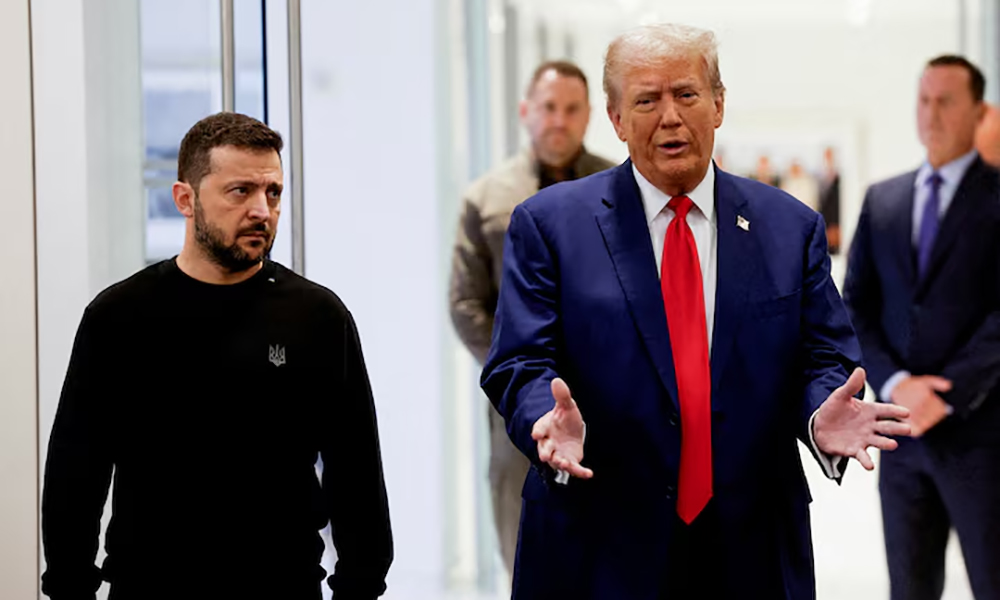
The U.S. and Ukraine have agreed on the terms of a draft minerals deal central to Kyiv’s push to win Washington’s support as President Donald Trump seeks to rapidly end the war with Russia, two sources with knowledge of the matter said on Tuesday.
A source familiar with the contents of the draft agreement said that it does not specify any U.S. security guarantees or continued flow of weapons but says that the United States wants Ukraine to be “free, sovereign and secure.”
One of the sources familiar with the deal said future weapons shipments are still being discussed between Washington and Kyiv.
Trump told reporters that Ukrainian President Volodymyr Zelenskiy wants to come to Washington on Friday to sign a “very big deal.” This came after the two leaders exchanged hostile words last week.
The U.S. president, who has cast the deal as a repayment for billions of dollars in aid to Kyiv, also said some form of peacekeeping troops are needed in Ukraine if an agreement to end the conflict is struck. Moscow, which launched an invasion of Ukraine three years ago, has refused to accept any deployment of NATO forces.
Some European countries have said they would be willing to send peacekeeping forces to Ukraine. Trump said on Monday that Moscow would accept such peacekeepers, but the Kremlin denied that on Tuesday.
Trump’s rush to impose an end to Russia’s war in Ukraine and his lurch toward Moscow has stoked fears of far-reaching U.S. concessions to Russian President Vladimir Putin that could undermine security in Ukraine and Europe and alter the geopolitical landscape.
Trump last week falsely called Zelenskiy an unpopular “dictator” who needed to cut a quick peace deal or lose his country. The Ukrainian leader said the U.S. president was living in a “disinformation bubble.”
Officials on both sides have agreed to the draft and advised it should be signed, the sources said.
The deal could open up Ukraine’s vast mineral wealth to the U.S.
“What we’re doing is now we’re saying, look, we want to be secured,” Trump said. “The American taxpayer now is going to get their money back, plus.”
Zelenskiy refused to sign an earlier draft of a minerals agreement as Washington sought rights to $500 billion in Ukraine’s natural wealth. Kyiv protested it had received far less than that in U.S. aid and the deal lacked the security guarantees Ukraine needs.
Under the terms of a draft minerals agreement, according to sources familiar with its contents, the United States and Ukraine would establish a Reconstruction Investment Fund to collect and reinvest revenues from Ukrainian sources including minerals, hydrocarbons and other extractable materials.
Ukraine would contribute to the fund 50% of the revenue minus operating expenses and continue until the contributions reach the sum of $500 billion. The United States would provide a long-term financial commitment to the development of a “stable and economically prosperous Ukraine.”
Asked what Ukraine would get in return for the minerals deal, Trump cited what he said was $350 billion already provided by the U.S. “and lots of … military equipment and the right to fight on.”
Scott Anderson, a fellow in governance studies at the Brookings Institution, said that while the minerals deal would look like “a kind of piracy” to much of the world it is necessary to get buy-in from Trump and Republican lawmakers.
“They say this gives him (Trump) real skin in the game. I think there is real logic to that,” Anderson said.
“I hear that he’s coming on Friday,” Trump told reporters. “Certainly it’s okay with me if he’d like to. And he would like to sign it together with me.”
European officials have been left flat-footed by Trump’s decisions to hold talks on ending the war in Ukraine with Russia, spurning both Kyiv and Europe, and by his administration’s warning that the U.S. was no longer primarily focused on Europe’s security.
A White House meeting could give Zelenskiy a chance to make his case for continued U.S. support directly to Trump, who last week falsely accused Kyiv of starting the war.
Ukraine has deposits of 22 of the 34 minerals identified by the European Union as critical, according to Ukrainian data. They include industrial and construction materials, ferroalloy, precious and non-ferrous metals, and some rare earth elements.
Ukraine’s reserves of graphite, a key component in electric vehicle batteries and nuclear reactors, represent 20% of global resources.


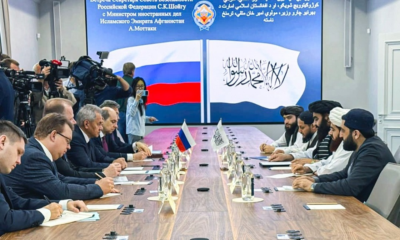



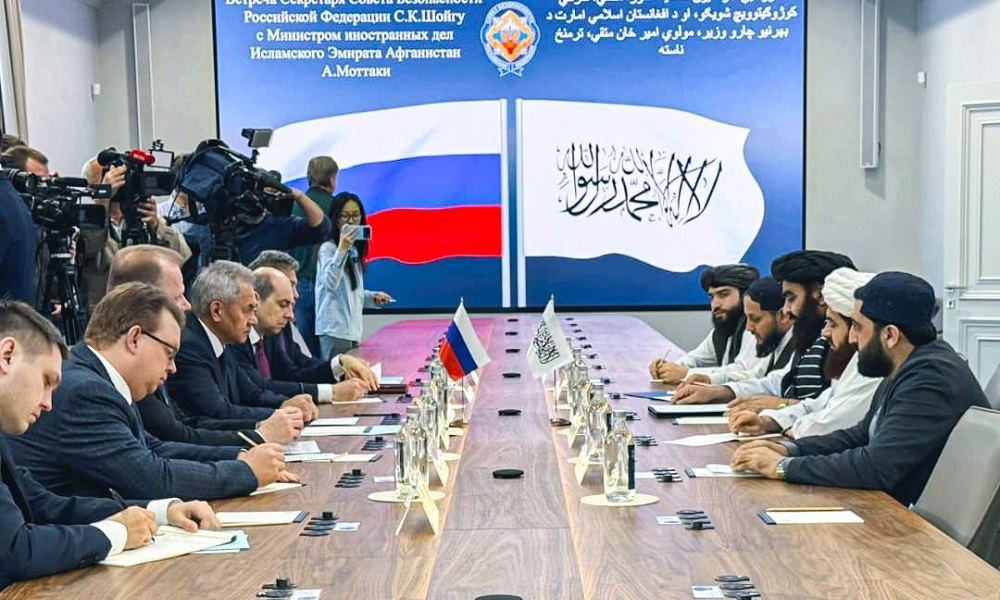
Amir Khan Muttaqi, Minister of Foreign Affairs, met on Tuesday with Sergei Shoigu, Secretary of Russia’s Security Council, to discuss bilateral relations, regional security, and security cooperation.
In a statement issued on Tuesday, the Ministry of Foreign Affairs of the Islamic Emirate said the two sides also discussed counter-narcotics efforts and expanding security cooperation between Afghanistan and Russia.
Muttaqi, referring to the positive progress in political relations between the two countries, thanked Russia for recognizing the Islamic Emirate of Afghanistan and stressed the importance of strengthening security cooperation, regular consultations, and expanding economic and trade relations.
The Foreign Minister also said Afghanistan would continue its efforts to ensure regional security and combat narcotics, and supports expanding cooperation with regional countries through direct contacts and practical cooperation.
Meanwhile, Sergei Shoigu described Afghanistan-Russia relations as expanding in various areas and expressed satisfaction with Afghanistan’s efforts to maintain security and combat narcotics.
The Secretary of Russia’s Security Council emphasized that Moscow would continue political consultations and practical cooperation with Afghanistan.
Latest News
Muttaqi, Russian deputy PM discuss expanding economic ties
Overchuk expressed Russia’s readiness to expand economic cooperation with Afghanistan, saying conditions are now in place for launching practical cooperation.
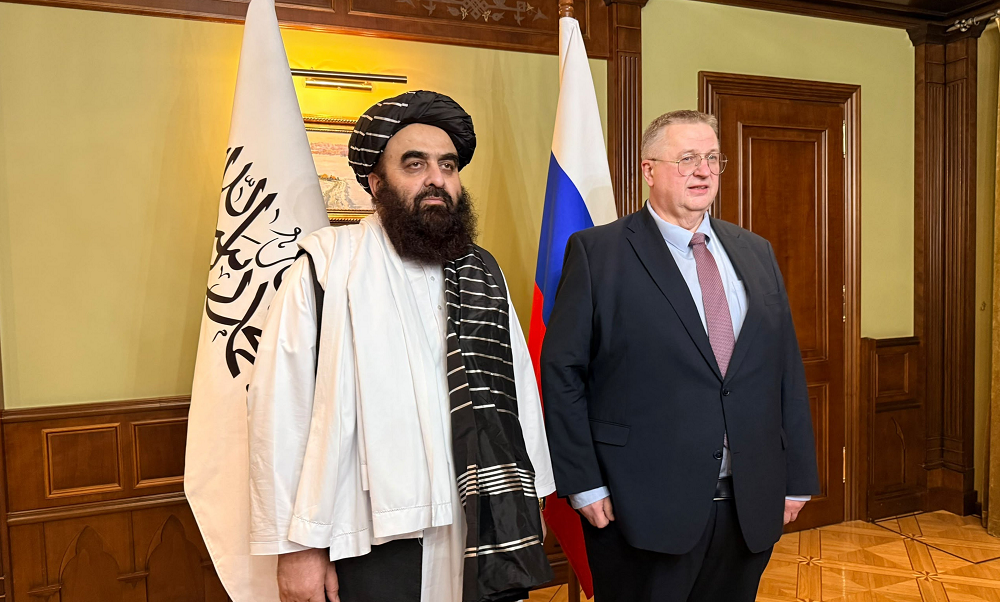
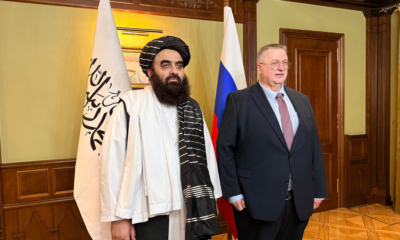
Afghanistan’s Foreign Minister Amir Khan Muttaqi met with Russian Deputy Prime Minister Alexei Overchuk in Moscow to discuss expanding political and economic cooperation between the two countries.
The talks focused on strengthening trade, transit, regional connectivity and energy cooperation, as well as investment and other areas of mutual interest, Afghan foreign ministry said in a statement.
Muttaqi highlighted the positive trajectory of political relations between Kabul and Moscow and thanked the Russian leadership for what he described as its positive policy toward Afghanistan.
He said the existing political understanding should be translated into practical economic partnerships, stressing the need to expand trade and transit, attract Russian investment to Afghanistan, cooperate in energy and mining, and facilitate banking and payment mechanisms between the two countries.
Overchuk expressed Russia’s readiness to expand economic cooperation with Afghanistan, saying conditions are now in place for launching practical cooperation.
He also stressed the importance of expanding joint work in transit, transport, energy and other sectors, while pointing to a significant increase in bilateral trade last year. He expressed hope that further practical economic cooperation between the two countries would develop in the near future.
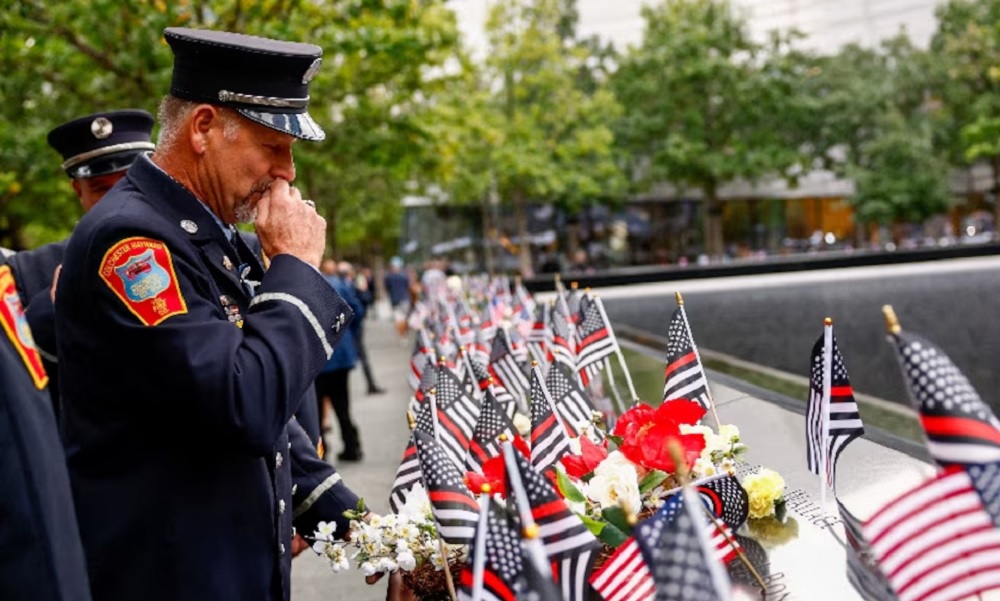
The attorneys general of 30 US states have asked the US Supreme Court to review a case involving around $3.5 billion in frozen assets of Da Afghanistan Bank that victims and families of the September 11 attacks are seeking to use for compensation.
The Iowa Attorney General’s Office said in a statement on Monday that the states filed a brief with the Supreme Court in support of the victims and their families, who have obtained compensation judgments in US federal courts.
According to the office, after years of legal proceedings, the victims and their families have secured nearly $17 billion in court-ordered compensation.
However, the US Second Circuit Court of Appeals ruled that around $3.5 billion in assets belonging to Afghanistan’s central bank cannot be used to satisfy those compensation awards.
The assets were frozen by the U.S. Treasury Department on August 15, 2021, the day the Islamic Emirate entered Kabul.
The state attorneys general argue that US law allows the frozen assets to be used to satisfy court-ordered compensation.
Iowa Attorney General Brenna Bird said the victims and their families had pursued justice and compensation through the US legal system and should be able to access the money awarded to them by the courts.
This comes as the Islamic Emirate has repeatedly called for the release of Da Afghanistan Bank assets.


Saar: Expansion of relations between Kabul and Moscow discussed

Aino Mina Kandahar defeat Istiqlal Kabul 3–2

Muttaqi and Shoigu discuss regional security and Afghanistan-Russia cooperation

Muttaqi, Russian deputy PM discuss expanding economic ties

Russia investigates suspected pneumonic plague; Trump ready to ‘help’

Saudi energy group signs major Afghanistan deals covering gas exploration and pipeline plans

Khalilzad: Afghanistan ready to attract major investment

UAE firm eyes investment in Salang’s second tunnel and pharmaceutical factories

US Treasury ratchets up pressure on Iran with sweeping new aviation sanctions

AI could pose ‘existential’ risk to humanity, UN rights chief warns
Saar: Expansion of relations between Kabul and Moscow discussed

Tahawol: Afghanistan-Iran: shared opportunities and challenges discussed

Saar: Pakistan’s hostile policy toward Afghanistan discussed

Tahawol: Doha process seeks new cooperation opportunities

Saar: Moscow forum 8th consultative meeting on Afghanistan
-
 Sport4 days ago
ACB announces Afghanistan squads for Bangladesh, Zimbabwe series
-

 Sport1 day ago
Cricket Bonanza: Afghanistan set for packed international schedule
-
 Latest News4 days ago
Russia expects to ease Afghanistan-Pakistan tensions at Moscow Format meeting
-

 International Sports4 days ago
Afghanistan to face Pakistan, India and Australia at 2027 Cricket World Cup
-
 Regional4 days ago
Saudi-led coalition says Houthis attacked power station for Prophet’s Mosque in Medina
-
 Regional4 days ago
Cargo stacks up as Pakistan seizes containers to block capital routes
-
 Latest News3 days ago
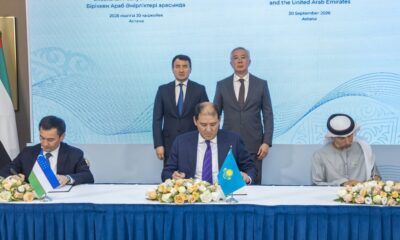
Kazakhstan, Uzbekistan and UAE sign MoU on CASA railway project via Afghanistan
-
 Regional4 days ago
Pakistan says Mecca pact members to hold emergency talks on engaging Houthis