Connect with us

Latest News

Watchdog raises concern over attacks plaguing media industry

Published

on

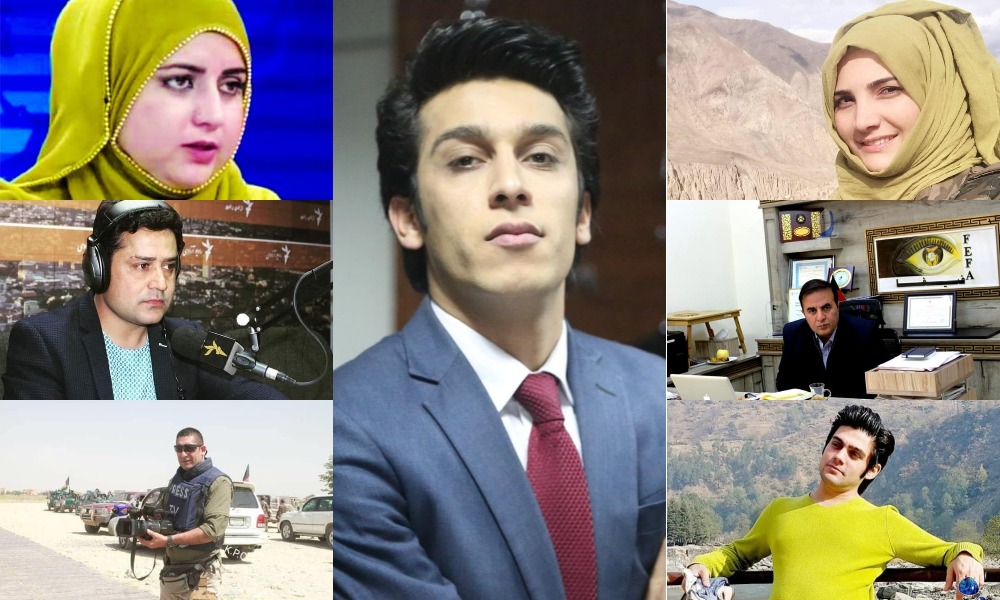
Afghanistan’s media workers have warned if government does not step up efforts to preserve freedom of expression and safeguard their lives they might end up being forced to flee the country. 
 
This comes after a string of attacks left five media workers dead in two months – amid a marked increase in targeted killings and attempted assassinations.  
 
At a meeting on Saturday, Afghan media workers said the escalation of targeted attacks against journalists and media workers has also led to self-censorship. 
 
In a statement issued by the Afghanistan Independent Human Rights Commission (AIHRC), the organization stated that the Afghan government and Taliban urgently need to consider and respond to the demands of the Afghan media for support, safety, protection, timely investigations and access to information.
 
The AIHRC said targeted killings of journalists in the past few months have had a negative impact on media across the country and that many female journalists from the provinces have left their jobs. 
 
“It is very difficult for journalists to have access to the districts, even those near the provincial centers. They cannot easily move around the city. When those working in media including journalists are threatened, they refer to government security agencies, but, according to journalists, their concerns and demands are not given sufficient attention by the security institutions,” the statement read.
 
At Saturday’s meeting, over 100 journalists and representatives of media support organizations shared their concerns and challenges with Shaharzad Akbar, the AIHRC’s Chairperson and the commission’s leadership.
 
AIHRC said: “There has been a lot of psychological pressure on those working in media in Afghanistan in recent months due to the environment of fear and intimidation created by the targeted attacks. 
 
“The media community are worried about more restrictions that could affect their work and their lives. 
 
“The government of Afghanistan has not shared sufficient information on preventing the targeted killings of journalists and prosecuting the perpetrators.”
 
This also comes just weeks after government announced it had dismantled the spokesperson position for provincial governor offices.
 
Since the decision came into effect, on December 2, the governors themselves are responsible for giving information to the media. 
 
“Dismantling this position has caused concern about disruption in the free circulation of information in the country. Most journalists complain about lack of access to information and data at the provincial level. 
 
“To this end, the media call on the government to ensure freedom of expression and respect people’s right to access information by revising the decision about dismantling the spokesperson position in the provincial governors’ offices,” the statement read.
 
Journalists at the meeting also called for a number of other measures to be considered. 
 
They asked for the international community to pressure the warring parties to agree to a ceasefire and end the violence and targeted killings; that the Afghan government must prevent targeted attacks, ensure security of journalists, and investigate cases of murder, threat, intimidation and violations against journalists. And also identify and prosecute the perpetrators and share the results with the people and families of the victims.
 
The journalists stated that the Taliban cannot abdicate responsibility for the attacks by mere denials and said if the Taliban is not involved, they must share their information and findings with the public. 
 
Some journalists expressed their concern over hate-inducing, violent language and narratives by local Taliban-affiliated media regarding independent journalists and free press and said this language and narrative has the potential to be normalized and could end up spreading violence against independent media.
 
The AIHRC meanwhile expressed its concern about the threats and limitations facing the media and journalists and called on the international community, Afghan government and Taliban to urgently consider the situation. 
 
Freedom of expression and the growth of the media sector is one of Afghanistan’s most significant achievements over the past twenty years and the media in Afghanistan has played an important role in ensuring citizens’ access to information, holding the government accountable, and promoting democratic institutions despite the difficult security situation. 

Latest News

Ministries of Public Health and Higher Education sign cooperation agreement

Published

on

The Ministry of Public Health announced on Tuesday it has signed a cooperation agreement with the Ministry of Higher Education aimed at expanding scientific, research, educational, and technical cooperation.

At the signing ceremony held in Kabul, Noor Jalal Jalali, Minister of Public Health, said that the agreement would lead to significant improvements in the capacity-building of students and doctors, ensure that research is conducted based on evidence, and enable the collection of accurate data.

Meanwhile, Neda Mohammad Nadeem, Minister of Higher Education, described the agreement as beneficial to the public and to both institutions, stressing the need to train individuals at universities who can contribute to social development and make the country self-sufficient in the public health sector.

Continue Reading

Latest News

UNAMA holds new round of Working Group meetings on counter-narcotics and private sector

Published

on

The United Nations Assistance Mission in Afghanistan (UNAMA) has convened a new round of Doha Process Working Group meetings focusing on counter-narcotics and private sector development.

The meetings, held in Kabul on February 3 and 9, brought together representatives of UN member states and international organizations, officials of the Islamic Emirate, and subject-matter experts.

According to UNAMA, discussions in the counter-narcotics working group centered on efforts by Islamic Emirate authorities and the international community to support alternative livelihoods for Afghans previously dependent on poppy cultivation and the illicit opium trade. Participants also reviewed drug-use prevention and treatment initiatives, as well as law-enforcement measures to curb narcotics production and trafficking.

The private sector working group focused on job creation and entrepreneurship, with particular attention to women’s participation in the private sector, market integration, access to finance, and the development of private banking and financial infrastructure.

UNAMA said both working groups identified priority areas for enhanced engagement and explored more effective and sustainable approaches to supporting Afghan men and women. Participants also examined the linkages between the two areas, noting that private sector development is a key source of livelihoods, while counter-narcotics efforts contribute to Afghanistan’s economic and social stability.

The working groups were established following the third Meeting of Special Envoys held in Doha, Qatar, in June and July 2024, in line with recommendations of the Independent Assessment endorsed by the UN Security Council. The process aims to promote more coherent, coordinated, and structured engagement with Afghanistan’s de facto authorities for the benefit of the Afghan people.

UNAMA added that stakeholders engage in the working groups on an ongoing basis, with full-format meetings convened periodically. Since their establishment, the groups have improved information-sharing, helped mobilize additional resources, and facilitated expert exchanges to strengthen support for the Afghan people.

Continue Reading

Latest News

Economic Commission approves national policy for development of agriculture

Published

on

At a regular meeting of the Economic Commission chaired by Mullah Abdul Ghani Baradar, Deputy Prime Minister for Economic Affairs, the National Policy for the Development of the Agriculture and Livestock Sector was approved.

According to a statement from the deputy PM’s office, the key objectives of the policy include the mechanization of the agriculture and livestock sector; development of agricultural, irrigation, and livestock research and extension systems; management of irrigation systems; support for investment in these sectors; and ensuring public access to high-quality agricultural and animal products.

During the same meeting, the development plan for the fish farming sector was also approved.

Under this plan, through private sector investment, 7,700 small, medium, and large fish production and farming facilities will be established on 6,500 hectares of land in various parts of the country.

The statement added that the implementation of this plan will create direct employment opportunities for 50,000 people and indirect employment for 250,000 others.

Continue Reading
Advertisement
Advertisement
Advertisement
Advertisement

Trending

Copyright © 2025 Ariana News. All rights reserved!