
Latest News
West claims IEA letter to US Congress ‘misconstrued the facts’

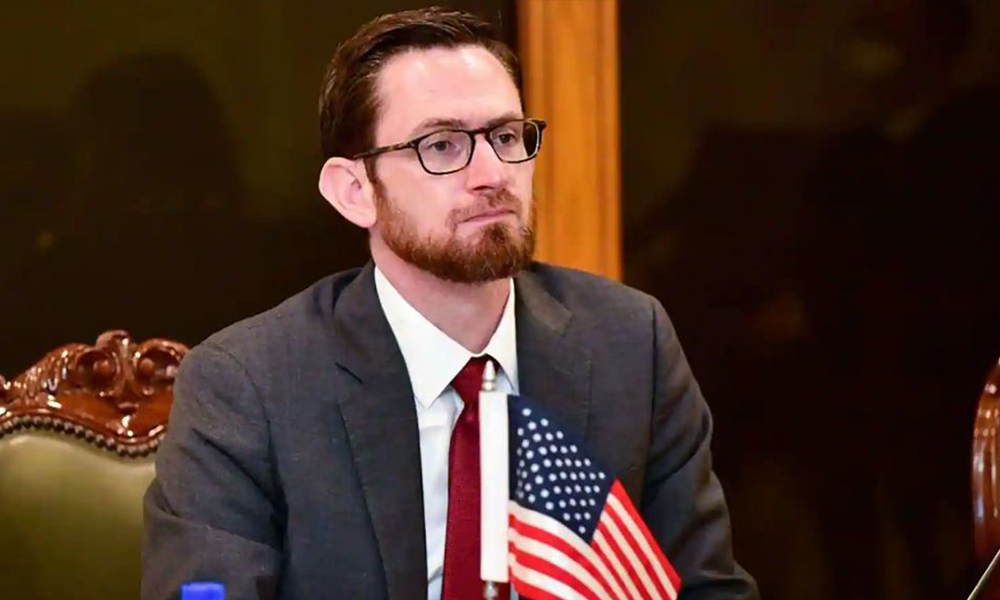
US Special Representative for Afghanistan Thomas West said on Friday the Islamic Emirate of Afghanistan’s (IEA) letter to Congress this week “misconstrued the facts” about the country’s economic and humanitarian crises.
In a series of tweets, West said: “The Taliban’s (IEA) letter to Congress earlier this week misconstrued the facts re Afghanistan’s economic & humanitarian crisis. Afghanistan was unfortunately already suffering a terrible humanitarian crisis before mid-August, made worse by war, years of drought, & the pandemic.”
This comes after Afghanistan’s acting foreign minister Mawlawi Amir Khan Muttaqi warned Wednesday that continued “sanctions” will not help the current situation and could instead lead to a major crisis including a mass migration.
In a letter addressed to the United States Congress, Muttaqi said after suffering decades of war, the Afghan people now “have a right to financial security.”
“Currently the fundamental challenge of our people is financial security and the roots of this concern lead back to the freezing of assets of our people by the American government,” he said.
He also said that following the signing of the Doha Agreement in February last year, the Islamic Emirate of Afghanistan (IEA) “no longer find ourselves in direct conflict with one another nor are we a military opposition, what logic could possibly exist behind the freezing of our assets?”
However, West said on Friday that “U.S. officials made clear to the Taliban (IEA) for years that if they pursued a military takeover rather than a negotiated settlement with fellow Afghans…then critical non-humanitarian aid provided by the international community – in an economy enormously dependent on aid, including for basic services – would all but cease. That is what occurred.”
He said the U.S. would “continue clear-eyed, candid diplomacy with the Taliban (IEA). Legitimacy and support must be earned by actions to address terrorism, establish an inclusive government, and respect the rights of minorities, women and girls – including equal access to education and employment.”
West also stated that the U.S. will continue to support the Afghan people with humanitarian aid. “We’ve provided $474 million this year, applaud the robust efforts of Allies and partners in this space, and are making every effort to help the UN and humanitarian actors scale up to meet needs this winter,” he said.






A new report by the Office of the United Nations High Commissioner for Human Rights (OHCHR) has warned that life for ordinary Afghans, especially women and girls, has worsened sharply under the rule of the Islamic Emirate.
The report, covering the period between August 2025 to January 2026, was presented at the latest session of the Human Rights Council in Geneva.
According to findings, policies and decrees imposed by the authorities have severely restricted access to education, employment, healthcare, and public life for women.
“The de facto authorities have, in effect, criminalized the presence of women and girls in public life,” said UN Human Rights chief, Volker Türk. “[…] Discrimination affects their healthcare, their access to civic space, and their freedom of movement and expression.”
The report also raised alarm over broader human rights concerns, including arbitrary detention, corporal punishment, shrinking civic space, and increasing restrictions on freedom of expression. UN officials say these developments reflect a continued deterioration in protections for basic rights and dignity.
The OHCHR report further warns that ongoing policies risk deepening Afghanistan’s humanitarian crisis, as restrictions on women—especially in sectors like healthcare—undermine essential services and long-term development.
The international community has repeatedly called on the Islamic Emirate to reverse restrictive measures and uphold international human rights obligations.
The Islamic Emirate, however, has maintained that laws in Afghanistan are based on Sharia, which must be respected by the international community.
Latest News
Islamic Relief Worldwide urges Afghanistan–Pakistan de-escalation, calls for aid to displaced
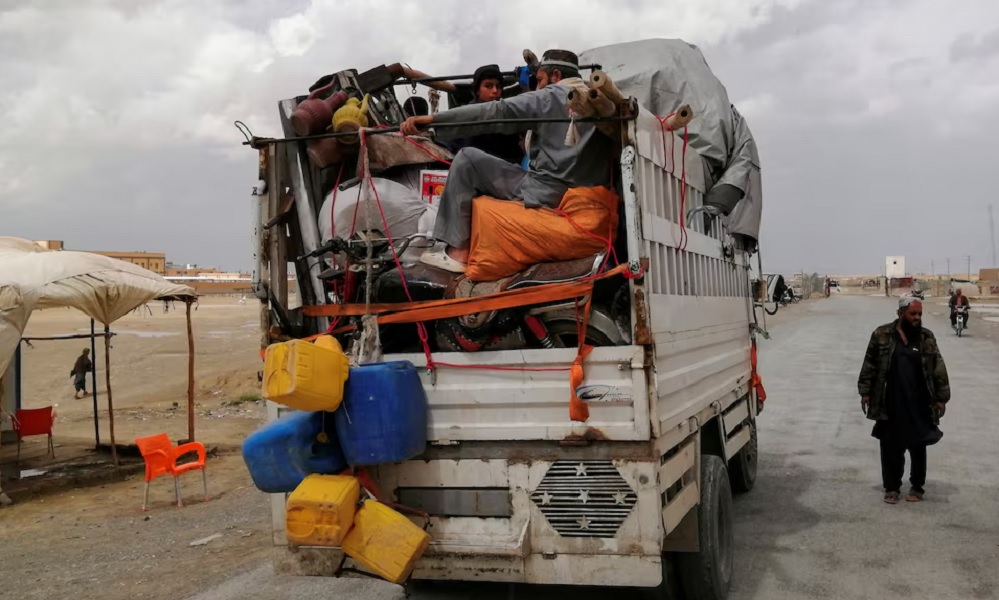
A UK-based Muslim charity has called for urgent de-escalation between Afghanistan and Pakistan, warning that escalating cross-Durand Line violence is driving a growing humanitarian crisis and displacing tens of thousands of civilians.
Islamic Relief Worldwide said it is expanding its humanitarian response as fighting intensifies along the Durand Line, forcing families to flee their homes in search of safety.
According to the UN, more than 115,000 Afghans have fled their homes near the Durand Line as heavy airstrikes and shelling have resumed after a brief pause over Eid al-Fitr. Hundreds of civilians have been killed or injured.
The organization warned that many displaced families are living in dire conditions, with limited access to shelter, food, and essential services. “Thousands of families have fled their homes with nothing and urgently need shelter and food. Whole families are sleeping out in the open, including elderly people and young children,” the charity said, adding that it is distributing tents, blankets, and cash assistance to help meet urgent needs.
Islamic Relief Worldwide has urged all parties to resume a ceasefire and prioritize civilian protection, stressing that the conflict is compounding Afghanistan’s already severe humanitarian challenges.
The country is also dealing with a surge in returnees from neighboring countries, with around three million Afghans having returned over the past year from Iran, Pakistan, and Tajikistan. Many are struggling to access livelihoods and basic services, increasing pressure on already limited resources.
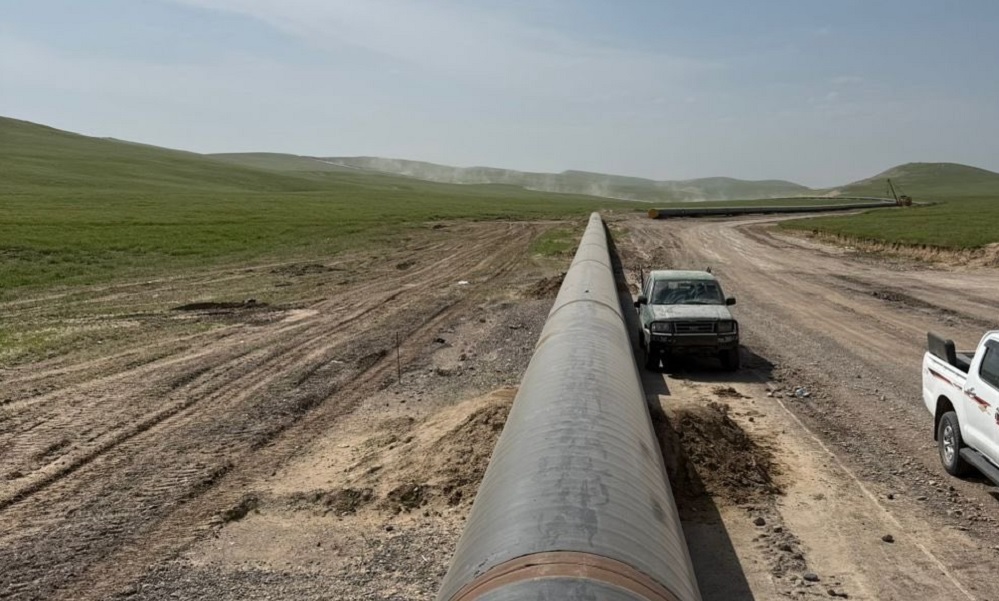
Afghanistan’s Ministry of Mines and Petroleum says construction of the TAPI Gas Pipeline is advancing steadily in Herat Province, with significant milestones already achieved.
According to the ministry, around 25 kilometers of the pipeline have been laid so far, while preparations for an additional 120 kilometers are now complete. The arrival of new pipes and technical equipment to the project site is expected to further accelerate construction in the coming months.
Homayoun Afghan, spokesperson for the ministry, said work on the Herat section of the project is progressing according to plan and is expected to be completed by the end of the current calendar year.
The TAPI pipeline, a major regional energy initiative linking Turkmenistan, Afghanistan, Pakistan, and India, is seen as a key driver of economic growth and regional cooperation. Afghan officials have repeatedly emphasized its potential to create jobs, boost revenues, and strengthen energy connectivity across the region.


ATN secures broadcast rights for inaugural Afghanistan Wrestling Premier League

UN report: Human rights situation in Afghanistan ‘deteriorating dramatically’

Russia backs Uzbekistan–Afghanistan trade hub, praises regional economic cooperation

Islamic Relief Worldwide urges Afghanistan–Pakistan de-escalation, calls for aid to displaced

Trump tells aides he is willing to end Iran war without reopening Hormuz, WSJ reports

Prominent Muslim scholar issues fatwa calling for Afghanistan-Pakistan ceasefire

Afghan air force strikes key Pakistani military installations in retaliatory operation

IEA Supreme Leader issues Eid-ul-Fitr message urging unity and support for Islamic system

14 Pakistani soldiers killed after military post falls along Durand line: MoD

Ronaldo’s private jet flies out of Saudi Arabia following US Embassy drone strike in Riyadh

Tahawol: Pakistani military shelling in Kunar

Saar: Impact of Middle East conflict on Afghanistan

Tahawol: Efforts for Kabul-Islamabad de-escalation

Saar: Restrictions on girls’ education in Afghanistan discussed

Tahawol: Concerns over spread of Middle East crisis discussed
-
 Latest News4 days ago
Russia deems US military presence in Afghanistan unacceptable
-
 Latest News5 days ago
Tajikistan shifts stance on Afghanistan amid rising border tensions
-
 Latest News4 days ago
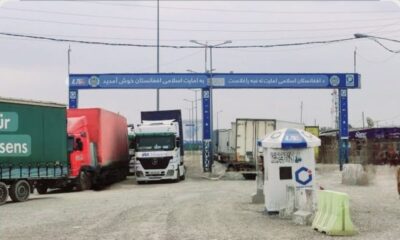
IEA says Iranian drivers no longer need visas to enter Afghanistan
-
 Latest News3 days ago
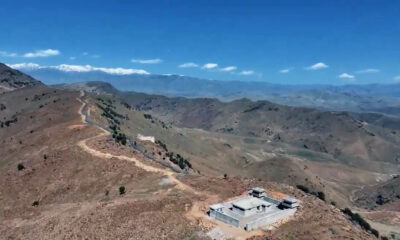
Afghan defense forces stand ready to protect national sovereignty: MoD
-
 Sport5 days ago
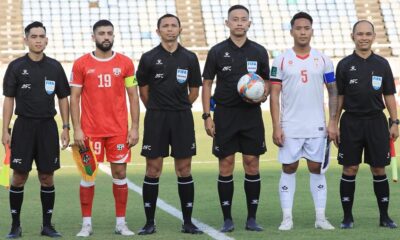
Myanmar trump Afghanistan 2-1 in Asian Cup Qualifier
-

 Sport5 days ago
Afghanistan to face Myanmar in crucial AFC clash
-
 Latest News5 days ago
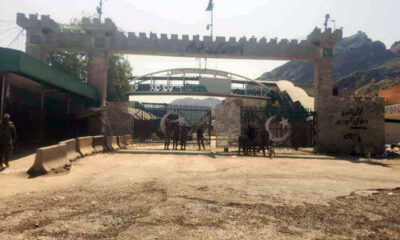
Torkham crossing reopens for returning Afghan migrants
-

 International Sports2 days ago
Injury concerns mount ahead of FIFA World Cup 2026 as stars sidelined