
Latest News
Without work and food, hundreds flee to Pakistan and Iran daily


A main bus terminal in Kabul is nowadays crowded as many residents of the city try to find their way out of Afghanistan into some neighboring countries.
Bus drivers at the Paitakht Bus Terminal said many families were trying to leave Kabul each day, but many could not afford the bus fare to destinations near the border cities.
“There are many families traveling (out of here) these says days. Most of them travel from here to Mazar-i-Sharif, and then many of them cross the border to Iran from Mazar-i-Sharif,” said bus driver Sahil.
Underlining the economic pressures building on Afghanistan’s new Islamic Emirate government, prices for staples like flour, fuel and rice have risen and long queues are still forming outside banks as they strictly ration withdrawals.
Some humanitarian aid has started to arrive and limited trade has returned across land borders with Pakistan, but a severe cash shortage is crippling day-to-day economic activity and decades of war have left much infrastructure in tatters.
Foreign aid payments, which accounted for 40% of Afghanistan’s gross domestic product, have all but stopped as the West considers how to deal with the IEA that, until August, led an insurgency against the U.S.-backed government.
Abdullah, one Kabul resident hoping to leave, said: “We will leave for Pakistan or Iran because we don’t have work here. We work the whole day for a single bite of bread. What else can we do? We have brought these items at home and have brought them here to sell, since there is no money and no work.”
This comes amid a continuing economic crisis including a severe cash shortage in the heavily dollarized country.
With dollar shipments to Afghanistan having been stopped and with sanctions against the IEA in place, thousands of government employees have not been paid and work has dried up especially as banks have a strict weekly withdrawal limit.
Members of a Russia-led security bloc that includes some countries adjacent or close to Afghanistan meanwhile have no plans to host Afghan refugees, bloc member Kazakhstan said last week.
The Collective Security Treaty Organisation (CSTO) includes three Central Asian nations – Tajikistan, which has a lengthy border with Afghanistan, Kyrgyzstan and Kazakhstan – as well as several more remote former Soviet republics.
At a heads-of-state meeting of the bloc in Tajikistan on Thursday, Kazakh President Kassym-Jomart Tokayev “supported the joint CSTO position that the placement of Afghan refugees or foreign military bases on our countries’ territories is unacceptable”, his office said in a statement.
Two more Central Asian nations, Uzbekistan and Turkmenistan, border Afghanistan but are not CSTO members. However, Uzbekistan has also said it would only allow short-term transit of refugees by planes to third countries.

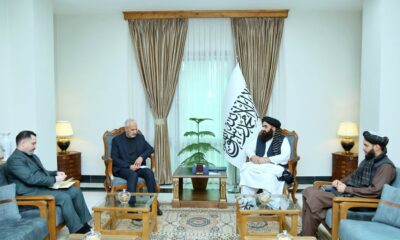

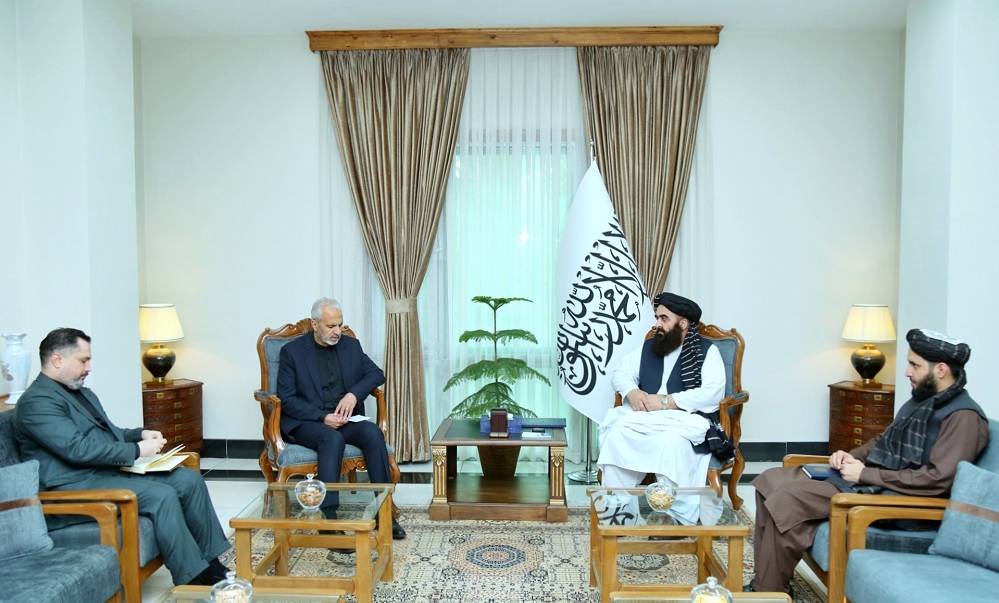
Amir Khan Muttaqi, Foreign Minister of the Islamic Emirate of Afghanistan, met with Ali-Reza Beikdeli, Iran’s acting ambassador in Kabul, to discuss bilateral relations and regional developments.
According to a statement from the Afghan Ministry of Foreign Affairs, Muttaqi criticized what he called the “aggression” of the United States and Israel against Iran, warning that the expansion of conflict to other countries affects the entire region.
He also highlighted the growing trade relations between Afghanistan and Iran, describing them as a positive sign of cooperation. In addition, Muttaqi praised the “constructive stance” of Iranian officials regarding recent tensions between Afghanistan and Pakistan, emphasizing that the resolution of legitimate concerns from both sides is only possible through genuine dialogue.
Beikdeli reaffirmed Iran’s position on U.S. and Israeli actions and described bilateral cooperation with Afghanistan—particularly in trade—as positive. He added that Iran’s leadership is closely monitoring the situation between Afghanistan and Pakistan and supports a peaceful resolution.
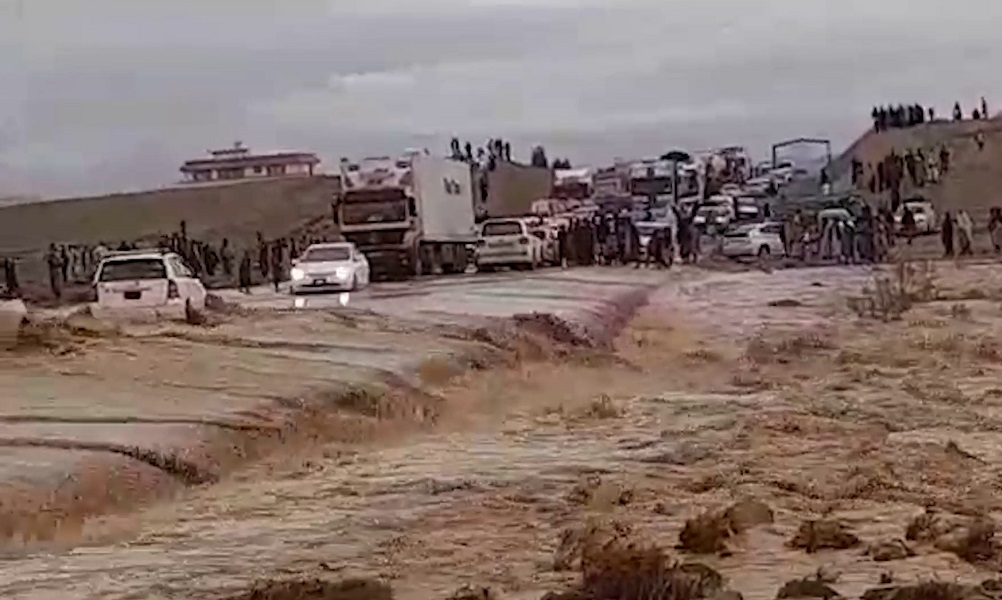
At least 17 people have lost their lives and 26 others have been injured as floods, landslides, and lightning strikes hit multiple provinces across Afghanistan, authorities said on Sunday.
Yousuf Hammad, spokesperson for the National Disaster Management Authority, said that in the past 24 hours, the provinces of Parwan, Daikundi, Maidan Wardak, Logar, Herat, Farah, Ghor, Badghis, Samangan, Sar-e Pol, Jowzjan, Faryab, and Laghman were all affected by natural disasters.
The disasters have also caused significant property damage. Thirty-seven homes were completely destroyed, while 110 others suffered partial damage. Around 80 kilometers of roads and 582 jeribs of agricultural land were damaged or destroyed.
Authorities emphasized that emergency response efforts are ongoing to provide relief and assistance to the affected communities.
Latest News
Afghanistan and Uzbekistan hold high-level bilateral meeting to boost trade and economic cooperation
Governor Abdullazov welcomed the initiatives of Minister Azizi, describing the Afghan people as friends and brothers, and provided an overview of the industrial and production capacities of Namangan Province.
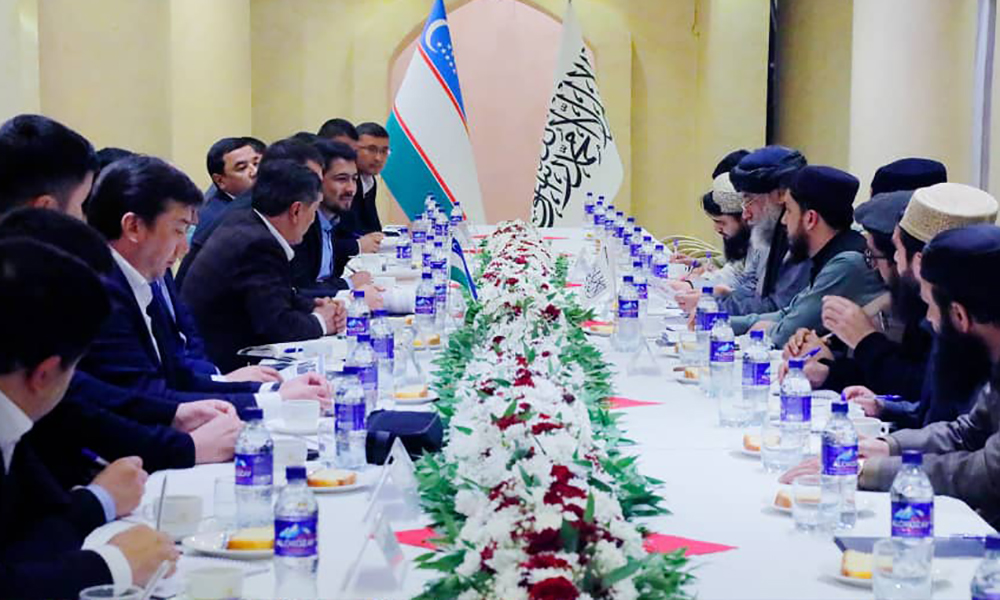
A high-level bilateral meeting between Afghanistan and Uzbekistan was held to strengthen trade and economic relations, particularly with the Namangan region of Uzbekistan. The meeting brought together Nooruddin Azizi, Minister of Industry and Commerce of the Islamic Emirate of Afghanistan, and Shukhrat Abdullazov, Governor of Namangan Province, along with their respective delegations.
At the outset of the meeting, Minister Azizi expressed appreciation for Uzbekistan’s four years of cooperation with the Islamic Emirate and the people of Afghanistan, emphasizing the country’s commitment to brotherhood and bilateral collaboration.
Governor Abdullazov welcomed the initiatives of Minister Azizi, describing the Afghan people as friends and brothers, and provided an overview of the industrial and production capacities of Namangan Province.
During the discussions, both sides explored cooperation in key sectors, including:
- Export and production of medicinal herbs and spices in Afghanistan
- Poultry farming capacity and joint ventures in the sector
- Investment and trade in precious and semi-precious stones, including exports
- Export of agricultural machinery and equipment, drip irrigation systems, and collaboration with Afghan farmers
Minister Azizi reaffirmed Afghanistan’s readiness for joint ventures and trade promotion between the two countries, highlighting investment opportunities in cold storage facilities, agricultural and medicinal product factories, and other sectors.
At the conclusion of the meeting, it was decided that a delegation from Afghanistan’s private sector would visit Namangan Province to identify trade opportunities. The Afghan delegation was also invited to attend the annual historic Flower Festival in Namangan, held every May.


Bamyan hosts ski competition sponsored by AWCC

Afghan FM meets Iran’s acting ambassador in Kabul, discusses regional issues

Pentagon preparing for weeks of ground operations in Iran, Washington Post reports

Seventeen dead, dozens injured in floods across Afghanistan

Afghanistan and Uzbekistan hold high-level bilateral meeting to boost trade and economic cooperation

Pakistani military jet downed in Afghanistan’s Jalalabad, pilot captured alive

Prominent Muslim scholar issues fatwa calling for Afghanistan-Pakistan ceasefire

Afghan air force strikes key Pakistani military installations in retaliatory operation

IEA Supreme Leader issues Eid-ul-Fitr message urging unity and support for Islamic system

14 Pakistani soldiers killed after military post falls along Durand line: MoD

Tahawol: Concerns over spread of Middle East crisis discussed

Saar: Weakening relations between Kabul and Washington discussed

Exclusive interview with Indrika Ratwatte, Deputy UN Special Representative for Afghanistan

Tawsia: Efforts to boost Afghanistan’s domestic production and economic diplomacy

Tahawol: Discussion on day 27 of Iran–US war
-
 Latest News3 days ago
Tajikistan shifts stance on Afghanistan amid rising border tensions
-

 Latest News2 days ago
Russia deems US military presence in Afghanistan unacceptable
-
 Latest News2 days ago
IEA says Iranian drivers no longer need visas to enter Afghanistan
-
 Latest News4 days ago
Two civilians killed, eight injured in fresh shelling by Pakistan in Kunar
-

 Sport4 days ago
IPL 2026: RCB sold for $1.78 billion in landmark deal
-

 Sport3 days ago
Afghanistan to face Myanmar in crucial AFC clash
-
 Sport3 days ago
Myanmar trump Afghanistan 2-1 in Asian Cup Qualifier
-

 Business4 days ago
‘Made in Afghanistan’ expo opens in Tashkent