
Women paying biggest price for aid cuts in Afghanistan: WFP
“More than one million mothers and children no longer benefit from nutritional aid due to a severe lack of funding.”

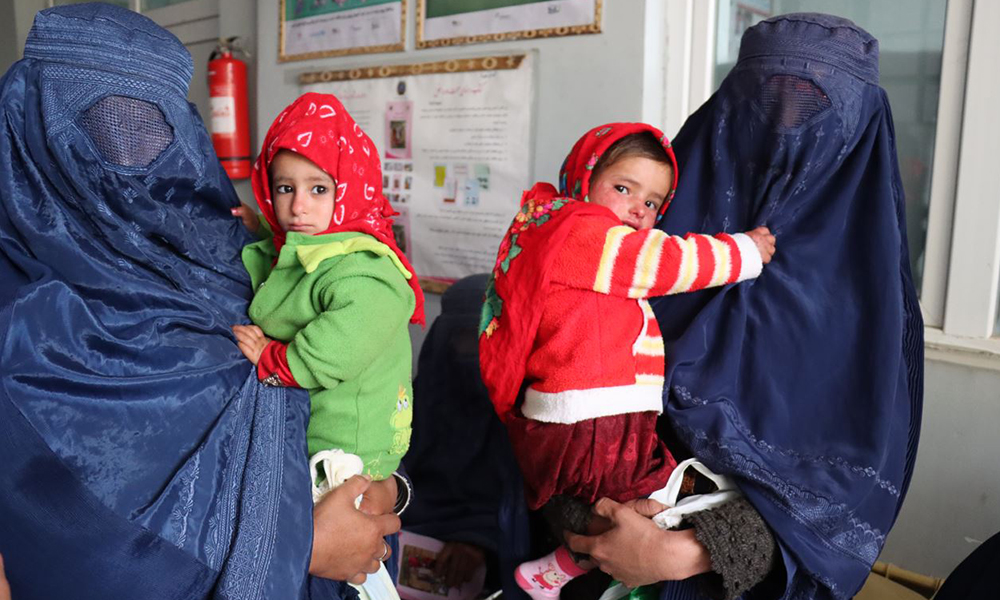
The United Nations World Food Program (WFP) has once again expressed concern about the lack of funding for aid programs for the needy in Afghanistan, saying that women will suffer the most.
The UN agency said on X on Sunday that in Afghanistan, it is the women who bear the heavy burden with less options for livelihood.
“Women are paying the greatest cost for aid cuts in Afghanistan,” WFP said.
“More than one million mothers and children no longer benefit from nutritional aid due to a severe lack of funding.”
According to the organization, four million women and children in Afghanistan are struggling with malnutrition, and the situation will only get worse if funding is not provided.




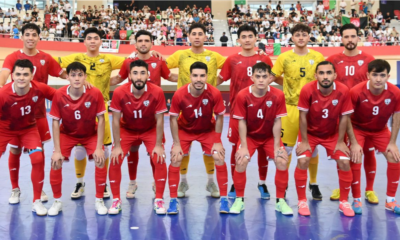




Abu Muslim Farah beat Omar Zawak Herat 4-0 in the 30th match of the sixth season of the Roshan Afghanistan Champions League, delivering an impressive performance.
The match was played today (Wednesday) at the Afghanistan Football Federation Stadium.
Samiullah Naderi scored Abu Muslim Farah’s opening goal in the final minutes of the first half.
Abu Muslim Farah continued their attacking play in the second half, with Aman Sardari scoring the team’s second goal in the 69th minute with a spectacular header.
Omid Rajabi and Mirois Ghafouri then added two more goals to complete a 4-0 victory for Abu Muslim Farah.
Amanullah Sardari, captain of Abu Muslim Farah, was named Player of the Match against Omar Zawak Herat.
Abu Muslim Farah will face Ariana Khost in their next match on October 2, while Omar Zawak Herat will take on Istiqlal Kabul on the same day.
The sixth season of the Roshan Afghanistan Champions League is being broadcast live on Ariana Television.


Tahawol: Improvement in Afghanistan-China relations discussed

Saar: Expanding ties with regional and global countries discussed

Abu Muslim Farah beat Omar Zawak Herat 4-0 in Afghanistan Champions League

ACB launches nationwide fast-bowling talent hunt

US extends Qatar camp stay for more than 1,000 Afghans

Saudi energy group signs major Afghanistan deals covering gas exploration and pipeline plans

Iranian clubs to face Gulf opponents at neutral venues in Asian Champions League Elite

Khalilzad: Afghanistan ready to attract major investment

Ariana Television Network secures exclusive rights to Afghanistan’s 2026/27 cricket series

Pakistan, Saudi Arabia and Türkiye strengthen new Mecca Defence Alliance
Tahawol: Improvement in Afghanistan-China relations discussed
Saar: Expanding ties with regional and global countries discussed

Tahawol: Absence of Afghanistan’s envoy at UNGA discussed

Saar: Assessment of war between Afghanistan and US discussed

Saar: Afghanistan’s image at UNGA
-

 Sport4 days ago
Afghan bodybuilder Ali Bilal finishes runner-up at Mr Olympia for third straight year
-
 Latest News4 days ago
Afghanistan says 28 killed, 32 captured in Nuristan operation
-
 World4 days ago
Trump rejects Iranian proposal to open Hormuz and end fighting
-
 Sport5 days ago
Afghanistan to face India in Asian Games cricket quarter-final
-

 Sport5 days ago
Afghanistan Champions League: Omar Zawak Herat beat Toofan Herat 1-0
-
 World5 days ago
Iran awaits US move after WSJ report says Trump rejects peace plan
-

 Latest News5 days ago
Khalilzad questions Pakistan’s commitment to Afghan welfare
-
 Latest News4 days ago
UNDP, UN Women launch financing initiative for Afghan women entrepreneurs