
Latest News
33 civilians killed or wounded in past 48 hours in Kandahar

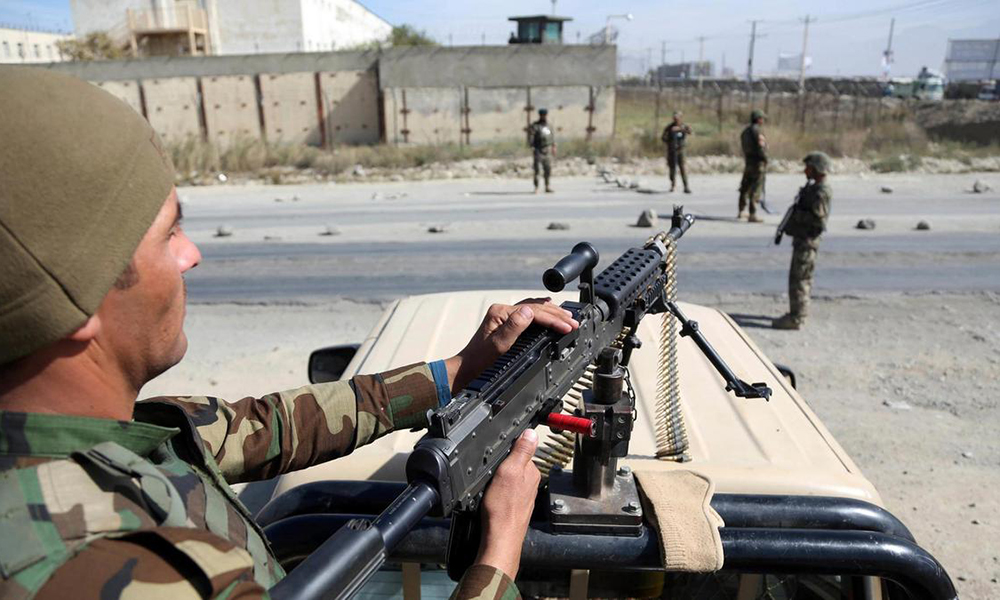
At least 33 civilians killed or wounded in past 48 hours in clashes in Kandahar province, local officials said on Sunday.
Officials at the Mirwais regional hospital in Kandahar said seven bodies and 26 injured people had been taken to the hospital.
“Besides from Daman and Arghandab districts, the victims are also brought from PD6, PD7, PD8, PD9 and PD13 of Kandahar city,” health officials said.
The injured include
women and children, officials said.
Currently, government forces and the Taliban are fighting in PD6, PD7, PD8 and PD9 of Kandahar city.
Earlier, Rohullah Akhundzada, the governor of Kandahar, said the districts of Kandahar province had not fallen militarily but politically.
He added that the only reason for the fall of the districts was because of the fight against corruption in the province, started by him.
He warns that he will provide all the documents of corruption to the people.
“When I started fighting corruption, they started a political downfall,” he said.
He also warns the elders of Kandahar that if they do not stop these political controversies, he will expose everything they have done over the last 18 years.


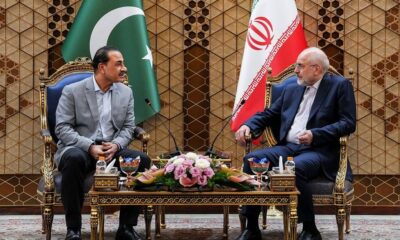


Uzbek and Norwegian officials have held a two-day workshop in Oslo to discuss Afghanistan’s regional integration, security and economic cooperation, according to Javlon Vakhabov, an adviser to Uzbekistan’s president.
In a post on X, Vakhabov said the discussions were convened by the Norwegian Center for Conflict Resolution (NOREF) and focused on promoting pragmatic engagement with Afghanistan through sustained dialogue and cooperation in security, trade, energy, transit and regional connectivity.
The Uzbek delegation included Ismatulla Irgashev, the president’s special envoy for Afghanistan; Rakhmatulla Nurimbetov, Uzbekistan’s ambassador to Norway; Odil Gafarov, deputy director of the Institute for Advanced International Studies at the University of World Economy and Diplomacy; and Vakhabov himself.
Vakhabov said he shared Uzbekistan’s experience in peacebuilding and good-neighbourly relations, stressing that lasting stability depends on Afghanistan’s gradual integration into regional cooperation processes.
Latest News
Qatar calls for shift from humanitarian aid to economic recovery in Afghanistan
She also said Afghanistan’s future should be shaped through a comprehensive political process led by Afghans themselves, with respect for the country’s sovereignty, independence and territorial integrity.
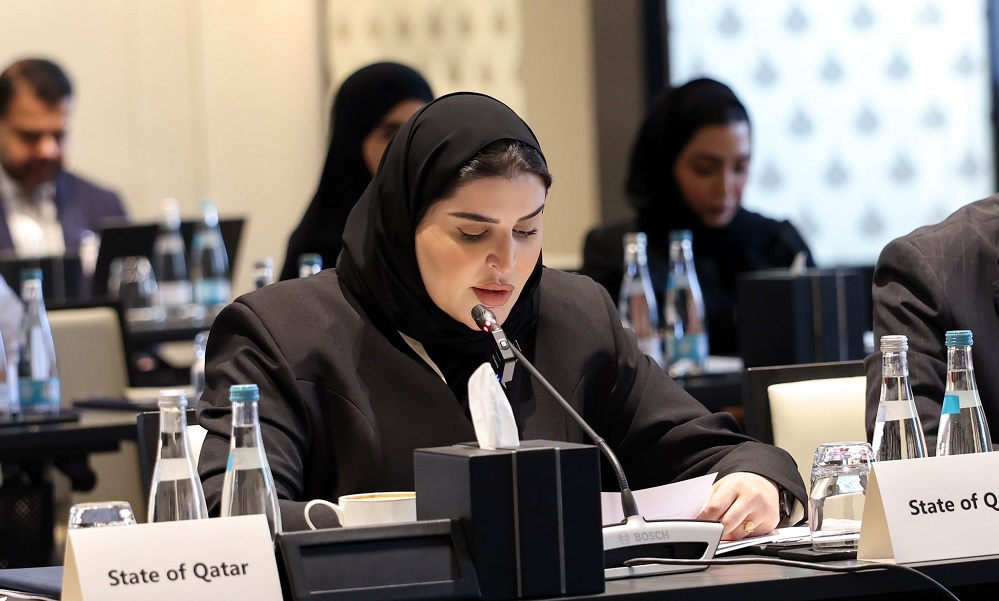
Qatar has called for a shift from emergency humanitarian assistance toward economic recovery and private-sector development in Afghanistan, stressing the need for sustained international engagement to build a more stable future for the country.
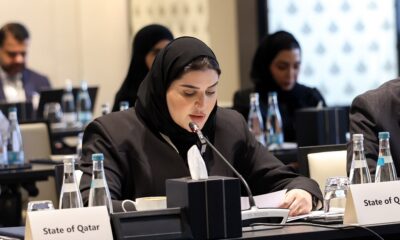
Qatar’s Minister of State for International Cooperation, Maryam bint Ali bin Nasser Al Misnad, made the remarks Tuesday at the Afghanistan Coordination Group meeting in Doha.
Al Misnad said Qatar has provided and pledged nearly $150 million over the past decade for humanitarian and development projects in Afghanistan, particularly in health care, education and emergency response.
She warned that severe humanitarian needs and economic difficulties continue to affect Afghan families, while the return and displacement of people are placing additional pressure on public services and livelihoods. She said urgent needs remain in food security, health care, nutrition, education and access to water.
The minister stressed that assistance must be delivered transparently, with accountability and in line with humanitarian principles, with particular attention to vulnerable groups, including women and young people.
She also said Afghanistan’s future should be shaped through a comprehensive political process led by Afghans themselves, with respect for the country’s sovereignty, independence and territorial integrity.
Al Misnad highlighted Qatar’s role in facilitating dialogue on Afghanistan since the launch of the Doha peace process in 2013, as well as its support for initiatives such as the Solutions Strategy for Afghan Refugees and the Afghanistan Humanitarian Fund.
She said the UN-led Doha Process provides a platform for political engagement and practical cooperation, highlighting counter-narcotics and private-sector development as areas where international efforts could deliver tangible results.
Al Misnad urged participants to maintain Afghanistan’s place on the international agenda, establish clear priorities and renew their commitments to the Afghan people, emphasizing that technical cooperation should complement broader political efforts.
Latest News
UN warns 19.2 million Afghans could face acute food insecurity this winter
Cherevko also warned that more than four million children aged six months to five years are projected to need treatment for acute malnutrition next year, including more than one million expected to suffer from severe acute malnutrition.
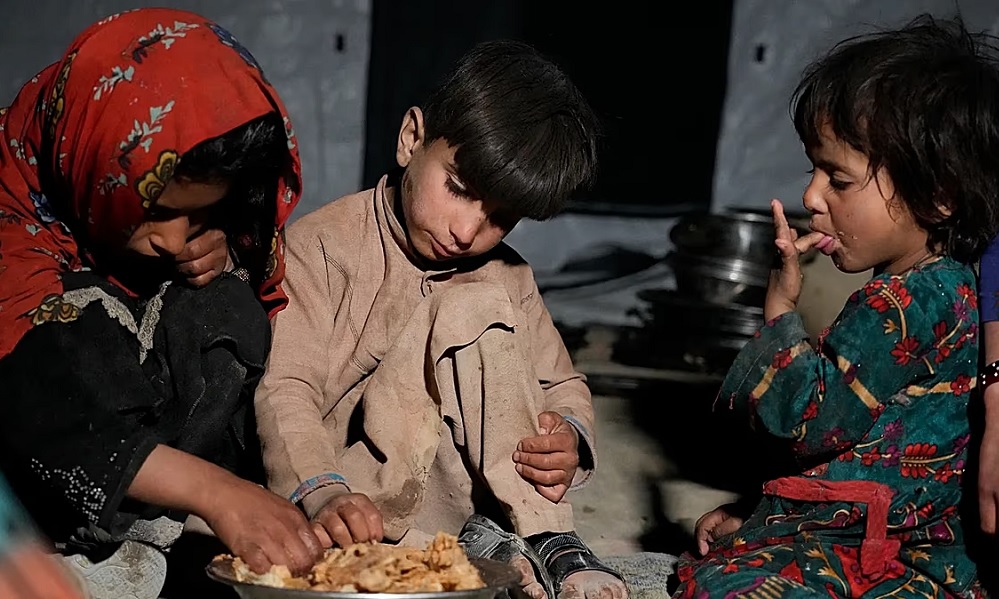
The United Nations has warned that 19.2 million people in Afghanistan could face acute food insecurity during the winter lean season from November 2026 to April 2027, including five million people expected to experience emergency levels of hunger.
Olga Cherevko, a UN humanitarian spokesperson in Afghanistan, presented the figures during a press briefing in Geneva on October 20, citing the latest Integrated Food Security Phase Classification (IPC) analysis.
She said 15.9 million Afghans, nearly one in three people in the country, faced acute food insecurity at crisis level or worse between September and October, including 3.4 million in emergency conditions.
Cherevko also warned that more than four million children aged six months to five years are projected to need treatment for acute malnutrition next year, including more than one million expected to suffer from severe acute malnutrition.
According to the UN official, around one-third of nutrition sites across Afghanistan have closed or suspended services, largely because of funding cuts, raising concerns about the consequences for vulnerable children.
Cherevko said that although improved rainfall and agricultural production have supported this year’s harvest, food remains unaffordable or inaccessible for millions of people. She noted that years of drought, economic hardship and conflict have weakened families’ ability to cope with further shocks.
She stressed that humanitarian assistance remains essential but cannot indefinitely compensate for the lack of economic opportunities and basic public services. She called for sustained investment in agriculture, rural livelihoods, local markets, employment, water systems, and health and nutrition services.
The UN official also highlighted the impact of restrictions on women and girls, warning that excluding them from education and employment undermines household incomes, public services and Afghanistan’s long-term recovery.
She cited UNICEF estimates indicating that, if the restrictions continue, Afghanistan could lose up to 20,000 women teachers and more than 5,000 female health workers by 2030.
Cherevko urged humanitarian organisations and other stakeholders to act before winter, including by delivering food assistance, protecting livestock and other productive assets, supporting farmers ahead of the planting season, and maintaining access to essential health, nutrition and water services.
She said that while humanitarian aid saves lives in the immediate term, sustained and inclusive investment in livelihoods, public services and economic opportunities is essential to help Afghan families become less dependent on emergency assistance.


Uzbekistan, Norway discuss Afghanistan and regional security in Oslo

Governments warn citizens over security risks in France after riots

Transit of Afghan goods through Sheikh Abu Nasr Farahi border crossing doubles

Qatar calls for shift from humanitarian aid to economic recovery in Afghanistan

UN warns 19.2 million Afghans could face acute food insecurity this winter

Cricket Bonanza: Afghanistan set for packed international schedule

Afghanistan says 28 killed, 32 captured in Nuristan operation

Silk Road highway in Wakhan corridor now reaches the China border

CNN, MS NOW and Politico sue Trump, challenging White House ban

Afghanistan on climate front line as Kabul faces groundwater warning
Governments warn citizens over security risks in France after riots

Tahawol: Iran’s reaction to Pakistan’s mediation discussed

Saar: Review of SCO meeting in Tajikistan

Trump blames migrants for violence in France as US midterms loom

Tahawol: US–Iran tensions escalate with mutual threats
-
 Sport3 days ago
Afghanistan reach Brazil futsal tournament final after beating Cape Verde 4-2
-

 Regional4 days ago
Trump says US may strike Iran’s ‘Pickaxe Mountain’ nuclear facility
-
 World2 days ago
Violent protests spread across Europe as Albanian PM blames ‘foreign hand’
-
 Latest News4 days ago
Afghanistan’s hunger crisis deepens as 16 million face food insecurity ahead of winter
-

 Sport5 days ago
Afghanistan Champions League: Abu Muslim Farah beat Sarsabz Yashlar 3-1
-

 Latest News3 days ago
Hegseth says only a few NATO allies were involved in fighting in Afghanistan
-

 World3 days ago
France rocked by nationwide clashes, looting and fires
-
 Latest News4 days ago
Russian deputy prime minister to visit Afghanistan soon for trade and economic talks