
Latest News
Civilian Casualties in Afghanistan Remain at Record High in 2015

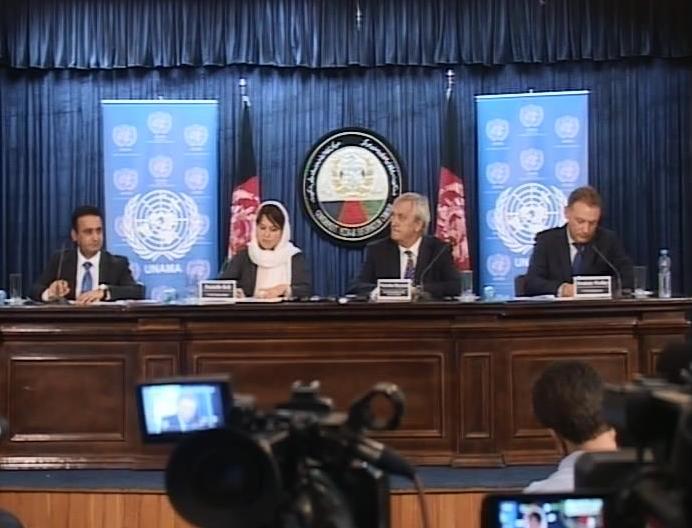
PRESS RELEASE: Civilian casualties remain at record high levels in first half of 2015
KABUL, 5 August 2015 –The Afghan conflict continued to exact a heavy toll on Afghancivilians in the first six months of 2015, with civilian casualties projected to equal or exceed the record high numbers documented in 2014, the United Nations Assistance Mission in Afghanistan (UNAMA) said today.
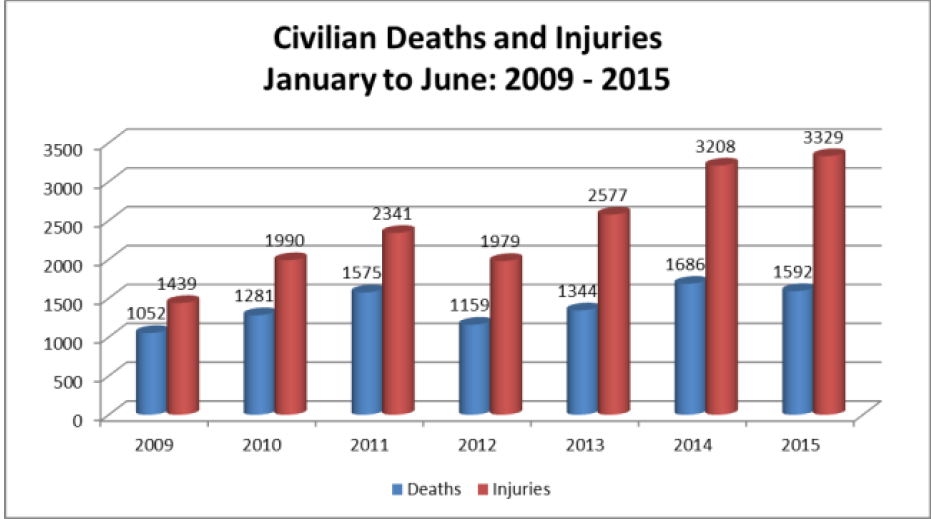
Released today, UNAMA’s 2015 Midyear Report on Protection of Civilians in Armed Conflict documented 4,921 civilian casualties (1,592 deaths and 3,329 injured) in the first half of 2015, a one per cent increase in total civilian casualties compared to the same period in 2014.
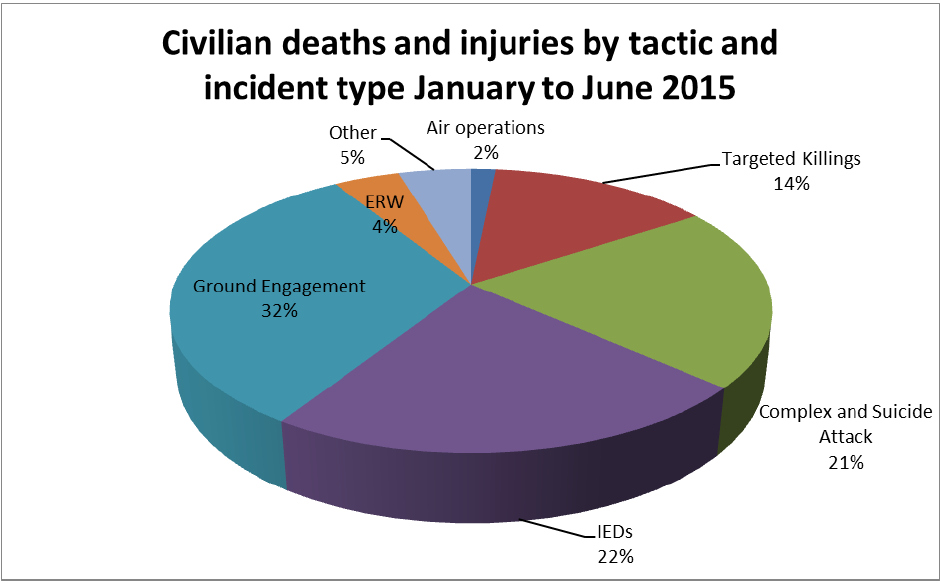
The vast majority – or 90 per cent – of civilian casualties resulted from ground engagements, improvised explosive devices, complex and suicide attacks and targeted killings, according to the report, prepared in coordination with the Office of the United Nations High Commissioner for Human Rights.
“Afghan civilians have suffered far too long from this destructive conflict. The devastating consequences of this violence against civilians as documented in this report should serve to strengthen the broad conviction that peace is urgently needed,” said Nicholas Haysom, head of UNAMA.
“Until peace is achieved, all parties to the conflict must fulfil their obligations under international humanitarian law to minimize the impact of the conflict on civilians and match their public statements on the protection of civilians with concrete actions,” said Haysom, who is also the UN Secretary-General’s Special Representative for Afghanistan.
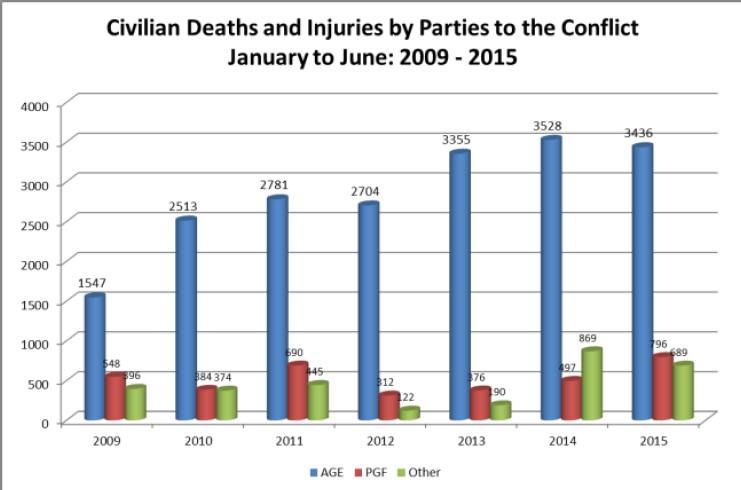
Anti-Government Elements continued to cause the most harm despite a slight reduction in total civilian casualties. UNAMA attributed 70 per cent of civilian casualties to their activities.
Civilian deaths and injuries caused by Pro-Government Forces caused 16 per cent of civilian casualties (15 per cent from Afghan National Security Forces and Pro-Government Militia and one per cent from International Military Forces). UNAMA notes with concern that this is a 60 per cent increase compared to the same period in 2014, mostly due to increased civilian casualties caused by Pro-Government Forces during ground engagements.
Fighting between the parties to the conflict that could not be attributed to one specific party caused 10 per cent of civilian casualties while unattributed explosive remnants of war caused the remaining four per cent.
Ground engagements between parties to the conflict caused 1,577 civilian casualties (379 deaths and 1,198 injured) – a 19 per cent decrease – yet remained the leading cause of civilian casualties in Afghanistan. Similarly, improvised explosive devices caused 1,108 civilian casualties (385 deaths and 723 injured) – a 21 per cent decrease – while remaining the second leading cause of civilian casualties in Afghanistan.
The slight rise in civilian harm recorded in the first half of 2015 is primarily a result of increased civilian casualties from suicide and complex attacks and targeted killings – the third and fourth leading causes of civilian casualties respectively. Suicide and complex attacks executed by Anti-Government Elements caused 1,022 civilian casualties (183 deaths and 839 injured), a 78 per cent increase compared to the first six months of 2014. Civilian casualties from targeted killings increased by 57 per cent, causing 699 civilian casualties (440 deaths and 259 injured) and became the leading cause of civilian deaths, despite being the fourth leading cause of overall civilian casualties (deaths and injured combined).
“This report lays bare the heart-rending, prolonged suffering of civilians in Afghanistan, who continue to bear the brunt of the armed conflict and live in insecurity and uncertainty over whether a trip to a bank, a tailoring class, to a court room or a wedding party, may be their last,” said UN High Commissioner for Human Rights Zeid Ra’ad Al Hussein.
“Impunity for serious violations of international human rights and humanitarian law has been reigning for too long in Afghanistan, and fuelling the cycle of violence. There need to be urgent, concrete steps towards accountability, to break this venomous cycle.”
In the first six months of 2015, UNAMA documented a 23 per cent increase in women casualties and a 13 per cent increase in children casualties.
“The rise in the numbers of women and children killed and maimed from conflict-related violence is particularly disturbing,” said Danielle Bell, UNAMA Director of Human Rights. “This year,
UNAMA recorded the highest number of children and women casualties compared to the same period in previous years. All parties to the conflict must undertake stronger measures to protect civilians from harm. When the conflict kills or maims a mother, child, sister or brother, the repercussions for families and communities are devastating and long-lasting.”
The report outlines key steps to be taken by parties to the conflict to mitigate casualties and protect civilians from harm, including the following:
Anti-Government Elements:
Cease the deliberate targeting of civilians and civilian locations, including places of worship and culture, civilian Government offices and aid workers.
Cease carrying out indiscriminate and disproportionate attacks.
Cease firing mortars, rockets and grenades from and into civilian-populated areas.
Cease the use of IEDs, particularly suicide and complex attacks, in all areas frequented by civilians, and stop using illegal pressure-plate IEDs.
Government of Afghanistan:
Cease firing mortars, rockets and grenades into civilian-populated areas.
Develop and approve a national policy on civilian casualty mitigation backed by an action plan with concrete objectives to prevent civilian casualties in the conduct of hostilities.
Disband and disarm all armed groups and militia, and ensure accountability for those members of armed groups who carry out human rights abuses.
International Military Forces:
Support the Government of Afghanistan in the development of a national policy on civilian casualty mitigation and support the implementation of an action plan to prevent civilian casualties in the conduct of hostilities.
Continue to take steps to ensure that all international military or foreign intelligence and security forces operating in Afghanistan, either independently or in support to Afghan national security forces, take all necessary measures to protect civilians during ground and aerial operations.

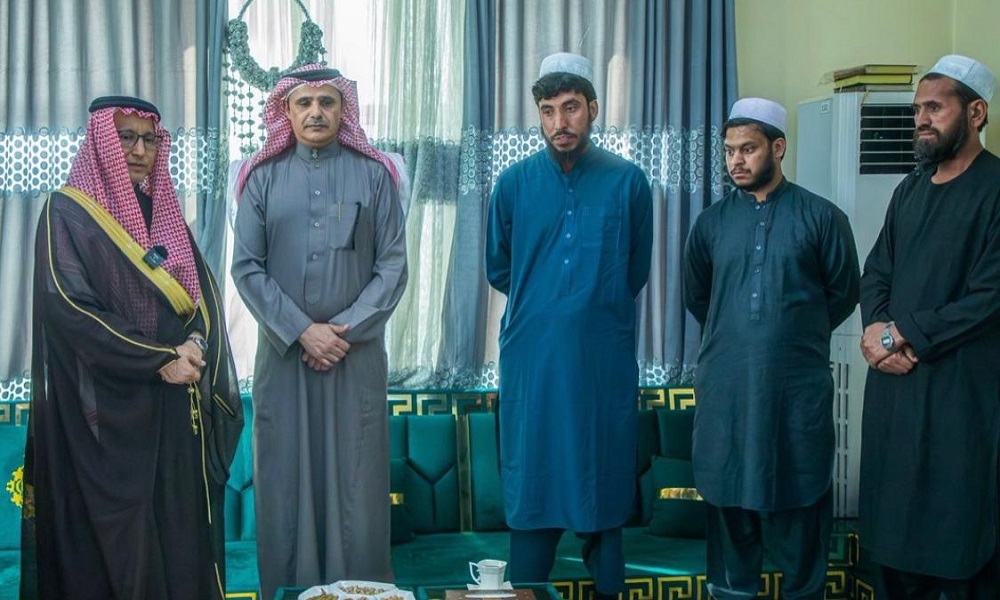
The spokesperson of the Islamic Emirate Zabihullah Mujahid announced on Wednesday that three Pakistani soldiers, who had been captured by Afghan forces on October 12, 2025, during clashes with Pakistani forces, were released to mark the month of Ramadan. The soldiers were handed over to a Saudi delegation.
According to Mujahid, the Islamic Emirate of Afghanistan, based on a policy emphasizing the maintenance of positive relations with all countries, responded positively to Saudi Arabia’s request and, on the occasion of hosting the negotiating delegation that arrived in Kabul last Monday, released the three Pakistani soldiers.
Latest News
Grateful to Afghans and Ulama for obeying the Islamic Emirate, says Hibatullah Akhundzada

Sheikh Hibatullah Akhundzada, the leader of the Islamic Emirate of Afghanistan (IEA), in a speech to the scholars of the districts of Kandahar, expressed gratitude to the scholars of Afghanistan and to the people for obeying the Islamic Emirate.
According to a statement released by Hamdullah Fitrat, Deputy Spokesperson of the Islamic Emirate, Akhundzada said in his speech that the ulama are leaders and guides of the Ummah in matters of Sharia.
Akhundzada emphasized that the entire Ummah and the emirs are obligated to obey the scholars in matters of Sharia, seek guidance from them, and consult with them on religious issues.
“Encourage people to (practice) unity, obey one another, and consult among yourselves. The system is built by you and can also be harmed by you. If you remain vigilant, this system will endure. Strive to eliminate the customs and practices of ignorance, do not be negligent, and officials must be attentive to their responsibility’s day and night, without wasting time on futile matters. Do not covet worldly rank and status. Your benefit lies in obedience; do not show favoritism in obedience. Promote a spirit of obedience among the people, because through obedience, unity is created and your community becomes strong,” Akhundzada added.
Akhundzada stated: “Islam and Sharia have been preserved by the ulama and will continue to be preserved. At all times, efforts have been made to weaken religion and Islam, and attempts have been made to distort Sharia rulings, which continue even today to divert people from the right path. However, the ulama have prevented distortion, alteration, and changes in Sharia. At various times, they have written books and treaties and enlightened the minds of the people. The Messenger of Allah, peace be upon him, also confronted such actions and defended Islam against the Jews.”
He added: “Allah Almighty has placed a heavy responsibility on the ulama. If the scholars have strong determination and resolve, many evils will be removed from society. If we explain the harmful consequences of vices from the pulpit and in such gatherings, and teach the people Sharia rulings, many people will be reformed. Since people are believers and Muslims, preventing vices is the responsibility of the ulama. The people of Afghanistan are pious; they have given testimony in defense of Islam, borne wounds, endured prisons, and suffered various hardships. It is the responsibility of the ulama to prevent sedition, reform the minds and morals of the people, and prevent corruption.”
The leader of the Islamic Emirate stressed: “The survival, success, and preservation of the Islamic system depend on religious knowledge. One of the most important responsibilities of the Islamic system is to promote religious knowledge so that it spreads and people become aware of religion, Islam, and Sharia. Therefore, the ulama must convey religious knowledge to the people.”
At the end of the speech, according to the statement, all the ulama renewed their pledge of allegiance to the leader of the Islamic Emirate and promised that they would remain steadfast supporters of his leadership and the Sharia-based system.
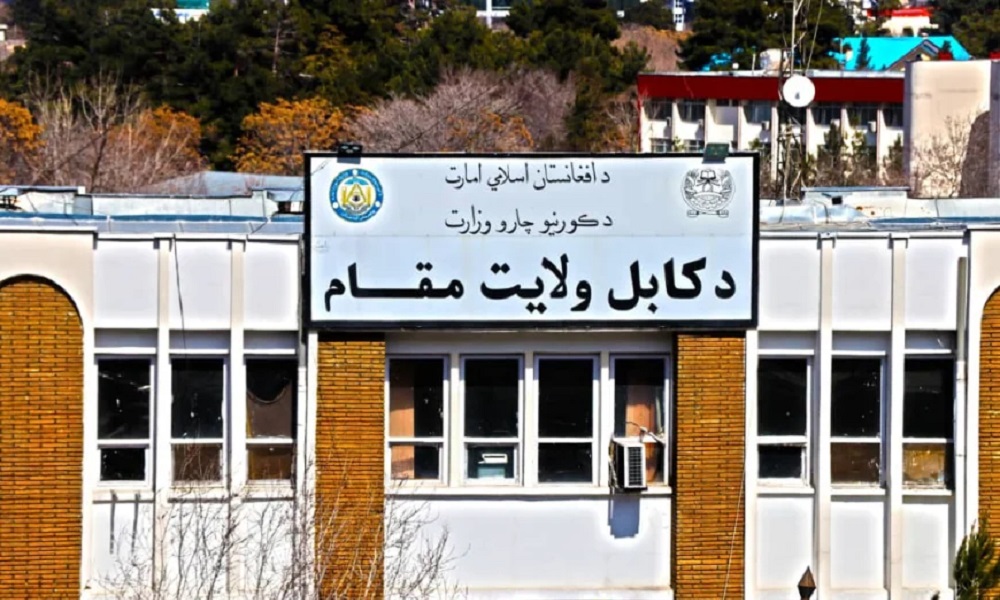
A coordination meeting involving senior officials from Afghanistan’s Central Zone provinces was held on Tuesday at the Kabul Governor’s Office and chaired by Kabul Governor Aminullah Obaid.
In a statement, the Media Office of the Kabul Governor’s Office said the meeting focused on improving coordination and ensuring more effective implementation of decrees issued by the Leader of the Islamic Emirate of Afghanistan.
Officials from the provinces of Kapisa, Panjshir, Maidan Wardak, Parwan, and Bamyan attended the meeting.
Also present were the head of the Central Zone Military Court, the deputy commander of the 313 Central Corps, provincial police chiefs, and intelligence directors.
According to the statement, participants discussed ways to strengthen coordination among provincial administrations and security institutions to ensure consistent and timely implementation of leadership directives across the Central Zone.


Tahawol: Afghanistan’s role in regional connectivity and trade

Saar: Activities of aid organizations in Afghanistan

IEA releases three Pakistani soldiers to mark Ramadan

Grateful to Afghans and Ulama for obeying the Islamic Emirate, says Hibatullah Akhundzada

Kabul hosts coordination meeting to strengthen enforcement of IEA leader’s decrees

Afghan traders sign deal to import pharmaceuticals from Bangladesh

AFC Futsal Asian Cup 2026: Day One Review

AFC Futsal Asian Cup: Afghanistan to face Iran in crucial Group D clash

Russia signals interest in expanding investment and trade ties with Afghanistan

Afghanistan shine on Day Two of AFC Futsal Asian Cup Indonesia 2026
Tahawol: Afghanistan’s role in regional connectivity and trade
Saar: Activities of aid organizations in Afghanistan

Tahawol: Afghanistan’s claim of Pakistan nurturing Daesh

Saar: Central Asian envoys’ meeting on Afghanistan

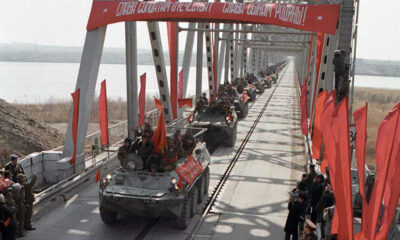
Tahawol: 37th anniversary of Soviet exit from Afghanistan
-
 Latest News2 days ago
Afghanistan’s defense ministry unveils new military uniforms for armed forces
-
 Latest News3 days ago
Tajikistan: Recent attacks from Afghanistan aimed at damaging our relations with China
-
 Latest News4 days ago
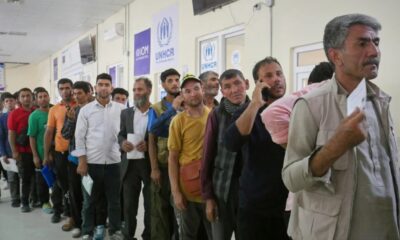
UN warns mass return of Afghans from Pakistan and Iran is pushing Afghanistan to the brink
-

 Business3 days ago
Iran–China rail link via Afghanistan proposed to cut transit time
-
 Latest News4 days ago
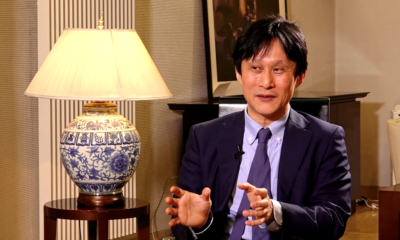
Japan maintains direct contacts with IEA officials through Kabul Embassy
-
 Latest News3 days ago
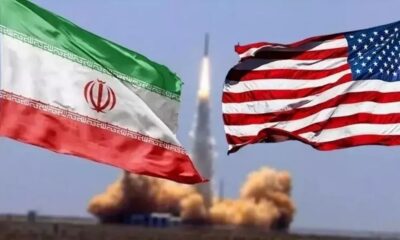
Iran would prevail in potential conflict with the United States, says IEA spokesman
-

 Latest News4 days ago
Trump: U.S. withdrawal from Afghanistan ‘looked like running’
-
 Latest News3 days ago
IEA marks 37th anniversary of Soviet withdrawal from Afghanistan