
Latest News
International Community must cut off aids to Pakistan

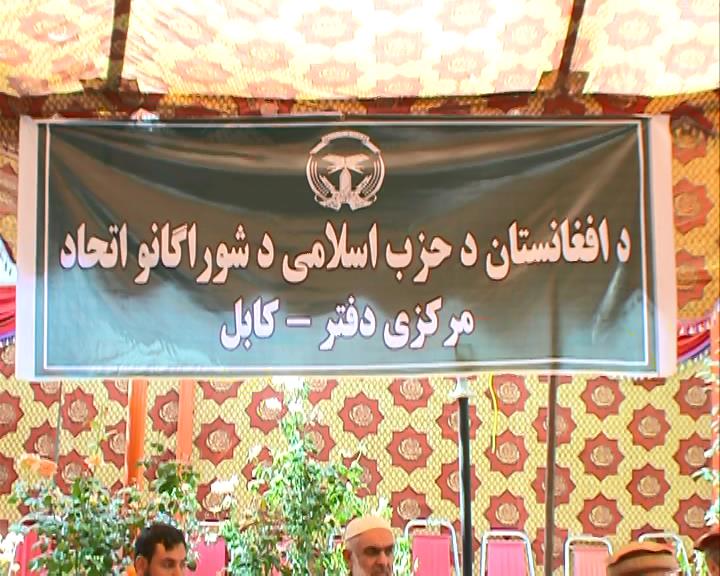
![HEZB ISLAMI_13_08_2015_DARI_SOT.avi_snapshot_00.14_[2015.08.13_16.57.27]](https://ariananews.af/wp-content/uploads/2015/08/HEZB-ISLAMI_13_08_2015_DARI_SOT.avi_snapshot_00.14_2015.08.13_16.57.27.jpg)
The Afghan government must convince the international community to cut off all aid funding to Pakistan, members of Hezb-e Islami Union Council said.
Members of Hezb-e Islami Union Council declared that they are sure Pakistan will never be honest with Afghanistan, and sending any delegation for talks would have no result.
However, they support President Ghani’s recent position against Pakistani government but stating that President must not trusted Pakistan.
“Pakistan has proved that has no honesty against Afghanistan. We should not expect any honesty from it,” Hamayoun Jarir, member of Hezb-e Islami Union Council said.
They criticized president’s last optimisms over Pakistan and are said to believe the government should provide internal unity against Pakistan.
“Previously, we were extremely optimistic over Pakistan which is not acceptable. The government, parties and leaders must unite because it is clear where the center of terrorism is,” Joma Khan Hamdard, CEO of Afghanistan Hezb-e Islami Council said.
Hezb-e Islami Union Council in a press release also expressed concern over militias of in the country, particularly the Northern Provinces.
Many in Afghanistan accuse Pakistan of being host to Taliban bases that are used to plan attacks such as the bombings over the weekend. Pakistan, which faces its own Taliban insurgency, denies that it has actively allowed its territory to be used in this way.
Pakistan last month hosted inaugural talks between the Afghan government and the Taliban, who are fighting to re-establish hard-line Islamist rule more than 13 years after the U.S.-led military intervention that toppled their regime.

Latest News
Fragile progress as US–Iran tensions shift toward negotiations, says Khalilzad
Khalilzad described these steps as positive, adding that the US president had reportedly agreed to delay a previously threatened escalation.
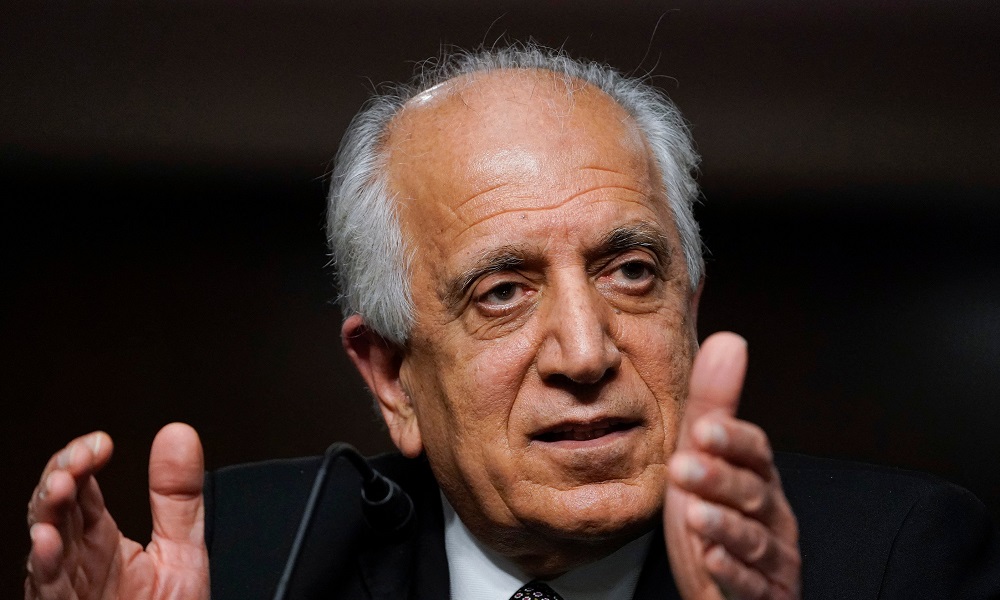
Senior former US diplomat Zalmay Khalilzad, says the conflict involving the United States, Israel and Iran has entered a new phase marked by both continued tensions and indirect diplomacy, with cautious signs of progress emerging.
In a social media post late Monday, Khalilzad, who served as the U.S. special representative for Afghanistan reconciliation, said the confrontation has shifted toward a combination of fighting and negotiations facilitated by regional powers.
He noted that developments over recent weeks include a five-week ceasefire, the reopening of the Strait of Hormuz to all international shipping, and renewed talks between Washington and Tehran on issues of mutual concern.
Khalilzad described these steps as positive, adding that the US president had reportedly agreed to delay a previously threatened escalation.
“These are positive. The President (Donald Trump) apparently has agreed to delay the escalation initially threatened for tomorrow,” he stated.
However, significant obstacles remain. According to Khalilzad, Iran is insisting on guarantees that any agreement must prevent a return to war, while the United States wants to preserve the option of resuming hostilities if negotiations fail.
“Frankly it is hard to argue with that,” Khalilzad wrote, saying it is common for conflict to resume if talks collapse without a mutually acceptable outcome.
He proposed a potential compromise in which both sides would commit not to return to war for the duration of the negotiations—a measure that could help build trust and prevent further escalation.
Tensions between Iran, the United States and Israel remain volatile, with the current phase of the conflict underscoring how quickly flare-ups can spread across the Middle East.
The Strait of Hormuz—a critical artery for global oil shipments—has emerged as a focal point, and its reopening is being closely watched as a stabilising signal for international energy markets.
Khalilzad also noted that Iran has previously accused the United States of launching attacks while negotiations were still underway.
Latest News
Heavy rains in Nangarhar leave 16 dead and injured
Further casualties were reported in Khogyani district, where one person was killed and two others injured.
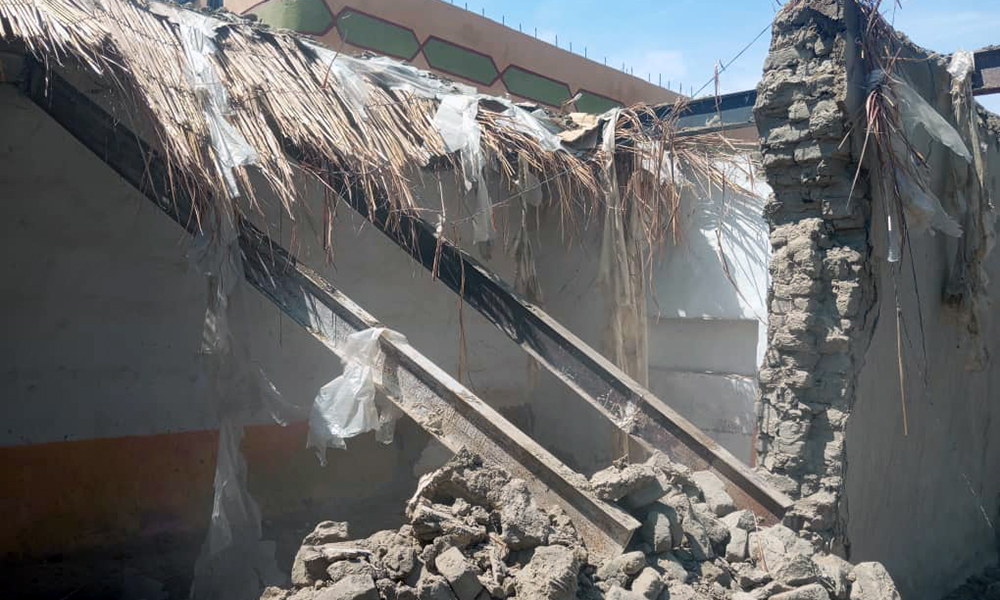
Heavy rains and a series of roof collapses in eastern Afghanistan’s Nangarhar province have left at least 16 people dead or injured, local officials said, as severe weather continues to batter vulnerable communities.
The worst-affected areas include the provincial capital Jalalabad, particularly the Angoor Bagh neighborhood, as well as the districts of Sherzad, Khogyani, and Haska Mina.
According to provincial authorities, five people were killed and two others injured when the roof of a house collapsed in Angoor Bagh. In Sherzad district, a separate incident claimed the lives of a woman and two children after another roof gave way.
Further casualties were reported in Khogyani district, where one person was killed and two others injured. In Haska Mina, the collapse of two homes left one child dead and two more people wounded.
Provincial spokesperson Qari Ehsanullah Osmani said emergency response teams have been deployed across the affected areas, with both civil and military units working to assist victims and carry out rescue operations.
Authorities have warned that continued heavy rainfall poses an ongoing risk to homes and infrastructure, particularly in rural and mountainous areas where buildings are often not constructed to withstand extreme weather.
Afghanistan has increasingly faced severe weather events in recent years, with heavy rains, flash floods, and landslides exacerbated by climate change, deforestation, and fragile infrastructure, leaving communities highly exposed to natural disasters.
Latest News
Australia’s most decorated soldier arrested over alleged Afghanistan war crimes
Investigators further allege that the victims were either shot by Roberts-Smith himself or killed by subordinates acting on his orders and in his presence.
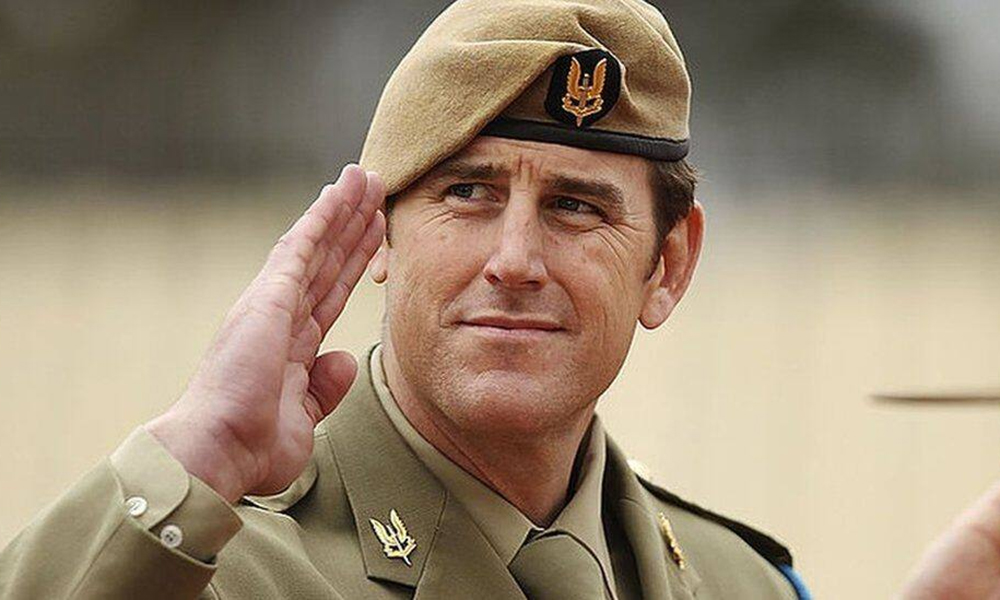
Australia’s most decorated living soldier, Ben Roberts-Smith, has been arrested and is set to face multiple war crimes charges over alleged killings of unarmed civilians during his deployment in Afghanistan.
The 47-year-old former member of the Australian Defence Force was detained at Sydney Airport on Tuesday morning, according to authorities. The Australian Federal Police said he will be charged with five counts of war crime murder linked to incidents between 2009 and 2012. Each charge carries a maximum penalty of life imprisonment.
AFP Commissioner Krissy Barrett said prosecutors will allege that the victims were not participating in hostilities at the time of their deaths. “It will be alleged the victims were detained, unarmed and under the control of ADF members when they were killed,” she told a press conference.
Investigators further allege that the victims were either shot by Roberts-Smith himself or killed by subordinates acting on his orders and in his presence.
Roberts-Smith, a recipient of the prestigious Victoria Cross for his service, rose to national prominence following six tours of Afghanistan between 2006 and 2012. He has consistently denied all allegations of wrongdoing.
The accusations first emerged in 2018 through investigative reporting by Nine Entertainment newspapers, which alleged, among other claims, that he was involved in the killing of unarmed detainees.
Roberts-Smith launched a defamation case against the publications, but in 2023 a Federal Court judge found that key allegations—including multiple unlawful killings—were substantially true. His final appeal was dismissed by the High Court of Australia in September 2025.
The case forms part of a broader investigation into alleged war crimes by Australian special forces during the Afghanistan conflict. A landmark 2020 inquiry found credible evidence that members of the Special Air Service Regiment were involved in the unlawful killing of dozens of unarmed prisoners.
A joint investigation by the AFP and the Office of the Special Investigator was launched in 2021 and has since examined dozens of cases. Officials say the process has been complex, in part due to the lack of access to crime scenes in Afghanistan.
Authorities confirmed that more than 50 investigations have been initiated, with several still ongoing. Another former special forces soldier is expected to stand trial on similar charges next year.
Roberts-Smith is due to appear in a local court in New South Wales later on Tuesday.


Fragile progress as US–Iran tensions shift toward negotiations, says Khalilzad

Heavy rains in Nangarhar leave 16 dead and injured

Australia’s most decorated soldier arrested over alleged Afghanistan war crimes

Afghanistan and Uzbekistan seek stronger ties in health sector

Afghanistan, Kyrgyzstan aim to boost trade to $1 billion

IEA Supreme Leader issues Eid-ul-Fitr message urging unity and support for Islamic system

14 Pakistani soldiers killed after military post falls along Durand line: MoD

Afghan airstrikes target Pakistani military sites in retaliation for air attacks

Turkmenistan, Afghanistan discuss steps to speed up land acquisition for TAPI pipeline

IPL 2026 kicks off in under two weeks; Afghan players set to shine

Tahawol: Continuation of Middle East crisis discussed

Saar: Ongoing Kabul-Islamabad talks in China discussed

Tawsia: This week’s key economic developments in Afghanistan discussed

Tahawol: Start of talks between Kabul-Islamabad in China discussed

Saar: Ongoing US and Israeli attacks on Iran discussed
-
 Latest News2 days ago
IEA supreme leader orders replacement of foreign terminology in official documents
-
 Latest News2 days ago
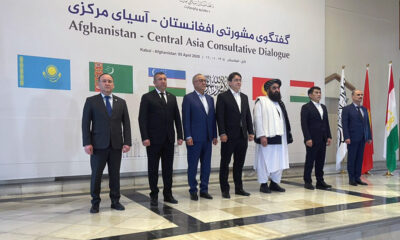
Afghanistan hosts inaugural Afghanistan–Central Asia Consultative Dialogue to strengthen regional cooperation
-
 Business4 days ago
Tripartite agreement to launch new Russia–Turkmenistan–Afghanistan transit corridor
-
 Latest News4 days ago
China says Afghanistan–Pakistan peace talks show progress
-

 Business3 days ago
Kazakhstan eyes rare metals mining projects in Afghanistan and Rwanda
-
 Latest News5 days ago
Afghanistan–Pakistan talks begin in China amid hopes for easing tensions
-
 Regional4 days ago
Iran claims it shot down US F-35 jet
-
 Latest News5 days ago
IEA confirms sending delegation to China for talks with Pakistan